S for Sabotage – Azure Spark. Part 19

[Music treat at the end. This story will be posted in full after the Challenge for those of us that like to read everything in one complete telling,]

SABOTAGE – Monday Midnight

Stars shining on the sea should settle our nerves. Impossible now we are sure the scheming stinks.

“How will we find these containers you say was swept overboard during the storm?”

Peder hands Rashmi an electronic tracker.

“Switch this on and our cargo will be transmitting a signal. Simply follow that. When you find the cargo attach the items to the rapid deployment lift bags. Once inflated they will bring the cargo to the surface for retrieval. Straightforward.”

Mind racing. Hesitate from asking what the salvage is. My senses say don’t.

“How many containers? You’ve given us eight small bags.”

“Four to search for. Two lift bags per canister.”

Pia strides over, tapping her watch. “You better leave now.”

At the stern, we climb back down to our boat, already loaded with the scuba tanks and lifting devices.

We cast off and raise the sails. Our craft slices apart the sheen on the water from the moon and stars. Perfect weather.

Sudden dread as spasms seize me.

P for Panic but also Precautions. Slow breathes.

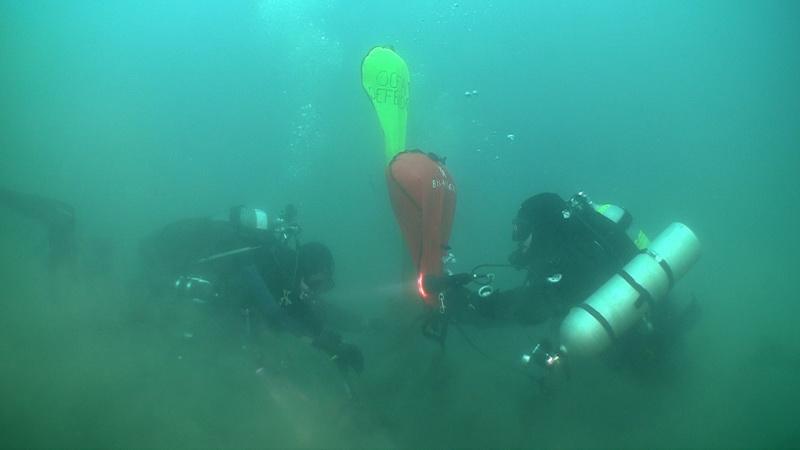
The mini-sonar directs us over the area where the cargo should be. We lower the sea anchor and release the rapid deployment lift bags – weighted to sink steadily on a long hawser.

A last scrupulous check of each other’s equipment, then we drop backwards over opposite sides into the serene darkness. The beams of our head-lamps stab into the depths.

The strengthening beeps guide our cautious descent.

When we reach the bags, we lower them. Deeper, past jagged rocks. Seaweed. Curious fish.

Containers – canisters designed for underwater recovery. Not just for the deck of a Swedish ship in the storm. Not swept overboard but jettisoned.

I sign Rashmi to strap two balloons to the first container as I adjust their regulator pressure gauges for the correct depth. Then we scrutinize the containers. No signifying marks. Nothing to divulge the contents. But designed for lifting straps.

However, there is a suitable slit where I insert our own tracker – a signal we can follow. Security 101.

We open the valves on the two scuba cylinders that inflate the bags. Swim clear as the bags lift and carry the container towards the surface.

Same procedure with the second canister – and second transponder. Two more balloons. Then the final two canisters.

A for Ascent.

Almost over. Tension not disappearing. Breathe slowly. Don’t waste precious air.

Our ascent takes longer as we need a stage decompression. Longer climb than our descent and time working on the seabed. Time enough for the waves to have picked up above.

The beginning of a squall.

No sign of the rapid deployment lift bags.

P for Panic as my stomach churns.

But the Njörðr Hämnaren has sailed closer. They’ve already winched the cargo aboard.

Relief and Apprehension.

We take off our tanks to simplify our return journey.

Tattoos hammer T for Timing.

“Too easy,” I say to Rashmi. “Be prepared for anything.”

Like the semi-automatic shots that spray the sea. R for Revenge.

Pia hails us. “Time to stay where you are, detectives. Yes, we know who you are and thank the North Wales Police for their assistance. Lagens väktare. May you swim in peace.”

I dive at Kama as I spy the carelessly stowed spare sail and scream.

TRAP. The boat is ripped apart.
For further details on this theme visit my Blogging from A to Z Theme Reveal, and on the evolution of Sparkle Anwyl visit Snowdon Shadows.

Other A to Z Bloggers can be found via the Blogging from A to Z website’s Master List –
http://www.a-to-zchallenge.com/2019/03/link-to-view-master-list-and.html

^*^

And now for something completely different.

“Music hath charms to soothe a savage breast, to soften rocks, or bend a knotted oak.” William Congreve – The Mourning Bride

Q for Quake – Azure Spark. Part 17

[Music treat at the end. This story will be posted in full after the Challenge for those of us that like to read everything in one complete telling,]

QUAKE – Sunday Evening

Quiet meals in quaint country restaurants can sap resolve. Not tonight when we all have questions. Like what are the sea jewels? Not drugs.

Peder and Pia Pilkvist collected us as arranged, taking us to a French bistro well above our normal budget. Somewhere we aren’t known.

We are encouraged to choose anything – and the wine flows freely.

“Did you eat Latin food in Patagonia? Or Welsh?”

“Welsh with an Argentinian twist.” I smile and add, “seafood became our favourite as it was fresh from the sea at Puerto Madryn.”

“Perfect, I recommend Quenelles de Homard.” Pia explains. “The lobster is local, maybe from off the Aberdaron coast.”

“I prefer Caille en Escabeche,” says Peder. “With the quail, I’m partial to the blend of Latin and French – fusion is an art form. Spare no expense when you order. We can afford this luxury.”

And the yacht. GEE is not an overtly rich company. No high value electrical or engineering items. Certainly not garden gnomes.

“I’ll have the Escabeche,” says Rashmi.

I choose the quenelles, but my mind is tapping my bracer. Q for Q-ships. Not what they seem. A disguise to hide weaponry. Like Quenelles de brochet and pike bones.

“Great choices require the right wines, “says Peder who then talks with the sommelier in passable French.

We aren’t meant to understand. But policing tourist areas has advantages. But nothing triggers alarms – yet.

If G is for Garden Gnomes, is W for Weapons? H for Herrings and more bones?

“Before the wine leaves us unfit to race tomorrow, what do you need me and Sioned for? As divers or sailors?”

Pia dips her head to her husband. We’re not meant to see as he is asking the sommelier for a bottle of vintage rosé Champagne.

“Divers primarily,” says Pia. “Your competitive reputation is impressive. But you will need your boat.”

Our doctored qualifications were straightforward for NWP to upload on the Internet. Our Q-ship.

“After we race tomorrow? No sooner I hope.” Although our participation is not vital. But I falter as if dismayed.

“Race, but then we need you. We will bring our yacht,” says Peder. “Then we’ll take you to the dive site.”

Late afternoon or later? Warning qualms kick in.

“Before the regatta ends?” Rashmi plunges deeper. “Or later when people disperse? A night dive will cost you more.”

Pia smiles and I shiver.

“After your race, join us on our yacht. No need to spoil this quiet meal with details.”

N for Night – W for no Witnesses. And for Warnings.

They suspect us. No more quizzing them tonight. Maybe not even on their yacht – their Q-ship. Or is that the freighter? The ship that is meant to be in Sweden.

Or is it? Another loose end. But we’re alone as money rules.

I attempt to quell my fears with food. By quenching a thirst for information that alcohol only stimulates.

Keeps them chatting. They’re digging too. Why? Do they know we’re police? Queer and a threat? Quislings.

We are being interrogated with a smile. About Patagonia. About diving competitions.

“How long have you two been together – diving? Amazing, your families are both from the Llŷn.”

Pia pushes – gently. A for Attitude and Alarm.

“Fate – except our families left together, so it was inevitable we were friends at school. And on the swimming team together.”

Rashmi is inventive, but Pia’s face indicates the story is disbelieved. Why? Who are they? More than smugglers.

S for Sail, Swim and Smugglers.

I shiver. Quake as my fears build. No coincidence.

I for Inside Information and Interrogation. R for Renegade – the cop that ratted on us.

Who?

RAIS – raison d’être. Why betray us? Prejudice or high-value goods? Or both?

Or RANG – ranged weapons?

In too deep without backup. The jeopardy thrills again. Quivering and riled.  Rats.

For further details on this theme visit my Blogging from A to Z Theme Reveal, and on the evolution of Sparkle Anwyl visit Snowdon Shadows.

Other A to Z Bloggers can be found via the Blogging from A to Z website’s Master List –
http://www.a-to-zchallenge.com/2019/03/link-to-view-master-list-and.html

^*^

And now for something completely different.

“Music hath charms to soothe a savage breast, to soften rocks, or bend a knotted oak.” William Congreve – The Mourning Bride

#AtoZChallenge #roadtrip 2018

a2z-h-small

This year, #AtoZChallenge Bloggers are being asked to pick ONE post from our #AtoZChallenge 2018 offerings and link it up to share.

The Road Trip – #roadtrip – is where bloggers continue to visit each other from May thru March. So, for me, that will be a chance to visit more of the #AtoZChallenge posts that I missed, especially of those visitors who managed the full A-to-Z. I even found some amazing new sites to follow, notably: Song A Day, a great music blog that is expanding my musical tastes (and inspired my 2019 #AtoZChallenge theme).

Plus, this informative folklore website, The Multicolored Diary, by Hungarian storyteller Zalka Csenge Virág, which delves into areas that fascinate me.

Folklore and mythology, as well as storytelling, are tied to many of my #AtoZChallenge posts, even if video games were the starting point.

When I was looking ahead to this road trip, in my #AtoZChallenge: Reflection, I hinted at what might be my favourite post and why, asking, “Will the writing-related research or the gaming-experience lift the award? H is for Hellblade or L is for Lord of the Rings? Or maybe something unexpected.”

Were you taken in by that red-herring?

Did you guess that my favourite post was W is for Witcher?

the-witcher-3-wild-hunt-new-build-screenshot-2

Or why? Well, that had less to do with the average number of comments, and more to do with ongoing research into the world that has emerged from The Witcher series of fantasy novels by distinguished Polish fantasy author Andrzej Sapkowski.

There proved to be so much to explore, from a Slavic mythology and folklore tradition that I barely knew to a game that I had only just started – The Witcher 3: The Wild Hunt. That game is my current escape, not least for the Gwent card-game within that fantasy world, but also for its excellent storytelling. As my Thursday Creation Review tomorrow will show, Sapkowski’s first collection of short stories, The Last Wish pulled me into the world of Geralt of Rivia and laid the world-building foundations, sowing seeds that resonate within the games.

Did you rate any of my posts as a favourite?

Are you sharing a favourite of your own on this #AtoZChallenge Road Trip?

Have you found any stand-out posts that we need to read?

If you are on the Road Trip then please be sure to include this phrase in your comments:
“Stopping by from the #AtoZChallenge Road Trip!”

survivor-atoz [2018] v1 (1)

#AtoZChallenge: Reflection

A-to-Z Reflection [2018]

2018 was my fifth Blogging From A to Z Challenge and the aim of my theme was “to find the origins of online games, some relatively modern and some with ancient roots. Gaming might well be a modern take on an art that is almost timeless – storytelling” …

This was a perfect excuse for a writer to delve a little deeper, in some cases finding the myths and legends that had inspired a new generation of storytellers. I wasn’t surprised at how many had ‘ancient roots’, nor was I surprised that there were universal themes arising.

However, I was intrigued how many cultures were represented as I expected most games had Celtic, Norse, Japanese or Chinese roots. Okay, I half-expected Korean mythology to work in somewhere as South Korea has a large games industry. The surprise was (a) the cross-fertilization between cultures – see Z is for Zelda; (b) the use of less prominent mythologies – see W is for Witcher.

I was pleased that most of the posts inspired comments, even a little debate. However, I was amazed that J is for Jumanji,  K is for King Arthur and T is for Tomb Raider received none – especially when R is for Resident Evil received six comments, excluding my replies. (I replied to every comment.) Was that because Resident Evil is the most successful game-to-movie adaptation? Or was it because King Arthur has been overdone in everything from legend to Hollywood blockbuster?

Maybe I spent too much time trying to get the posts out. I admit that I didn’t visit many A-to-Z bloggers beyond the ones that I follow regularly – I have a lot of catching-up to – in the Road Trip. (The Road Trip is where bloggers continue to visit each other from May thru March.)

However, as well as my posts linking with my Twitter, Facebook and Linkedin accounts, I did manage to add my post-address to the Daily Lists as well to my comments on other sites. Towards the end of the Challenge, I was writing the following day’s post with a few hours to spare – and I consistently forgot the #AtoZchallenge hashtag, except on my Theme post.

My frantic approach was partly because I hadn’t even remembered to sign-up until mid-March. That began some in-depth research which included some ‘product testing’. I need to give myself time in future if I am going to reduce the pressure and visit more sites.

Looking ahead to the Road Trip is coming on May 23, I’m trying to decide which was my favourite post and why. Will the writing-related research or the gaming-experience lift the award?

H is for Hellblade or L is for Lord of the Rings? Or maybe something unexpected.

What would you choose?

a2z-h-small

Z is for Zelda

Z

The aim of my Blogging From A to Z Challenge is to find the origins of online games, some relatively modern and some with ancient roots. Gaming might well be a modern take on an art that is almost timeless – storytelling. A perfect excuse for a writer to delve a little deeper.

[Visit here for links to other A to Z participants.]


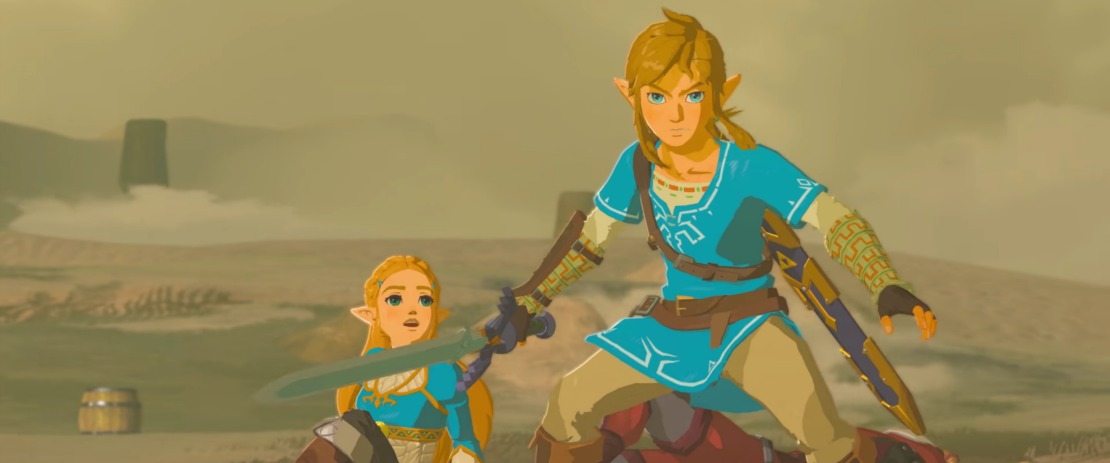
What other game character can end this challenge than the Princess of gaming herself?


Game: The Legend of Zelda is a high-fantasy action-adventure video game series created by Japanese game designers Shigeru Miyamoto and Takashi Tezuka. Each game in The Legend of Zelda series tells an important part of the history of Hyrule. The Japanese version of the game on the Famicom is known as The Hyrule Fantasy: The Legend of Zelda.

Release Date:

  1. First release – The Legend of Zelda – February 21, 1986
  2. Latest release – The Legend of Zelda: Breath of the Wild – March 3, 2017

Developer/Developer: Nintendo

Genre/gameplay mechanics: The series’ gameplay incorporates elements of actionadventure, battle-gameplay, exploration and puzzle-solving games. These elements have remained constant throughout the series, but with refinements and additions in each new game. Later games include stealth gameplay. The role-playing elements, however, have led to much debate over whether the Zelda games should be classified as action role-playing games, a genre on which the series has had a strong influence. The games pioneered several features that were to become industry standards. The original Legend of Zelda was the first console game with a save function that enabled players to stop playing and then resume later. The Legend of Zelda: Ocarina of Time introduced a targeting system that simplified 3D combat.

Setting: The Legend of Zelda takes place predominantly in a medieval Western Europe inspired fantasy land called Hyrule which has developed a deep history and wide geography over the series’ many releases. Hyrule’s principal inhabitants are pointy-eared humanoids called Hylians, which include the player character, Link, and the eponymous princess, Zelda.  Some games take place in different lands with their own back-stories. Termina and Lorule serve as parallel worlds to Hyrule, Hytopia is a connected kingdom, and Koholint is an island far away from Hyrule that appears to be part of a dream.

Storytelling: The series centres on Link, the chief protagonist, and the timeless battles between good and evil. Link is often given the task of rescuing Princess Zelda and the kingdom of Hyrule from Ganon, who is the principal antagonist of the series; however, other settings and antagonists have appeared in several games. The plots commonly involve a relic known as the Triforce, a set of three omnipotent golden triangles. The protagonist in each game is usually not the same incarnation of Link, but a few exceptions exist.

Releases + Expansions: Since the original The Legend of Zelda was released in 1986, the series has expanded to include 19 entries on all of Nintendo’s major game consoles, as well as a number of spin-offs.

IGN and GamesRadar selected their Top Ten Zelda games in 2016 and 2017 respectively,  while the top three from aggregated scores for all the games on Metacritic in 2017 were:

  1. 99The Legend of Zelda: Ocarina of Time – (November 21, 1998) – Metacritic’s highest-rated Zelda game, ever. “It’s no surprise why: Not only was the game the first in the series with 3D graphics and time travel, the 256-megabit Ocarina of Time was the largest game ever produced by Nintendo at the time. Over 7.6 million copies have been sold worldwide.” As GamesRadar said, “It popularized so many techniques that are ingrained in 3D gameplay – Z-targeting, camera control, world layout – that it’s easy to take for granted, particularly when later Zelda titles improved on them so well.”
  2. 97The Legend of Zelda: Breath of the Wild – (March 3, 2017) – The newest entry in the Zelda franchise, IGN’s Jose Otero said, “is a masterclass in open-world design and a watershed game that reinvents a 30-year-old franchise.” According to GameSpot’s Peter Brown, “there’s so much to see, to accomplish and to learn that you never feel like you have control over the world. This is a great thing.” GamesRadar said, “It’s, in a word, breath-taking, and it marks a rebirth for The Legend of Zelda that sent shockwaves through the entire industry.”
  3. 96The Legend of Zelda: The Wind Waker – (December 13, 2002) – “Set in a vast sea dotted with small islands long after the events of Ocarina of Time, The Wind Waker charges a cel-shaded Link with rescuing his sister, solving the mystery of the flooded world and again defeating the menacing Ganon.” Zach Ryan of IGN said, “This version of Link is so expressive and charming that it’s hard not to love him right from the outset. It refined everything that made Ocarina an instant classic to near perfection.”

Platform of origin: Family Computer Disk System

Origins (Chronological) include:

  1. The 1980s – Hearing of American novelist  Scott Fitzgerald‘s wife Zelda, co-designer Shigeru Miyamoto thought the name sounded “pleasant and significant”. Paying tribute, he chose to name the princess after her, and titled it The Legend of Zelda.
  2. The 1950s – principally inspired by Miyamoto’s “explorations” as a young boy in the hillsides, forests, and caves surrounding his childhood home in Sonobe, Japan where he ventured into forests with secluded lakes, caves, and rural villages. According to Miyamoto, one of his most memorable experiences was the discovery of a cave entrance in the middle of the woods. After some hesitation, he apprehensively entered the cave, and explored its depths with the aid of a lantern. Miyamoto has referred to the creation of the Zelda games as an attempt to bring to life a “miniature garden” for players to play with in each game of the series.
  3. The 1900s – Link and the fairy were inspired by Peter Pan and Tinker Bell.
  4. 12th–13th centuries – The Master Sword was inspired by Excalibur in the Arthurian legend, first mentioned in Welsh mythology, as in the Mabinogion as; ‘Caledfwlch’ . The similarities lay with the swords being kept in stone until the chosen one, the ‘hero’ takes it out to save the land. It’s fascinating when a Japanese cultural icon like The Legend of Zelda has a root in one of the British Isle’s oldest legends – one that creeps into works like The Lord of the Rings, as well as King Arthur. Myths and legends echo each other and the human condition, so why not in video games.


Adaptations set in the ‘Zelda’ universe – as well as the 27 video games, the franchise also includes a cartoon adaptation, multiple comic book adaptations, and soundtracks.

  1. TV – An American animated TV series based on the gamesaired in 1989. It is heavily based on the first game of the Zelda series, The Legend of Zelda, but includes some references to the second, Zelda II: The Adventure of Link.
  2. COMICS –  individual manga adaptationscommissioned by Nintendo have been produced in Japan since 1997, and are now being released in English.

Recommendation: The Legend of Zelda is one of Nintendo’s most prominent and successful franchises, selling over 80 million copies as of 2017. Many of its titles are considered by critics and fans alike to be among the greatest video games of all time. The Legend of Zelda series has received outstanding levels of acclaim from critics and the public. Ocarina of TimeThe Wind WakerSkyward Sword, and Breath of the Wild have each received a perfect 40/40 score (10/10 by four reviewers) by Japanese Famitsu magazine, making Zelda one of the few series with multiple perfect scores. Ocarina of Time was even listed by Guinness World Records as the highest-rated video game in history, citing its Metacritic score of 99 out of 100. In Nintendo Power‘s Top 200 countdown in 2004, Ocarina of Time took first place, and seven other Zelda games placed in the top 40. There is a devoted and extensive community behind the games.

Alternative ‘Z’ thoughts:

Z is also for the weirdly watchable 1974 Boorman movie Zardoz with Sean Connery, almost mentioned in my O post, where I said, “O is also for Oz, as in the L Frank Baum’s wonderful book The Wonderful Wizard of Oz …There were numerous adaptations, including games, but none that sparked my research brain – despite Baum’s origins.”

For those that don’t make the connection, the Baum book is the source of the name ‘-zard [of] oz’.


Enter this portal to reach other Worlds in my A2ZMMORPG

Hela da


Y is for Ys

Y


The aim of my Blogging From A to Z Challenge is to find the origins of online games, some relatively modern and some with ancient roots. Gaming might well be a modern take on an art that is almost timeless – storytelling. A perfect excuse for a writer to delve a little deeper.

[Visit here for links to other A to Z participants.]


Game: Ys (pronounced like “ease”) is a series of constantly evolving Japanese role-playing video games  The first game in the series, Ys I: Ancient Ys Vanished, was released in 1987. Ys is considered to be the company’s flagship franchise.

In terms of the number of game releases, the Ys series is second only to Final Fantasy as the largest Eastern role-playing game franchise, as of 2011.

Release Date:

  1. First release – Ys I: Ancient Ys Vanished – June 21, 1987
  2. Latest release – Ys VIII: Lacrimosa of Dana – July 21, 2016

Developer/Producer: Nihon Falcom.

Genre/gameplay mechanics: In early games, the player used only the directional pad to fight using bump attacks. A feature used in nearly every Ys title is the recharging health mechanism, which had previously only been used in the Hydlide series. Recharging health has since become a common mechanism in many video games. Over the series, Ys has progressed, gradually introducing: magic spells, the ability to actively block, learn skills, stun meters for enemies, weapon types, super combos, the ability to parry hits with a flash guard system, and a flash dodge.

As JoyfulSanity says, “Although there can be drastic differences between titles, common elements of each game in the series includes the following:

  1. Lightning fast combat
  2. Awesome hair metal music with ORCHESTRATION
  3. Grandiose boss battles
  4. Simple, episodic plots with reoccurring characters
  5. Music music music music
  6. Old-school challenge that can be brutal but not usually Nintendo Hard (Dark Souls fans should be pleased)
  7. Many difficulty levels that can either subdue that old-school challenge or crank the insanity to 11

And did I mention the music? Seriously, a lot of people legitimately get into Ys because of the music. It’s a huge part of Ys’ appeal.

Setting: Fantasy worlds. Thus far, Adol has visited the regions of Esteria, Ys, Celceta, Felghana, Xandria, the Canaan Islands, and Altago.

Storytelling: Ys stars a red-haired warrior named Adol Christin (this only varies in Origin), a young man with a zest for adventure and an uncanny knack for being in the right place at the right time. Gameplay usually revolves around Adol, though his comrade, Dogi, is a frequent companion in his travels – playable in some later games.

According to in-game lore, the normally immortal ancient Ys aged because humans overused the magic power of an ancient artefact, known as the Black Pearl. The result of this misuse was evil magical energy bringing forth millions of cruel demons. The people of Ys fled to the Palace of Solomon and used the Black Pearl to lift the palace into the sky, creating a safe haven. The demons, focused on controlling the Black Pearl for their own intentions, began building the Darm Tower, day and night, attempting to connect to the Palace of Solomon with their construction. As in-game-events transpired, however, the demons’ efforts were thwarted.

Later games feature a variety of plots but frequently begin with a shipwreck. A stranded Adol then gets involved in the new area’s events and adventure ensues.

Releases + Expansions –eight main releases with multiple re-releases.

Highest rated games are.:

  1. January 27, 2011 – Ys: Oath In Felghana – Platforms: PSP and PC. Metacritic: 80. JoyfulSanity says, “With a playtime that clocks under 10 hours for a first playthrough, you get a thoroughly polished adventure that’s extremely light on filler. Oath’s brevity and polish are why I believe it to be the best starting point for the series.”
  2. August 17, 2010 – Ys Seven – Platform: PSP and PC. Metacritic: 79. JoyfulSanity says, “This game modernized the Ys formula, so fans of other contemporary hack-and-slash style RPGs should be pleased with this ~30-hour long quest. If you’re determined to only get one Ys game and never try the other ones, I’d recommend this one.”

Platform of origin: NEC PC-8801

Origins (Chronological):

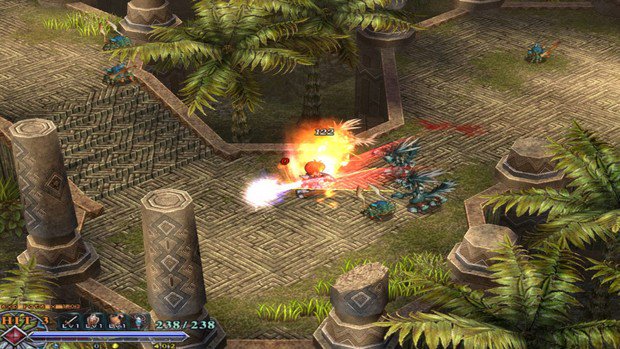
  1. June 21, 1987 – Ys I: Ancient Ys Vanished (also Ys: The Vanished Omens or The Ancient Land of Ys) was released by Nihon Falcom. Developed for the PC-8801 by Masaya Hashimoto (director, programmer, designer) and Tomoyoshi Miyazaki (scenario writer), Ys was a precursor to RPGs that emphasize storytelling. The hero of Ys is an adventurous young swordsman named Adol Christin. As the story begins, he has just arrived at the Town of Minea, in the land of Esteria. He is called upon by Sara, a fortune teller, who tells him of a great evil that is sweeping the land.

Ys164402-266590-reviewys2jpg-620x

Adaptations set in the ‘Ys’ universe:

  1. ANIME – there are two separate series of Ys, with the first spanning seven episodes and covering the events of the first game, and the second running for four episodes and loosely covering the events of the second game. The first anime expands on the storyline of Ys I, including a retelling and expansion of the prologue found in the game’s original Japanese manual.
  2. MUSIC – The first two games were composed by Yuzo Koshiro, Mieko Ishikawa, and Hideya Nagata, whereas Mieko Ishikawa handled the soundtrack for Ys III. The composers’ works have been remixed for each subsequent release. Consequently, the Ys series is seen in the video game music industry as some of the finest and most influential role-playing video game scores of all time, demonstrated by an extensive 39 series of CD releases based on the series’ music, with numerous variations on its themes. It has also inspired video game composers outside Japan.

Recommendation: Since Ys is among the oldest RPG franchises, there have been many reviews for each game, ranging from mixed to very positive. Other than Metacritic, there are overviews from JoyfulSanity,  Shaun Mudd, and comparing platforms and games by Game Sack on YouTube.

Alternative ‘Y’ thoughts:

Y is also for Yakuza, a series of video games that I thought of researching as there had been live-action adaptations and the origins go back to the mid-Edo period (1603–1868). Also, I enjoyed the unrelated Robert Mitchum movie The Yakuza (1974).

Enter this portal to reach other Worlds in my A2ZMMORPG

Hela da