The Shepherdess of Siena – a review

Thursday_horizons

This week’s novel for my Thursday Creation Review was a ‘must read’ that fit two reading genres and offered more: historical and equestrian, plus it was set in Italy.

Shepherdess_Siena

The Shepherdess of Siena

by

Linda Lafferty (Goodreads Author)

Raised by her aunt and uncle amidst the rolling hills of the Tuscan countryside, young orphan Virginia Tacci has always harboured a deep love for horses—though she knows she may never have the chance to ride. As a shepherdess in sixteenth-century Italy, Virginia’s possibilities are doubly limited by her peasant class and her gender. Yet while she tends her flock, Virginia is captivated by the daring equestrian feats of the high-spirited Isabella de’ Medici, who rides with the strength and courage of any man, much to the horror of her brother, the tyrannical Gran Duca Francesco de’ Medici.

Inspired, the young shepherdess keeps one dream close to her heart: to race in Siena’s Palio. Twenty-six years after Florence captured Siena, Virginia’s defiance will rally the broken spirit of the Senese people and threaten the pernicious reign of the Gran Duca. Bringing alive the rich history of one of Tuscany’s most famed cities, this lush, captivating saga draws an illuminating portrait of one girl with an unbreakable spirit.

Review 4.3 stars

A Historical novel with horses and set primarily in Tuscany was a Must Read, and it proved enjoyable.

Virginia Tacci is the young shepherdess that loves horses and wants to ride – something that few women in the sixteenth-century can do on an even playing field with men. Even those from the nobility like Isabella de’ Medici that can attempt to ignore social expectations are prey to their male superiors – or those that believe in their right to manipulate and persecute.

This is a world of rules and rulers, and Linda Lafferty paints the period and the setting vividly, demonstrating her painstaking research. This is a realistic medieval world from attitudes to architecture, from struggling peasants to scheming nobility. Many of the characters are historical, yet the author gives them distinct personalities – at times needing to build on limited documentary evidence from the period. (The author’s notes at the end make the extent of the research clear.)

The novel is strongest when focused on the horses and on Virginia. It is their story that kept me reading from the birth of a key foal, through the event that makes Virginia the centre of a thread of plots. The equestrian elements were meticulous in their detail as well as vibrant. The choice of having the protagonist tell their own first-person story also worked and enhanced this central thread.

However, with multiple plotlines, there was a need for some of the other viewpoints used. All these were the third person, and, in most cases, these worked and gave the plotlines momentum. But, purely from this reader’s perspective, there were too many, and some characters suffered through too little ‘screen-time’. There were moments when I stopped and wondered if some of these POVs could have been amalgamated – perhaps giving one observer more chapters to record events as they experience them.

This applied to the probably accurate de Medici scenes which led me to comment, mid-reading, “Whose story is this?” At times, I wanted to get back to Virginia and the horses as those scenes had a momentum that never tailed off. Of course, to me ‘Mares rule’ – except I will always find room for a great stallion.

Virginia’s ride is not always easy and not just because of her gender, although that prejudice never lets up. The ending is unexpected, but many have argued that it is right given the era. One question was uppermost as the threads converged together: “How would the antagonists atone for their sins?”

How can a historical novel ever have a neat ending? Reality is never what we expect or desire. And life goes on beyond the end of a novel. If characters evolve, as they do here, then that is the truth.

Although this novel rates 4.3 stars adjusted to 4 stars, I would recommend this to fans of historical fiction especially if they love horses.

Story – four stars

Setting/World-building – five stars

Authenticity – five stars

Characters – four stars

Structure – four stars

Readability – four stars

Editing – four stars
 

Air and Ash – a review

Thursday_horizons

This is the second of my new Thursday Creation Review posts which will usually be Books, but I am still reserving the right to review Games, Films or other Works of Art – and I will add music to that.

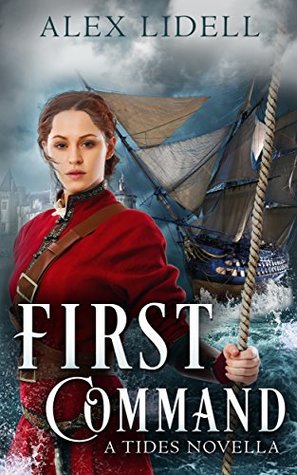
Alex Lidell’s Tides is a series of books that has been on my Want To Read list for too long – and then I won Book 3, Sea and Sand (#3) in a Goodreads Giveaway. First, though, I read and reviewed First Command (TIDES, # 0.5), which was an absorbing taster that introduced me to the main character of Lieutenant Nile Greysik and her world.

The author kindly provided me with Book 1 of the series, and this is my extended review.

AirandAsh

Air and Ash (TIDES #1)

by

Alex Lidell (Goodreads Author)

Born to privilege.
Trained for command.
Destined for danger.

After a lifetime of training, seventeen-year-old Princess Nile Greysik, a lieutenant on the prestigious Ashing navy flagship, sails into battle with one vital mission–and fails.

Barred from the sea and facing a political marriage, Nile masquerades as a common sailor on the first ship she can find. With a cowardly captain, incompetent crew, and a cruel, too-handsome first officer intent on making her life a living hell, Nile must hide her identity while trying to turn the sorry frigate battle worthy. Worse, a terrifying and forbidden magic now tingles in Nile’s blood. If anyone catches wind of who Nile is or what she can do, her life is over.

But when disaster threatens the ship, Nile may have no choice but to unleash the truth that will curse her future.

Review 4.3 stars

After reading First Command (TIDES, # 0.5), the taster that introduced me to Lieutenant Nile Greysik and her world, I had to read Tides #1. This book was provided by the author but without any requirements.

When Nile escapes her Royal obligations and masquerades as a common sailor, events conspire against her. The author ensures that the decks are stacked against Nile in unexpected ways that had me guessing where the story was heading. This was a slightly devious storyline although with few plotlines to misdirect the reader from a fast read.

The characters are varied, and some have complex personalities with backstories that are never totally revealed – there must be more to come. The cast hints at the world created from the political situation and attitudes to the crucial seafaring.

Alex Lidell’s well-imagined world blends seafaring and fantasy, and yet brings back memories of reading the Hornblower books in my teens – although it is wrong to compare the books. This protagonist is female, and the author builds on that – as well as the princess angle. But there is so much more – like magic being a very mixed curse. For Nile, this force that flows through her veins is a primary motivation – and not just for herself.

This is a world where magic is going underground through misunderstanding and a growing sense of discrimination. Attitudes, not just in magic, vary from nation to nation and between cultures. For instance, the Ashing royals serve in their navy, but in other states, the nobility and rich pamper themselves.

The social divide is clear, but onboard a ship there is promotion from the ranks. The nautical details rang true from my limited mucking-around-in-boats and from my copy of The Hornblower Companion. The confined space of a ship adds to the cruel pecking order. However, rank brings expectations as does Royal blood. Nile needs to judge who to trust beyond appearances if she is to complete her goals.

Where do events lead Nile? I’m giving nothing away – even if you keel-haul me – all I can say is ‘don’t expect all the threads to be tied up’. This entertaining read is Book 1 of a trilogy and you won’t want to stop. I’m not, although I must clear the reading decks so I can open War and Wind (#2) and the conclusion Sea and Sand (#3).

Recommended for those that enjoy their seafaring adventures spiced with fantasy – 4.3 stars adjusted to 4.

Story – four stars

Setting/World-building – four stars

Authenticity – four stars

Characters – five stars

Structure – four stars

Readability – five stars

Editing – four stars

First Command

#AtoZChallenge: Reflection

A-to-Z Reflection [2018]

2018 was my fifth Blogging From A to Z Challenge and the aim of my theme was “to find the origins of online games, some relatively modern and some with ancient roots. Gaming might well be a modern take on an art that is almost timeless – storytelling” …

This was a perfect excuse for a writer to delve a little deeper, in some cases finding the myths and legends that had inspired a new generation of storytellers. I wasn’t surprised at how many had ‘ancient roots’, nor was I surprised that there were universal themes arising.

However, I was intrigued how many cultures were represented as I expected most games had Celtic, Norse, Japanese or Chinese roots. Okay, I half-expected Korean mythology to work in somewhere as South Korea has a large games industry. The surprise was (a) the cross-fertilization between cultures – see Z is for Zelda; (b) the use of less prominent mythologies – see W is for Witcher.

I was pleased that most of the posts inspired comments, even a little debate. However, I was amazed that J is for Jumanji,  K is for King Arthur and T is for Tomb Raider received none – especially when R is for Resident Evil received six comments, excluding my replies. (I replied to every comment.) Was that because Resident Evil is the most successful game-to-movie adaptation? Or was it because King Arthur has been overdone in everything from legend to Hollywood blockbuster?

Maybe I spent too much time trying to get the posts out. I admit that I didn’t visit many A-to-Z bloggers beyond the ones that I follow regularly – I have a lot of catching-up to – in the Road Trip. (The Road Trip is where bloggers continue to visit each other from May thru March.)

However, as well as my posts linking with my Twitter, Facebook and Linkedin accounts, I did manage to add my post-address to the Daily Lists as well to my comments on other sites. Towards the end of the Challenge, I was writing the following day’s post with a few hours to spare – and I consistently forgot the #AtoZchallenge hashtag, except on my Theme post.

My frantic approach was partly because I hadn’t even remembered to sign-up until mid-March. That began some in-depth research which included some ‘product testing’. I need to give myself time in future if I am going to reduce the pressure and visit more sites.

Looking ahead to the Road Trip is coming on May 23, I’m trying to decide which was my favourite post and why. Will the writing-related research or the gaming-experience lift the award?

H is for Hellblade or L is for Lord of the Rings? Or maybe something unexpected.

What would you choose?

a2z-h-small

Apricots and Wolfsbane

Thursday_horizons


This is the first of my new Thursday Creation review posts which will usually be Books, although I reserve the right to review Games, Films or other Works of Art.

When I first encountered Apricots and Wolfsbane in an interview with K M Pohlkamp, and then read the blurb, I had to read the novel. This review is an extended and more developed version of my initial thoughts when I’d reached the end.

Apricots_36194389

Apricots and Wolfsbane

by

K.M. Pohlkamp

* Shortlisted for the 2017 Chaucer Book Awards for Historical Fiction.
* Contains a book club reading guide in the back.
* Available on Google Play:

Lavinia Maud craves the moment the last wisps of life leave her victim’s bodies—to behold the effects of her own poison creations. Believing confession erases the sin of murder, her morbid desires are in unity with faith, though she could never justify her skill to the magistrate she loves.

At the start of the 16th century in Tudor England, Lavinia’s marks grow from tavern drunks to nobility, but rising prestige brings increased risk. When the magistrate suspects her ruse, he pressures the priest into breaking her confessional seal, pitting Lavinia’s instincts as an assassin against the tenets of love and faith. She balances revenge with her struggle to develop a tasteless poison and avoid the wrath of her ruthless patron.

With her ideals in conflict, Lavinia must decide which will satisfy her heart: love, faith, or murder—but the betrayals are just beginning.

“One should never condone murder, but, strangely, I rooted for Lavinia. Pohlkamp made her easily understandable, despite her odd sense of morality. She had to survive in a time period dominated by men…Her dark obsession with poison, her love for the magistrate, Haylan Moryet, and her belief in God turn the narrative into something fascinating and substantial that powers the heart of the story.”- 5 Star Review from Readers’ Favorite

**

Review 4.9 stars

I’m one of Lavinia Maud’s victims – or am I a gullible sympathiser? However, she wove her masterful ways – or rather K. M Pohlkamp did – and the price was very acceptable.

First an interview with the author then the blurb tempted me. Other reviews hooked me, and the opening pulled me in as I succumbed to the words. I knew the protagonist was poisoning people, but the author did a crafty job of keeping this reader behind Lavinia, despite the crimes. When are sins forgiven? Was it through her confessions? Unlikely as I sympathised with the priest. But I wanted Lavinia to succeed – at least in her attempt to find the elusive poison and escape to another life. Was I deceived by someone?

The plotting and character development required skill and abilities that all writers could learn from. As Lavinia’s machinations get more devious, there are repercussions – ripples that have consequences. This well-crafted plot builds, and trust is tested as the poisoned web grows.

Beyond Lavinia, there are other well-painted characters, although through the eyes of the poison mistress so the perspective is shrouded by beliefs. Words and actions make for memorable personalities, even fleeting – and strange partnerships emerge. And identifying the next victim is always under the surface in this world.

This Tudor England felt accurate, although as a Brit, I went investigating where this was set and uncovered the writer’s reasoned decision to tread a semi-fabricated path. Yet the plotting and politics painted an unsettling but familiar picture of a society where being male and having money equals privileges. A too-real world where women needed other wiles to survive – like a knowledge of herbs and more.

How far can a poison mistress climb? When is she respected?

Questions I was loath to project as my sympathies were torn between acceptance of Lavinia with all her sins, and the innocent crying out for justice. It takes a talented writer to outsmart her protagonist and her readers, creating an unexpected conclusion.

At this point, I must be careful and evade the temptation of spoilers.

As the climax drew near, I couldn’t put the book down, desperate to know what Fate and Faith had devised. Who would choose to play chess with Poison?

So, I hope that I’ve tempted you, even if a killer deserves fewer stars, and Divine Justice makes demands too. But why condemn the poison wielder, when it was the author’s skill that resolved the web of deviousness.

Am I perverse? No, Drama prevails so I recommend this novel wholeheartedly. 4.9 stars upgraded to 5.

Story – five stars

Setting/World-building – five stars

Authenticity – four stars

Characters – five stars

Structure – five stars

Readability – five stars

Editing – five stars


#IWSG – Spring Inspiration

IWSGBadge

Another month and another IWSG post. Well, not just any month but the Blogging from A to Z Challenge month, so I managed to write 26 posts and got them scheduled on the correct days. But enough of that – I’ll post my reflections on the Challenge next week – this is an IWSG monthly past.

May 2 question – It’s spring!

Does this season inspire you to write more than others, or not?

Of course, Spring inspires me – to get outside and soak up the sunshine. And yes, Spring is here, and the little grey cells are sparking – despite the MS. Okay, I have my struggles with the misfiring nervous system, and my brain loses direction and thoughts. I forget what I am doing, my fingers hit too many wrong keys, and my body must sleep sporadically or suffer the painful body-wrenching attacks.

Officially, according to The Old Farmer’s Almanac, Spring arrived on March 20, 2018. That means that the Spring Equinox must have set all those A-to-Z posts in motion.

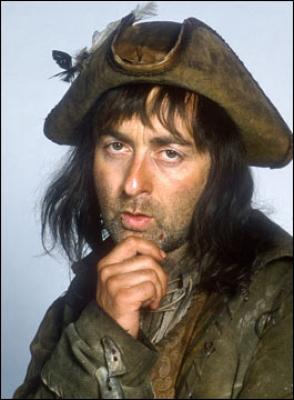
I’ve even used the last few days to devise a cunning plan. Did Baldrick help with that?

Baldrick_thumbnail

The cunning plan: to write a review once a week of one of the books I’ve read and failed to review here. Those reviews will be scheduled for every Thursday.

However, I reserve the right to write other posts – if motivated.

What about the deviously cunning Fates Maelstrom plans? Not abandoned or shelved but extended.

I wrote draft one of Book 3 in the Snowdon Shadows series for NaNoWriMo last November. Then I started editing Fates Maelstrom in December, developing all the ideas needed for the final draft prior to beta-reading.

That has led to Goth Patrol, a short story about the main protagonist, policewoman Sparkle Anwyl and how she lost her first love and joined the CID. I’m starting on another short, Face Trash, her first case as a detective, fresh from police college. Call these stories ‘character research’.

Or should I publish those stories first?

That’s what Spring does for my devious brain – seeds seeking fertile soil.

[One problem: I need a friend to sit with and chat, face-to-face over a pint or a meal. I lost that when I moved four years ago.]

**

The awesome co-hosts for the May 2 posting of the IWSG are E.M.A. Timar, J. Q. Rose, C.Lee McKenzie, and Raimey Gallant!

Purpose of IWSG: To share and encourage. Writers can express doubts and concerns without fear of appearing foolish or weak. Those who have been through the fire can offer assistance and guidance. It’s a safe haven for insecure writers of all kinds!

Every month, we announce a question that members can answer in their IWSG post. These questions may prompt you to share advice, insight, a personal experience or story. Include your answer to the question in your IWSG post or let it inspire your post if you are struggling with something to say.

Posting: The first Wednesday of every month is officially Insecure Writer’s Support Group day. Post your thoughts on your own blog. Talk about your doubts and the fears you have conquered. Discuss your struggles and triumphs. Offer a word of encouragement for others who are struggling. Visit others in the group and connect with your fellow writer – aim for a dozen new people each time – and return comments. This group is all about connecting! 

Let’s rock the neurotic writing world!

Our Twitter handle is @TheIWSG and hashtag is #IWSG


Z is for Zelda

Z

The aim of my Blogging From A to Z Challenge is to find the origins of online games, some relatively modern and some with ancient roots. Gaming might well be a modern take on an art that is almost timeless – storytelling. A perfect excuse for a writer to delve a little deeper.

[Visit here for links to other A to Z participants.]


What other game character can end this challenge than the Princess of gaming herself?


Game: The Legend of Zelda is a high-fantasy action-adventure video game series created by Japanese game designers Shigeru Miyamoto and Takashi Tezuka. Each game in The Legend of Zelda series tells an important part of the history of Hyrule. The Japanese version of the game on the Famicom is known as The Hyrule Fantasy: The Legend of Zelda.

Release Date:

  1. First release – The Legend of Zelda – February 21, 1986
  2. Latest release – The Legend of Zelda: Breath of the Wild – March 3, 2017

Developer/Developer: Nintendo

Genre/gameplay mechanics: The series’ gameplay incorporates elements of actionadventure, battle-gameplay, exploration and puzzle-solving games. These elements have remained constant throughout the series, but with refinements and additions in each new game. Later games include stealth gameplay. The role-playing elements, however, have led to much debate over whether the Zelda games should be classified as action role-playing games, a genre on which the series has had a strong influence. The games pioneered several features that were to become industry standards. The original Legend of Zelda was the first console game with a save function that enabled players to stop playing and then resume later. The Legend of Zelda: Ocarina of Time introduced a targeting system that simplified 3D combat.

Setting: The Legend of Zelda takes place predominantly in a medieval Western Europe inspired fantasy land called Hyrule which has developed a deep history and wide geography over the series’ many releases. Hyrule’s principal inhabitants are pointy-eared humanoids called Hylians, which include the player character, Link, and the eponymous princess, Zelda.  Some games take place in different lands with their own back-stories. Termina and Lorule serve as parallel worlds to Hyrule, Hytopia is a connected kingdom, and Koholint is an island far away from Hyrule that appears to be part of a dream.

Storytelling: The series centres on Link, the chief protagonist, and the timeless battles between good and evil. Link is often given the task of rescuing Princess Zelda and the kingdom of Hyrule from Ganon, who is the principal antagonist of the series; however, other settings and antagonists have appeared in several games. The plots commonly involve a relic known as the Triforce, a set of three omnipotent golden triangles. The protagonist in each game is usually not the same incarnation of Link, but a few exceptions exist.

Releases + Expansions: Since the original The Legend of Zelda was released in 1986, the series has expanded to include 19 entries on all of Nintendo’s major game consoles, as well as a number of spin-offs.

IGN and GamesRadar selected their Top Ten Zelda games in 2016 and 2017 respectively,  while the top three from aggregated scores for all the games on Metacritic in 2017 were:

  1. 99The Legend of Zelda: Ocarina of Time – (November 21, 1998) – Metacritic’s highest-rated Zelda game, ever. “It’s no surprise why: Not only was the game the first in the series with 3D graphics and time travel, the 256-megabit Ocarina of Time was the largest game ever produced by Nintendo at the time. Over 7.6 million copies have been sold worldwide.” As GamesRadar said, “It popularized so many techniques that are ingrained in 3D gameplay – Z-targeting, camera control, world layout – that it’s easy to take for granted, particularly when later Zelda titles improved on them so well.”
  2. 97The Legend of Zelda: Breath of the Wild – (March 3, 2017) – The newest entry in the Zelda franchise, IGN’s Jose Otero said, “is a masterclass in open-world design and a watershed game that reinvents a 30-year-old franchise.” According to GameSpot’s Peter Brown, “there’s so much to see, to accomplish and to learn that you never feel like you have control over the world. This is a great thing.” GamesRadar said, “It’s, in a word, breath-taking, and it marks a rebirth for The Legend of Zelda that sent shockwaves through the entire industry.”
  3. 96The Legend of Zelda: The Wind Waker – (December 13, 2002) – “Set in a vast sea dotted with small islands long after the events of Ocarina of Time, The Wind Waker charges a cel-shaded Link with rescuing his sister, solving the mystery of the flooded world and again defeating the menacing Ganon.” Zach Ryan of IGN said, “This version of Link is so expressive and charming that it’s hard not to love him right from the outset. It refined everything that made Ocarina an instant classic to near perfection.”

Platform of origin: Family Computer Disk System

Origins (Chronological) include:

  1. The 1980s – Hearing of American novelist  Scott Fitzgerald‘s wife Zelda, co-designer Shigeru Miyamoto thought the name sounded “pleasant and significant”. Paying tribute, he chose to name the princess after her, and titled it The Legend of Zelda.
  2. The 1950s – principally inspired by Miyamoto’s “explorations” as a young boy in the hillsides, forests, and caves surrounding his childhood home in Sonobe, Japan where he ventured into forests with secluded lakes, caves, and rural villages. According to Miyamoto, one of his most memorable experiences was the discovery of a cave entrance in the middle of the woods. After some hesitation, he apprehensively entered the cave, and explored its depths with the aid of a lantern. Miyamoto has referred to the creation of the Zelda games as an attempt to bring to life a “miniature garden” for players to play with in each game of the series.
  3. The 1900s – Link and the fairy were inspired by Peter Pan and Tinker Bell.
  4. 12th–13th centuries – The Master Sword was inspired by Excalibur in the Arthurian legend, first mentioned in Welsh mythology, as in the Mabinogion as; ‘Caledfwlch’ . The similarities lay with the swords being kept in stone until the chosen one, the ‘hero’ takes it out to save the land. It’s fascinating when a Japanese cultural icon like The Legend of Zelda has a root in one of the British Isle’s oldest legends – one that creeps into works like The Lord of the Rings, as well as King Arthur. Myths and legends echo each other and the human condition, so why not in video games.


Adaptations set in the ‘Zelda’ universe – as well as the 27 video games, the franchise also includes a cartoon adaptation, multiple comic book adaptations, and soundtracks.

  1. TV – An American animated TV series based on the gamesaired in 1989. It is heavily based on the first game of the Zelda series, The Legend of Zelda, but includes some references to the second, Zelda II: The Adventure of Link.
  2. COMICS –  individual manga adaptationscommissioned by Nintendo have been produced in Japan since 1997, and are now being released in English.

Recommendation: The Legend of Zelda is one of Nintendo’s most prominent and successful franchises, selling over 80 million copies as of 2017. Many of its titles are considered by critics and fans alike to be among the greatest video games of all time. The Legend of Zelda series has received outstanding levels of acclaim from critics and the public. Ocarina of TimeThe Wind WakerSkyward Sword, and Breath of the Wild have each received a perfect 40/40 score (10/10 by four reviewers) by Japanese Famitsu magazine, making Zelda one of the few series with multiple perfect scores. Ocarina of Time was even listed by Guinness World Records as the highest-rated video game in history, citing its Metacritic score of 99 out of 100. In Nintendo Power‘s Top 200 countdown in 2004, Ocarina of Time took first place, and seven other Zelda games placed in the top 40. There is a devoted and extensive community behind the games.

Alternative ‘Z’ thoughts:

Z is also for the weirdly watchable 1974 Boorman movie Zardoz with Sean Connery, almost mentioned in my O post, where I said, “O is also for Oz, as in the L Frank Baum’s wonderful book The Wonderful Wizard of Oz …There were numerous adaptations, including games, but none that sparked my research brain – despite Baum’s origins.”

For those that don’t make the connection, the Baum book is the source of the name ‘-zard [of] oz’.


Enter this portal to reach other Worlds in my A2ZMMORPG

Hela da