#TheIWSG Titles or Names?

Insecure Writers Support Group Badge


The months seem to be flashing by in leaping bounces. Is that the result of spring in the air, or the pull of summer? Whatever the reason, it’s time for another Insecure Writer’s Support Group monthly blog post and my latest attempt to write to the IWSG voluntary prompt:

June 6 question – What’s harder for you to come up with, book titles or character names?

The answer is that I’ve never pondered this too much. So far, the titles of my novels/WIPs seem to have come in a flash during plotting. Whether they are any good remains open to debate. Finding titles for my short stories has been harder, but nothing too taxing as the right title emerges before THE END draft one.

Character names require more extensive work as I like to research the meaning of names. Most of my characters have names that have an appropriate meaning, so there have been cases when I found something better. As with the detective protagonist in Fates Maelstrom, who went from Sparkle Morgan to Sparkle Anwyl. Sometimes the name change is to avoid confusion with another character, or because their nature changes.

So, character names must be harder.

That should be the post, except I’m having a meltdown. Why?

I’ve been focused on writing reviews, and these are making me insecure – well, reading great books might be invaluable, but… I’m committing a cardinal sin and judging my own ability by them. They give me ideas – like the bookend structure of The Last Wish – but I can’t hope to write as well as these masters of the craft. (Watch out for tomorrow’s review when I assess another five-star book.)

Is it time to just read and dream?

I’ve already lost my ability to take photos as my hands shake like a tree in the wind. Writing gets harder as my brain fogs and my thoughts jumble.

Or am I only achieving if I keep scribbling creatively?
 

2x6_bookmark

**

 The awesome co-hosts for the June 6 posting of the IWSG are Beverly Stowe McClure, Tyrean Martinson, Tonja Drecker, and Ellen @ The Cynical Sailor!

Purpose of IWSG: To share and encourage. Writers can express doubts and concerns without fear of appearing foolish or weak. Those who have been through the fire can offer assistance and guidance. It’s a safe haven for insecure writers of all kinds!

Every month, we announce a question that members can answer in their IWSG post. These questions may prompt you to share advice, insight, a personal experience or story. Include your answer to the question in your IWSG post or let it inspire your post if you are struggling with something to say.

Posting: The first Wednesday of every month is officially Insecure Writer’s Support Group day. Post your thoughts on your own blog. Talk about your doubts and the fears you have conquered. Discuss your struggles and triumphs. Offer a word of encouragement for others who are struggling. Visit others in the group and connect with your fellow writer – aim for a dozen new people each time – and return comments. This group is all about connecting! 

Let’s rock the neurotic writing world!
Our Twitter handle is @TheIWSG and hashtag is #IWSG
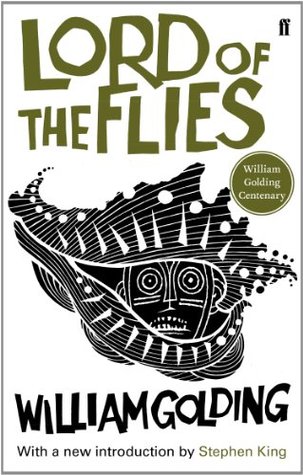
Lord of the Flies – a review

Thursday_horizons

Today’s review post is of a book read for the Insecure Writer’s Support Group (Book Club). I read William Golding’s 1954 novel Lord of the Flies in February, and this is my belated addition to the group’s discussion. This novel was chosen by club members for how the author used symbolism throughout the story.

LordofFlies18964701

Lord of the Flies

by

William Golding

At the dawn of the next world war, a plane crashes on an uncharted island, stranding a group of schoolboys. At first, with no adult supervision, their freedom is something to celebrate; this far from civilization the boys can do anything they want. Anything. They attempt to forge their own society, failing, however, in the face of terror, sin and evil. And as order collapses, as strange howls echo in the night, as terror begins its reign, the hope of adventure seems as far from reality as the hope of being rescued. Labelled a parable, an allegory, a myth, a morality tale, a parody, a political treatise, even a vision of the apocalypse, Lord of the Flies is perhaps our most memorable tale about “the end of innocence, the darkness of man’s heart.”

Review 4.5 stars

It’s hard to review a classic that has been around in many ways all my life from novel to screen. My first reaction was that it’s a gritty and a difficult read that may be literary in style, but the messages are there. The beast lives so why should kids be immune to its power? Yes, it could be written in other ways, – and it has been. But I understand the author’s intent (as does Stephen King).

In Lord of the Flies, symbolism is everywhere, from the moment a group of schoolboys are stranded on an uncharted island along an inevitable path to the heart-wrenching climax. As we meet the boys, each one is unique and typical of certain English schoolboys – like myself. Yet each one is an archetype that plays a specific role – none more so than Ralph, Piggy, Jack and Simon. Their distinct appearances add to their character and their roles as symbols.

The early scenes realistically show the boys forming groups, their personalities coming out in how they make friends – and in how they can quickly hurt the vulnerable people like Piggy. Tragic to see that bullying still exists today, although it is more often exposed – perhaps. (I was bullied but never like Piggy is.) However, at an early stage, it seemed that Piggy should be in charge, as the most grounded – the rational symbol of common sense…even if Ralph took that role in survivor’s eyes.

There were vivid images to establish the differences – from the choirboys like black-feathered creatures to the innocent, distracted young’uns. Sometimes, the imagery and description might feel heavily applied, but that can work if the reader lets the complexity carry their imagination to another level.

Golding paints images that show the multi-facets of symbols – like fire being the tool that nurtures society but also destroys. There is a cruel irony in the role that the signal fire plays and how the novel deals with the possibility of rescue.

Simon was crafted as both the hermit and the seer, just as the reader gets the sense that the beast is always real.

It’s hard writing this without spoilers just as it was hard to ignore the memories of Peter Brook’s film as I read, knowing what came next – and I know that the actors’ experiences mirrored the novel. Yet that inevitability as the story unfolds added to the fear that the writing engendered. There’s always that sense of the Lord of the Flies, aka the beast being unrelenting and still alive today. This might have been written in 1954 and a product of an era, and yet we live with the same underlying terrors.

Maybe our self-awareness, as portrayed most notably in Jack, has kept us from stumbling over a precipice and fuels progression as well as dangerous fascination. There is some dialogue at the end that hinted at adults not having the answer. Perhaps there is something in innocence after all.

So, a hard book to enjoy in the entertainment sense, but Golding as a master craftsman does incite a multitude of thoughts. That alone is worth four or more stars.

Story – four stars

Setting/World-building – four stars

Authenticity – five stars

Characters – five stars

Structure – five stars

Readability – four stars

Editing – four stars


Is the paw is mightier than the pen?

I have been interviewed by my author friend, Kristina Stanley about my writing and the pets in my life. There were fun questions as well as one that made me think. What do you think?

Discover more about me here: Pens, Paws, and Claws would like to welcome Roland Clarke to the blog!

The Last Wish – a review

Thursday_horizons


Yesterday, I posted about my favourite A to Z post which was about the game, The Witcher 3: The Wild Hunt. Today, I’m doing a review of the short stories that brought that world of Geralt of Rivia into being. Sadly, although I read a great deal of fantasy, I had failed to encounter the creations of Andrzej Sapkowski – until now.

His first short story, “The Witcher” (“Wiedźmin”), also translated as “The Hexer” or “Spellmaker”, was published in Polish science fiction and fantasy magazine Fantastyka. By 2017, The Witcher series encompassed two collections of short stories (1992-1993) and five novels (1994-1999).

This is my review of the first collection of short stories.

LastWish

The Last Wish (Saga o Wiedźminie #1)

by

Andrzej Sapkowski,

Danusia Stok (Translator)

Geralt of Rivia is a witcher. A cunning sorcerer. A merciless assassin.

And a cold-blooded killer.

His sole purpose: to destroy the monsters that plague the world.

But not everything monstrous-looking is evil and not everything fair is good. . . and in every fairy tale there is a grain of truth.

The international hit that inspired the video game: The Witcher.

Review 5 stars

Although I read fantasy, I first encountered Geralt of Rivia in the video game, The Witcher 3: The Wild Hunt and as I explored this gaming world, I was inspired to discover Andrzej Sapkowski’s books – starting with this first collection of short stories.

The last story in the book deservedly took third place in a magazine competition and sowed the first seed that created a universe. I enjoyed these original stories, discovering Geralt’s origins in pre-game events. (And these stories are echoed in-game.}

The collection is assembled to reflect the chronology of Geralt’s life, although we have yet to learn many things – and I look forward to reading more books. Sapkowski creates a brilliant and exemplary framing structure for these stories that gives them more impact – and adds to the unfolding plotlines that I know develop. (This is a writing technique that I need to learn.)

Some amazing and complex characters are introduced, including the sorceress, Yennefer, whose life is woven into a complicated relationship with Geralt that opens great possibilities. And then there is Dandelion, the bard whose tales and exploits are something else amusingly different. These are origin stories perhaps before the Witcher-universe had fully-formed, but the characters are relatable.

The tales are rooted in heroic deeds – even if Dandelion has a habit of re-telling them differently. The author demonstrates that he has been inspired by folklore. However, while the echoed fairy stories have a germ of truth, this is a grimmer tradition than Grimm, in a cutthroat environment. There are the Slavic monsters that a reader might expect but other mythologies play their part, adding to a rich tapestry.

The world rings with the realism of bloody steel and fangs, the smells of soiled streets and tempting food. The era doesn’t feel static, even across so few stories. The times are changing and so are the people. Evolving? Maybe not – but sowing many seeds. This is a medieval world of superstition and persecution – and torn apart by discrimination that resonates today. Witch-burnings are inevitable, and nothing is black-and-white. Not all monsters are obvious or what they seem.

Is my interpretation coloured by exploring the game-world? Perhaps, but these are the roots of the legend that is Geralt of Rivia. I look forward to discovering how the writing evolved, and how the world of The Witcher builds in later stories and novels. This was definitely the place to start on my quest to enjoy how Sapkowski grew from a very good writer into a master craftsman.


Story – five stars

Setting/World-building – five stars

Authenticity – five stars

Characters – five stars

Structure – five stars

Readability – five stars

Editing – five stars

#AtoZChallenge #roadtrip 2018

a2z-h-small

This year, #AtoZChallenge Bloggers are being asked to pick ONE post from our #AtoZChallenge 2018 offerings and link it up to share.

The Road Trip – #roadtrip – is where bloggers continue to visit each other from May thru March. So, for me, that will be a chance to visit more of the #AtoZChallenge posts that I missed, especially of those visitors who managed the full A-to-Z. I even found some amazing new sites to follow, notably: Song A Day, a great music blog that is expanding my musical tastes (and inspired my 2019 #AtoZChallenge theme).

Plus, this informative folklore website, The Multicolored Diary, by Hungarian storyteller Zalka Csenge Virág, which delves into areas that fascinate me.

Folklore and mythology, as well as storytelling, are tied to many of my #AtoZChallenge posts, even if video games were the starting point.

When I was looking ahead to this road trip, in my #AtoZChallenge: Reflection, I hinted at what might be my favourite post and why, asking, “Will the writing-related research or the gaming-experience lift the award? H is for Hellblade or L is for Lord of the Rings? Or maybe something unexpected.”

Were you taken in by that red-herring?

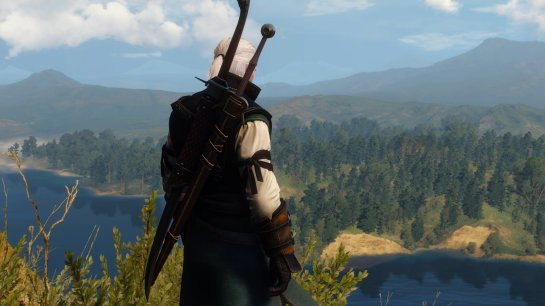
Did you guess that my favourite post was W is for Witcher?

the-witcher-3-wild-hunt-new-build-screenshot-2

Or why? Well, that had less to do with the average number of comments, and more to do with ongoing research into the world that has emerged from The Witcher series of fantasy novels by distinguished Polish fantasy author Andrzej Sapkowski.

There proved to be so much to explore, from a Slavic mythology and folklore tradition that I barely knew to a game that I had only just started – The Witcher 3: The Wild Hunt. That game is my current escape, not least for the Gwent card-game within that fantasy world, but also for its excellent storytelling. As my Thursday Creation Review tomorrow will show, Sapkowski’s first collection of short stories, The Last Wish pulled me into the world of Geralt of Rivia and laid the world-building foundations, sowing seeds that resonate within the games.

Did you rate any of my posts as a favourite?

Are you sharing a favourite of your own on this #AtoZChallenge Road Trip?

Have you found any stand-out posts that we need to read?

If you are on the Road Trip then please be sure to include this phrase in your comments:
“Stopping by from the #AtoZChallenge Road Trip!”

survivor-atoz [2018] v1 (1)

Doctor Mom Blog Hop

BLOG HOP


Today is the much-anticipated Blog Hop for Elaine Kaye’s latest children’s book, Doctor Mom. I can’t wait for my great-grandkids to give yet another seal of approval as they did with Pea Soup Disaster, the first in the Gregory Green series, and with Slow Poke, her debut. These kids are the best reviewers – and already Elaine Kaye fans.

So, let’s have a fanfare with cake, ice-cream and fireworks for Doctor Mom.

cover


Title: Doctor Mom

Author: Elaine Kaye

Genre: Picture Story Book

Ages: 5-8 years

BLURB: It’s Saturday, and Gregory Green can’t wait to have fun with his dad on the riding lawnmower, but something is wrong. Sammy, his teddy bear and best friend, won’t get out of bed. Gregory is worried when he sees Sammy’s left leg is torn. This is a case for Doctor Mom! Can they fix Sammy? And just how did Sammy get hurt in the first place?

PRAISE FOR DOCTOR MOM:

“Doctor Mom is an adorable story that shows how Moms can fix anything—even a torn limb on a beloved teddy bear! Children will enjoy the lovable little bear who needs a stitch or two and his boy who plays dress-up as a doctor.” – Wanda Luthman, award-winning author of Little Birdie Grows Up

“A sweet and heartfelt tale kids can easily identify with, and all of that with a wonderful touch of magic.” – Tonja Drecker, reviewer at Bookworm for Kids

BUY LINK:

AMAZON


Elaine Kaye

ABOUT THE AUTHOR:

 Elaine Kaye first created Gregory Green after her son, who loved her homemade pea soup, thus inspiring the story Pea Soup Disaster. Doctor Mom is the second book in A Gregory Green Adventure series and highlights something all moms and children can relate to; a beloved stuffed animal in need of a repair.

Kaye has worked as a library assistant and teacher’s assistant in elementary schools in the Sunshine State. She currently lives in Florida, but she has called Michigan; Honolulu, Hawaii; and Okinawa, Japan home.

She is a grandmother of three boys.

Website / Etsy Shop / Goodreads

**

MOTHERLY MEMORIES

My mother has been in my thoughts as we have just celebrated Mother’s Day, here in the US on May 13th – Mothering Sunday back in the UK was earlier in the year on March 11th. Anyway, for this blog I got the chance to bathe in those motherly thoughts as the hop-hostess – thanks Chrys Fey – set me a wonderful goal:

“Prompt: Share a favourite memory you have of your mom. Or just share a picture of your mom that you cherish. Or you can do both!

Image

I have two specific pictures of my mum, Nidia – or Mummy as we called her – and the one above releases so many specific memories.

It was taken in May 2005 at Borde Hill Horse Trials by a veterinary surgeon friend, Tony Warr. I was co-organiser of this event at the family estate, and my mother was very supportive, especially as I had already been diagnosed with MS – multiple sclerosis – five years earlier. That support had to be strong as despite the MS, I had been determined to revive the horse trials that had been cancelled in 2001 due to the horrendous foot & mouth outbreak.

I was cutting back on my equestrian journalism career as the MS didn’t sit well with tight deadlines. Pacing myself and co-organising an event with a long lead was a better fit, especially living with a mother that backed me and, with her riding background, shared the dream. I remember going with her to other horse trials in the South East and sitting eating a picnic lunch watching the cross-country. And I remember Mummy polishing the trophies for the South East Eventers League, founded in 1995 by me and Ian Bareham – and so much more moments we shared.

That era came to an end for me and others, and sadly my mother passed in April 2013 – which still brings floods of tears. Borde Hill Horse Trials commemorated her with a beautiful flower box fence on the cross-country.

The family used this photo, that I had taken a few years earlier, as the cover of the Order of Service for the funeral of Juana Nidia Gereth Clarke – more memories flood out.

555492_423761374305002_567484029_n

Check out the other story in the MOM BLOG HOP!