#IWSG – When do you know your story is ready?

Insecure Writers Support Group Badge

Apologies for the long silence, but the long journey from North Wales to Idaho was amazing and exhausting = another post when I recover. For now, I will say that my health is still low and I have been sleeping in my wheelchair – not recommended – as I can’t stretch out on a normal bed. Scary medical details next time and cool pictures arriving in New York by sea.

Golden sunrise clouds and rising sun above sea , Atlantic Ocean

Anyway, I’ve finally got online to post for Insecure Writer’s Support Group Day:

October 5 Question: When do you know your story is ready?

My stories tend to be plotted in detail so I know most of the twists and endings. Revisions address holes and errors, especially when I remember to use critique partners, writing groups, or editors. I tend to be guided by their comments as to when the story is ready or finished.

However, in the last resort I know I’m finished when I start crossing my ‘I’s and dotting my ‘t’s.

*

The first Wednesday of every month is officially Insecure Writer’s Support Group Day. We post our thoughts on our own blogs. We talk about our doubts and the fears we have conquered. We discuss our struggles and triumphs. We offer a word of encouragement for others who are struggling.

Please visit others in the group and connect with my fellow writers.

Let’s rock the neurotic writing world!

Our Twitter hashtag is #IWSG

And be sure to check out our Facebook group – https://www.facebook.com/groups/IWSG13/

Our revved up IWSG Day question may prompt you to share advice, insight, a personal experience or story. Include your answer to the question in your IWSG post or let it inspire your post if you are struggling with something to say.

The awesome co-hosts for the October 5 posting of the IWSG are Beverly Stowe McClure, Megan Morgan, Viola Fury, Madeline Mora-Summonte, Angela Wooldridge, and Susan Gourley!


Writing A Series

Today, as promised, I have the pleasure of welcoming Canadian author Kristina Stanley as my Guest on Writing Wings. Kristina is the author of “Blaze“, which is Book 2 in the Stone Mountain Mystery series. I recently reviewedBlaze” and I am looking forward to the release of Book 3, “Avalanche“, tomorrow.

Over to you, Kristina.

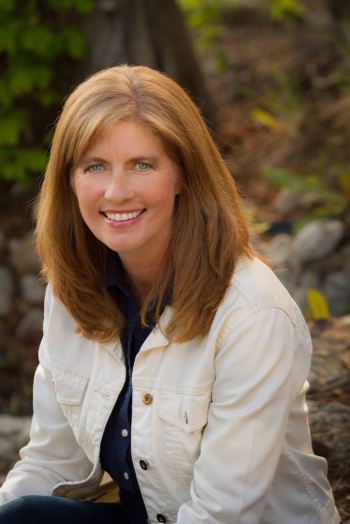
KS 75 High Res

Thank you, Roland for having me on your site today. It’s a pleasure to be here to write about writing.

Writing a Series

Can you imagine being buried alive in an avalanche? Did you know a buried person can hear rescuers searching for him but can’t speak about because the pressure from the snow is keeping his mouth closed?

This terrifying knowledge is what I first learned about avalanches when I was researching BENEATH THE SNOW. I spoke to a man who’d been buried and survived, of course. He was generous enough to share details that I wouldn’t have known otherwise.

THE HISTORY:

So why am I telling you about this when the title of the post is Writing a Series?

BENEATH THE SNOW was the working title for AVALANCHE. It’s the first novel I wrote. I then went on to write DESCENT and BLAZE (working title BURNT).

As I wrote the first novel, I wasn’t aware I was writing a series. When I finished the novel, I knew Kalin Thompson and Ben Timlin had more to say.

By the time I had three novels in the Stone Mountain series finished, I learned a great deal about writing. Working with my agent, together we decided BENEATH THE SNOW should be retitled as AVALANCHE and rewritten to be the third in the series instead of the first.

Kalin Thompson (the protagonist) needed more knowledge and experience at a ski resort if she was to investigate a large theft and the disappearance of her brother at the same time. The title changed because by then we knew all the titles in the series had to be a one-word titles.

THE BENEFIT OF WRITING 3 NOVELS:

Having three novels in a series written gave me the opportunity to develop the character arcs across the series, plant information in the first two novels that would lead to the third, and be consistent with the setting.

I also believe writing three novels before approaching a publisher gave me time to develop needed skills.

CONSISTENCY IN MARKETING:

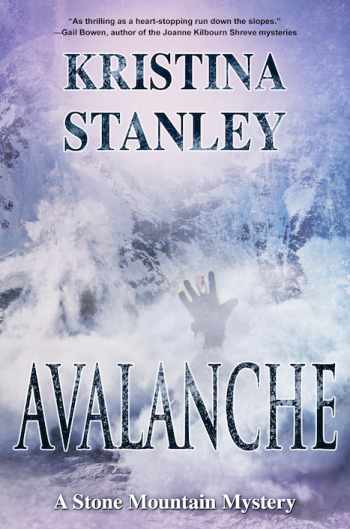
The covers for all three novels have a similar look and feel. The fabulous Ryan Doan created the artwork based on the setting of the series. The font, the text placement and cover layout are the same for each book. If a readers see my books on a shelf, they will know they go together. Because we knew ahead of time where the series going, the DESCENT cover was designed with the long term goal in mind.

Avalanche Cover Final

A Little About AVALANCHE

(To Be Released Tomorrow!):

On a cold winter morning, the safe at Stone Mountain Resort is robbed, and Kalin Thompson’s brother, Roy, suspiciously disappears. As Director of Security, Kalin would normally lead the investigation, but when her brother becomes the prime suspect, she is ordered to stay clear.

The police and the president of the resort turn their sights on Kalin, who risks everything to covertly attempt to clear Roy’s name. As threats against her escalate, she moves closer to uncovering the guilty party. Is Kalin’s faith in her brother justified? Or will the truth destroy her?

A Little About Kristina Stanley:

Kristina Stanley is the best-selling author of the Stone Mountain Mystery Series. Her first two novels garnered the attention of prestigious crime writing organizations in Canada and England. Crime Writers of Canada nominated DESCENT for the Unhanged Arthur award. The Crime Writers’ Association nominated BLAZE for the Debut Dagger. Her short stories have been published in the Ellery Queen Mystery Magazine and The Voices From the Valleys anthology. She is also the author of THE AUTHOR’S GUIDE TO SELLING BOOKS TO NON-BOOKSTORES.

Before writing her series, Kristina was the director of security, human resources and guest services at a resort in the depths of the British Columbian mountains. The job and lifestyle captured her heart, and she decided to write mysteries about life in an isolated resort. While writing the first four novels, she spent five years living aboard a sailboat in the US and the Bahamas.

Find out more about her at www.KristinaStanley.com.


Links to the Stone Mountain Mystery Series:

DESCENT: myBook.to/Descent

BLAZE: myBook.to/BlazebyKristinaStanley

AVALANCHE: myBook.to/Avalanche (on sale for a few more days only.)

Writers, Have You Rocked The Vault?

Yesterday, I posted a review of The Urban Setting Thesaurus: A Writer’s Guide to City Spaces, and today I’m celebrating its release date with authors Becca Puglisi and Angela Ackerman. Congratulations ladies. 🙂 

#myfavoritethesaurus

As this is there day, they have the comm, or the floor, here at Writing Wings.


It is a writer’s job to draw readers into the fictional story so completely that they forget the real world. Our goal is to render them powerless, so despite the late hour, mountain of laundry, or workday ahead, they cannot give up the journey unfolding within the paper-crisp pages before them.

Strong, compelling writing comes down to the right words, in the right order. Sounds easy, but as all writers know, it is anything BUT. So how do we create this storytelling magic? How can we weave description in such a way that the fictional landscape becomes authentic and real—a mirror of the reader’s world in all the ways that count most?

The Setting Thesaurus DuoWell, there’s some good news on that front. Two new books have released this week that may change the description game for writers. The Urban Setting Thesaurus: A Writer’s Guide to City Spaces and The Rural Setting Thesaurus: A Writer’s Guide to Personal and Natural Spaces look at the sights, smells, tastes, textures, and sounds a character might experience within 225 different contemporary settings. And this is only the start of what these books offer writers.

In fact, swing by and check out this hidden entry from the Urban Setting Thesaurus: Police Car.

And there’s one more thing you might want to know more about….

Rock_The_Vault_WHW1Becca and Angela, authors of The Emotion Thesaurus, are celebrating their double release with a fun event going on from June 13-20th called ROCK THE VAULT. At the heart of Writers Helping Writers is a tremendous vault, and these two ladies have been hoarding prizes of epic writerly proportions.

A safe full of prizes, ripe for the taking…if the writing community can work together to unlock it, of course.

Ready to do your part? Stop by Writers Helping Writers to find out more!


The Urban Setting Thesaurus: A Writer’s Guide to City Spaces

Tomorrow, June 13th, Becca Puglisi and Angela Ackerman are expanding their indispensable Thesaurus family by adding The Rural Setting Thesaurus: A Writer’s Guide to Natural and Personal Places and The Urban Setting Thesaurus: A Writer’s Guide to City Spaces.

“We are very excited about these books, and hope they’ll change how you think about setting and description. Sensory detail, a large part of each book, is an especially powerful way to draw readers into our story’s world, so we really need to get it right.”

For Angela’s taster visit: http://writershelpingwriters.net/2016/06/launch-mock-post/

However, here is my review of The Urban Setting Thesaurus: A Writer’s Guide to City Spaces.

Pageflex Persona [document: PRS0000046_00072]


As a writer, one of my most referred to books is The Emotion Thesaurus: A Writer’s Guide to Character Expression, so I was excited to find the Thesaurus family had new additions. I was not disappointed when I delved into The Urban Setting Thesaurus: A Writer’s Guide to City Spaces.

The Thesaurus is well laid out, with three parts, starting with some insightful and useful sections that explain why setting is so important, and how writers can enhance their creations by using it well. Setting is too often the poor relation of characterization and plot, but, as Ackerman and Puglisi demonstrate, it can lift your writing.

As they say, “We are very excited about these books, and hope they’ll change how you think about setting and description. Sensory detail, a large part of each book, is an especially powerful way to draw readers into our story’s world, so we really need to get it right.”

These eight sections include: The Setting as a Vehicle for Characterization; The Setting as a Vehicle for Delivering Backstory; The Crown Jewel of Settings: Sensory Details; and Common Setting Snags. These were informative, and made me aware of all the opportunities that I was missing in my own writing.

The main body of the Thesaurus contains a collection of over 100 diverse settings arranged under helpful headings: IN THE CITY; RESTAURANTS; RETAIL STORES; SPORTS, ENTERTAINMENT AND ART VENUES; and TRANSPORTATION. There is plenty of options to choose from when finding the most suitable location – for instance I choice the settings ALLEY, BAR, RACETRACK, and POLICE CAR as the starting points for my exploration, and just these locations led down a multitude of avenues.

Each setting contains a wealth of suggestions on the SIGHTS, inside and outside, although you definitely don’t need every one. These are just great prompts and reminders. Then you get the same on SOUNDS, SMELLS, TASTES, TEXTURES AND SENSATIONS.  The suggestions don’t stop there. There are POSSIBLE SOURCES OF CONFLICT, PEOPLE COMMONLY FOUND HERE, SETTING NOTES AND TIPS, and another thought-provoking paragraph that demonstrates techniques – the SETTING DESCRIPTION EXAMPLE for each setting.

For me, these EXAMPLEs demonstrated what was possible and the techniques available to a writer. Full marks to the authors for their well-crafter slices of fiction, that demonstrate what is possible with Settings.

Perhaps the feature that got me dashing along other avenues most, was the RELATED SETTINGS THAT MAY TIE IN WITH THIS ONE. This lists those other settings, and in the eBook links to them. So POLICE CAR took me to the Police station. Prison, Courtroom etcetera. It was hard to stop exploring this Urban world. If that’s not enough, there are even related settings in The Rural Setting Thesaurus: A Writer’s Guide to Natural and Personal Places, so the two books work in tandem.

The final part of the book contains tools to aid you in applying all these gems, as well as a list of all the Rural Settings, Recommended Reading, and more information on the first class team behind the Thesaurus family.

After this wordy exploration of the invaluable Urban Setting Thesaurus, I’m off to buy The Rural Setting Thesaurus: A Writer’s Guide to Natural and Personal Places as its sister thesaurus is a tempting taster of what to expect. Both have to be an essential part of any fiction writer’s library. They will be part of mine.

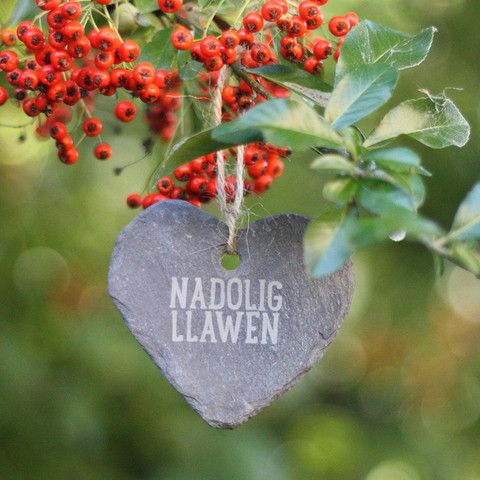
Nadolig Llawen

Nadolig Llawen. Dymuniadau gorau ar gyfer y Flwyddyn Newydd. Ffrindiau a chyd-awduron, Mai 2016 yn cael ei llenwi â chyflawniadau rhyfeddol.

Now the greetings are pronounced, no doubt incorrectly, I’m not planning to work on any resolutions – either today or next week, when I may be under the tree. What’s the point if my resolutions get scrubbed out in February.

And it’s likely that my other glaring errors will return somehow. As Billy Liar says, “I turn over a new leaf every day. But the blots show through.” [And if you haven’t read Keith Waterhouse’s novel, add it to your reading list.]

Fortunately, in this digital age I have a backspace key, a delete button, a built-in editor, and a conscience, so I can correct some blots on my landscape before anyone realises what I’ve done. One problem: I struggle with the editing process, and I know that 2016 might mean a lot of that.

So what is the point of this blog? Well to thank everyone for putting up with me for another year – and to repeat my earlier Welsh salutation, but in English this time.

Happy Christmas. Best wishes for the New Year. Friends and fellow writers, may 2016 be filled with wondrous achievements.

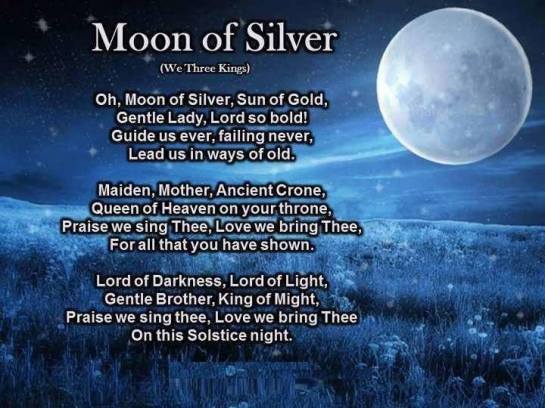
I should add my blessings for the Winter Solstice, as we are still at that point on this dark winter evening here in Wales. Spring is approaching, I hear.

12373266_561211560697521_7464267440370120283_n


How long was that novel?

InsecureWritersSupportGroup2

Which novel you ask? That bestseller? My novel? Well, in some ways that’s a general question, but today it’s personal, and my monthly post for Insecure Writer’s Support Group day – and my weekly post combined.

As November approached, I was wondering if reaching the NaNoWriMo winning tape was possible, and how I would managed to keep blogging. But now, 70,186 words later and a ‘Winner’, my worry/insecurity is different.

I haven’t finished this re-write of the first draft [Draft 1 Mark 2] of “Fates Maelstrom”, and, looking at where I am in relation to Draft 1 Mark I, there are another 32,000 words to write. Maybe more if I play out my new crazed idea and kill another character.

A crime novel with over 100,000 words, in a highly competitive market, felt wrong. Surely, Agatha Christie had been able to tackle far cleverer mysteries in less words.

It didn’t take me long to find truth in that fear. Agatha Christie’s novels range from 54,000 to 70,000. And looking at two more recent authors that I admire, Ellis Peters and Dick Francis, their books are shorter than some of the current writers that I read, like Linwood Barclay.

But then I looked at Famous Novels and saw the huge range, well-illustrated in word count order, from small gems to mammoth tomes, in this article, and in alphabetical order here.

However, my novel has to fit in with the norm, and current publishing requirements – even if I self-publish, somehow. I began to feel better when I found out that in the genre of ‘Mysteries and Crime Fiction’, the suggested figures are: Cozies 60,000-70,000; all others 80,000-100,000.

For those of you that want more detail, I found the following figures in posts by various people, including Jacqui Murray – Word Count by Genre. The posts also tackle all the key genres. For crime, the figures are:

  • cozy mysteries = 65k to 90k
  • mysteries, thrillers and crime fiction = A newer category of light paranormal mysteries and hobby mysteries clock in at about 75k to 90k. Historical mysteries and noir can be a bit shorter, at 80k to 100k. Most other mystery/thriller/crime fiction falls right around the 90k to 100k mark.

That gives me some leeway, at this stage, as I sense my mystery is veering away from a ‘cozy’, although it isn’t going to be an action-driven thriller.

2a1b43a6358cbace50a470473b87ac6f

Last stop on the research bus was Writers Workshop, and a post by Harry Bingham, a crime novelist and founder of the WW. (I’m slightly apprehensive now, as Harry has written a successful crime series, featuring a strange young female Welsh detective, Fiona Griffiths. And my series features a strange young female Welsh detective, Sparkle Anwyl. Uffern gwaedlyd – the bar has been raised.)

Anyway, Harry Bingham says, “Crime novels usually run a bit longer than women’s fiction, so although 75,000 words is fine as a lower limit, anything up to 130,000 words is pretty standard. Don’t go below 75,000 though.”

His post, not only looks at other genres, but also has links on what to do if your novel is too long. I will be using those suggestions come revision time – even just to remove the weasel words and the padding.

By any of the above measures, my debut novel “Spiral of Hooves” fell just inside the lower limit, coming in at 75,400 words. “Fates Maelstrom” may be nearer the upper end, around 90,000.

Insecurity postponed.

**

The first Wednesday of every month is officially Insecure Writer’s Support Group day. We post our thoughts on our own blogs. We talk about our doubts and the fears we have conquered. We discuss our struggles and triumphs. We offer a word of encouragement for others who are struggling.

Please visit others in the group and connect with other writers – aim for a dozen new people each time.

Purpose: To share and encourage. Writers can express doubts and concerns without fear of appearing foolish or weak. Those who have been through the fire can offer assistance and guidance. It’s a safe haven for insecure writers of all kinds!

Let’s rock the neurotic writing world!

Our Twitter hashtag is #IWSG

And be sure to check out our Facebook group –https://www.facebook.com/groups/IWSG13/

The awesome co-hosts for the December 2 posting of the IWSG are Sandra Hoover,Mark Koopmans, Doreen McGettigan, Megan Morgan, and Melodie Campbell! 

f443498f9932d9f1360c2f9945b0e896