#IWSG Celebration

Insecure Writers Support Group Badge

The month seems to have flown by – but then February does that, even when it leaps around…like a March Hare perhaps. That brings us around to another Insecure Writer’s Support Group monthly blog post and my chance to knock my erratic thoughts into the round edges of the IWSG voluntary guidance or prompt:

March 7 question – How do you celebrate when you achieve a writing goal/ finish a story?

Simple answer: sigh, fall asleep (again), eat a chocolate or eight, then escape into some online game.

(When I’m frustrated, the formula is similar, except the game must involve killing something – like hell-bugs, raptors or orcs.)

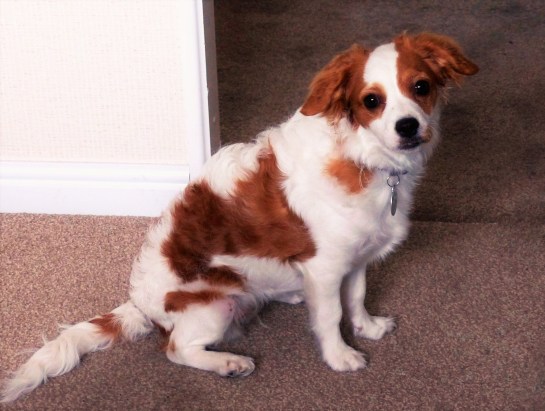
Convoluted answer: For this I wish that I had a time-travelling cat like Ellen, or a familiar with better writing skills. My dog, Quetzal just sits on my lap or in front of the desktop screen while my brain ties itself in knots- although she can inspire me.

Celebrations require real achievements and they are as rare as blue moons, especially when I keep going backwards. If my writing was like knitting, then it would be the scarf that I knitted decades ago for a girlfriend who a few years later recycled the wool.

So, where was I? Unravelling my insecurities.

My WIP is going backwards. My protagonist now has a deaf sister as well as her own struggles with being bisexual. This author wonders if he/I should choose a pen name – Roland Clarke is a prolific musician; maybe Rafael Clarke or Buxton. Revision is becoming a re-write.

I’ve fallen down a cliff, and my escape route seems to be a 1st person POV novella-exercise set before my WIP.

Is that a good idea or just another diversion? Can I celebrate even if the scribbles lead to a landslide?

What do you celebrate with?

*

The awesome co-hosts for the March 7 posting of the IWSG are Mary Aalgaard, Bish Denham,Jennifer Hawes, Diane Burton, and Gwen Gardner!

Purpose of IWSG: To share and encourage. Writers can express doubts and concerns without fear of appearing foolish or weak. Those who have been through the fire can offer assistance and guidance. It’s a safe haven for insecure writers of all kinds!

Every month, we announce a question that members can answer in their IWSG post. These questions may prompt you to share advice, insight, a personal experience or story. Include your answer to the question in your IWSG post or let it inspire your post if you are struggling with something to say.

Posting: The first Wednesday of every month is officially Insecure Writer’s Support Group day. Post your thoughts on your own blog. Talk about your doubts and the fears you have conquered. Discuss your struggles and triumphs. Offer a word of encouragement for others who are struggling. Visit others in the group and connect with your fellow writer – aim for a dozen new people each time – and return comments. This group is all about connecting! 

Let’s rock the neurotic writing world!
Our Twitter handle is @TheIWSG and hashtag is #IWSG

10542693_919553014725833_6267297834542028336_o1

Figuring out Fictionary


Fictionary-Logo-200-002-1

When I was approaching the final third of my fourth rewrite of Fates Maelstrom, I felt that I had ‘lost the plot’. I wasn’t sure what to do until I was introduced to the online editing tool Fictionary by their CEO and lead developer, mystery writer Kristina Stanley who said it might help.

Although my draft wasn’t finished, the rewrite in Scrivener had the final third of draft three as guide notes. Fictionary showed me how to create and upload a docx file from Scrivener.

From that file, Fictionary automatically generated the following overviews:

  • Story Arc
  • Word Count per Scene
  • Scenes per Chapter
  • Characters per Scene
  • Scenes Per Character
  • Point of View

Before I could start using the editing features, I was prompted to confirm my cast of thousands – well almost two hundred. Many of these were characters mentioned but who never appeared like ancestors and other relations.

WARNING: I made the error of deleting the ones that seemed minor – as well as names of mentioned authors like Agatha Christie, and I deleted names like Ford and Guinness. At this stage, variations/mis-spellings of a character’s name come up as different characters, so you can correct that – or note the errors.

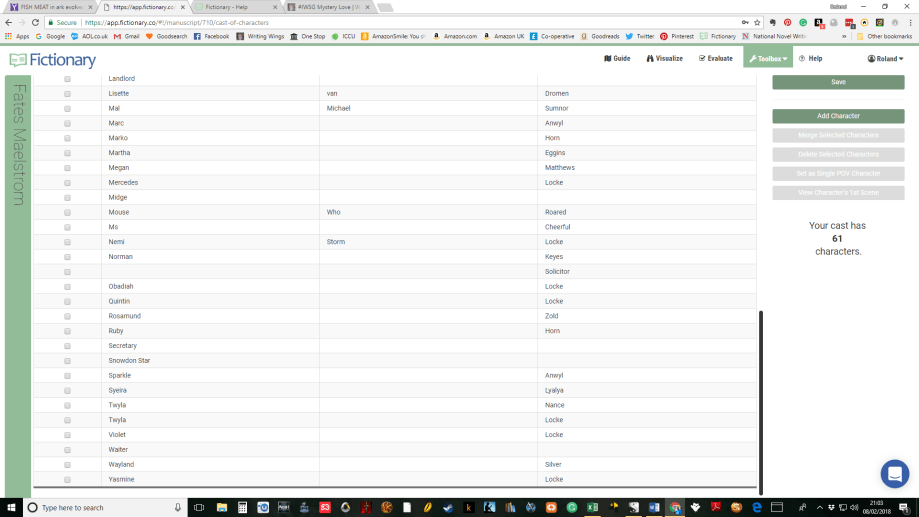
Here’s a screenshot of part of my Cast List.
2018-02-08

The Character function proved cleverer than me as in every scene you can select ‘Characters in the scene’ and ‘Characters mentioned’, but only the former is used for analysis in the above Overviews and the other ‘Visualize’ reports. Next time, I won’t be deleting those ‘unimportant’ names since they can help as well – I’ve had to add them back in.

This Cast list also shows where characters have similar names, so those clashes might be worth changing.

I like the way in Fictionary that as you evaluate each scene, the visualisation of your novel grows. I have only worked through some aspects of my scenes to tackle what I need to do, but that was enough to demonstrate the potential available.

In the words of Fictionary:

Fictionary helps you evaluate and edit your manuscript until you are satisfied your story works. The Visualize page lets you see your story like never before with automated reports such as the Story Arc.

The Evaluate page helps you consider key elements of fiction for Character, Plot, and Setting on a scene-by-scene basis. As you capture information for each element, Fictionary builds out your Story Map report.

You’ll alternate between Visualize and Evaluate until you’re happy with every scene in your manuscript. When your Fictionary edit is complete, you can Export your manuscript back to Word.

Hence, the following reports required me to consider and add information on my manuscript when I was evaluating my scenes:

  • Story Map
  • Scenes Opening / Closing Types
  • Purpose of Scene
  • Setting Elements Per Scene

As I said, I haven’t evaluated every element in many scenes but at a glance, the Visualize page began to show potential problems with my draft so I had to make some immediate amendments to lend some sense to my chaos.

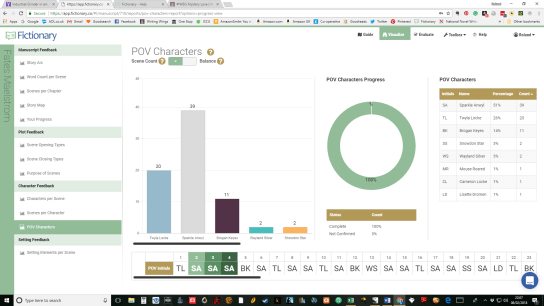
Let’s go back to my first shock – the cast of thousands. There was one omission – my main protagonist called Sparkle. Computer programmes get fooled by ordinary nouns as proper names – I know of a writer called Rose who has that problem with Dragon Naturally Speaking. Once Sparkle was recognised, I got this POV chart:
2018-02-08 (2)

Visualize is showing the three main POVs, my progress in confirming their scenes, the number of scenes they are in,  the percentage for each POV and at the bottom the scenes in novel order with the POV character identified. Ignore the POVs with two or less scenes as they are news reports or similar. From overviews like this, I began to see how I could take one POV character, Brogan Keyes – the purple column – and without losing the character, I could envisage a better plotline unfolding.

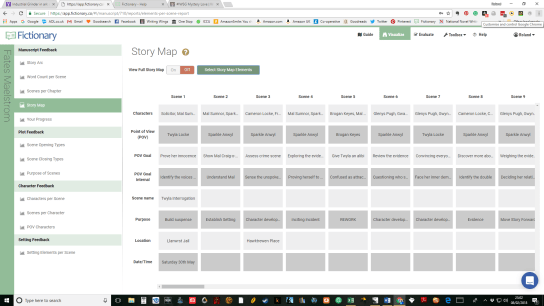
On the left of this Fictionary screenshot, you can see a list of all the elements that you can show reports on – too many to assess individually here. Let’s look at one of the main ones – the Story Map. This is where all your evaluated details end up, generating an overview that has so many applications. Ultimately it will help you see where the manuscript can be improved as you edit.
2018-02-08 (3)

There is a choice between the Full Story Map or just a selection as I have here. If I want, I can identify all the missing elements that are easy to fill in – like Scene Name, Location, and Date. The more information that I ‘identify’, the better the visualisation and the better my edit.

Adding scene names in the messed up third of the novel has already help me visualise how the plot is unfolding. I had created an Excel breakdown of the first half of the novel and was about to create an Aeon Timeline file as well, but Fictionary is creating a better variation, especially as the programme encourages me to assess each scene.

When I did the first Fictionary pass, I identified all the POV goals and every scene’s purpose – on Kristina Stanley’s recommendation. This proved to be a valuable step in identifying scenes that could be tightened or removed.

My Story Map has many blanks still, so I will be using the other elements to assess my manuscript, but I am already making a lot of sense of the novel with the help of Fictionary.

Here’s my opening scene on the Evaluation page, showing the text in the middle where you do the edits, the manuscript scene list on the left, and the key element tabs that feed the Story Map on the right.

2018-02-08 (4)

Please note that my scenes weren’t in chapters in Scrivener, only headings, so Fictionary created a Chapter for each scene – except when I had two or more scenes under one heading so that correctly became one chapter.

At most stages, there are quick ways of checking elements in a scene like here with ‘characters involved’ or ‘mentioned’ via the View Characters button. If there isn’t a way in-scene then I go to Visualize and try there. When you move between Visualize and Evaluate, those ‘tabs’ remain on what you were last looking at – and they update if you press the Save button.

Even with this scene, I have yet to complete every element but now that I know where I am going, I can rewrite the novel with the help of all the Fictionary tools. I have the choice to edit the draft in Fictionary and then export my finished manuscript, or if there are major changes go back to Scrivener as I’m doing.

This has been a mere glance at what this software offers, but I will continue to use it and learn about it along the way. Sometime in the near future, I will write another post about my experiences Figuring out Fictionary.

Bugs? More like omissions that are likely to be fixed. Sometimes I found missing aspects, but that is where being involved in an ongoing piece of software is so good. The developers are open to suggestions on things to add. Like one cool feature: from some Visualize reports you can activate a pop-up of the scene concerned. There were some places where I wanted this feature, but it wasn’t available – well not yet. When I asked about or suggested something, the change was either coming or my suggestion would be taken on board.

Another feature that would help, is being able to move scenes around. I do this quite often in Scrivener and the process works well. In Fictionary, I must create a blank scene then cut & paste – slower but it works. Again, that’s a suggestion that was taken on-board.

Beyond the guides on site, there are regular articles posted or sent to subscribers – like this post on The Purpose of a Scene:

https://kristinastanley.com/2018/02/08/ensure-the-purpose-of-a-scene-is-engaging-your-readers/

To get a taste of this online editing tool, you can sign up for a free 10-day trial as I did initially. Then you upload your 50,000+ word manuscript and start your Fictionary story edit.

And if you sign up by February 18th, 2018, you will be automatically entered in The Fictionary Finish Your Novel Contest hosted in partnership with FriesenPress.

Grand Prize – One lifetime Fictionary subscription and a $1999 FriesenPress Publishing Package.

Additional Prizes: $200 annual Fictionary subscription for 3 lucky writers!

Check out the details to enter the contest and check out this recommended online editing tool, Fictionary.

Four stars for this evolving software and five stars for the support team.

Fictinary_contest

#IWSG Mystery Love

Insecure Writers Support Group Badge

Today is the Insecure Writer’s Support Group monthly blog post and a chance to promote the Fictionary Finish Your Novel Contest.

First, the IWSG post:

February 7 question – What do you love about the genre you write in most often?

Although I write in various genres – mystery, SF/speculative, fantasy, alternative history and even children – Mystery must be the one that I write in most often.

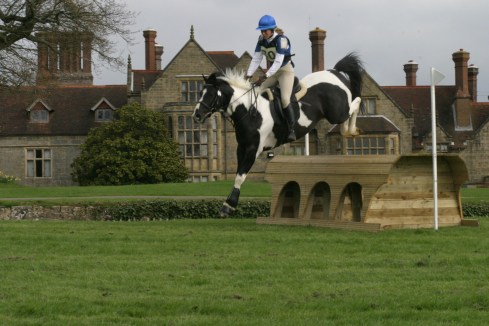
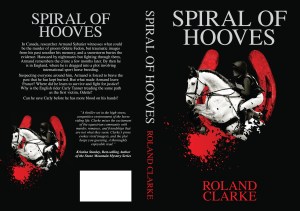
My debut was an equestrian mystery – Spiral of Hooves – so its sequels will be. My current series is a mystery/police procedural – Snowdon Shadows. Even draft novels in other genres have a strong mystery element.

Yes, I love a perplexing mystery and my mind enjoys devising the twists. When I read a good mystery, especially by a master like Agatha Christie, I try to outthink the ‘detective’ but usually fail. However, when I finish a great mystery novel, I like looking back to see how the story was crafted, for instance with the clues buried in the text at key points. Learning how to use red herrings, deceit, and well-timed distractions are something that I still need to take on board.

One of my favourite examples is Agatha Christie’s The Murder of Roger Ackroyd with its brilliant twist ending. How this was achieved is masterful and one reason why I keep writing and reading Mysteries. A modern favourite in a similar vein, and also a lesson in crafting a mystery, is Sally Quilford’s The Secret of Lakeham Abbey.

You can flick through my Book Reviews to see how many Mystery novels I read. What do you recommend? What genre do you read and/or write? And why?

*

The awesome co-hosts for the February 7 posting of the IWSG are Stephen Tremp, Pat Garcia, Angela Wooldridge, Victoria Marie Lees, and Madeline Mora-Summonte!

Purpose of IWSG: To share and encourage. Writers can express doubts and concerns without fear of appearing foolish or weak. Those who have been through the fire can offer assistance and guidance. It’s a safe haven for insecure writers of all kinds!

Every month, we announce a question that members can answer in their IWSG post. These questions may prompt you to share advice, insight, a personal experience or story. Include your answer to the question in your IWSG post or let it inspire your post if you are struggling with something to say.

Posting: The first Wednesday of every month is officially Insecure Writer’s Support Group day. Post your thoughts on your own blog. Talk about your doubts and the fears you have conquered. Discuss your struggles and triumphs. Offer a word of encouragement for others who are struggling. Visit others in the group and connect with your fellow writer – aim for a dozen new people each time – and return comments. This group is all about connecting! 

Let’s rock the neurotic writing world!
Our Twitter handle is @TheIWSG and hashtag is #IWSG

*

Fictinary_contest

I am currently using a brilliant tool for online editing my current WIP and I highly recommend it. Fictionary was developed for writers by writers and makes many of the tasks after writing an early draft much simpler.

If you sign up with Fictionary for a free 10-day trial by February 18th, 2018, you will be automatically entered for the contest to win a Grand Prize of a lifetime Fictionary subscription and a $1999 FriesenPress Publishing Path. There are also additional prizes – further details and sign-up at https://fictionary.co/Finish-your-novel-contest/

I will be doing an assessment of Fictionary in the next day or so, looking at the various elements that I have been using – or intend to use.


Mystery and Crime

Today is not only the first 2018 post for the Insecure Writer’s Group but also the Flaming Crimes Blogfest, so this is a double post – of sorts.

#IWSG – Schedule Mystery

Insecure Writers Support Group Badge

First, the January 3 IWSG question – What steps have you taken or plan to take to put a schedule in place for your writing and publishing?

In truth, nothing specific. 2018 in writing terms is in some ways a continuation of 2017’s objectives, or rather what my plan became in October when I decided to focus on my Snowdon Shadows series.

So, in November, I wrote draft one of ‘Ruined Retreat ‘(Book 3) and now I must finish the revision of Book 1, ‘Fates Maelstrom’. The only plan is devising some way – legal of course – to raise the funds to cover the editing stage; not easy when you are retired, on a limited budget and dealing with a chronic illness.

Maybe the bank robbery is a good plan. Call it research – if they catch me.

Now, that’s a plan. (Our dogs are complaining that it’s too complicated and I should stick to reading. Then, they fall asleep.)

*

The awesome co-hosts for this January 3 posting of the IWSG are Tyrean Martinson, Ellen @ The Cynical Sailor, Megan Morgan, Jennifer Lane, and Rachna Chhabria!

Purpose of IWSG: To share and encourage. Writers can express doubts and concerns without fear of appearing foolish or weak. Those who have been through the fire can offer assistance and guidance. It’s a safe haven for insecure writers of all kinds!
Posting: The first Wednesday of every month is officially Insecure Writer’s Support Group day. Post your thoughts on your own blog. Talk about your doubts and the fears you have conquered. Discuss your struggles and triumphs. Offer a word of encouragement for others who are struggling. Visit others in the group and connect with your fellow writer – aim for a dozen new people each time – and return comments. This group is all about connecting! Be sure to link to this page and display the badge in your post. And please be sure your avatar links back to your blog! If it links to Google+, be sure your blog is listed there. Otherwise, when you leave a comment, people can’t find you to comment back.

Let’s rock the neurotic writing world!
Our Twitter handle is @TheIWSG and hashtag is #IWSG

Every month, we announce a question that members can answer in their IWSG post. These questions may prompt you to share advice, insight, a personal experience or story. Include your answer to the question in your IWSG post or let it inspire your post if you are struggling with something to say.

**

Now, for the exciting part of my post.

Welcome to the Writing Wings ‘blog-stop’ for the

Flaming Crimes Blogfest

Flaming Crimes Blogfest Badge

 Prompt: What is something ridiculous you would save if there was a fire?

‘Wondering what to save if there was a fire’ has been in my head for most of my life, although I’ve been fortunate to never face the real thing. As Chrys Fey and others have said, fires are serious especially wildfires. But for this blog post, I’m thinking ‘off-piste’.

Beyond our two dogs, who would get out faster than me in my wheelchair, and the flash drive with my writing – my current notebook lives in the chair – there are some precious items but those could never be ‘ridiculous’. Like the 1957 leather-bound Holy Bible my late-mother gave my wife, and my late father’s 1932 copy of George Brooksbank’s Old Mr Fox.

As my eyes glance past the grandfather clock and inherited paintings – too heavy to save – I see our collection of cuddly toys. They have names and evoke memories – they are characters that need saving, but there are too many and they don’t come in a flash drive.

Earth to earth, ashes to ashes, dust to dust.

My wife will grab her daughter’s ashes but I’m taking the box with my cat Oliver’s – his painting by my late-mother is on the wall so I could take that.

Decisions, decisions. Dang the flaming heat is removing my options.

So, I grab the Waterford paperknife from my desk. Well’ it was a 50th birthday present from a horsey colleague and it will be useful when I stab my next victim.

What should I have saved?

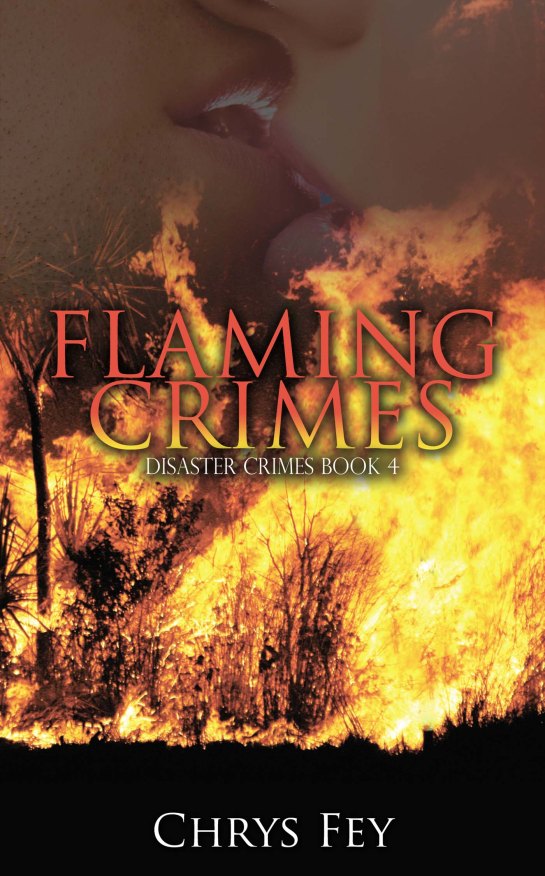
FlamingCrimes_w12192_ib

Series: Disaster Crimes #4
Page Count: 304
Digital Price: 4.99
Print Price: 16.99

Rating: Spicy (PG13)

BUY LINKS:

Amazon / Barnes & Noble

The Wild Rose Press

BLURB: Beth and Donovan are now happily married, and what Beth wants more than anything is a baby. Her dream of starting a family is put on hold as fires burn dangerously close and Donovan becomes a victim of sabotage.

Donovan escapes what could’ve been a deadly wreck. Their past enemies have been eliminated, so who is cutting brake lines and leaving bloody messages? He vows to find out, for the sake of the woman he loves and the life they’re trying to build.

Amidst a criminal mind game, a fire ignites next to their home. They battle the flames and fight to keep their house safe from the blaze pressing in on all sides, but neither of them expects to confront a psychotic adversary in the middle of the inferno.

Their lives may just go up in flames…

Chrys Fey - Cropped

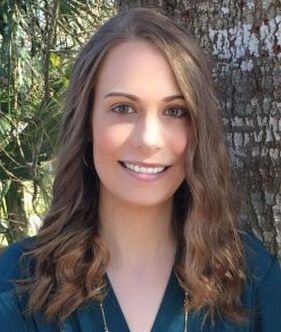
About the Author: Chrys Fey is the author of the Disaster Crimes Series, a unique concept blending romance, crimes, and disasters. She’s partnered with the Insecure Writer’s Support Group and runs their Goodreads book club. She’s also an editor for Dancing Lemur Press.

Author Links:

Website / Blog / Goodreads

Facebook / Twitter / Amazon


Here are the other Flaming Crimes Blogfest participants – Powered by Linky Tools

Click here to see what they saved…

Counting the Cost

o

I’ve been encouraged to keep going with my writing, but I have some questions. Unless I can answer those churning thoughts, the future looks vague.

What is the true cost of writing?

Does writing have a price, a value?

What is a true measure of a book’s worth?

I’ve been writing some book reviews so perhaps that is where the worth is measured – in writing a book that garners five-star reviews. I have finally got my first review for the second edition of Spiral of Hooves and it was a five. Hopefully, there will be more as don’t reviews drive sales.

However, I know as a writer that writing a review is not easy. So, I’m grateful to those that bother. It’s only been two months since the new edition of Spiral of Hooves was released – plenty of time. And there are thirteen reviews from the first edition across Amazon US and UK.

The real question is: Will the sales cover the financial costs of releasing that second edition. At present, probably not, as I estimate that I need one thousand sales to cover the costs so far. What were those costs?

Formatting      $50

Cover               $160

Publishing       $17.19 [proof copy]

Promotion       $226.59

Giveaways      $488.05

TOTAL           $941.83

Can I afford to publish another book? How much of my costs will even a small press cover? Can I justify the cost that is not included above thanks to some very generous editors?

Even if I find a small press – or an agent – I still need to be prepared to find an editor. I can go cheap, but that is foolish. The cost of a professional editor can be a $1,0000 or more. My current WIP, Fates Maelstrom, will require at least one if not three ‘sensitivity readers’ at $250 each. There is good editing software – like Fictionary – to reduce the number of paid edits, but that costs as well. $1,500 and rising.

Bottom line is that I’m retired and bills like medical, insurance, and HOA, as well as household expenses, are the priorities – followed by helping the family.

So – what should I do?

Give up writing?

Find a benefactor?

Write another 50k first draft for NaNoWriMo next month to postpone the decision?

11fdb57492e7757e58f98bcf5c62d8c1

A great line-up

219_1971

On Monday, August 7th I will be surfing the internet to launch ‘Spiral of Hooves’ – the second and improved edition, now available for the first time in paperback.

I will drop by Goodreads throughout the day but be partying over on Facebook where I have gathered a great line-up of talented authors to discuss everything from eventing to highwaymen, from Africa to England, and from inspiration and research to writing tools and marketing.

There will be drinks, cake, biscuits (or cookies) and everyone is welcome from readers, riders, writers, to horses and pets. Please feel free to invite your friends. And have fun. There will be prizes including a signed copy of ‘Spiral of Hooves’.

The novel is available as a paperback and on Kindle at Amazon.

Roland_PBookV1

The Launch Party starts at 0900 MDT (0800 PDT – 1100 EDT – 1600 BST – 1700 CEST) on Facebook and the schedule opens with my welcome to the ‘Spiral of Hooves’ launch and then I will chat about my writing life and horses.

BreathOfAfrica

1000 MDT (1700 BST) – Jane Bwye, has a lifetime of amazing adventures, in Kenya and other countries, and as a dressage judge, horsewoman, and author of ‘Breath of Africa’, ‘Grass Shoots’, and ‘I Lift Up My Eyes’. Visit her at https://jbwye.com/ and learn much more. Jane knows the world behind ‘Spiral of Hooves’, including many of the horse events described, and at the launch party, she will have some fascinating tales to share.

144_4470

1100 MDT – Roland Clarke is back to discuss settings and reality, and to introduce his next guest and friend.

Shaman's Drum

1130 MDT (1930 CEST) – Ailsa Abraham is a lady of many talents and careers, including shaman and author of many books including ‘Shaman’s Drum’, ‘Alchemy’, and ‘Attention to Death.’ Visit her at https://ailsaabraham.com/ and delve deeper into her writing and her adventurous life in France and at the Bingerbread Cottage. At the launch party, Ailsa will lead you into her world of mystery and beyond, lifting the veil to other worlds.

60e20e62d97062453d34936a266c3e5f

1200 MDT – Roland Clarke will return to the party and to the mysterious appearances driving our imaginations.

Pageflex Persona [document: PRS0000040_00067]

1400 MDT (1600 EDT) – Donna Beckley Galanti is an author and writing coach. She is the author of the paranormal suspense Element Trilogy and the children’s fantasy adventure Joshua and The Lightning Road series. Visit her at www.elementtrilogy.com and www.donnagalanti.com and then check out her 4 Proven Steps to Connect with Readers Right Now (Before Your Book Even Comes Out!) www.createyourawesomecommunity.com. At the launch party, Donna will chat about her wealth of experiences from writing to inspiring other writers and readers.

2a1b43a6358cbace50a470473b87ac6f

1500 MDT – Roland Clarke will be back – if he has left – and he will discuss how he sculpts his ideas into readable draft novels, what is in his scribbling pipeline and the crafting tools he uses.

Blaze_27218007

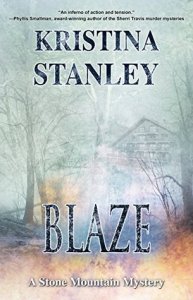
1600 MDT (1500 PDT) – Kristina Stanley is the best-selling author of the Stone Mountain Mystery series based on her experience at Panorama Mountain Village, B.C. as the director of human resources, security and guest services. The series comprises Descent, Blaze and Avalanche. Her latest novel, Look the Other Way, is a suspense thriller based on her experience sailing in the Caribbean.  Visit her at https://kristinastanley.com/ and at https://fictionary.co/ an indispensable writer’s tool. At the launch party, Kristina will discuss research and real life inspiration.

34dc602d00000578-3622523-after_a_treacherous_journey_across_the_north_atlantic_ocean_the_-a-64_1464895479448

1700 MDT – Roland Clarke will move from this world to an alternate timeline, before introducing his last guest, whose historical novel is his current engrossing read. Yes, Roland reads historical fiction and enjoys escaping to other ages.

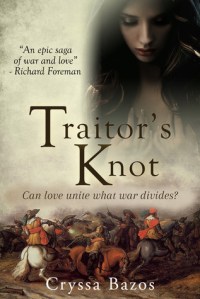
Traitor's Knot1800 MDT (2000 EDT) – Cryssa Bazos is published by Endeavour Press, and her debut novel ‘Traitor’s Knot’, is a sweeping tale of love and conflicted loyalties set against the turmoil of the English Civil War. A member of the Romantic Novelist Association, the Historical Novel Society, and the Battle of Worcester Society, her articles and short stories have appeared in Canada and the UK. She is a co-editor and contributor of the English Historical Fiction Authors site and blogs at https://cryssabazos.com/.  At the launch party, she will talk about combining two of her fascinations: the 17th century and highwaymen.

P1010138

Highwaymen must mean horses. So that sets Roland Clarke up for the final fences at 1900 MDT until 2100 MDT – a chance for you to discuss any burning topics and attempt to win a final prize.

Don’t miss the ‘Spiral of Hooves Online Re-launch’ Party on Monday, August 7th.

121_2131