Would YOU miss me?

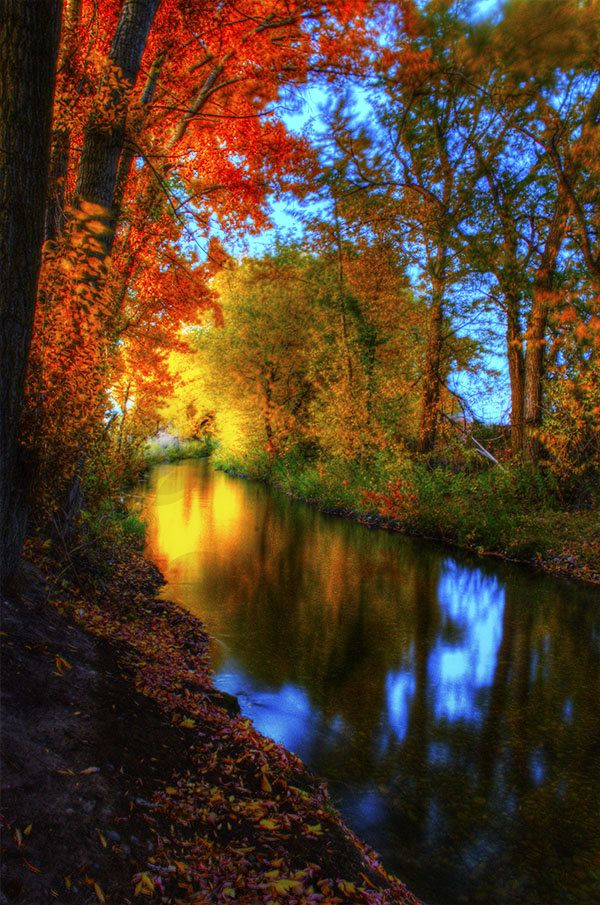
From DeviantArt. For if one link in nature's chain might be lost, another might be lost, until the whole of things will vanish by piecemeal.

From DeviantArt. For if one link in nature’s chain might be lost, another might be lost, until the whole of things will vanish by piecemeal.

Or rather would you miss my weekly blog posts? I was trying to think of something worthwhile to blog about, but kept rejecting the crass ideas.

Who wants to read about “A World without Shakespeare”?

Why pose the question “What sort of heroine rules your mind?” in any genre?

What is the point of musing about “Autumn Fruitfulness” if it’s not the “Colours of Fall”?

My inspirational “The Difference between Critique and Beta Readers” will be next Wednesday’s IWSG monthly post.

So I reached the conclusion that I wouldn’t write anything, and then see whether anyone noticed. Shtako! I’ve written something after all.

But what next?

The Candle

There was a single twinkling candle on my chocolate fudge sundae. One candle for another year older, if not a year healthier. Friday August 7th 2015 was a turning point – well it felt that way for my stomach.

It churned and squirmed along with my head as we drove through the lush green Welsh scenery, across the mountains between Harlech and Bodnant. I hadn’t felt so car sick since I was a child – not physically sick, just feeling rotten. Is this because I’m into my second childhood?

But the journey was worthwhile as the food was delicious at the Bodnant Welsh Food Centre, which is “set in the heart of the Conwy Valley and surrounded by the stunning scenery of Snowdonia”. Best part was browsing their farm shop, and being tempted to buy some tasty treats from chili chocolate to locally sourced beef sausages. What happened to the vegetarian? Disgraceful – or not?

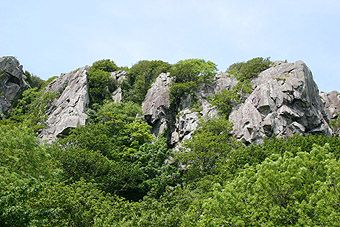
I did get to glimpse odd bits of the scenery on the way home. I needed to, as the fictional setting for “Fates Maelstrom” is in this locality, about 10 miles south-west of Bodnant and on the edge of Snowdonia. Through the mists of car sickness, I caught sight of some crags like the one above Crag-o-Niwl, my fictional Welsh village.

There's a crag in there somewhere! Craig Bwlch y Moch poking up out of a dense forest of rampant vegetation above Tremadog. Photo: Al Leary

There’s a crag in there somewhere! Craig Bwlch y Moch poking up out of a dense forest of rampant vegetation above Tremadog. Photo: Al Leary ~ http://www.groundupclimbing.com/newsitem.asp?nsid=185

So overall it was a good birthday, despite the childhood throwback, and a day that I won’t forget.

What next then? Well other than a birthday in Idaho on August 7th 2016. That depends on the emigration process to the USA, which entails many hurdles.

That candle also threw a light on one aspect of my writing future: where this Blog goes from here.

At the moment, I manage to blog once a month, in the IWSG monthly post on the first Wednesday. However, I feel that the posts should be more regular, for instance once a week – possibly on Monday or Tuesday.

If I go to that new schedule, then I need a new theme, as my intermittent ramblings don’t come up to scratch or muster.

There are three possibilities:

white-dragon-medium

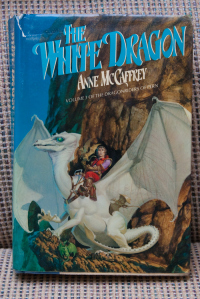
  • Inspiring writers – a weekly blog about authors that have inspired me with their writing. The post would include my favourite books by those writers. I envisage choosing a crime/mystery writer one week, such as Dick Francis or Linwood Barclay. Then a SF/Fantasy writer the next. Like Charles de Lint or Roger Zelazny. I could intersperse these posts with interviews with published writers that I am online friends with. This is the simplest option, and more akin to the A to Z Challenge, but much more laid back.
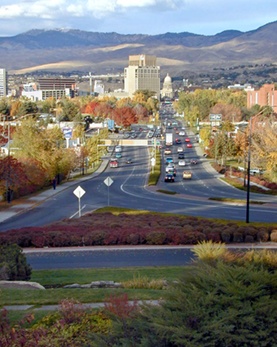
  • Boise Skyline

    Boise Skyline ~ Copyright: http://www.visitidaho.org/photos/

    Moving to the USA – a weekly blog about the process that my wife and I are going through in trying to get to Idaho, USA. It could address the hurdles as well as the breakthroughs, and the prospects that await us. This would be more of a diary with a few suggestion for others undertaking the same expedition. I’m not sure that this would work as a weekly post, but with so many hurdles it could.

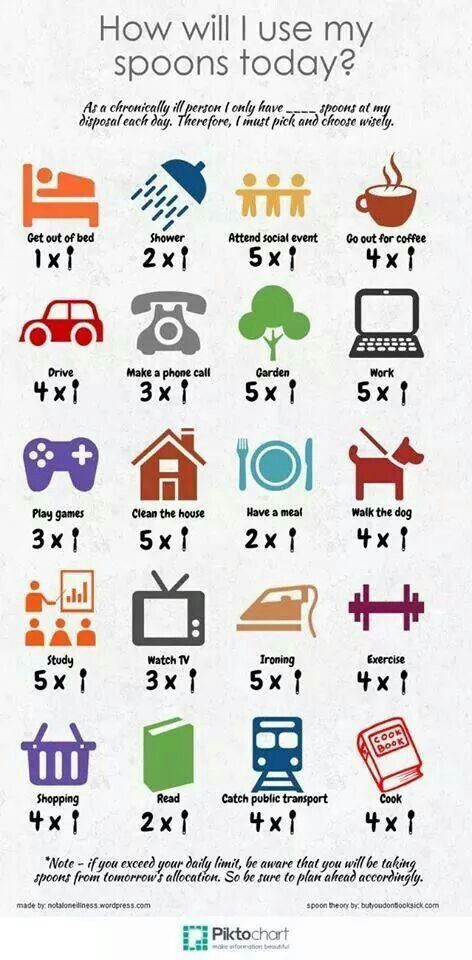
  • fd6a0b9306bea4eb33c76f2f4578481b (1)Living with Multiple Sclerosis – a weekly blog that is a chance for me to explain the condition, vent about the MonSter, and perhaps help others. Much more seat-of-the-pants than the other two, and also the disability gives me good days and bad days. Of course, I can’t help mentioning the MonSter in other posts, especially the American ones. Of course, my health is a key reason behind the move.

Of course, I could intersperse these and do one per week, choosing whatever I was inspired to write. Call it Pick-n-Mix.

328a26c2f1cca551c77117d6ce3bd911

So what would you like to see me Blog about? Inspiring Writers, Moving to the USA, Living with Multiple Sclerosis, or ‘Pick-n-Mix’?

Was Beer the end of Mother’s Ruin?

When I was growing up, I was often told that my Quaker ancestors had helped bring an end to the repercussions of ‘Mother’s Ruin’ by promoting beer.

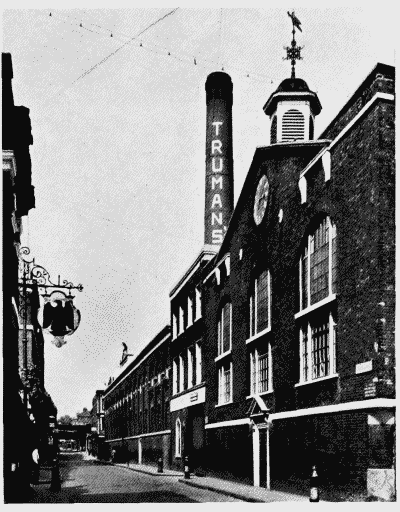
This made some sense as the family had been involved with the brewing firm of Truman Hanbury & Buxton.

eabb9a5c024588495588728792fc52d8 (1)

Plate 53: Truman’s Brewery, Brick Lane. | British History Online

So, when my writer friend Maureen Vincent-Northam asked me to write about those ancestors, I began wondering whether that was just a family legend, whether that would be an interesting starting-point. Was there was some truth behind the story?

Read the rest here on Maureen’s website.

Lessons learnt for next year’s A to Z Challenge

A-to-Z Reflection [2015] - Lg

2015 A to Z Blogging Challenge Reflections

Reflecting on how I survived the Challenge is hard, but I do know that I’m wearing the T-shirt as I write – and I’m okay.

This post will be shorter than others as I suspect that you have had to read too many of my words during.

I realised as the month unfolded that my posts were too long, although I hope they were informative about ‘The War of 1812’. The research will be useful when I eventually get back to my novel “Seeking A Knife”, although I need to concentrate on the novel preceding it in the Snowdon Shadows series.

Writing the posts and updating/amending them as I went along took too long, and left me with too little time to visit many other bloggers, even some of my regular haunts – apologies.

Those I did visit regularly and enjoyed were:

Tasha’s Thinkings – an example of how to do A to Z and have fun

Alex Cavanaugh – the Ninja Captain is always worth visiting but how does he do it?

Magic Moments – an Indian perspective from Pratikshya Mishra, often looking further East

if I only had a time machine – Second World War insights

The Old Shelter – information that I never knew about Roaring Twenties America

Insecure Writers Support Group – succinct and insightful; and one of the guiding lights

There were other blogs that I dropped by, but not on a regular basis like these. Over time I intend to visit some more, but at the pace I do things it will take a few months. (My wheelchair goes faster than my fingers or my mind.)

So inspired by the way that others approached this challenge, and encouraged by the way that it has been organised, I am now looking forward. Next year I will plan better, and choose a short post theme – letters of the alphabet.

93c82ca40bf511a22386762cd902f2c9

Just kidding. Not sure what I will do but will be something easier for everyone, especially passers-by. Suspect that the window-shoppers take one look and run.

For more reflections by other blogging survivors, visit here.

PREVIOUS A TO Z POSTS

Details on my 2015 A to Z theme and a linked list of posts can be found on my A to Z Challenge page, which also has a linked list of my 2014 posts.

F is for First Nations

F

The War of 1812 was a turning point for the First Nations, being the last conflict in north-eastern North America in which their participation was important, if not critical.

The peace treaty of 1783, which concluded the American Revolution, saw the ceding of all lands west of the Ohio River to the United States. However, the British still saw the Indian nations as valuable allies and a buffer to its Canadian colonies and they provided them with arms. Attacks on American settlers in the Northwest further aggravated tensions between Britain and the United States, and was one of the causes of the War of 1812.

In 1812 the Shawnee chief Tecumseh gathered 10,000 warriors, hoping to unify First Nations peoples into a confederacy with their own land and government. Tecumseh sided with the British not because he trusted them, but because he saw them as the lesser of two evils.

With the British fighting Napoleon Bonaparte in Europe, their troops in North America were stretched and the participation of native warriors was key to their campaign. However, First Nations warriors preferred to rely on stealth and spontaneous attack. They were puzzled and sometimes appalled by European tactics and by the extreme casualties the Europeans seemed to countenance. And the advocates of European tactics were unable to understand First Nation tactics, although they often turned the tide of battles.

Just prior to the British capture of Fort Detroit, communications across the Detroit River were all-important. Fast canoes manned by loyal First Nations warriors performed this task (Downriver Despatches by Peter Rindlisbacher).

Just prior to the British capture of Fort Detroit, communications across the Detroit River were all-important. Fast canoes manned by loyal First Nations warriors performed this task (Downriver Despatches by Peter Rindlisbacher).

The First Nations were largely responsible for the fall of Michilimackinac on 17 July 1812, and subsequent victories. However, due to the inefficiency of the British commander at Moraviantown, the brunt of the fighting fell to the First Nations and they were routed and Tecumseh was killed. His loss is hard to overestimate and with him went the remains of the nativist movement. Nevertheless, First Nations warriors continued to fight until the end of the war.

During negotiations for the Treaty of Ghent, the British did try to bargain for the establishment of an Indian Territory but the Americans resolutely refused to agree. The most that they would accept was the status quo before the war. But despite all their efforts, the First Nations were unable to recover their lost territory.

Three years after the death of Tecumseh, Indiana became a state and began to remove all First Nations from their traditional lands, a mass eviction that was repeated in state after state. In the South East, the Creek War came to an end,  and about half of the Creek territory was ceded to the United States, with no payment made to the Creeks. This was, in theory, invalidated by Article 9 of the Treaty of Ghent, thereby restoring to the Indians “all the possessions, rights and privileges which they may have enjoyed or been entitled to in 1811.” The British failed to uphold this, and did not take up the First Nations cause as an infringement of an international treaty. Without this support, the Indians’ lack of power was apparent and the stage was set for further incursions of territory by the United States in subsequent decades, such as the forced removal of the Choctaw and Cherokee under the Indian Removal Act of 1830.

Indian Removal Act 1830. A tragic time in American history that led to the long forced relocation of Indigenous Americans on what is appropriately called the "Trail of Tears".

Indian Removal Act 1830. A tragic time in American history that led to the long forced relocation of Indigenous Americans on what is appropriately called the “Trail of Tears”.

In Canada, the War of 1812 was the end of an era in which the First Nations had been able to keep their positions in return for service in war. Soon, with the growth of Upper Canada, the First Nations were outnumbered in their own lands. It was almost forgotten that if not for their support Upper Canada might very well have fallen into American hands.

In 1992, Georges Erasmus, Chief of the Assembly of First Nations, said, “You have a phrase called “Golden Age.” We do not want to be depicted the way we were, when we were first discovered in our homeland in North America. We do not want museums to continue to present us as something from the past. We believe we are very, very much here now, and we are going to be very important in the future.”
http://www.thecanadianencyclopedia.ca/en/article/first-nations-in-the-war-of-1812/

http://www.eighteentwelve.ca/?q=eng/Topic/9

PREVIOUS A TO Z POSTS:


A is for Anishinaabe ~ B is for Brock ~ C is for Coloured Corps ~ D is for Detroit ~ E is for Erie

A2Z-BADGE-000 [2015] - Life is Good

The brainchild of Arlee Bird, at Tossing it Out, the A to Z Challenge is posting every day in April except Sundays (we get those off for good behaviour.) And since there are 26 days, that matches the 26 letters of the alphabet. On April 1, we blog about something that begins with the letter “A.” April 2 is “B,” April 3 is “C,” and so on. Please visit other challenge writers.

My theme is ‘The War of 1812’, a military conflict, lasting for two-and-a-half years, fought by the United States of America against the United Kingdom of Great Britain and Ireland, its North American colonies, and its American Indian allies. The Memoirs of a British naval officer from the war is central to my novel “Seeking A Knife” – part of the Snowdon Shadows series.

Further reading on The War of 1812:

http://www.eighteentwelve.ca/?q=eng

http://www.theglobeandmail.com/globe-debate/the-war-of-1812-stupid-but-important/article547554/

A is for Anishinaabe


For the first day of my A to Z Challenge, I resisted choosing the arena for the War of 1812 – America. But first what caused the conflict? Unsettled issues between the British and the United States after the War of Independence were a factor, as was the Royal Navy attempting to press gang American sailors. However, the US also thought that American settlers in the territory that would become Canada would support their invasion across the border. Canada then consisted of the maritime colonies and parts of southern Quebec and Ontario.  But let’s start with the First Nations, who were the other major players on both sides.

A

A is for the Anishinaabe (Ojibwe, Odawa, Potowatomi), who were among two dozen tribal nations that were involved in the conflict.

When war was declared, there were 8,410 warriors of the Western Confederacy, who included Ojibwe, Odawa, Potowatomi, Huron, Shawnee, Mississaugas, Nipissings and Algonkians. The Anishinaabe made up 7,410 of this number, an overwhelming majority. Although the Shawnee war chief Tecumseh is most associated with the war, it was the Anishinaabe that formed the majority.

The tribes met for military and political purposes and maintained relations with fellow Anishinaabeg nations (Mississauga, Algonquin, and Nipissing) from Michilimackinac, an island between Lake Huron and Lake Michigan, It’s always been revered, although opinion is divided whether it is because the island is the turtle of creation or the place of origin of the spirits now called Bgoji-anishnaabensag.

Mackinac Island, William Dashwood – A Painting Commissioned by Robert McDouall

Mackinac Island, William Dashwood – A Painting Commissioned by Robert McDouall

Major General Brock, aware that there were not enough regular forces available to defend Upper Canada, suggested that capturing Michilimackinac and Detroit, from the US, would allay the suspicions of the natives who no longer trusted the British after the Battle of Fallen Timbers in 1796. The chiefs constantly recalled when the Americans overpowered the Western Confederacy and the British abandoned the retreating Anishinaabeg to massacre, by locking the gates to Fort Miami.

When Brock’s forces fought alongside the Anishinaabe to secure Fort Michilimackinac, many more of the western nations joined the British.

Throughout the war, the Anishinaabe were repeatedly told that their interests would not be forgotten when peace was made. So much so that at the conclusion of the War of 1812, the Odawa suggested that the British negotiators offer the Americans a greater quantity of Anishinaabe land on the mainland in order to keep Michilimackinac in their possession.

The possibility was there, but in the end the British meekly vacated Michilimackinac to the United States. It is totally conceivable that at least a portion of upper Michigan or Wisconsin could have been set aside as an “Indian country” as the British had promised. The mechanisms were in place but not the honour. This is why the Anishinaabeg say that “we did not lose the war but we lost the peace”.

Further reading on the Anishinaabe and the War of 1812:

http://activehistory.ca/tag/anishinaabeg/

http://activehistory.ca/2014/09/anishnaabeg-in-the-war-of-1812-more-than-tecumseh-and-his-indians/

http://en.wikipedia.org/wiki/Anishinaabe

http://www.theworldofgord.com/2012/11/heritage-toronto-talk-anishinaabe-first.html


A2Z-BADGE-000 [2015] - Life is Good

The brainchild of Arlee Bird, at Tossing it Out, the A to Z Challenge is posting every day in April except Sundays (we get those off for good behaviour.) And since there are 26 days, that matches the 26 letters of the alphabet. On April 1, we blog about something that begins with the letter “A.” April 2 is “B,” April 3 is “C,” and so on. Please visit other challenge writers.


My theme is ‘The War of 1812’, a military conflict, lasting for two-and-a-half years, fought by the United States of America against the United Kingdom of Great Britain and Ireland, its North American colonies, and its American Indian allies. The Memoirs of a British naval officer from the war is central to my novel “Seeking A Knife” – part of the Snowdon Shadows series.


Further reading on The War of 1812:

http://www.eighteentwelve.ca/?q=eng

http://www.theglobeandmail.com/globe-debate/the-war-of-1812-stupid-but-important/article547554/