G is for Ghent

G

The Treaty of Ghent), signed on December 24, 1814, was the peace treaty that ended the War of 1812 between the United States and Great Britain. The treaty restored relations between the two nations to status quo before the war — that is, it restored the borders of the two countries to the line before the war started in June 1812. The Treaty was approved by the Prince Regent (the future King George IV). It took a month for news of the peace treaty to reach the United States. American forces under Andrew Jackson won the Battle of New Orleans on January 8, 1815. The Treaty of Ghent was not in effect until it was ratified by the U.S. Senate unanimously on February 18, 1815.

The peace discussions began in the neutral city of Ghent in August 1814. As the peace talks opened American diplomats decided not to present President Madison’s demands for the end of impressment and suggestion that Britain turn Canada over to the U.S. They let the British open with their demands, chief of which was the creation of an Indian barrier state in the American Northwest Territory (the area from Ohio to Wisconsin). It was understood the British would sponsor this Indian state. The British strategy for decades had been to create a buffer state to block American expansion. The Americans refused to consider a buffer state and the proposal was dropped. Article IX of the treaty included provisions to restore to Natives “all possessions, rights and privileges which they may have enjoyed, or been entitled to in 1811”, but the provisions were unenforceable and in any case Britain ended its practice of supporting or encouraging tribes living in American territory.

In his 1914 painting A Hundred Years Peace, artist Amedee Forestier illustrates the signing of the Treaty of Ghent between Great Britain and the US, 24 December 1814 (courtesy Library and Archives Canada/C-115678).

In his 1914 painting A Hundred Years Peace, artist Amedee Forestier illustrates the signing of the Treaty of Ghent between Great Britain and the US, 24 December 1814 (courtesy Library and Archives Canada/C-115678).

After months of negotiations, against the background of changing military victories, defeats and losses, the parties finally realized that their nations wanted peace and there was no real reason to continue the war. Now each side was tired of the war. Export trade was all but paralyzed and after Napoleon fell in 1814 France was no longer an enemy of Britain, so the Royal Navy no longer needed to stop American shipments to France, and it no longer needed more seamen so impressment was not an issue.

Consequently, none of the issues that had caused the war or that had become critical to the conflict were included in the treaty.

The treaty thus made no significant changes to the pre-war boundaries, although the U.S. did gain territory from Spain. Britain promised to return the freed black slaves that they had taken. In actuality, a few years later Britain instead paid the United States $1,204,960 for them. Both nations also promised to work towards an ending of the international slave trade.

Canadian author, Pierre Berton wrote of the treaty, “It was as if no war had been fought, or to put it more bluntly, as if the war that was fought was fought for no good reason. For nothing has changed; everything is as it was in the beginning save for the graves of those who, it now appears, have fought for a trifle:…Lake Erie and Fort McHenry will go into the American history books, Queenston Heights and Crysler’s Farm into the Canadian, but without the gore, the stench, the disease, the terror, the conniving, and the imbecilities that march with every army.”

The Peace Bridge between Buffalo, New York, and Fort Erie, Ontario, opened in 1927 to commemorate more than a century of peace between the United States and Canada.

http://en.wikipedia.org/wiki/Treaty_of_Ghent

http://www.history.com/topics/treaty-of-ghent

http://www.eighteentwelve.ca/?q=eng/Topic/55

PREVIOUS A TO Z POSTS:

A is for Anishinaabe ~ B is for Brock ~ C is for Coloured Corps ~ D is for Detroit

E is for Erie  ~  F is for First Nations

A2Z-BADGE-000 [2015] - Life is Good

The brainchild of Arlee Bird, at Tossing it Out, the A to Z Challenge is posting every day in April except Sundays (we get those off for good behaviour.) And since there are 26 days, that matches the 26 letters of the alphabet. On April 1, we blog about something that begins with the letter “A.” April 2 is “B,” April 3 is “C,” and so on. Please visit other challenge writers.

My theme is ‘The War of 1812’, a military conflict, lasting for two-and-a-half years, fought by the United States of America against the United Kingdom of Great Britain and Ireland, its North American colonies, and its American Indian allies. The Memoirs of a British naval officer from the war is central to my novel “Seeking A Knife” – part of the Snowdon Shadows series.

Further reading on The War of 1812:

http://www.eighteentwelve.ca/?q=eng

http://www.theglobeandmail.com/globe-debate/the-war-of-1812-stupid-but-important/article547554/

http://www.shmoop.com/war-1812/

F is for First Nations

F

The War of 1812 was a turning point for the First Nations, being the last conflict in north-eastern North America in which their participation was important, if not critical.

The peace treaty of 1783, which concluded the American Revolution, saw the ceding of all lands west of the Ohio River to the United States. However, the British still saw the Indian nations as valuable allies and a buffer to its Canadian colonies and they provided them with arms. Attacks on American settlers in the Northwest further aggravated tensions between Britain and the United States, and was one of the causes of the War of 1812.

In 1812 the Shawnee chief Tecumseh gathered 10,000 warriors, hoping to unify First Nations peoples into a confederacy with their own land and government. Tecumseh sided with the British not because he trusted them, but because he saw them as the lesser of two evils.

With the British fighting Napoleon Bonaparte in Europe, their troops in North America were stretched and the participation of native warriors was key to their campaign. However, First Nations warriors preferred to rely on stealth and spontaneous attack. They were puzzled and sometimes appalled by European tactics and by the extreme casualties the Europeans seemed to countenance. And the advocates of European tactics were unable to understand First Nation tactics, although they often turned the tide of battles.

Just prior to the British capture of Fort Detroit, communications across the Detroit River were all-important. Fast canoes manned by loyal First Nations warriors performed this task (Downriver Despatches by Peter Rindlisbacher).

Just prior to the British capture of Fort Detroit, communications across the Detroit River were all-important. Fast canoes manned by loyal First Nations warriors performed this task (Downriver Despatches by Peter Rindlisbacher).

The First Nations were largely responsible for the fall of Michilimackinac on 17 July 1812, and subsequent victories. However, due to the inefficiency of the British commander at Moraviantown, the brunt of the fighting fell to the First Nations and they were routed and Tecumseh was killed. His loss is hard to overestimate and with him went the remains of the nativist movement. Nevertheless, First Nations warriors continued to fight until the end of the war.

During negotiations for the Treaty of Ghent, the British did try to bargain for the establishment of an Indian Territory but the Americans resolutely refused to agree. The most that they would accept was the status quo before the war. But despite all their efforts, the First Nations were unable to recover their lost territory.

Three years after the death of Tecumseh, Indiana became a state and began to remove all First Nations from their traditional lands, a mass eviction that was repeated in state after state. In the South East, the Creek War came to an end,  and about half of the Creek territory was ceded to the United States, with no payment made to the Creeks. This was, in theory, invalidated by Article 9 of the Treaty of Ghent, thereby restoring to the Indians “all the possessions, rights and privileges which they may have enjoyed or been entitled to in 1811.” The British failed to uphold this, and did not take up the First Nations cause as an infringement of an international treaty. Without this support, the Indians’ lack of power was apparent and the stage was set for further incursions of territory by the United States in subsequent decades, such as the forced removal of the Choctaw and Cherokee under the Indian Removal Act of 1830.

Indian Removal Act 1830. A tragic time in American history that led to the long forced relocation of Indigenous Americans on what is appropriately called the "Trail of Tears".

Indian Removal Act 1830. A tragic time in American history that led to the long forced relocation of Indigenous Americans on what is appropriately called the “Trail of Tears”.

In Canada, the War of 1812 was the end of an era in which the First Nations had been able to keep their positions in return for service in war. Soon, with the growth of Upper Canada, the First Nations were outnumbered in their own lands. It was almost forgotten that if not for their support Upper Canada might very well have fallen into American hands.

In 1992, Georges Erasmus, Chief of the Assembly of First Nations, said, “You have a phrase called “Golden Age.” We do not want to be depicted the way we were, when we were first discovered in our homeland in North America. We do not want museums to continue to present us as something from the past. We believe we are very, very much here now, and we are going to be very important in the future.”
http://www.thecanadianencyclopedia.ca/en/article/first-nations-in-the-war-of-1812/

http://www.eighteentwelve.ca/?q=eng/Topic/9

PREVIOUS A TO Z POSTS:


A is for Anishinaabe ~ B is for Brock ~ C is for Coloured Corps ~ D is for Detroit ~ E is for Erie

A2Z-BADGE-000 [2015] - Life is Good

The brainchild of Arlee Bird, at Tossing it Out, the A to Z Challenge is posting every day in April except Sundays (we get those off for good behaviour.) And since there are 26 days, that matches the 26 letters of the alphabet. On April 1, we blog about something that begins with the letter “A.” April 2 is “B,” April 3 is “C,” and so on. Please visit other challenge writers.

My theme is ‘The War of 1812’, a military conflict, lasting for two-and-a-half years, fought by the United States of America against the United Kingdom of Great Britain and Ireland, its North American colonies, and its American Indian allies. The Memoirs of a British naval officer from the war is central to my novel “Seeking A Knife” – part of the Snowdon Shadows series.

Further reading on The War of 1812:

http://www.eighteentwelve.ca/?q=eng

http://www.theglobeandmail.com/globe-debate/the-war-of-1812-stupid-but-important/article547554/

C is for Coloured Corps

C

Shortly after the Americans declared war on the British in June 1812, a 68 year old West African named Richard Pierpoint proposed the formation of a Black fighting unit, a “Corps of men of Colour.” A small militia unit was formed and became known as the Coloured Corps. Pierpoint, who had fought for the British in the American Revolutionary War, was one of over 50 who served in that unit throughout the war. While the commanding officers were white, six of the enlisted Black men served as sergeants or corporals and the rest served as privates. The number strength of the unit varied throughout the war due to fatalities, illness, desertions and the occasional addition of Black soldiers from other militias. There were usually between 25-30 men. The Coloured Corps saw action in some of best-known battles of the War of 1812. At the Battle of Queenston Heights, they participated in the recapture of the Redan Battery after the death of Major General Brock.

Coloured Corps Painting “Runchey’s Coloured Corps” by Cameron Porteous. Image courtesy of canadianartcards.com. 1812 1 20N.

Coloured Corps Painting
“Runchey’s Coloured Corps” by Cameron Porteous.
Image courtesy of canadianartcards.com. 1812 1 20N.

The Black population throughout British North America had much to fear, should the Americans win the war: those who were free men might find themselves sold into slavery. Those who were enslaved might have hoped that their service to the King as soldiers would win them their freedom.

There were both free and enslaved men in the Coloured Corps’ ranks. While Pierpoint gained his freedom for his service in a British provincial regiment, Butler’s Rangers, he was one of many who were free men when the Corps was founded. Robert Scott, a free man and farmer living in the town of York, joined up. George Martin, another Coloured Corps enlistee, had been a slave as a child, until his freedom was purchased by his own father who, like Pierpoint, had served in Butler’s Rangers.

However, others were not so lucky. “Jack” was a slave who had enlisted in the Coloured Corps, perhaps believing that by doing so he might gain his freedom. He was owned by a white slaveholder, W. A. Nelles, who requested that the military return “Jack” to him in March 1814. Prince Henry was the legal property of William Jarvis, the Provincial Secretary of Upper Canada. He appears on the muster roll in 1813. Was he signed up by Jarvis, or was he a ‘run-away,’ hoping his military service would gain him his freedom?

The Coloured Corps was a unique fighting unit within the British military, consisting of men who valued freedom and who were willing to fight to ensure freedom for themselves, their families and their country.

In 1813, the company was transformed into a unit of the Provincial Corps of Artificers and attached to the Royal Sappers and Miners. It served on the Niagara front during the war, and was disbanded a few months after the war ended.

5b2fc081af57b463cfdb9eb29cd481b6

1814 Corps of Artificiers. Image courtesy of Parks Canada.

The Coloured Corps was dismissed in March of 1815, a few months after the signing of the Treaty of Ghent. In the years following the war, Coloured Corps veterans worked hard at getting back pay and their pensions. The records indicate that these claims were still being settled well into the 1820s and early 1830s. In fact, getting what was owed was often left to their widows and children, as many Coloured Corps veterans died before receiving what was due to them.

The unit’s history and heritage is perpetuated in the modern Canadian Army by the Lincoln and Welland Regiment.

Further Information:

http://tubman.info.yorku.ca/educational-resources/war-of-1812/richard-pierpoint/coloured-corps/

http://www.thecanadianencyclopedia.ca/en/article/the-coloured-corps-african-canadians-and-the-war-of-1812/

http://en.wikipedia.org/wiki/Captain_Runchey%27s_Company_of_Coloured_Men

http://www.eighteentwelve.ca/?q=eng/Topic/25

http://www.pbs.org/wned/war-of-1812/essays/black-soldier-and-sailors-war/

A2Z-BADGE-000 [2015] - Life is Good

The brainchild of Arlee Bird, at Tossing it Out, the A to Z Challenge is posting every day in April except Sundays (we get those off for good behaviour.) And since there are 26 days, that matches the 26 letters of the alphabet. On April 1, we blog about something that begins with the letter “A.” April 2 is “B,” April 3 is “C,” and so on. Please visit other challenge writers.

My theme is ‘The War of 1812’, a military conflict, lasting for two-and-a-half years, fought by the United States of America against the United Kingdom of Great Britain and Ireland, its North American colonies, and its American Indian allies. The Memoirs of a British naval officer from the war is central to my novel “Seeking A Knife” – part of the Snowdon Shadows series.

Further reading on The War of 1812:

http://www.eighteentwelve.ca/?q=eng

http://www.theglobeandmail.com/globe-debate/the-war-of-1812-stupid-but-important/article547554/

Welsh Musings

Whitedragontwolegs

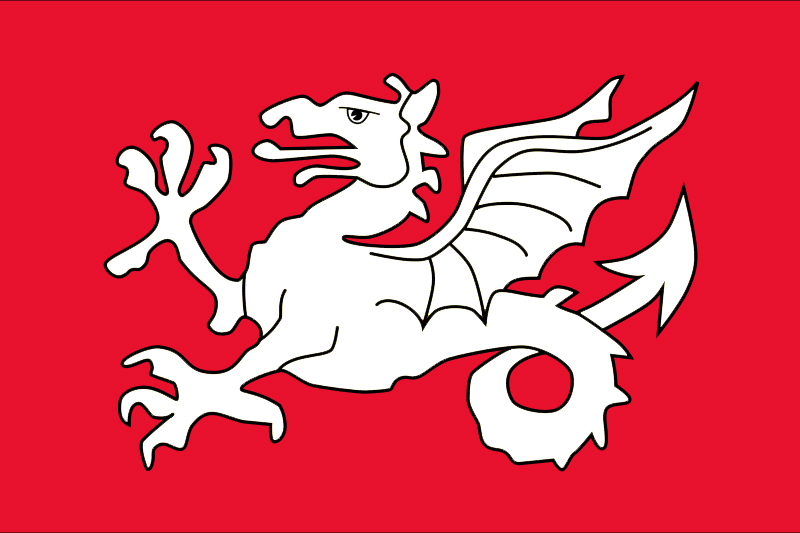
White dragon (wyvern). Adapted from wikipedia image of the wyvern flag of wessex. This two legged dragon (or wyvern) follows the style of the two dragons in Harold Godwinson’s death scene in the original 1066 Bayeux tapestry.

I’m not Welsh, either by heritage or because of where I was born. I don’t speak Welsh – I don’t think knowing “bore da” and “nos da” heralds more than the day or the night… and my struggle to pronounce other simple phrases.

I have to admit that I am a white dragon in red territory. I’m English with a touch of Scottish and a quarter Chilean blood to add some spice. An Englishman living in another country. Our puppy, Quetzal has more claim to being Welsh by birthplace – Garndolbenmaen.

However, my American wife, Juanita and I live in Wales. Our home on Pant Mawr Residential Park in Harlech has views that captivate us, giving life to the dreams that were impossible when linked to the States or Canada. One autumn weekend, in the light-sculpting rain, we made the decision to move.

22_PantMawr

Now, gazing at the mountain panorama watching the spring light etch shapes or soften edges enchants our eyes. There are days when the house is wrapped in a white blanket but the sea mist stirs us, its aroma rich with estuary life. Birds are everywhere dawn through dusk, calling for mates, warning off interlopers, and enriching our ears.

Our lives and our hearts are in Snowdonia. So my musings must be Welsh for this land inspires them.

I have a novel, “Fates Maelstrom”, which was set on the edge of Dartmoor in its first draft. However, the land plays a crucial part and it calls out for more mountains, wild terrain and mists. In this land of legends there have to be the roots of the novel’s new life. “Accused of murdering her grandfather and condemned by her Romany blood, Twyla Locke faces prejudice,  family tradition, a mysterious double and declining health as she fights to prove her innocence and save her eviction-threatened community.  The arrival of Brogan Keyes, an American journalist offering his assistance, seems too contrived, especially when he claims to know about the Lockes’ past. Twyla fears that she is the victim of a scam that can only end in her death.”

I will post my Welsh Musings on my Blog but the Welsh Musings page will be their home. From there you can travel to each post with ease. Join me on this adventure and share your thoughts.

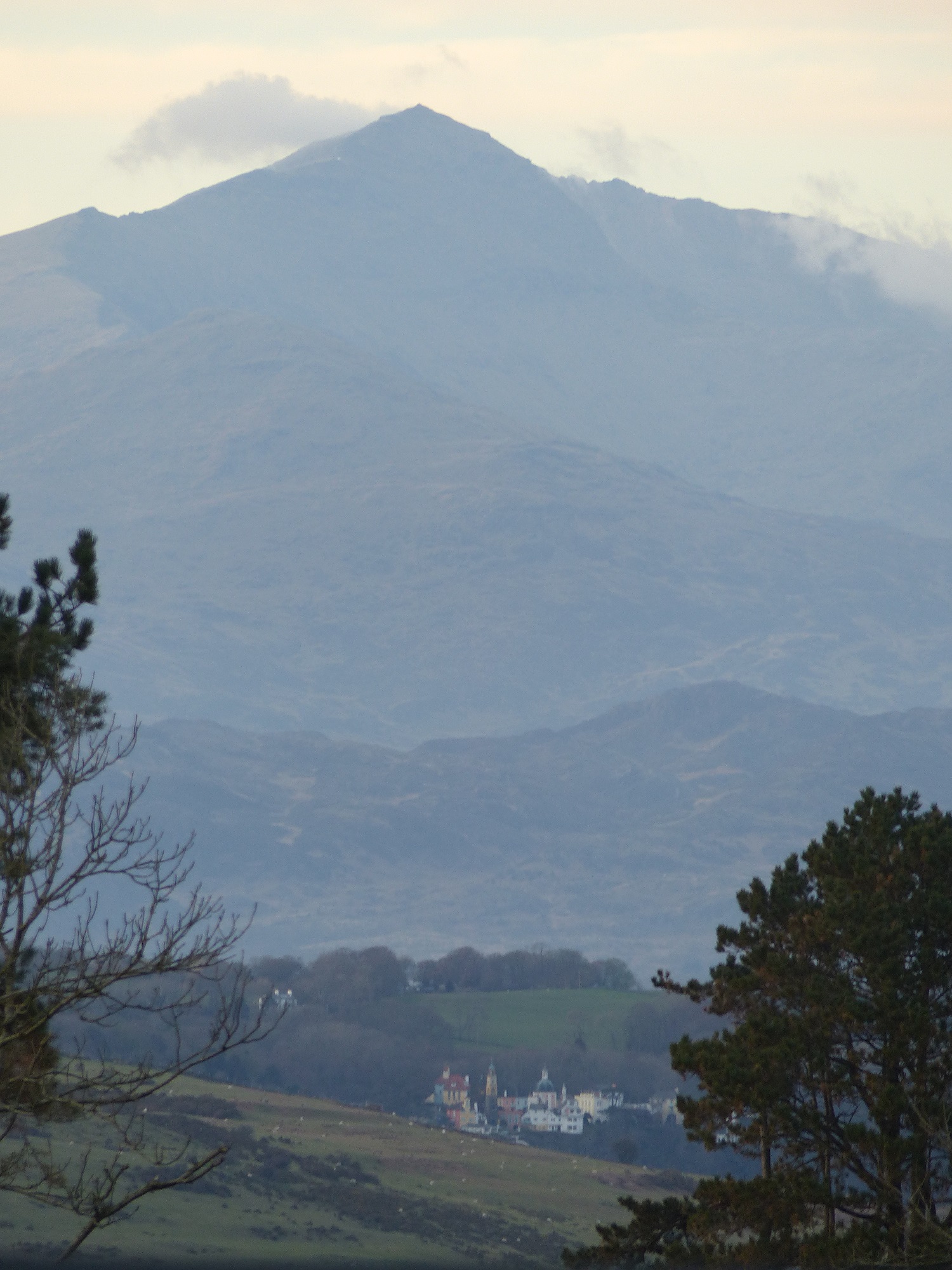
Snowdon & Portmeirion ~ Juanita Clarke

Snowdon & Portmeirion ~ Juanita Clarke

Z is for Zephyr

ZZ is for Zephyr: In the world of Gossamer Steel, the west winds or zephyrs allow Walen Sokol-Thorson to fly his solar plane east from Mojave to The Country, hoping to find his shaman grandfather Jarilo Sokol, and join the struggle to revitalise the Earth.

A zephyr is a wind that blows from the west, in an eastward direction. In Western tradition, it has usually been considered the mildest and most favourable of the directional winds. The Greek wind gods were each ascribed a cardinal direction from which their respective winds came

In Greek mythology, Zephyrus was the personification of the west wind and the bringer of light spring and early summer breezes; his Roman equivalent was Favonius. In the myth of Cupid and Psyche, Zephyrus was the attendant of Cupid, who brought Psyche to his master’s palace. Zephyrus appears in a number of Greek myths, and in classical art he is portrayed as a handsome winged youth.

As Wikapedia also says, Geoffrey Chaucer wrote of the “swete breth” of Zephyrus, and a soft, gentle breeze may be referred to as a zephyr, as in Shakespeare’s Cymbeline (IV, ii): “They are as gentle / As zephyrs blowing below the violet, / Not wagging his sweet head.”

Flora and Zephyr ~ William-Adolphe Bouguereau (1875) on display at Musée des Beaux Arts de Mulhouse

Flora and Zephyr ~ William-Adolphe Bouguereau (1875) on display at Musée des Beaux Arts de Mulhouse

Zephyr is also name of various ultra-light aerial craft from recreational kit planes to the lightweight solar-powered UAVs originally designed and built by the United Kingdom company, QinetiQ, and is now part of the Airbus High Altitude Pseudo-Satellite (HAPS) programme. . The military uses the vehicle for reconnaissance and communications platforms. Civilian and scientific programmes use it for Earth observation. The Zephyr 7 holds the official endurance record for an unmanned aerial vehicle for its flight from 9 July to 23 July 2010, lasting 336 hours and 22 minutes (2 weeks / 14 days).

Z is also for Zealot as the fanatics that want to control the world and also Zoroastrianism, one of the many religions surviving in Bhārata (India sub-continent).

Z ends these A to Z posts focusing on my Gossamer Steel world. However, they will become the basis for a new Gossamer Steel page – or should it be called Gossamer Steam? Is that more appropriate for my future world? Or Gossamer Dreams or Threads? What do you think?

Finally many thanks to all my visitors, the 2048 participants and the hosts of this amazing A to Z Challenge, especially Arlee Bird.

PREVIOUS A TO Z POSTS:

A is for Array ~ B is for the Blood-Marked ~ C is for Corylus Avellana ~ D is for Duskweald ~ E is for Energy ~ F is for Feeniks ~ G is for Garuda ~ H is for Herders ~ I is for Ithaka ~ J is for Junk ~ K is for Kitsune ~ L is for Lorelei ~ M is for Mojave ~ N is for Native~ O is for Outcasts  ~ P is for Punk ~ Q is for Quisling ~ R is for Ragnarök ~ S is for Seiðr ~ T is for Technology ~ U is for Urdu~ V is for Vidda ~ W is for Windsong ~X is for Xerarch ~ Y is for Yggdrasil

*

The brainchild of Arlee Bird, at Tossing it Out, the A to Z Challenge is posting every day in April except Sundays (we get those off for good behaviour.) And since there are 26 days, that matches the 26 letters of the alphabet. So this year on April 1 we blogged about something that began with the letter “A.” April 2 was “B,” April 3 was “C,” and so on. Please visit other challenge writers even after the month is over – there are a lot of us out there so there’s plenty to read and get you thinking.

See you around in May, although daily posts might slip to nearer weekly… unless I’m inspired.

A2Z-BADGE-000 [2014] (1)

Y is for Yggdrasil

Y

Y is for Yggdrasil: To the shaman that follow the  seiðr path in the world of Gossamer Steel, their practices revolve around Yggdrasil, the Nine Worlds, and the Well of the Norns,.

In Norse mythology, Yggdrasil is an immense tree that is central in Norse cosmology, in connection to which the nine worlds exist.

According to Encyclopedia Mythica, “Yggdrasil (“The Terrible One’s Horse”), also called the World Tree, is the giant ash tree that links and shelters all the worlds. Beneath the three roots the realms of Asgard, Jotunheim, and Niflheim are located. Three wells lie at its base: the Well of Wisdom (Mímisbrunnr), guarded by Mimir; the Well of Fate (Urdarbrunnr), guarded by the Norns; and the Hvergelmir (Roaring Kettle), the source of many rivers.

Four deer run across the branches of the tree and eat the buds; they represent the four winds. There are other inhabitants of the tree, such as the squirrel Ratatosk (“swift teeth”), a notorious gossip, and Vidofnir (“tree snake”), the golden cock that perches on the topmost bough. The roots are gnawed upon by Nidhogg and other serpents. On the day of Ragnarok, the fire giant Surt will set the tree on fire…”

"Die Nornen Urd, Werdanda, Skuld, unter der Welteiche Yggdrasil". The Nornic trio of Urðr, Verðandi, and Skuld beneath the world tree (called an oak in the caption) Yggdrasil. At the top of the tree is an eagle (likely Veðrfölnir), on the trunk of the tree is a squirrel (likely Ratatoskr), and at the roots of the tree gnaws what appears to be a small dragon (likely Níðhöggr). At the bottom left of the image is the well Urðarbrunnr. ~ Ludwig Burger (1882)

“Die Nornen Urd, Werdanda, Skuld, unter der Welteiche Yggdrasil”. The Nornic trio of Urðr, Verðandi, and Skuld beneath the world tree (called an oak in the caption) Yggdrasil. At the top of the tree is an eagle (likely Veðrfölnir), on the trunk of the tree is a squirrel (likely Ratatoskr), and at the roots of the tree gnaws what appears to be a small dragon (likely Níðhöggr). At the bottom left of the image is the well Urðarbrunnr. ~ Ludwig Burger (1882)

Y is also for Years of Dust & Death, the years of chaos and survival immediately after the apocalypse.

PREVIOUS A TO Z POSTS:

A is for Array ~ B is for the Blood-Marked ~ C is for Corylus Avellana ~ D is for Duskweald ~ E is for Energy ~ F is for Feeniks ~ G is for Garuda ~ H is for Herders ~ I is for Ithaka ~ J is for Junk ~ K is for Kitsune ~ L is for Lorelei ~ M is for Mojave ~ N is for Native~ O is for Outcasts  ~ P is for Punk ~ Q is for Quisling ~ R is for Ragnarök ~ S is for Seiðr ~ T is for Technology ~ U is for Urdu~ V is for Vidda ~ W is forWindsong ~X is for Xerarch

*

The brainchild of Arlee Bird, at Tossing it Out, the A to Z Challenge is posting every day in April except Sundays (we get those off for good behaviour.) And since there are 26 days, that matches the 26 letters of the alphabet. On April 1, blog about something that begins with the letter “A.” April 2 is “B,” April 3 is “C,” and so on. Please visit other challenge writers.

My theme is ‘The World of Gossamer Steel, the SF-fantasy setting for a series of short stories and novellas that portray the tales behind the MMORPG that is central to my crime novel ‘Wyrm Bait’.

A2Z-BADGE-000 [2014] (1)