The Strange Death of Fiona Griffiths – a review

Thursday_horizons

For today’s Thursday Creation Review, I’m catching up on an outstanding one from March when. I wrote a few words on Goodreads for this third book in the Fiona Griffiths series by Harry Bingham and promised a longer review.

This will be my third review of a Fiona Griffiths book – see also: Book 1. Talking to the Dead and Book 2. Love Story with Murders.

Anyway, as promised…
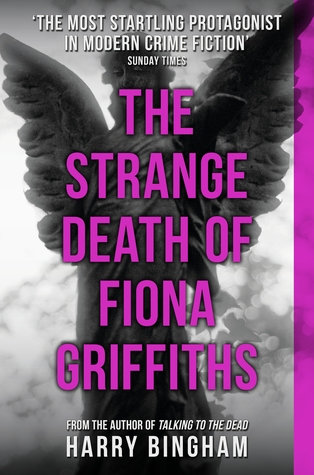
StrangeDeath

The Strange Death of Fiona Griffiths

(Fiona Griffiths #3)

by

Harry Bingham (Goodreads Author)

It started out as nothing much. A minor payroll fraud at a furniture store in South Wales. No homicide involved, no corpses. Detective Constable Fiona Griffiths fights to get free of the case but loses. She’s tasked with the investigation.

She begins her enquiries, only to discover the corpse of a woman who’s starved to death. Looks further, and soon realizes that within the first, smaller crime, a vaster one looms: the most audacious theft in history.

Fiona’s bosses need a copper willing to go undercover, and they ask Fiona to play the role of a timid payroll clerk so that she can penetrate the criminal gang from within.

Fiona will be alone, she’ll be lethally vulnerable – and her fragile grip on ‘Planet Normal’ will be tested as never before …

Review 5 stars

Fiona Griffiths is one amazingly quirky detective and this third book adds just another layer or two to her persona. Harry Bingham continues to throw curve balls in her path, starting with that title.

When DC Fiona Griffiths is tasked with investigating a minor payroll fraud, she discovers a vaster crime is lurking within the first. Fiona is asked to go undercover as a timid payroll clerk to penetrate the criminal gang from inside. But, being alone and vulnerable, challenges her ability to cope with reality.

I enjoyed this third book even more than the previous. Fiona continues to go down unexpected paths and evolve in unexpected ways. With her new persona, she is so complex and fascinating that there was room for her to explore this new world, discover different people – all well portrayed – and prove she can interact convincingly with criminals. If you have read the first two books, then you know that her father has criminal connections. However, she is always operating on a precipice – in reality, and in her mind.

As Fiona becomes Jessica, there is a clever change of pace that matches the new character – a new character that Fiona inhabits almost too well. The title began to make sense, but then the author added new twists and turns – new layers to his protagonist and that title.

The settings are crafted with a realism that matches the unfolding story – from London offices to remote Welsh farms. Gritty when the scene requires that but uplifting when the reader needs green spaces and strong breezes. A year in Fiona’s life covers so much territory.

Harry Bingham is a great believer in keeping readers thinking as well as the coppers and the criminals. He creates believable situations and demonstrates the depth of his research, even down to the details of forms that Fiona/Jessica handles and the electronics both sides use.

Nothing is ever easy or calm when undercover, and as Fiona/Jessica got deeper into this criminal world, I asked, “Will Jessica survive?” Prepare for another awesome ending.

I look forward to visiting Fiona Griffiths’ Cardiff/South Wales world soon, especially as she has ongoing questions to resolve.

Story – five stars

Setting/World-building – five stars

Authenticity – five stars

Characters – five stars

Structure – five stars

Readability – five stars

Editing – five stars
 

#TheIWSG – What Publishing Path?

Insecure Writers Support Group Badge

I’m using a lull in the chaos to write this month’s  Insecure Writer’s Support Group monthly blog post as the undisciplined step-great-grandkids are out raising hell in Walmart. My biggest concern is now my wife who fell badly yesterday (Sunday) because of one selfish kid and smashed her weak knee so she has to use one of my wheelchairs to get around. We will be glad when this extended month’s stay is over.

Anyway, on with this month’s question.

September 5 question – What publishing path are you considering/did you take, and why?

The future is a mystery as I’m unsure what path I will choose for my Snowdon Shadows mystery series. Is that why I’m evading the finish line by writing shorts about my heroine? Those tales may appear as a self-published collection or as freebies here. The first novel of the series – three drafted so far – I will offer to a few small presses when it is finished.

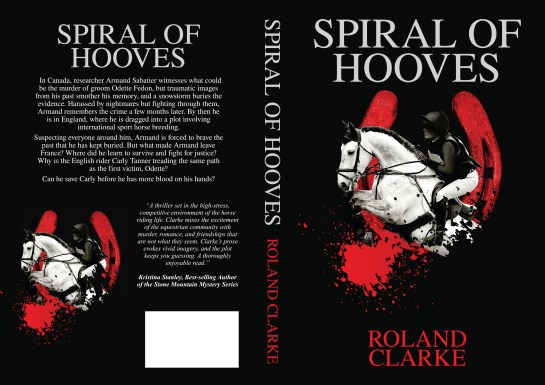
I’ve been down the small press path with my debut novel Spiral of Hooves, which was published as an e-book on Monday, December 9th, 2013, by Spectacle Publishing Media Group. When SPMG changed hands and I got the right back, I released a paperback revised edition on August 7th, 2017 – self-published via CreateSpace. Neither release garnered much attention, so I have little to base any future publications on, except—

  • The small press put me in touch with fellow authors and they were supportive; self-publishing was a lonelier path.
  • Self-publishing allowed me to choose more about the release like format and cover. And that meant assembling my own team.
  • Publicity with the small press was a mix of them and me – their suggestions and my workload.
  • Self-publishing was costlier overall – in theory, the profit margins were greater, but I never sold the copies needed to cover my costs.

Perhaps, I am writing for my pleasure alone, so publishing is not important?

Or I have a blockbuster rather than a money-pit.

What’s in your wallet/on your publishing schedule?

Roland_PBookV1

Cover design by Jonathan Temples. Cover photo by Nick Perry

**

The awesome co-hosts for the September 5 posting of the IWSG are Toi Thomas, T. Powell Coltrin, M.J. Fifield, and Tara Tyler!

Purpose of IWSG: To share and encourage. Writers can express doubts and concerns without fear of appearing foolish or weak. Those who have been through the fire can offer assistance and guidance. It’s a safe haven for insecure writers of all kinds!

Every month, we announce a question that members can answer in their IWSG post. These questions may prompt you to share advice, insight, a personal experience or story. Include your answer to the question in your IWSG post or let it inspire your post if you are struggling with something to say.

Posting: The first Wednesday of every month is officially Insecure Writer’s Support Group day. Post your thoughts on your own blog. Talk about your doubts and the fears you have conquered. Discuss your struggles and triumphs. Offer a word of encouragement for others who are struggling. Visit others in the group and connect with your fellow writer – aim for a dozen new people each time – and return comments. This group is all about connecting! 

Let’s rock the neurotic writing world!

Our Twitter handle is @TheIWSG and hashtag is #IWSG


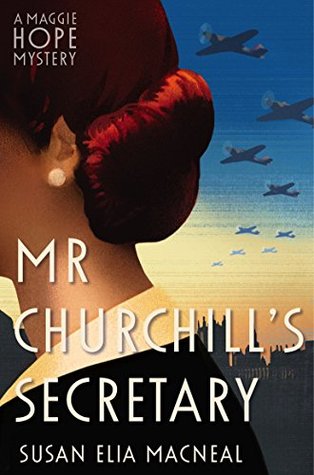
Mr Churchill’s Secretary – a review

Thursday_horizons

For today’s Thursday Creation Review, I’m reviewing a historical mystery set in World War II that I read after reading tempting reviews for two books from the ongoing series.

I’m hesitating from getting the next book for reasons stated in the review – and the length of the series so the costs in reading time and my dwindling book funds.

 MaggieHope

Mr Churchill’s Secretary

(Maggie Hope Mystery #1)

by

Susan Elia MacNeal (Goodreads Author)

London, 1940. Winston Churchill has just been sworn in, war rages across the Channel, and the threat of a Blitz looms larger by the day. But none of this deters Maggie Hope. She graduated at the top of her college class and possesses all the skills of the finest minds in British intelligence, but her gender qualifies her only to be the newest typist at No. 10 Downing Street. Her indefatigable spirit and remarkable gifts for codebreaking, though, rival those of even the highest men in government, and Maggie finds that working for the prime minister affords her a level of clearance she could never have imagined—and opportunities she will not let pass. In troubled, deadly times, with air-raid sirens sending multitudes underground, access to the War Rooms also exposes Maggie to the machinations of a menacing faction determined to do whatever it takes to change the course of history.

Ensnared in a web of spies, murder, and intrigue, Maggie must work quickly to balance her duty to King and Country with her chances for survival. And when she unravels a mystery that points toward her own family’s hidden secrets, she’ll discover that her quick wits are all that stand between an assassin’s murderous plan and Churchill himself.

In this thrilling debut, Susan Elia MacNeal blends meticulous research on the era, psychological insight into Winston Churchill, and the creation of a riveting main character, Maggie Hope, into a beautifully crafted mystery.

Review 3.7 stars

Fortunately, I didn’t read too many reviews of this novel first, so my enjoyment wasn’t tainted by watching out for potholes – historical or linguistic errors. Yes, I spotted some mistakes, but the plot swept me past them. So, I’m not going to nit-pick – and I know first-hand about American editors making changes for their larger market. (I fear my own writing lapses into Americanisms that might cause problems.)

Anyway, I suspended my disbelief and judgemental self to read about a clever young woman attempting to push past the restrictions imposed on women. The heroine, Maggie Hope has the qualifications to be more than just a typist for Winston Churchill, but that is how she starts out at 10, Downing Street. From there, she becomes involved in ‘a web of spies, murder, and intrigue’ earning promotion of sorts.

The plot unfolds through a series of events told from multiple POVs – almost too many by the end, though never a read-block – and the threads are brought together in a series of climactic episodes. Eventually, these lead into the over-long set-up for what has become not just a sequel but a series of books.

Were there plot holes? No, a few coincidences but life is full of them, and these felt explained, especially as some characters were being minimal with what they told Maggie – they have their reasons like there is a war on and “Careless talk costs lives”.

As a Brit ex-pat living in the US, I enjoyed reading about London during the war and recognised places from having lived there (and researched places destroyed in the Blitz). The fashion, music, art and celebrity references made me smile, especially as Maggie was part of a set on the fringes of high-society. Hobnobbing and name-dropping was rife throughout the world I grew up in. There were settings outside London that I recognised, although a few decades after these events – they came alive for me.

The characters, especially Maggie, felt realistic, even though emotions felt restrained in some cases. For instance, when death becomes more personal, there are demonstrations of grief – but not wailing. But even by the time the Blitz arrives, there is a sense of numbness for some – a numbness that shatters, perhaps not as overtly as we might portray it today. Stiff upper lip? And some of the secondary roles felt shallow in passing.

When the Luftwaffe arrived over London, the atmosphere changed, and the plot moved faster for me. Life must continue, including dancing, but the danger was more visible – and the smell pungent. So, characters are asking, ‘Who to trust?’ They become more conscious of Nazi sympathisers and more in their midst. Britain has older enemies and we slowly learn why in dialogue, memories and songs.

I always felt that Susan Elia MacNeal had done her research – for instance, when Frederick Ashton appeared- and despite the few potholes that I read around. Her ‘historical notes’ make it clear that this research was extensive, and she used numerous reputable sources, including her inspiration for Maggie and her fictional exploits in the real-life Churchill secretaries, Marian Holmes and Elizabeth Layton Nel.

This was a fast read, and I recommend this novel. Book 2 will have to wait as I have other historical novels to tackle first – and I need to forget those distracting reviews that I want to disagree with.

3.7 stars upgraded to 4.

Story – four stars

Setting/World-building – four stars

Authenticity – four stars

Characters – three stars

Structure – three stars

Readability – four stars

Editing – four stars


Can we change Youth Crime hearts?

Phrases trigger memories – well, they do for me. Recently, I took part in the WEP August Challenge and the theme was ‘Change of Heart’ and that clicked through to this memory-post. Before I revisit that memory, I want to congratulate everyone that took part in the Challenge and created such amazing pieces, especially the winners announced here.

Back to the memory that theme triggered:

In the early 1990s, Gaia Productions Ltd produced a short film and documentary entitled ‘Change of Heart’ that looked at the various means for tackling youth crime within Greater London.

Initiated by film editor, Gordon Greenaway, the focus of this production was the involvement of young ex-offenders and kids at risk from youth crime at all levels, from the cast to the editing.

The plot and script were workshopped with a young offenders’ rehabilitation group that worked with drama as a means of tackling the issues behind youth crime. The plotline that the group developed was to present a young offender that was struggling to choose the right life path but was plagued by his inner self. The final filming script was drawn up by the director, my ex-wife, Joanna Lehmann, and I was involved as the producer.

The group ‘auditioned’ for the parts and a number took roles, including the protagonist who was played by Louis, a black guy with natural talent. We ended up with a mixture of professional and non-professional – and some of the non-professionals had been convicted in the past. The parts played by professionals included the ones representing the dark tempter and the light conscience, portrayed by Dexter Fletcher (Band of Brothers, Dir. Bohemian Rhapsody) and Ian Dury (Raggedy Rawney, singer-songwriter of The Blockheads), and the protagonist’s parents.

‘Change of Heart’ was shot on 16mm film at various locations in London, with scenes varying from a family argument, to a petrol station hold-up and a ram-raid. For the crew, we had film industry head-of-departments – such as director, cameraman, designer and makeup – with youngsters assisting and learning. Some were ex-offenders, like the acting group, while others were from inner city groups tackling youth crime issues in their neighbourhoods. Gordon Greenaway edited the film with a trainee.

This ‘apprenticeship’ was also reflected in the documentary crew that shot their segment on Betacam. They covered behind the scenes of the film, and interviewed groups involved with rehabilitating young offenders such as a soccer club and a motor mechanic project, as well as Feltham Young Offenders Institution.

For many of the ex-offenders ‘Change of Heart’ proved a unique experience. For instance, Louis went on to become a professional actor with the help of Dexter and his agent mother. Another one in the cast, who had been convicted of armed robbery, played the petrol station attendant and found being on the ‘receiving end’ was a valuable lesson – better than any in prison. Some of the crew trainees worked for their ‘mentors’ on other productions.

As for the finished product, that was shown around community centres and also taken by a distributor. But the distributor failed to promote it – even when Ian Dury died a few years later of cancer and there were retrospectives on his creative work. Tragically, the final product was mislaid by the distributor, although most of the edited footage still exists – somewhere in London – and there are VHS copies.

However, for some it was still a change of heart.

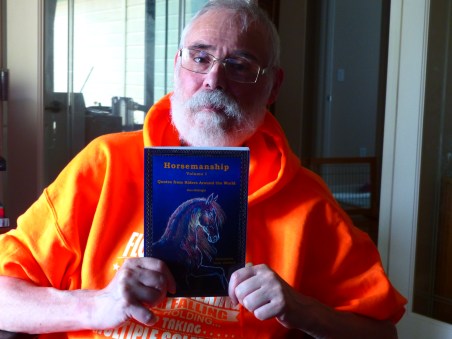
Horsemanship – a review

Thursday_horizons

Horses will always have a place in my heart, so today’s Thursday Creation Review is special in many ways. When my freelance equestrian writer friend, Gina McKnight collated some quotes from horse people around the world, I was interested, especially as these were an extension to the interviews that she had done with them. And one of those interviews was with me – https://ginamc.blogspot.com/2014/02/roland-clarke.html. (My quote, though, is only in the book so you will have to buy it…)

Horsemanship

Horsemanship

by

Gina McKnight (Goodreads Author)

0.0  ·  Rating details ·  0 Ratings  ·  0 Reviews

Journey through country stables, city trails, working round pens, and shining arenas where you will find equestrian wisdom from around the world. “What does horsemanship mean to you?” The question asked of cowboys, horse trainers, clinicians, equine writers, eventers, bull riders, barrel racers, and more! As a freelance writer, Gina McKnight connects with amazing horsemen and horsewomen. They are the inspiration for this book. To read their entire interview, visit www.ginamc.blogspot.com. Thanks to each one for their contribution to this volume. Special thanks to Zorka for inspiration and motivation. Her charismatic character, along with her engaging art, continue to encourage and support our love for horses. A portion of the proceeds from this book will be donated to local horse rescues

Review 5 stars

This collection is more than a taster as it contains some profound quotes by equestrian people from around the world who were interviewed by Gina McKnight over the last few years.

I enjoyed reading the diverse interpretations of ‘horsemanship’ and was not surprised at the overlap. Trust and respect kept being mentioned as well as understanding the horse’s language.

“To me horsemanship means two-way communication between horse and rider based on mutual trust, respect and affection. It is more than physical communication, it is mental and emotional as well. Horsemanship leads to an intuitive connection so that communication requires no conscious thought.”

Lee Atterbury

Wisconsin, USA

Equestrian

Author of Big Fracking Mess

www.leeatterbury.com


Another theme in the ‘thoughts’ is how important it is to develop a special relationship on an equal basis. In fact, that seems to be the hidden message to many regardless of discipline or nationality.

“To me, horsemanship, is having the ability to establish and then develop a productive relationship with a horse, which subsequently leads to earning the horse’s trust and confidence in you.”

Bill Slader

Ohio, USA

Equine Photographer

www.billsladerphotography.com


I loved reading about all those subtle ways of asking a horse to flourish, not forcing them but forging a natural bond. These horse people understand that a rider must feel what is best for the horse. This is real teamwork – when human and horse are working together for fun or sport. We are reminded that the horse can be a trainer and a partner. And there is another crucial bond.

“The definition of horsemanship is basically the skill, art or practise of riding horses. What it means to me is love. Pure love. Love of a beast that is so big he can squash you like a grape…but he won’t…because he loves you, too.”

Karen Miscovich

Florida, USA

Optimal Horse Environment Horse Boarding at Picalata Farms


There are pages of horse wisdom here, and some of my favourite equestrian writers share their thoughts as well – why not, they are equestrians too.

“…It would make for better equine/human relationships if the human tried to think more like the horse when in the saddle instead of assuming the horse is thinking/feeling human thoughts and emotions.”

TK Lukas

Texas, USA

Equestrian

Author of Orphan Moon

www.tklukas.com


I have watched many proponents of horsemanship with their own techniques and yet, as this book shows so well, their approaches overlap – they seem to have become unified with the horse.

Glimpse that through this collection and at Gina McKnight’s site – www.gmcknight.com

HorseCoverRC

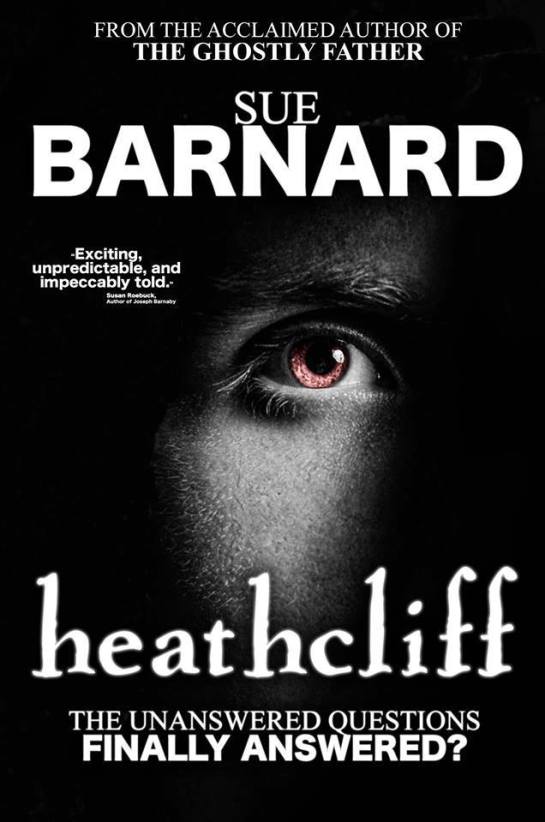
Heathcliff: The Unanswered Questions Finally Answered? – a review

Thursday_horizons


For today’s Thursday Creation Review, I’m reviewing another of Sue Barnard’s novels, Heathcliff: The Unanswered Questions Finally Answered?, which I announced prior to its release on Monday, July 30th, alongside my review of Sue’s last novel, Never on Saturday.

This post is somewhat delayed due to MS depression zapping my spoons.

Heathcliff

Heathcliff: The Unanswered Questions Finally Answered?

by

Sue Barnard (Goodreads Author)

“It would degrade me to marry Heathcliff now…”

Cathy’s immortal words from Wuthering Heights change Heathcliff’s life. At just seventeen years of age, heartbroken and penniless, he runs away to face an unknown future.

Three years later, he returns – much improved in manners, appearance and prosperity.

But what happened during those years? How could he have made his fortune, from nothing? Who might his parents have been? And what fate turned him into literature’s most famous anti-hero?

For almost two centuries, these questions have remained unanswered. Until now…

Review 4.4 stars

I always enjoy Sue Barnard’s novels so was looking forward to this one – and I wasn’t disappointed.

Although I read some long summaries of Emily Bronte’s Wuthering Heights, to familiarise myself, I regretted that I had never read the book – my excuse being that it was not a set book at school, unlike Jane Austen’s and Joseph Conrad’s works. (An omission that I intend to rectify). However, a prior knowledge isn’t required as many of the incidents are recounted, albeit with the missing three years at their heart.

The style of narration adopted seems to echo that used by Emily Bronte, but with Sue Barnard’s style woven in to make this a re-telling. Each scene is told from alternating perspectives, with the narrator’s name before each one.

For those three years of Heathcliff’s life that Emily Bronte left unexplained, Sue Barnard has done some interesting research and come up with plausible reasons, not only for his wealth and prosperity but also for his appearances and mannerisms. But I won’t let on about that time, just believe me when I say that the explanation works – as does some fascinating revelations at the end of the novel. Hidden secrets and devious research make for key threads.

Barnard makes good use of the historical setting for her re-telling, creating some new and memorable characters to fill those unexplained years. And the existing characters might be Bronte’s but they are fleshed out, although I didn’t understand some of their oddities. Heathcliff became clearer and darker than I had envisaged him – no thanks to Hollywood. He comes over as both tragic as he spirals out of control and depressing in his failure to see reason. But isn’t that the way with anti-heroes?

So, this wasn’t a smooth read, nor my favourite Barnard book, but I still recommend this novel.

Story – four stars

Setting/World-building – four stars

Authenticity – five stars

Characters – four stars

Structure – four stars

Readability – five stars

Editing – five stars
cdd86cfe83966ea55f47199e5c68402b