This month, I’m attempting to write a short story every day as part of StoryADay September. I’ve done a few – and I will post some of them – but here is the one for yesterday’s suggestion that we write in a different genre.
I may be a mystery writer now, but I’ve attempted most genres – even Romance, but with a crime at its core. However, I’ve only ever written one Western short, years ago – in a post-apocalyptic setting. Here’s another:
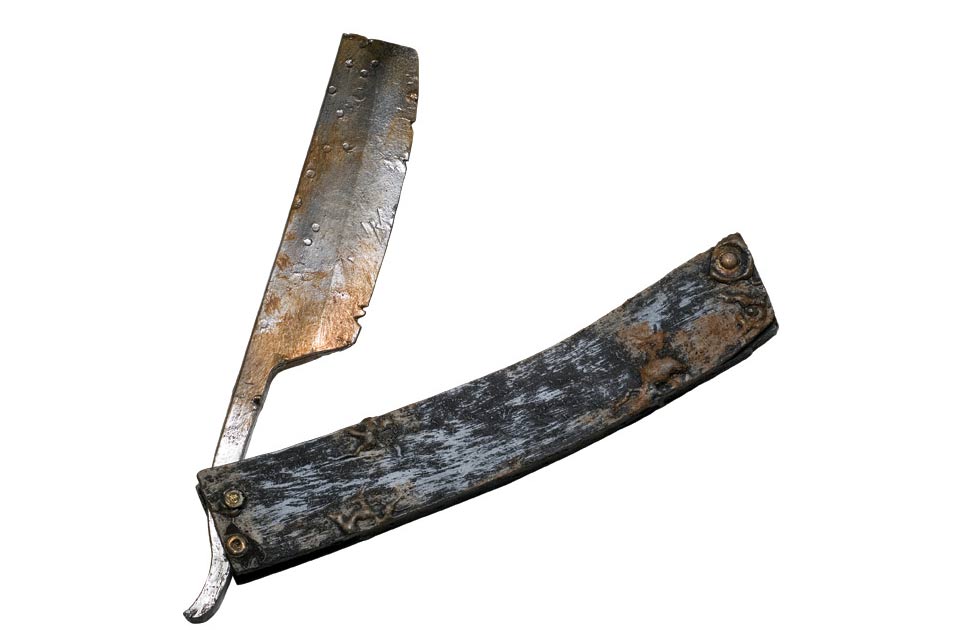
Close Shave
By Roland
Clarke
They didn’t trust me.
Why should they trust an old fool with nothing valuable to give?
No gold secrets. No real skills.
A barber with an idle razor.
“I need your skill with a blade,” said Ma Baker.
“Another gunshot wound? The sheriff needs to shoot straight.”
I’d blame the whisky, but from his grey hair, I knew it was
his eyesight.
“He hit my Daisy. I can’t afford to lose her – not with them
rustlers about.”
I nodded and followed the rancher matriarch to her spread.
In the kitchen, her son was leaning against the couch,
weeping.
“She’s lost a lot of blood, Mum. But she’s a fighter. Can
you save her, Seth?”
I knelt beside the body. Daisy looked up at me, her brown
eyes gleaming. I took her paw.
I finally got my entry for the 2019
Annual IWSG Anthology Contest in with a day
to spare. Finally, I suppressed my fears, switched off my urge to edit, edit,
edit, and edit forever. I managed to integrate almost all the comments from my wonderful
beta readers. However, my step kids were no shows as readers. But I had an
awesome MG kid-reader from the UK – thanks Rebecca, for some awesome
suggestions.
Insecurity postponed until the results
appear next year.
Now, I’m stressing about my Pitch Wars 2019 submission – Fevered Few. The required query letter, one-page synopsis, and the first chapter of my completed manuscript are achievable by the September 25th-27th deadline. But I’m unsure if I have a “completed and polished full-length, fiction manuscript”. Complete perhaps, but ‘dusted’ might fit better than ‘polished’.
So, another insecure month. Or maybe, I’ll
work on my short stories and the drug cartel in Bolivia.
Anyway, on to the IWSG monthly question.
September 4
question – If you could pick one place in the world to sit and write your next
story, where would it be and why?
I’m writing this in an office shared with my
wife, that overlooks a suburban US street – not my dream location.
Requirements for change:
Water view: by a river would be good or
overlooking a beach or ocean.
Mountain view: looking out onto green alpine
meadows or something with a snow cap.
Log cabin: a feel of being in the woods, surrounded
by trees.
In my mind, I see a cabin on Crater Lake
in Oregon, USA. We once looked at murals to create some of that on the wall
behind/beside our desks. Sound effects? We were planning to move to a mobile home
park with houses overlooking a lake – but that’s not happening.
Of course, our house and office
in North Wales was on the edge of woodland, overlooked Ceredigion Bay, and had
a view of Snowdon. Plus, we had jackdaws in our garden. Just try ignoring our
neighbours-from-Hell.
My wife’s photo may not show the estuary or the tip of Harlech Castle, but we could see them, especially from our landscaped garden. But the memories are there – and inspire my writing about Detective Sparkle Anwyl of the North Wales Police/Heddlu Gogledd Cymru in my Snowdon Shadows series.
And that photo has been enlarged,
so it hangs above my desk with a red Welsh Dragon in front. Outside the window,
beside our new rose garden, is a fountain of running water. Good enough for the
next story, especially as we are spending the last weekend of September in a
cabin in the mountains surrounded by pine trees.
(I so admire these
guys as I know they have commitments too. Ticker-tape applause.)
Purpose of IWSG: To share and encourage. Writers
can express doubts and concerns without fear of appearing foolish or weak.
Those who have been through the fire can offer assistance and guidance. It’s a
safe haven for insecure writers of all kinds!
Every month, we announce a question that members can answer
in their IWSG post. These questions may prompt you to share advice, insight, a
personal experience or story. Include your answer to the question in your IWSG
post or let it inspire your post if you are struggling with something to say.
Posting: The first Wednesday of every month is
officially Insecure Writer’s Support Group day. Post your
thoughts on your own blog. Talk about your doubts and the fears you you
have conquered. Discuss your struggles and triumphs. Offer a word of
encouragement for others who are struggling. Visit others in the group and
connect with your fellow writer – aim for a dozen new people each time – and
return comments. This group is all about connecting!
Let’s rock the neurotic writing world!
Our Twitter handle is @TheIWSG and hashtag is #IWSG.
Every month, we announce a question that members can answer
in their IWSG post. These questions may prompt you to share advice, insight, a
personal experience or story. Include your answer to the question in your IWSG
post or let it inspire your post if you are struggling with something to
say.
Once again, this is a standalone tale – or is it. There’s a subtle link to my ‘Jewel Box‘ story – if you spot it – and some characters may appear again. Plus, the setting is probably Wales or the Borders.
WARNING – there is blood, but be brave…like Mina. Remember, the dragon is red, and so is the beetroot of shame – and some wheelbarrows.
Enjoy.
Blood Bridal
The
shooting had been tough.
Yet,
Mina was relieved. Her life was changing, although not as planned after her
parents died.
Still,
she had a few weeks off before Oriole Productions needed her and Dafydd back
for dubbing. By then she’d no longer be Mina Westenra, but Mina Glyndwr.
Biting
her lips didn’t bury her pre-nuptial nerves as the limousine pulled up outside
the grey-stone church.
“You
can still call it off, although the family might kill you after all they’ve
arranged.”
A
shiver washed over her at Victor Frankel’s words. Her director was standing-in
for her deceased father. If only her mum hadn’t died of grief or her dad had survived the blood
disease.
She
swallowed and attempted bravery.
“No
more killing – fictional or real. I’m marrying Dafydd. I just wish one parent was
here.”
“I can
never replace either in there.” Vic pointed at her heart. “They are watching
and proud. Dafydd isn’t just a fine actor – perfect for a classic remake. He’s
genuine – like the Glyndwrs.”
Their
bloodline was as ancient as the yew tree guarding the grounds. Descended, as
Dafydd claimed, from the famous Owain Glyndwr, the last true Prince of
Wales.
They
climbed out of the limo, then walked up the path through the graveyard. She
drew strength from the man who had guided her career.
Ahead some late comers dashed out of the rain towards the sanctuary. An
elderly man greeted them. He was about seventy from the grey hair, white beard
and old-style tweed suit and waistcoat.
Standing outside, he braved the foul weather. So much for a summer
wedding with blue sky.
The
man smiled at Mina and reached into the basket on his arm.
“A
first gift on your bridal day. Our custom, since Dafydd brings us new
blood.” He handed
her a circlet of lilies, entwined with roses and sprigs of rosemary. “Gwna
dda dros ddrwg, uffern ni’th ddwg – or as the English say, Repay evil
with good, and hell will not claim you.”
Did he mean to sound so archaic, thought Mina – like the
Count in their movie. Her skin prickled and icy fingers crawled across her.
Had anyone noticed?
Vic was chatting with the old man as he took the petals the creepy
man removed from a blood-red wheelbarrow.
“You’ll be a needing these. Better than confetti for
the ground. Food for the soil so play on, as my friend Will said.”
A poet gardener not a legendary creature. She relaxed and
let Vic guide her into the packed church for this best day of her life. Marrying
the man, she loved. Witnessed by friends she valued. The family welcoming her.
Petals strewn underfoot, crushed releasing their scent,
suppressing all else.
Her glances as she was walked down the aisle showed the old
man hadn’t joined them.
Why not?
Only a gardener.
Except vampires couldn’t step inside a holy place –
according to the script.
The vicar banished the misleading thought. The blissful
moments grew as the wedding service lifted her and her heart. She made her vows
committing her future. Dafydd’s lips sealed the union.
Here before her, hands cupping her face, was the dream guy
who was worth putting her BAFTA dreams aside for.
Their identical Welsh gold rings were their eternal bond. Her blood warmed her as they walked out of the church arm in arm – united forever. Into the sunshine which bathed the churchyard, banishing the last vestiges of a dead writer’s imaginings and a scriptwriter’s fantasies.
Petals showered them. Joy and warmth. Heart bursting. Congratulations
flowed as their photographer posed them.
On the edge of the graveyard, the abandoned wheelbarrow. And
the thought – vampires don’t like churches or sunlight.
She laughed – cracked and shaking.
“The photos are a formality and a memento.” Her
husband sounded reassuring but then asked, “Or did something else unnerve
you?”
She needed an excuse. “I wondered where the gardener
was.”
“Gardener?”
“The elderly guy who gave me the circlet as we arrived. He
wasn’t in the church, so I presumed—”
Dafydd laughed. “You mean Great Uncle Owain. He’s never been
inside that church. Old but not the gardener. But he likes plants, and
creatures though, bats especially. Creatures of the night and their ilk.”
He laughed again. Her head and heart churned but wedding
customs propelled her through cheering people to the limo.
Dafydd kissed her in the back seat.
“Great Uncle Owain will be at the reception – it’s in the
garden of his old ancestral home. Well, the house he’s lived in since before the
Great War. He’s a true war vet – valiant as a lion, Will said.”
Over one hundred years old. Yet she’d guessed seventy. Age
was deceptive.
Great Uncle Owain’s house felt forgotten. Ancient. Nature
had overrun it, with ivy and Virginia creeper vying for the prime masonry.
However, the garden was more ordered.
“You asked if Great Uncle was the gardener. Well, this
is his creation – over many decades.”
“How many decades? He must be older than he
looks.”
“He keeps young. The family trait – passed down the
generations. A secret like my love bites – hidden from view.”
Warmth spread across her face at the memory. She laughed,
right hand caressing her neck where the marks had been.
Her excuses for the pinpricks where he had drawn blood.
Like the Count.
She suppressed the shivers as they walked into the crowded
marquee.
Tables – their white linen surfaces decorated.
Gifts on the wedding table at one side.
Flowers in green and red wheelbarrows.
Laughter. Music. Chatter.
Great Uncle Owain leaning in for a kiss. Breath on her neck.
Lips hovering.
She stiffened.
He kissed both her cheeks.
His voice – rich and smooth. Relaxing. Hypnotic.
He raised a glass of crimson liquid.
“Welcome to the Glyndwr Dynasty. Don’t let the rumours of my addiction to blood disturb you, my dear Mina. It’s kept me alive for generations. We all get used to its taste. You will too. Try some.”
Word Count 1000: FCA
Comments are welcome as usual and the following applies:
Guilty as my writing in July continued to be minimal: a few
book reviews and the first draft for my August #WEP/IWSG CHALLENGE – due a
fortnight (two weeks) today. Meanwhile, Sparkle Anwyl has taken a holiday in my
head. And I’m still wading through a backlog of emails that fills up like
sand. Or is it my gaming distractions or
my health?
Rabbit
holes – like researching hashtags that describe me: #IWSG #WEP/IWSG #crimefiction #ubisoftgames #assassinscreed #gamer #bookworm
#goodreads #MS. Those were for #PWPoePrompts.
My biggest concern is my entry for the 2019
Annual IWSG Anthology Contest. I’ve done most of the research, but
some key bits are missing. I’ve outlined my story but I’ve yet to finish the
first draft. Finally, I fear I need more than beta readers that know MG. The
deadline looms – September 4th. Panic is setting in.
Beta readers. I keep losing them. I
even need some to help get ‘Azure Spark’ ready for pro-editing. Are my
own critiques frightening writers/readers away?
The brutal truth. Can anyone help me, please?
Anyway, on to the IWSG monthly question.
August 7 question
– Has your writing ever taken you by surprise? For example, a positive and
belated response to a submission you’d forgotten about or an ending you never
saw coming?
I can’t claim any ‘industry’ surprises. But that’s not
surprising given my lack of productivity. A few expected rejections, a few
years ago. One hoped for acceptance – my debut novel, Spiral of Hooves.
But unsurprising low sales and mixed reviews.
However, there was one surprise while writing Spiral of
Hooves – the identity of the antagonist. S/he changed as I edited the early
drafts and focused the story – as did her/his motive.
In one of my current WIPs, part of the Snowdon Shadows
series, one of my favourite characters became an unexpected victim – but with a
twist. Where did that come from?
There must be a devious person at work in my mind. Who is
it? Why did I create a link back to my unrelated debut? A character in the WIP
series appeared after playing a minor role in Spiral of Hooves. Who was more
surprised? Me or Sparkle?
(I so admire these
guys as I know they have commitments too. Ticker-tape applause.)
Purpose of IWSG: To share and encourage. Writers
can express doubts and concerns without fear of appearing foolish or weak.
Those who have been through the fire can offer assistance and guidance. It’s a
safe haven for insecure writers of all kinds!
Every month, we announce a question that members can answer
in their IWSG post. These questions may prompt you to share advice, insight, a
personal experience or story. Include your answer to the question in your IWSG
post or let it inspire your post if you are struggling with something to say.
Posting: The first Wednesday of every month is
officially Insecure Writer’s Support Group day. Post your
thoughts on your own blog. Talk about your doubts and the fears you you
have conquered. Discuss your struggles and triumphs. Offer a word of
encouragement for others who are struggling. Visit others in the group and
connect with your fellow writer – aim for a dozen new people each time – and return
comments. This group is all about connecting!
Let’s rock the neurotic writing world!
Our Twitter handle is @TheIWSG and hashtag is #IWSG.
Every month, we announce a question that members can answer
in their IWSG post. These questions may prompt you to share advice, insight, a
personal experience or story. Include your answer to the question in your IWSG
post or let it inspire your post if you are struggling with something to
say.
Once again, I’m catching up with my book reviews – by not
reading but writing. And I’m still ahead in my 2019
Goodreads Challenge– 22 books read from my target of
35 with a few part-finished books in the read-line. Whether I can stay ahead
depends on my ability to write. After this, I’ll only be three book reviews
behind – if I ignore the backlog from 2018 and earlier.
Anyway, on to the Thursday Creation Review for today
– a novel that was a change for me. It’s been a while since I read a Middle
Grade book, but research for the
IWSG Anthology competition led me here.
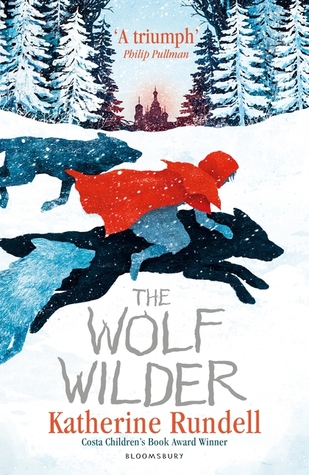
Feodora
and her mother live in the snowbound woods of Russia, in a house full of food
and fireplaces. Ten minutes away, in a ruined chapel, lives a pack of wolves.
Feodora’s mother is a wolf wilder, and Feo is a wolf wilder in training. A wolf
wilder is the opposite of an animal tamer: it is a person who teaches tamed
animals to fend for themselves, and to fight and to run, and to be wary of
humans.
When the murderous hostility of the Russian Army threatens her very existence,
Feo is left with no option but to go on the run. What follows is a story of
revolution and adventure, about standing up for the things you love and
fighting back. And, of course, wolves.
Review 5 stars
This was magical. A story that resonated with me – wolves,
Russia, revolution, adventure, and the wolves. Plus, prose that was masterful.
12-year-old Feo Petrovna and her mother, Marina, live in the
snowbound Russian woods with a pack of wolves nearby. A pack of wolves that were
once aristocrats’ tamed pets. But wolf wilder Marina, with Feo’s help, has
helped the creatures discover how to be wolves. They all bear the scars – human
and wolf – but these make them stronger
and more prepared to face what is coming.
“Wolves, like children, are not meant to lead calm lives.”
This is 1917 and revolution is coming. It arrives in their
lives, and Marina is arrested by the local commanding officer Rakov.
Dislikeable from the moment he appears and exerts his twisted authority, he
becomes Feo’s foe as she attempts to save her mother – and the wolves.
In her attempt, she is aided by the pack, who are complex
and formidable characters – and tragic. Each has distinctive appearances and
traits. Katherine Rundell excels not only in portraying multi-dimensional
people in clear language but also creatures that are mysterious and faithful –
faithful to the pack and those like Feo they trust.
Feo’s escape with the wolves gains an unexpected ally – Ilya,
a 13-year-old soldier boy. A reason to be wary, but Feo can sense his true
nature – a skill she must have learnt as a wolf wilder-in-training. But are the
wolves so trusting?
Will the children and wolves survive to save Marina before
Rakov can execute her in the face of the revolution aimed at him?
I couldn’t stop reading the beautiful words of this
unfolding story. I knew the history, but that was just a setting like the woods
and weather, so lives were still at risk. The escape only set up more – more
encounters, more conflict, more character, and a climax which ties everything
together.
The opening and the ending are beautiful bookends – crafted
to perfection. This is a true ‘once upon a time’ about ‘a dark and
stormy girl’.
Wolf wilders may be a fiction, yet they are rooted in fact
and in places might exist. Feo’s family feel real so that’s what matters.
Another enjoyable read – suitably illustrated by Gelrev Ongbico – and highly recommended for anyone who likes entertaining historical fiction with strong MG protagonists.
I’m catching up with my book reviews – by not reading but writing.
Anyway, I’m still ahead in my 2019
Goodreads Challenge– 22 books read from my target of
35 with a few part-finished books in the read-line. And after this, I’ll only
be four book reviews behind – if I ignore the backlog from 2018 and earlier.
So, on to the Thursday Creation Review for today/tomorrow – a novel that continued my interest in Soviet airwomen in World War II. My research is ongoing and there are two more ‘Night Witches’ novels in my reading pile.
Farm girl to aviator in the heroic WWII
Russian flying unit the Germans called the Night Witches…
JUNE 1941 Nineteen-year old Raisa Tarasova’s peaceful life shatters when
Hitler’s forces invade Russia. Her two brothers immediately enlist in the air
corps. Despite Raisa’s desire to fly and her many hours of flying time, neither
the air corps nor her father would allow such a thing. She is, after all, “just
a girl.”
In September Raisa returns to her engineering studies at the university in
Moscow. Once there, she jumps at the opportunity to join a newly formed women’s
aviation unit. Wearing men’s uniforms hurriedly cut down to fit, Raisa and 300
other female recruits are loaded into railcars and transported to a
training base.
After six hard months of schooling, Raisa is assigned as a navigator with the
all-women Night Bomber Regiment.
Their aircraft is the PO-2, a biplane made of wood and fabric. Months later,
after a night of heavy losses, Raisa is given a field promotion and the new
responsibility of pilot. She has no choice but to carry out her orders and face
down a most significant enemy…her own fear.
Courage, an impossible romance, and a daring rescue only a woman would devise
become part of Raisa’s new life as a member of the 588th Night Bomber Aviation
Regiment, the NIGHT WITCHES.
Review 4.3 stars
This was the second novel I’ve read about a young woman who risks everything to join the legendary Night Witches, an all-female Soviet night bomber regiment that wreaked havoc on the invading Germans in World War II.
Echoing the real friendships
forged amid the harsh struggle to survive a gritty and vicious war – the terrible
conflict known to the Soviets as the Great Patriotic War – this was a crafted
story built around good research.
Nineteen-year old
Raisa Tarasova’s peaceful life and engineering studies are shattered when
Hitler’s forces invade Russia. But unlike her brothers, she cannot join the air
corps despite her many hours of flying time – she’s a girl. However, when a
women’s aviation unit is formed, she joins up with 300 other recruits.
After six hard
months of schooling, Raisa is assigned as a navigator with the all-women 588th
Night Bomber Regiment, which flies the PO-2, a biplane made of wood and fabric.
Comrades die, leading to a field promotion to pilot – and a daring rescue at
the expense of everything, including a burgeoning romance.
The build-up from peace
to war pulls the reader in, giving the ideal amount of backstory. The author
paints a clever contrast between everyday normality and the encroaching storm
of war. The invasion triggers an increase of pace, although the female recruits
are not rushed to the front – unlike men such as Raisa’s brothers.
From the training into
the combat, the reader is enveloped in the realism of flying and the social
interaction between the young women – and with the male aircrew. There is
enough detail to ground the story, but not so much that the pace struggles. Events,
especially at the front, are traumatic but some are humorous.
S.J. McCormack did
her research, judging from my reading of a newly-published non-fiction book on
Soviet airwomen I own. The author lists her sources, and these include ones I’ve
heard of.
Only one thing concerned me. SPOILER ALERT…
I knew Stalin
imposed strict orders that if you surrendered or were captured by the enemy –
or even just ended up behind enemy lines – you were a traitor. So, when Raisa
is shot down on the German side of the front, I wondered how she could ever
return to her regiment safely.
END ALERT.
The resolution the
author devised for the climax was ingenious, strengthened the story – and had
me diving down research rabbit holes and nodding, grin on my face.
The characters all
felt rounded, especially Raisa with all her complexities and central fear. Plus,
her pilot-friend who everyone admires, and who inspires Raisa throughout the
story is a strong role. Even the secondary characters seemed real, from her love-interest
to the girl with the cow.
The settings worked
as background to the story and characters, even if nothing came alive either as
distinctive or as a distraction. But the locations worked neatly into the whole
structure. Although there were no WOW-twists, the inventive ending had me ‘heading
home’ with Raisa, nodding in agreement.
An enjoyable read
and recommended for anyone who likes entertaining WWII historical fiction.







 Writing Wings