R is for Resident Evil

R


The aim of my Blogging From A to Z Challenge is to find the origins of online games, some relatively modern and some with ancient roots. Gaming might well be a modern take on an art that is almost timeless – storytelling. A perfect excuse for a writer to delve a little deeper.

[Visit here for links to other A to Z participants.]

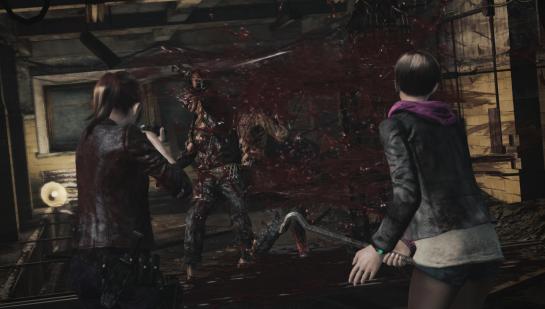
Game: Resident Evil: Revelations 2, known in Japan as Biohazard Revelations 2, is an episodic survival horror video game. It is the tenth major instalment in the Resident Evil franchise (22nd overall). The game is a follow up to Resident Evil: Revelations and Resident Evil 5.

Release Date: February 25, 2015 Episode 1 and then weekly

Developer/Publisher: Capcom

Genre/gameplay mechanics: Survival Horror; mystery; puzzles; Single-player, Cooperative; four-episode structure; stealth elements; ability to switch from main to ‘sidekicks’; bonus Raid mode – a comeback from the first Revelations with new changes, more missions and characters.

Setting: a facility on Sushestvovanie Island, where the “Afflicted” are in wait. It is unknown where exactly the island is located, as it is not listed on any maps. However, the island was previously affiliated with the Soviet Union, harbours many inhabitants of Russian descent, and the main language was Russian, placing it somewhere close to Russia, Latvia, Estonia or Kaliningrad Oblast.

Storytelling: The main storyline of the Resident Evil games primarily concerns a group of individuals who battle against the Umbrella Corporation as well as characters in relation to them who have developed the T-virus which, among other things, can transform humans into zombies as well as mutate other creatures into horrifying monsters. Resident Evil: Revelations 2 references previous instalments and is set between the events of Resident Evil 5 and Resident Evil 6. Developed storyline with decision-based alternative endings. Two storylines: (i)  Claire Redfield is one main protagonist and Barry Burton‘s daughter, Moira, plays her ‘sidekick’. (ii) Barry is the other playable protagonist and he is assisted by Natalia Korda, a little girl with supernatural abilities.

Releases + Expansions – 11 major instalments – 24 releases overall:

First release     Resident Evil                          March 22, 1996

Latest release   Resident Evil 7: Biohazard    January 24, 2017

Formats: PS3, PS4, Vita, Xbox 360, Xbox One, PC, Nintendo Switch

Origins (Chronological):

  1. 1989 – The development of first Resident Evil, originally titled Biohazard, and the first game dubbed ‘survival horror’, began in 1993 when Tokuro Fujiwaraconceived it as a remake of his earlier 1989 Capcom horror game Sweet Home, borrowing gameplay mechanics and the mansion setting. Based on the 1989 Japanese horror film of the same name, and supervised by the film’s director, Kiyoshi Kurosawa, the Sweet Home game used the same setting, storyline and scariness.
  2. The German novelist and story writer, Franz Kafka (3 July 1883 – 3 June 1924), was a major inspiration behind the Revelations 2 game story, and the idea came from the scenario writer, Dai Satō. Since the first Revelations used passages from Dante Alighieri, the team felt that would be a common element from the Revelations series. Also, that would give a deep meaning for the quotes and themes approach, like “The Transformation” to the story of the game. Scattered notes and books quote or echo Kafka. His work typically features isolated protagonists faced by bizarre or surrealistic predicaments and incomprehensible social-bureaucratic powers.
  3. The title of the four episodes of the game are allusions to his work,
    1. Episode 1, called Penal Colony, is based on a short story by the name: In the Penal Colony, (October 1914), set on an island with an elaborate torture and execution device.
    2. Episode 2, named Contemplation – Contemplation (short story collection), (1904-1912). Some of these stories echo with events in the game.
    3. Episode 3, called Judgement – The Judgment(1912) – in which some read complex views concerning the notion of judgement itself.
    4. Episode 4, called Metamorphosis – The Metamorphosis, (1915) in which the main character find himself transformed into a giant insect, much as some game characters are transformed into something else.

Adaptations set in the Resident Evil universe:

  1. FILMS – The six Resident Evil films follow Alice(Milla Jovovich), a character created for the films, who battles the Umbrella Corporation, whose bioweapons have triggered a zombie apocalypse. Characters from the games also appear, including Jill ValentineCarlos OliveraClaire RedfieldAlbert WeskerChris Redfield, and  Barry Burton. These have been the most successful movie adaptations of any video-games.
  2. ANIMATED FILMS – there have been four made.
  3. NOVELS – seven written by D. Perry; five novelizations of live-action films; three other novels, two in Japanese.
  4. COMICS – four comics and two manga.

Revelationsimage_326100_full

Recommendation: On release, the reviews were mixed to positive, there was praise about the setting, story, characters and the co-op gameplay, but the graphics and some technical issues were largely criticized. For example, IGN writer, Lucy O’Brien, said the game “kept me hooked right up until its finale”. She felt the game’s “horror does not frighten” and criticized the graphics details and overused enemies. Her review praised the elements of action-adventure, the co-op gameplay, the implement of some traditional puzzles and spoke well about the bonus Raid mode.

As at the end of December 2017, the title reached a combined 2.3 million units sold, surpassing its predecessor and becoming the 24th best seller of the company.

3.75 Stars: I admit that I have only played Resident Evil: Revelations 2 – and then only Episode One – so starring the game fairly is impossible. The setting was scary but not in the nightmarish sense that Hellblade was. It’s clear that ‘survival horror’ is not my genre – even if there are challenges that spark my determination. I’m best with a sword, which may be why Moira with a crowbar survived so well. Fun but not immersive.

  1. Setting: 4*
  2. Storyline: 4*
  3. Gameplay: 3.75*
  4. Entertainment: 3.5*
  5. Genesis: 3.5*

Alternative ‘R’ thoughts:

R is also for Ready Player One, both  Ernest Cline’s 2011 book and the 2018 Spielberg film based on it. A worldwide virtual reality game that can’t be ignored and yet I must – I’ve yet to read the book, or see the movie, plus the game is probably…still in development. I do love all the cultural references in the movie trailers and in the book’s outlines, so I suspect the origins might be fascinating and I will succumb.

+ ‘R’ Games played: the enjoyable MMORPG Rift, plus Revelation, Runes of Magic, and Raiderz [shutdown August 2015].

Enter this portal to reach other Worlds in my A2ZMMORPG

Hela da


Q is for Quake

Q


The aim of my Blogging From A to Z Challenge is to find the origins of online games, some relatively modern and some with ancient roots. Gaming might well be a modern take on an art that is almost timeless – storytelling. A perfect excuse for a writer to delve a little deeper.

[Visit here for links to other A to Z participants.]

Game: Quake is a first-person shooter video game and the first game in the successful Quake series.

Release Date: June 22, 1996

Developer: id Software

Genre/gameplay mechanics: single-player and multi-player. Single-player mode – players explore and navigate to the exit of each Gothic and dark level, facing monsters and finding secret areas along the way; reaching the exit takes the player to the next level; three pathways with easy, medium, hard and Nightmare skill levels. Multi-player mode – either the single-player campaign together in co-op mode, or play against each other, popularly in deathmatches.

Setting: players must find their way through various maze-like, medieval environments while battling a variety of monsters using a wide array of weapons.

Storytelling: in the single-player game, the player takes the role of the protagonist known as Ranger, who was sent into a portal to stop an enemy code-named “Quake”. The government had been experimenting with teleportation technology and developed a working prototype called a “Slipgate” The mysterious Quake compromised the Slipgate by connecting it with its own teleportation system, using it to send death squads to the “Human” dimension to test the martial capabilities of humanity. The sole surviving protagonist in “Operation Counterstrike” is Ranger, whose main objective is to collect four magic runes from four dimensions of Quake; to stop the enemy and end the invasion of Earth.

Releases + Expansions – various for Quake and for the sequel; includes:

  1. There were two official expansion packs released for Quake. The expansion packs pick up where the first game left off, include all the same weapons, power-ups, monsters, and gothic atmosphere/architecture, and continue/finish the story of the first game and its protagonist.
  2. An unofficial third expansion pack, Abyss of Pandemonium, was developed by the Impel Development Team, published by Perfect Publishing, and released on April 14, 1998; an updated version, titled Abyss of Pandemonium – The Final Mission was released as freeware.
  3. An authorized expansion pack, Q!ZONEwas developed and published by WizardWorks, and released in 1996.
  4. In honour of Quake’s 20th anniversary, MachineGames, an internal development studio of ZeniMax Media, who are the current owners of the Quake IP, released online a new expansion pack for free, called Episode 5: Dimension of the Past.

Sequels:

Quake II, released in December 1997, made the design more technological and futuristic, rather than maintaining the focus on Lovecraftian-Cthulhu-ish fantasy.

Quake 4 followed the design themes of Quake II, whereas Quake III Arena mixed these styles.

Formats: MS-DOS, AmigaOS, Classic Mac OS, Sega Saturn, Nintendo 64, Linux, Microsoft Windows

Origins (Chronological – The various realms consist of several gothic, medieval, and lava-filled caves and dungeons, with a recurring theme of hellish and satanic imagery. Inspiration includes:

  1. Several dark fantasy influences, most notably that of  P. Lovecraft – (August 20, 1890 – March 15, 1937) an American writer who achieved posthumous fame through his influential works of horror fiction. He was virtually unknown and published only in pulp magazines before he died in poverty, but he is now regarded as one of the most significant 20th-century authors in his genre. Among his most celebrated tales are The Rats in the WallsThe Call of CthulhuAt the Mountains of MadnessThe Shadow over Innsmouth, and The Shadow Out of Time, all canonical to the Cthulhu Mythos. The Cthulhu Mythos is a term coined by August Derleth, a contemporary correspondent and protégé of Lovecraft, to identify the settings, tropes, and lore that were employed by Lovecraft and his literary successors.
  2. Lovecraft cited Algernon Blackwood(14 March 1869 – 10 December 1951) as an influence, quoting The Centaur in the head paragraph of “The Call of Cthulhu“. He declared Blackwood’s story “The Willows” to be the single best piece of weird fiction ever written.
  3. Lovecraft’s most significant literary influence was Edgar Allan Poe (January 19, 1809 – October 7, 1849). Like Lovecraft, Poe’s work was out of step with the prevailing literary trends of his era. Both authors created distinctive, singular worlds of fantasy and employed archaisms in their writings. Poe’s best-known fiction works are Gothic, a genre that he followed to appease the public taste. His most recurring themes deal with questions of death, including its physical signs, the effects of decomposition, concerns of premature burial, the reanimation of the dead, and mourning.

Quake-first-episode-boss

Recommendation: Quake was critically acclaimed on the PC. Aggregating review websites GameRankings and Metacritic gave the original PC version 93.22% and 94/100, the Nintendo 64 port 76.14% and 74/100, and the Sega Saturn version 64.50%. A Next Generation critic lauded the game’s realistic 3D physics and genuinely unnerving sound effects. Major Mike of GamePro said Quake had been over-hyped but is excellent nonetheless, particularly its usage of its advanced 3D engine. He also praised the sound effects, atmospheric music, and graphics, though he criticized that the polygons used to construct the enemies are too obvious at close range. Next Generation listed Quake as number 9 on their “Top 100 Games of All Time”.


Enter this portal to reach other Worlds in my A2ZMMORPG

Hela da

P is for Perfect World

P


The aim of my Blogging From A to Z Challenge is to find the origins of online games, some relatively modern and some with ancient roots. Gaming might well be a modern take on an art that is almost timeless – storytelling. A perfect excuse for a writer to delve a little deeper.

[Visit here for links to other A to Z participants.]

Game: Perfect World, commonly abbreviated as PWI, is a 3D adventure and fantasy MMORPG with traditional Chinese settings. This is a special game as I met my wife in Perfect World at a birthday party, and my elf Archer avatar took her human Blademaster avatar flying…

This is the third of the oriental games that I am looking at – this one originating with Chinese mythology.

Release Date: CN: July 2005; EU: 2008; NA: September 2, 2008

NA Publisher: Perfect World Entertainment

Genre/gameplay mechanics: Flexible character customization with twelve classes, each with unique skills and roles; large-scale territorial PvP; free-to-play BUT shop/boutique [pay-to-win culture]; quest or grind to level and develop; exploration; unusual crafting; pets/genies plus unique pet class (Venomancer); open world bosses; WASD point-and-click and auto-navigation; flying.

Setting: set in the mythical world of Pan Gu with attractive environments and semi-anime graphics. Chinese-style buildings and costumes.

Storytelling: The lonely first god, Pan Gu creates the universe, then a world out of his own essential elements: fire, metal, wood, earth, and water. But his world is largely imperfect—wraiths and monsters infect it like a plague. And it’s up to the races that embody Pan Gu’s vision to create order from chaos. Basic story is sound and there are clear threads, but also plenty of dead-end side-quest distractions.

Releases + Expansions: From the original release with six classes, there have been six further chapters that develop the storyline and introduce more races and classes.

Formats: Windows

Origins (Chronological) – The fiction is based on Chinese myths and the quest text reflects that. Unfortunately, this rich literary tradition isn’t used imaginatively enough:

  1. Chinese mythology is a collection of cultural history, folktales, and religious tradition that has been passed down for centuries in oral or written form. There are several aspects to Chinese mythology, including creation myths and legends, and myths concerning the founding of Chinese culture and the Chinese state.
  2. 618-907 – Hei’an Zhuan (Epic of Darkness) is the only collection of legends in epic form preserved by a community of the Han ethnicity of China, the inhabitants of the Shennongjia mountain area in Hubei, and contains accounts from the birth of Pangu until the historical era.
  3. 184-194 – Pangu is the first living being and the creator of all in some versions of Chinese mythology. The first writer to record the myth of Pangu was Xu Zheng during the Three Kingdoms Recently his name was found in a tomb dated 194 AD. Various myths exist. One legend is a Chinese version not only of the Norse myth of the Giant Ymir but also of the Babylonian story of Tiamat.
  4. 4th century BC – Shan Hai Jing (Mountain and Sea Scroll) describes the myths, witchcraft, and religion of ancient China in great detail and also has a record of the geography, sea and mountains, history, medicine, customs, and ethnicities of ancient times. It has been called an early encyclopaedia of China.
  5. 12th century BCE – Historians have written evidence of Chinese mythological symbolism in the Oracle bone script. Legends were passed down for over a thousand years before being written in books.

Recommendation: Neilie Johnson’s IGN review (29 Jan, 2009) said, “Perfect World is a beautiful, well-made MMO with a few of the seemingly inevitable flaws of the genre. While it offers all the mechanics MMO players have come to expect and allows you to see and do some spectacular things, it suffers from an inconsistent, buggy and obscure UI, an imbalanced levelling system and frequent bouts of quest-induced tedium”.

Sean Sullivan’s more recent verdict for MMS.com was ‘Good’, saying, “Maybe Perfect World was great three years ago. But it has aged and fallen far from its original standing. Its reigning feature is the character creation system …but beyond that, the game is a clunky mess. It feels dated, a relic from some bygone age that should only be appreciated at a distance.”

pw456456364

4.35 Stars: Back in 2009, I went to Perfect World with my ‘guildies’ from Corum OnlIne, and was immersed in the story, characters and beautiful graphics. I created a pet-taming Venomancer [a female shapeshifting class based on the Japanese kitsune], and we formed a clan. Playing with others is essential as dungeons are part of the quest-line, and we had to know our job. There were also social occasions like the party where I met my wife-to-be – we first married in a Chinese ceremony in-game. (Now we game together.) Yes, there were problems that moved us on to other games – but not all PWI.

  1. Setting: 4.25*
  2. Storyline: 4.25*
  3. Gameplay: 3.75*
  4. Entertainment: 4.5*
  5. Genesis: 5”

Alternative ‘P’ thoughts:

P is also for Poirot one of my favourite detectives, whose appearances include the brilliant The Murder of Roger Ackroyd – but no games.

P is also for Pan’s Labyrinth, one of my top twenty movies – but again, I found no games.

Enter this portal to reach other Worlds in my A2ZMMORPG

Hela da


O is for Onigiri

O

The aim of my Blogging From A to Z Challenge is to find the origins of online games, some relatively modern and some with ancient roots. Gaming might well be a modern take on an art that is almost timeless – storytelling. A perfect excuse for a writer to delve a little deeper.

 [Visit here for links to other A to Z participants.]

Game: Onigiri is an action MMORPG set in a fantasy land reminiscent of ancient Japan in which humans and non-humans such as Oni and other Yōkai coexist. The game has a unique progression system – rather than picking classes, players swap between weapons which each have different skills available.

This is the second of the oriental games that I am looking at – here originating with Japanese mythology.

Release Date: JP: February 6, 2014; NA: July 1, 2014

Developer/Publisher: CyberStep

Genre/gameplay mechanics: players choose one of five traits that will determine which weapons they can use; each player unlocks eight NPC partners that each have distinct personalities and abilities; real-time combat and multiple difficulty modes for each dungeon; stylish anime graphics and Japanese voice acting.

Setting: The game is set in a fantasy version of ancient Japan that is filled with creatures of myth. Landscape and inhabitants have a firm basis in myths, even though anime graphics reduce realism.

Storytelling: Ages ago the terrible Kamikui wreaked a trail of death and destruction across the land before being stopped by the goddess of the Sun, Amaterasu Oomikami. The goddess places three great Seals that forced the Kamikui to retreat. Now one of the Seals has shattered. The player character is an Oni whose peaceful life in the Western island of Onigashima is disturbed by the revival of the Kamikui

All the NPCs have backgrounds and stories.

Formats: Microsoft Windows, PlayStation 4, PlayStation Vita, Xbox One

Origins (Chronological):

  1. 1st century – Japanese myths were originally transmitted orally, as in most cultures. An early source of Japanese mythology is the Nihongi, or Nihonshoki (Chronicles of Japan). Completed in 720, this work includes various myths and legends, and it helps establish the genealogy of the imperial family. The Nihongi was greatly influenced by Chinese and Korean history and mythology.
  2. The first written version of the mythology was in A.D. 712 when the Kojiki (Records of Ancient Matters) was compiled for the Japanese imperial The tales tell of the creation of the world, the origin of the gods, and the ancestry of the Japanese emperors, who claimed descent from the sun goddess Amaterasu. Both the Kojiki and the Nihongi contain elements of Taoism, a Chinese religious movement that was introduced to Japan by the 600s. 

Adaptations set in the ‘Onigiri’ universe:

  1. TV Anime – An anime television adaptation of the game was aired from April 7, 2016, on Tokyo MX and BS Fuji until June 30, 2016.

onigiri-equipment

Recommendation: Onigiri has garnered a number of favourable reviews, from Bradly Storm of Hardcore Gamer saying it was “a fairly competent and enjoyable hack-and-slash experience” even though the launch suffered from server-side latency issues to Crunchyroll calling it “a very solid title.”

However, the game has remained low-key with a moderate anime fanbase. Many players have criticized the game for its monotony after reaching a certain level.

MMOs.com gave the following summary:

Pros: +Unique weapon system. +Great NPC Companion feature. +Stylish visuals.
Cons: -Repetitive dungeon designs. -Appeal limited to anime fans. -Collision and imprecise control issues.

Alternative ‘O’ thoughts:

O is also for Oz, as in the L Frank Baum’s wonderful book The Wonderful Wizard of Oz or the subsequent films, including the strange prequel in 2013, Oz the Great and Powerful. There were numerous adaptations, including games, but none that sparked my research brain – despite Baum’s origins.

Plus, I needed to look much further East to make my gaming POV representative’ of the breadth of gaming origins. So, tomorrow we are in China.


Enter this portal to reach other Worlds in my A2ZMMORPG

Hela da


Adaptations Unmasked

atoz-theme-reveal-2018

A to Z Challenge Theme Reveal – #AtoZChallenge #ThemeReveal

When I discovered that it was A to Z Challenge Theme Reveal day, I had been relaxing for my day oblivious to the work ahead.

I hadn’t even remembered to sign-up – well, in fact, my thoughts were still drifting around what I scribbled down after 2017’s challenge. I had a list of places in North Wales that were linked to my Welsh detective series.

Change of plan. I’m heavily into the rewrite of my first Welsh mystery. Do I need to get deeper into my world, or do I need a distraction? I have that: reading other books, watching movies, and gaming. Three more lists began to emerge – and a link.

The Lord of the Rings: a book – a re-visited trilogy, great movie adaptations and an immersive game. All firm favourites.

And LOTRO is not the only game with roots (or cuttings) – Conan, Star Wars, Tomb Raider, and the Welsh medieval masterpiece, The Mabinogion.

So, my theme might be ‘gaming’ in inspiration, but its roots are ancient. Do all games have such roots? What about other adaptations? Gaming might well be a modern take on an art that is almost timeless – storytelling.

Where did Shakespeare borrow his tales from? Who is re-telling his?

And how about testing your wits against The Bard: https://www.theguardian.com/stage/ng-interactive/2014/apr/23/beat-the-bard-shakespeares-characters-fight-it-out-in-our-interactive-game

That’s all folks. I’m off to do my research – there are a few letters to find. X is okay but what about Q?

*

UPDATE: Tuesday, 20th March 2018.

Apologies, yesterday I forgot to link this post to the main Blogging from A to Z Challenge page so readers could find out more about this amazing annual event. So, today I am adding some links in the hope that helps explain more than I have.

I’m switching off for now as my brain is getting overloaded and confused = short-circuiting, stress time. (I hate MonSters and losing my Spoons.)

a2z-h-small

Reflections of 2017 #AtoZChallenge

survivor-atoz [2017] v1


The 2017 Blogging from A to Z Challenge didn’t go as planned for me so apologies to my followers and to my fellow bloggers. In previous years, I have written and scheduled all or at least most of my posts by the end of March. That allows me time to write the few missing ones during the early part of April as well as time to visit the A to Z bloggers that I follow and any new ones that catch my attention.

This time things went awry. I chose my theme okay – The History of Kanata – and even got some of the posts done. But I was already a bit behind come April 1st so there was no way that I was taking Sunday, April 2nd off. Then overnight my health took a nose-dive and on Monday April 3rd I collapsed shortly after posting on Facebook, “After a terrible night when Juanita Clarke was luckily tere for me, psting is very hard as mystyping everything. So apologies for siaslence.”

My belated post, “Insecure and Invalid”, explains how I was rushed to hospital and my nights there. Suffice to say that the rest of April was a struggle just to stay on top of my own posts while still feeling poorly. At least, the 500+ emails that I came back to have been reduced to nearer 350 but they keep sneaking back into my Inbox somehow.

I also managed to reply to those people that took the trouble to comment on the posts – you know who you are so my grateful thanks.

When I did the post-event survey I said that I hadn’t visited or commented on any other posts and that answer was inaccurate – I visited two or three that dropped by my site. However, I have a lot of A to Z sites to visit as I get on top of things – if that is possible.

As far as the absence of the Linky links page was concerned I didn’t have a chance to miss it. But I did manage to post most of my daily posts on the Facebook page. That worked brilliantly, just like the Insecure Writers Facebook page does, and on a random visit, I found a fellow MS warrior which made April worthwhile.

I don’t feel my experience was a fair reflection on the team, but I would still like to give the hard-working bunch a shout out, especially founder Arlee Bird.

Time now to point you to the It’s Time to Reflect! page where you can find other A to Z Reflections.

And visit:         Facebook page: https://www.facebook.com/atozchallenge/

Twitter handle: @AprilAtoZ

Twitter hashtag: #atozchallenge