The Occupation Thesaurus – a review

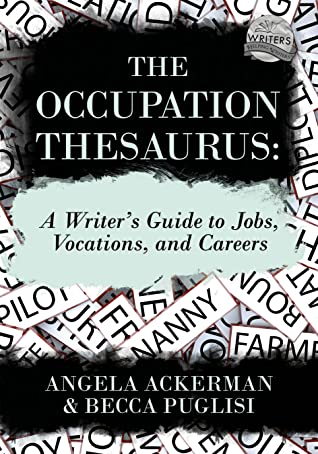
I was privileged and excited to read an ARC of The Occupation Thesaurus. This is my rambling review and I’ll start with the crucial and deserved rating:

5 stars *****

The core of this non-fiction reference book is – as the title suggests – an extensive selection of Occupations with details on them all. I should mention the US emphasis, although the authors clearly state aspects like training/requirements for a job might vary between states and countries. As an ex-pat Brit, I was aware of this but never felt that aspect distracted from the immense value of the information.

The excellent opening sections on numerous aspects of job selection, motivation, and their value to writers, are essential reading. They are jammed full of ideas, observations, and suggestions on how to apply Occupations in your writing.

They triggered some interesting thoughts for me. Topics covered are: It’s All in the Details; The Motivations behind Career Choice; Careers that Characterize; Jobs as Sources of Tension and Conflict; Jobs Can Support Story Structure and Character Arc; Vocations as Thematic Devices; Choosing a Career for Your Character; Additional Tips for Writing about Occupations.

These sections alone make this book invaluable. Many of the comments felt topical in the light of the effect of the Covid-19 pandemic on the economy, society, and job issues. The authors reference how the trickle-down effect from such a crisis causes a wider economic crisis across multiple industries.

From the opening sections onwards, it’s “a matter of figuring out which ones [Occupations] will work for your characters…” Over 125 jobs are covered from Actor to Yoga Instructor with sections for each job on: Overview; Necessary Training; Useful skills, talents, and abilities; Helpful character traits; Sources of Friction; People they might interact with; How this occupation might impact the character’s needs; Twisting the fictional stereotype; Characters might choose this profession because they…

Plenty to set the grey cells sparking.

I could relate to so much in the light of my own characters’ occupations and my own diverse careers. Some occupations seemed absent at first – until I applied some lateral thinking. For instance, the female protagonist of my debut novel was a horse rider – not included. But as a Professional Athlete her traits were represented. There is enough variety in the detailed Occupations in other related fields presented. Plus, the Animal Trainer applies to horses – and other creatures including marine.

Just think sideways. I have a secondary character who is the PA to a Fashion Designer. No PA, but the Personal Assistant to a Celebrity has relevant elements.

Or to quote the authors, “explore ones with similar responsibilities, risk, or theme to get you started,” using the appendices especially.

Warning – with a wink – rabbit-holes galore abound here. Or triggers for lateral plotting.

For instance, “…even an innocent nosebleed that turns the entryway into a murder scene can create imaginative and embarrassing complications…” That snippet is now my favourite image – and idea rabbit-hole. Don’t ask what Occupation that came from. Real Estate Agent?

Anyway, I didn’t read every Occupation entry in detail, but I ensured I read ones familiar to me – e.g. Actor, Farmer, Police Officer, Reporter – my own profession – and Talent Agent. These all were accurate with aspects I would have forgotten but agree with.

Plus, I read ones I was intrigued by – e.g. Astronaut, Funeral director, Palaeontologist, Robotics Engineer, and Treasure Hunter.

I was tempted to read every entry. My secondary characters have jobs and so should yours. This book will always prove useful – and I’ve found more material for ongoing characters – like that Fashion Designer. And there are enough unusual professions like Dream Interpreter, Glassblower, Podcaster, Reiki Master, and Tattoo Artists, to set your ideas flowing.   

Even the familiar – or not – Novelists, ??!!***

My approach might skim the surface, but this is the way most will use this invaluable resource. Dipping in-&-out, researching for specific Occupations, marker on that key profession, these are some of the ways I use the other thesauri in the indispensable series.

There are also inspirational appendices to spark more thoughts and plotlines.

Appendix A: Occupation Speed Dating: Where you start by identifying a standout trait for your character, then using some graphics find an occupation match.

And Appendix B contains a Career Assessment that can help you put all the pieces together.

In addition, this is not a static reference tool. The list will be updated since “the Occupation Thesaurus at One Stop for Writers isn’t limited by page count, so you will find more of our entries there…”

Navigation in this thesaurus and others in the series is simple, with a clear table of contents including links to external resources. To quote a recent reply I made about the authors’ Emotion Thesaurus, “…I have a Kindle for PC version of ET, The Rural Setting T., and The Urban Setting T., as well – and all three are easy to use. In fact, the Kindle Index facility helps. I’m reading an ARC of the new Occupation Thesaurus as a PDF – also extremely useable.”

This addition to the stable is already proving another winner and an essential in this writer’s library. And as one friend suggested, it could help anyone struggling to figure out what kind of job they want in real life.

Or as another writer friend wrote, “What a totally brilliant idea and resource.”

What better why to improve existing characters or even spark story ideas.

Now to weave in “a part-time pastor or priest doing ethical hacking as a way to supplement his income” as Angela and Becca suggested. Or was it a Ghost doing my writing?

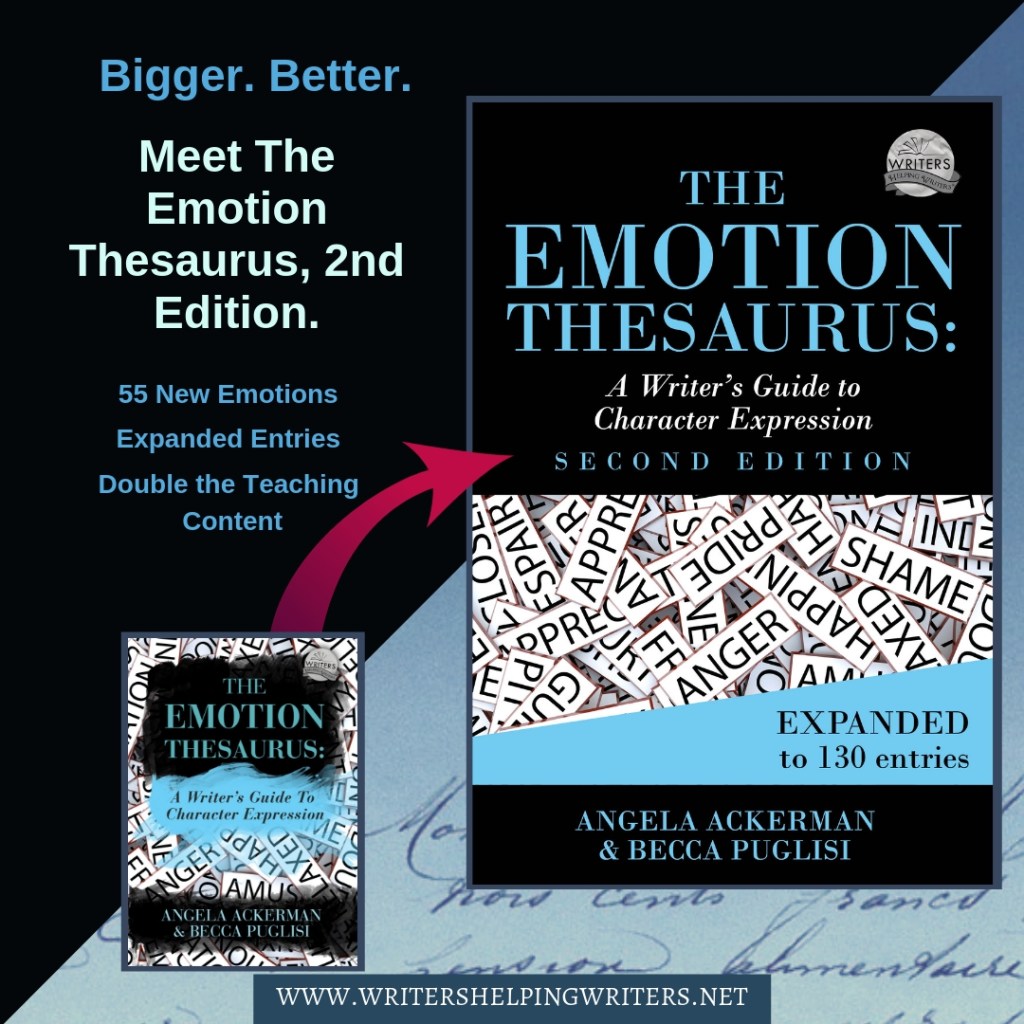
Writers, Have You Heard About The Occupation Thesaurus?

Hi everyone! As promised, today I have something fun to share…a special chance to win some help with your writing bills. Awesome, right?

Some of you may know Angela Ackerman and Becca Puglisi of Writers Helping Writers. Well, today they are releasing a new book, and I’m part of their street team. I’m handing the blog over to them so they can tell you about their Writer’s Showcase event, new book, and a great freebie to check out. Read on!


Certain details can reveal a lot about a character, such as their goals, desires, and backstory wounds. But did you know there’s another detail that can tie your character’s arc to the plot, provide intense, multi-layered conflict, AND shorten the “get to know the character” curve for readers?

It’s true. Your character’s occupation is a GOLD MINE of storytelling potential.

Think about it: how much time do you spend on the job? Does it fulfill you or frustrate you? Can you separate work from home? Is it causing you challenges, creating obstacles…or bringing you joy and helping you live your truth?

Just like us, most characters will have a job, and the work they do will impact their life. The ups and downs can serve us well in the story.

Maybe you haven’t thought much about jobs in the past and how they act as a window into your character’s personality, interests, and skills. It’s okay, you aren’t alone. The good news is that The Occupation Thesaurus: A Writer’s Guide to Jobs, Vocations, and Careers is going to do all the heavy lifting for you. (Here’s one of the job profiles we cover in this book: FIREFIGHTER.)

GIVEAWAY ALERT: THE WRITER’S SHOWCASE

To celebrate the release of a new book, Writers Helping Writers has a giveaway happening July 20th & July 23rd. You can win some great prizes, including gift certificates that can be spent on writing services within our Writer’s Showcase. Stop by to enter!

Resource Alert: A List of Additional Jobs Profiles for Your Characters

Some of the amazing writers in our community have put together additional career profiles for you, based on jobs they have done in the past. What a great way to get accurate information so you can better describe the roles and responsibilities that go with a specific job, right? To access this list, GO HERE.

Happy writing to all!

________________________________________________________

My review is imminent, although I’m still researching for the right job for a secondary character. Maybe a Ghost who’s a Writer or a Priest who moonlights as a hacker.

Anyway, tomorrow I’ll attempt posting my thoughts on what is already a five star essential in this writer’s reference library.

Stay tuned – as well as safe, secure, and inspired.

Writing craft books ~ Part 1

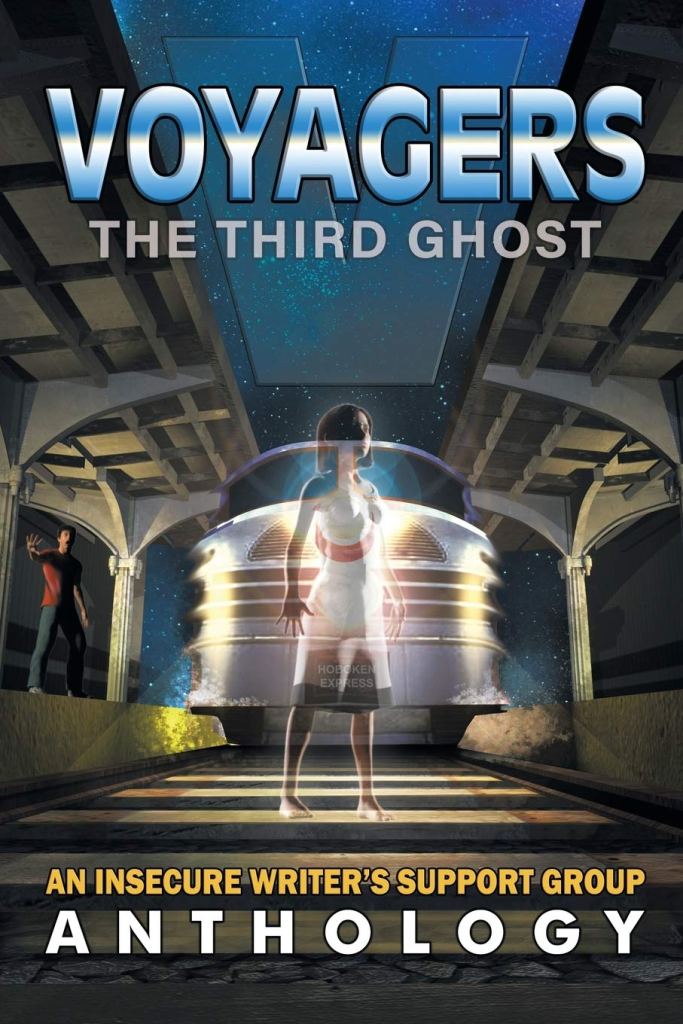
On the IWSG Anthology blog this week and next, the first five of our authors featured in the 2020 Insecure Writer’s Support Group anthology Voyagers:  The Third Ghostand our publisher L. Diane Wolfe are sharing some favourite writing craft books.  Check them out ~ perhaps you will find a new favourite to inspire your writing.  

https://iwsganthologies.blogspot.com/2020/07/favorite-writing-craft-books.html

Watch out for details on the new Thesaurus from the same team behind The Emotion Thesaurus – Angela Ackerman & Becca Puglisi, from One Stop for Writers. I will be reviewing and blogging about The Occupation Thesaurus on Monday July 20th. Drop by then, please.

Online Writing Resources ~ Part 2

On the IWSG Anthology blog his week, the second group of authors featured in the 2020 Insecure Writer’s Support Group anthology Voyagers:  The Third Ghost are sharing some favourite online writing resources beyond the IWSG.  From the Rosetta Stone to online archives discover what great resources our Voyager authors have found!   

And thanks once again to fellow Anthology author and blog-co-ordinator, Louise MacBeath Barbour for keeping us inspired.

https://iwsganthologies.blogspot.com/2020/07/favorite-online-writing-resources-not.html

#IWSG – Altered States

Another new month dawns, as does the Insecure Writer’s Support Group post. Where would I be without the Ninja Captain himself, Alex J. Cavanaugh who created the Insecure Writer’s Support Group? Lost in some cultural desert as IWSG do such amazing things for writers, from the annual Anthology to friendly advice for all us vacillating writers. Many thanks, Captain Alex, for keeping me focused on my real goals. Especially at this difficult time when world news is so depressing – from Covid-19 to environmental degradation.

Before I forget, I’m attempting to stay motivated so I can write another short story – an entry for 2020 IWSG Anthology Contest. It’s a challenging theme again – Dark Matter – so my old brain is attempting to re-awaken my initial leanings. More about the contest at:

https://www.insecurewriterssupportgroup.com/p/the-2019-annual-iwsg-anthology-contest.html

June was a confusing month, filled with distractions from my WIP writing/editing. However, the promotion surrounding the launch of Voyagers: The Third Ghost on May 5th has continued to inspire me. Here’s one of the last posts referencing that anthology:

https://rolandclarke.com/2020/06/24/online-writing-resources-part-1/

Anyway, on to the monthly question which worried me – even when the blocks fell away – or rather the chocks were pulled aside. At least, I’ve attempted something – hopefully coherent and entertaining if not useful.

Supposedly– the question is optional! 

So?

July 1 question – There have been many industry changes in the last decade, so what are some changes you would like to see happen in the next decade?

I may be a plotter but not when it comes to the distant goal of publishing even my current WIP. That strategy is as flexible as my decreasing writing budget. A few months ago, I had the money for an editor, but it’s been frittered away on other non-essentials.

Which? Too many to mention. Or am I being too vague – or evasive? Let’s just call some escapism and some household.

Well, not exactly all unrelated to my writing. There was the graphic image for my WIP:

https://rolandclarke.com/2020/06/17/wep-iwsg-june-challenge-urban-nightmare/

Graphics by Jonathan Temples – 
http://jonathantemples.co.uk/

…and that was based on future publishing potential. Graphic novels do seem to appeal to fit with a generation of shorter-attention span, minimal-readers. Also, we are becoming visual consumers so why not. Or it could be adapted into cover art if the traditional route survives.

And I sense the traditional will thrive in some guise, whether it’s e-books, audio-books, or page-turned paper touchables. OK, there may be a more visual offshoot related to Virtual Reality technology, but like graphic novels, words and stories will be crucial elements.

Genres will be as fluid as they seem to be whenever I glance at Amazon or Book Bub. I don’t suspect my genre – crime/mysteries – will diminish since it’s endured for decades, nor other genres I tend to read like historical fiction and fantasy.

However, I’m wary of predicting or planning for anything. I write what inspires me, not what seems marketable. If the industry changes, my manuscripts will gather dust and become my legacy – or scraps to be recycled. Anyway, my minimally-selling debut created no precedence – even in waste of space or dust-gathering.

One prediction though: the IWSG Anthology will continue for the near future as it’s a worthwhile exercise. So, I remind you again to check out the details of the next IWSG Anthology competition here:

https://www.insecurewriterssupportgroup.com/p/the-2019-annual-iwsg-anthology-contest.html

Stay sensible, safe, and inspired, please

***

The awesome co-hosts for the July 1 posting of the IWSG are Jenni Enzor,Beth Camp, Liesbet,Tyrean Martinson, andSandra Cox!

How can I be repetitive asking you to agree these guys are the best? Especially as they all have concerns, fears, and insecurities. But they struggle on, so ticker-tape applause for all of them – plus toasts with the best brew available.

Purpose of IWSG: To share and encourage. Writers can express doubts and concerns without fear of appearing foolish or weak. Those who have been through the fire can offer assistance and guidance. It’s a safe haven for insecure writers of all kinds!

Every month, we announce a question that members can answer in their IWSG post. These questions may prompt you to share advice, insight, a personal experience or story. Include your answer to the question in your IWSG post or let it inspire your post if you are struggling with something to say.

Posting: The first Wednesday of every month is officially Insecure Writer’s Support Group day. Post your thoughts on your own blog. Talk about your doubts and the fears you you have conquered. Discuss your struggles and triumphs. Offer a word of encouragement for others who are struggling. Visit others in the group and connect with your fellow writer – aim for a dozen new people each time – and return comments. This group is all about connecting!

Let’s rock the neurotic writing world!

Our Twitter handle is @TheIWSG and hashtag is #IWSG.

Every month, we announce a question that members can answer in their IWSG post. These questions may prompt you to share advice, insight, a personal experience, or story. Include your answer to the question in your IWSG post or let it inspire your post if you are struggling with something to say.

Witcher Boxed Set – a review

Ever since I met Geralt of Rivia in the game, The Witcher 3: The Wild Hunt and posted about it in W is for Witcher, I have been exploring the origins of that world in the creations of Andrzej Sapkowski.

Most recently on this blog site, I posted a brief update in my 2020 Blogging from A to Z Challenge revisits – my best posts from the 2014 to 2019 Challenges. The post was a link back to my 2018 delve into the Witcher origins:

https://rolandclarke.com/2020/04/27/w-for-witcher/

The extent of my interest/obsession with all things Witcher extended to a game review:

https://rolandclarke.com/2018/07/19/witcher-3-the-wild-hunt-a-review/

And a review of the first book in Geralt’s chronology – a collection of short stories which introducing Sapkowski’s character to a growing audience: The Last Wish:

https://rolandclarke.com/2018/05/24/the-last-wish-a-review/

Then the second collection of shorts – Sword of Destiny:

https://rolandclarke.com/2018/06/28/sword-of-destiny-a-review/

However, my journey didn’t end there as the Witcher world is growing – even before Netflix released the TV series over Christmas. In Witcher 3, there was an addictive card game called Gwent – well, addictive for some players like me. I even have a physical set of all the cards and a board.

Plus, the developers behind the video games, CD Projekt Red, have an ongoing online version of Gwent, which even includes international tournaments. I’m now addicted to online Gwent when I can find the time. I also completed CDPR’s Thronebreaker: The Witcher Tales, which also has Gwent at its heart.

But I digress as this post is ultimately a review of the next three books – part of Sapkowski’s awesome world-building. And my reading continues from here, so expect more.

The Witcher Boxed Set

(The Witcher #1-3)

by Andrzej Sapkowski


This special boxed set includes the first three novels in Andrzej Sapkowski’s New York Times bestselling epic fantasy saga — the books that introduced the world to THE WITCHER and inspired the hit Witcher video games.

“The universe of Sapkowski’s The Witcher is one of the most detailed and best-explored in modern fantasy.” —B&N

For over a century, humans, dwarves, gnomes, and elves have lived together in relative peace. But times have changed, the uneasy peace is over, and now the races are fighting once again. The only good elf, it seems, is a dead elf.

Geralt of Rivia, the cunning assassin known as The Witcher, has been waiting for the birth of a prophesied child. This child has the power to change the world – for good, or for evil.

As the threat of war hangs over the land and the child is hunted for her extraordinary powers, it will become Geralt’s responsibility to protect them all – and the Witcher never accepts defeat.

In Blood of Elves, The Time of Contempt, and Baptism of Fire, Sapkowski brings a fresh new voice to fantasy fiction, creating something wholly dark and exciting in this world of fairy tales and witchers.

Review 4.4 stars

I confess to being engrossed – probably obsessed – by Andrzej Sapkowski’s Witcher universe. It’s a fantasy world unlike the Norse/Anglo-Saxon/Celtic one I grew up absorbing. Trying to review the books out of their overall context is hard. They don’t read as standalone novels, although each one has a different style in how the tale is told and in emphasis, whether in who is the primary character or the overarching theme.

Each novel reads differently, sustaining the epic length of the saga. I admire Sapkowski’s ability to change styles – and applaud the translator. One crucial piece of advice: read the books in sequence and start not with Blood of Elves, but with The Last Wish https://www.goodreads.com/book/show/40603587-the-last-wish  –– as past events are key to the unfolding saga.

Blood of Elves: https://www.goodreads.com/book/show/6043781-blood-of-elves

Geralt may be a Witcher, a hired monster slayer, but his challenge is now the Child of Destiny, the Princess Ciri who escaped the destruction of Cintra. There are monsters, but unlike the two earlier initial books of short stories, his concern is personal and more of the monsters are human. Politics and racial tensions are simmering. 

Ciri and those who care for her have become the focus, not just Geralt. Learning about the Witcher universe is a learning process – for us and Ciri – and the jigsaw shimmers into view…although not all at once.

Some readers expected more about Geralt, but the key to his destiny and others is now Ciri. So, other characters play crucial roles – like the sorceress Yennefer, Geralt’s on-off love.

A second war between the Empire of Nilfgaard and the Northern Realms is brewing – and it helps to know more of the background from the shorts. The reader is given some clues and hints, but explaining the intricacies, the twists, the deceptions of politics – and history – will take a few books. It’s complex as in real life.

Yes, there are ‘pages of dialogue’ and Sapkowski indulges in writing chunks of text, sometimes verging on the didactic. Yet, I was engrossed and never stopped read – and adding to my knowledge of a richly-painted and crafted world. Having met a few familiar characters from the shorts – and played Witcher games – I was keen to read more about the Child of Destiny, about whether this child of prophecy will save the world or herald its destruction. 

The Time of Contempt: https://www.goodreads.com/book/show/14781491-the-time-of-contempt

The story from Blood of Elves develops with increasing complexity as more players get involved – which means more POVs and threads. For those who want a Witcher slaying monsters, beware. Be prepared for political intrigue instead, when a coup threatens the Wizard’s Guild, war breaks out across the lands, and everyone knows what’s best for Ciri.

Including Geralt, but a serious injury leaves the Witcher fighting for his life, while Ciri, in whose hands the world’s fate rests, has vanished. The threads, twists, deceptions, double-crossings, intrigues, and intricacies are spreading – like a disease.

And yes, there are chunks of Sapkowski’s trademark sermonic yet instructive info-dumps. I welcomed them as I’m open to indulging in his world-building, but I recognise many aren’t. But then I’m an addict who even plays the Witcher games, so I dive down research rabbit holes with little prompting.

Anyway, this continuation builds on the previous book – in a more varied and engrossing style. There are distinct approaches to the storytelling, depending on the protagonist – and there are some more now. We get a chance to see events from various angles, depending on the character’s allegiances to one of the Northern Realms, the Nilfgaard Empire, the non-human Scoia’tael, or those caught up in the struggles. Some are poignant and tragic, like a King’s messenger called Aplegatt – one of my favourite chapters. Trying to remain neutral is hard, especially for Geralt.

“It’s incredible,’ the Witcher smiled hideously, ‘how much my neutrality outrages everybody.’”

The portrayal of the non-humans is not idealised either – be they dwarves, gnomes, elves, or dryads. They may wage a bloody struggle against humans, but I understand why they fight and for what since Sapkowski portrays their dilemma in detail.

The book has a cliff-hanger, but the author’s impudently clever explanation made me chuckle. And I had to read the next book.

Baptism of Fire: https://www.goodreads.com/book/show/18656031-baptism-of-fire

Onto Book 3 of this Witcher set and the weaving threads bring in new characters – ones I know from the Witcher 3: The Wild Hunt game and the Gwent card-game. As I read more and more, engrossed, I was wishing I’d bought the next two books.

Anyway, the plot layers are growing. Now that dark times have fallen upon the world, Geralt is helpless until he has recovered from his injuries – in Brokilon, home of the dryads. While war rages across all the lands, the future of magic is under threat and those sorcerers who survive are determined to protect it. It’s an impossible situation in which to find one girl – Ciri, the heiress to the throne of Cintra. She has vanished – until a rumour places her in the Nilfgaard court, preparing to marry the Emperor.

However, the reader knows differently, although Ciri is struggling to survive and too far from those like Geralt, who want to help her. Her story takes disturbing turns as she stumbles from one challenge to another, discovering innate skills. Her ‘adventures’ are told in a contrasting style to the events of those searching/pursuing her.

More characters are introduced with varying agendas and idiosyncrasies – distinct too…with a few forgivable tropes. However, most are complex and deceptive. Never trust first appearances. Geralt adds to his traveling companions at various crossroads, and I welcomed meeting Emiel Regis Rohellec Terzieff-Godefroy, having encountered Regis in the Witcher 3. Let’s just say Regis, the intellectual barber-surgeon of Dillingen is one of the best characters in all the books – comparable in a way to Borch Three Jackdaws alias Villentretenmerth from one of the earlier short stories.

There are the expected passages that some readers skip as didactic sermonising – or bad writing – and others like me relish as informative. There are other wonderful descriptive passages – as in the other books – but then I’m a sucker for purple prose if it captivates in its craft. Easily satisfied?

By the expected/foreshadowed climax/cliff-hanger, I was wondering where the Rats would end up and whether Geralt would find Ciri before chaos ensued. So, I spent my money and I’m now reading the final two books in the series – but those reviews must wait.

Having given up recently on another trilogy, as scenes felt repetitive – copy & pasted almost – this set of books was an engrossing read.

This isn’t my number one fantasy saga/series, but for all its faults, I rate it for what it adds to the genre. My favourite isn’t even any of the obvious ones. [See the When Women Were Warriors Series https://www.goodreads.com/series/46351-when-women-were-warriors]

Story – five stars

Setting/World-building – five stars

Characters – five stars

Diversity – four stars

Structure – four stars

Readability – four stars

Editing – four stars