P is for Pushmataha

P

Pushmataha (c. 1760s–December 24, 1824; also spelled Pooshawattaha, Pooshamallaha, or Poosha Matthaw), the “Indian General”, was one of the three regional chiefs of the major divisions of the Choctaw in the 19th century. Rejecting the offers of alliance and reconquest proffered by Tecumseh, Pushmataha led the Choctaw to fight on the side of the United States in the War of 1812.

When the neighbouring Creek Indians, then located in present-day Alabama, killed more than 500 Americans at Fort Mims on 30 August 1813, Pushmataha assumed his position as war leader. He quickly organized a Choctaw military force to assist General Andrew Jackson in fighting against the Creeks.
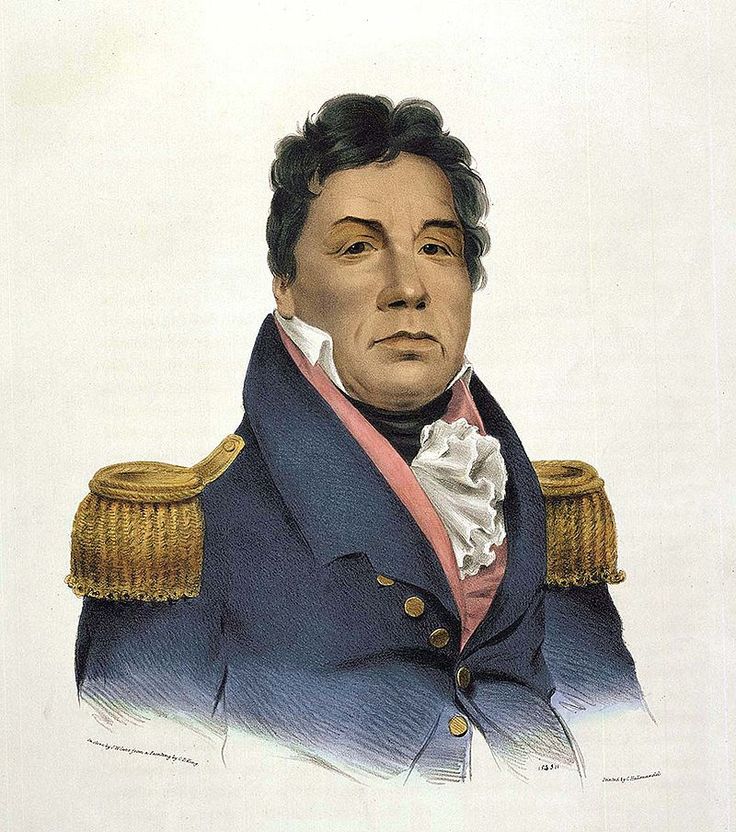
PUSH-MA-TA-HA. Choctaw chief, ca. 1837-1844, Publisher: McKenney and Hall, Copy after Charles Bird King

PUSH-MA-TA-HA. Choctaw chief, ca. 1837-1844, Publisher: McKenney and Hall, Copy after Charles Bird King

For that assistance, Jackson was forever grateful, but when the American general returned to Choctaw country in 1820 to negotiate the Treaty of Doak’s Stand, which called for Choctaw removal to lands west of the Mississippi River, Pushmataha resisted. He told Jackson that the lands in the west (present-day Arkansas) were too poor to support agriculture and hunting. In addition, Pushmataha pointed out that white settlers already lived on those lands. He knew that they would not leave voluntarily simply because the U.S. government had decided that those lands now belonged to the Choctaws.

Pushmataha tried to get a promise from Jackson to evict the white settlers, but this issue was never settled and it brought Pushmataha and other chiefs to Washington D.C. in 1824. They sought compensation for those Arkansas lands that they could never settle because of the large numbers of whites already living there. During the 1824 negotiations, his portrait was painted by Charles Bird King. Pushmataha also became sick and died. He was buried with full military honours in the Congressional Cemetery in Washington, D.C.

Portrait of Pushmataha unveiled April 1, 2001. It hangs in the Mississippi Hall of Fame, Old Capitol Museum, in Jackson, Mississippi. The portrait was presented by the Mississippi Band of Choctaw Indians. Portrait by Mississippian Katherine Roche Buchanan. ~ Courtesy Mississippi Department of Archives and History

Portrait of Pushmataha unveiled April 1, 2001. It hangs in the Mississippi Hall of Fame, Old Capitol Museum, in Jackson, Mississippi. The portrait was presented by the Mississippi Band of Choctaw Indians. Portrait by Mississippian Katherine Roche Buchanan. ~ Courtesy Mississippi Department of Archives and History

Many historians considered him the “greatest of all Choctaw chiefs”. Pushmataha was highly regarded among Native Americans, Europeans, and white Americans, for his skill and cunning in both war and diplomacy.

NOTE: The Memoirs in my novel “Seeking A Knife” are received by a Choctaw journalist, whose ancestors might have fought alongside Pushmataha.

Further Information

http://mshistorynow.mdah.state.ms.us/articles/14/pushmataha-choctaw-warrior-diplomat-and-chief

http://en.wikipedia.org/wiki/Pushmataha#War_of_1812

PREVIOUS A TO Z POSTS

A is for Anishinaabe ~ B is for Brock ~ C is for Coloured Corps ~ D is for Detroit ~ E is for Erie ~ F is for First Nations ~ G is for Ghent ~ H is for Harrison ~ I is for Impressment ~ J is for Jackson ~ K is for Key ~ L is for Lundy’s ~ M is for Madison ~ N is for New Orleans ~ O is for Ontario

 A2Z-BADGE-000 [2015] - Life is Good

The brainchild of Arlee Bird, at Tossing it Out, the A to Z Challenge is posting every day in April except Sundays (we get those off for good behaviour.) And since there are 26 days, that matches the 26 letters of the alphabet. On April 1, we blog about something that begins with the letter “A.” April 2 is “B,” April 3 is “C,” and so on. Please visit other challenge writers.

My theme is ‘The War of 1812’, a military conflict, lasting for two-and-a-half years, fought by the United States of America against the United Kingdom of Great Britain and Ireland, its North American colonies, and its American Indian allies. The Memoirs of a British naval officer from the war is central to my novel “Seeking A Knife” – part of the Snowdon Shadows series.

Further reading on The War of 1812:

http://www.eighteentwelve.ca/?q=eng

http://www.history.com/topics/war-of-1812


http://www.theglobeandmail.com/globe-debate/the-war-of-1812-stupid-but-important/article547554/

http://www.shmoop.com/war-1812/

http://www.pbs.org/wned/war-of-1812/essays/

O is for Ontario

O

Lake Ontario and the area that became Ontario was a key battleground during the War of 1812. Upper Canada, the predecessor of modern Ontario, was created in 1791 by the division of the old colony of Quebec into Lower Canada in the east and Upper Canada in the west. A wilderness society settled largely by Loyalists and land-hungry farmers moving north from the United States, Upper Canada endured war with America, an armed rebellion, and half a century of economic and political growing pains until it was merged again with its French-speaking counterpart into the Province of Canada.

Upper Canada - The Canadian Encyclopedia

Upper Canada – The Canadian Encyclopedia

During the War there were three theatres, but varying in significance as well as the fierceness of the encounters.

The most significant ones on land were: Detroit Frontier – the Battle of Fort Michilimackinac (see A is for Anishinaabe); and on the Niagara Frontier – Queenston Heights fought on October 13, 1812 on the Niagara Escarpment (Q will be for Queenston – but see also B is for Brock), and most notably the Battle of York fought on April 27, 1813, in York (present-day Toronto), the capital of the province of Upper Canada (Y will be for York).

A scene on Lake Ontario - United States sloop of war Gen. Pike, Commodore Chauncey, and the British sloop of war Wolfe, Sir James Yeo, preparing for action, September 28, 1813. Published and sold by Shelton & Kennet, Cheshire, Con. November 1st 1813

A scene on Lake Ontario – United States sloop of war Gen. Pike, Commodore Chauncey, and the British sloop of war Wolfe, Sir James Yeo, preparing for action, September 28, 1813. Published and sold by Shelton & Kennet, Cheshire, Con. November 1st 1813

There were also engagements on Lake Ontario, a prolonged naval contest for control of the lake during the War. Few actions were fought, none of which had decisive results, and the contest essentially became a naval building race, sometimes referred to sarcastically as the “Battle of the Carpenters”. Both sides (especially the British) renamed, re-rigged and re-armed their ships several times during the war. Both sides also possessed several unarmed schooners or other small vessels for use as transports or tenders.

Because neither side had been prepared to risk everything in a decisive attack on the enemy fleet or naval base, the result of all the construction effort on Lake Ontario was an expensive draw. The great demands for men and materials made by both squadrons adversely affected other parts of the war effort in the region.

Blockhouse and Battery in Old Fort, Toronto, 1812, [ca. 1921] C. W. Jefferys Pen and ink drawing on paper 29.2 cm x 36.8 cm (11.5" x 14.5") Government of Ontario Art Collection, 621228

Blockhouse and Battery in Old Fort, Toronto, 1812, [ca. 1921] C. W. Jefferys Pen and ink drawing on paper 29.2 cm x 36.8 cm (11.5″ x 14.5″) Government of Ontario Art Collection, 621228

During the war, Upper Canada, whose inhabitants were predominantly American in origin, was invaded and partly occupied. American forces were repulsed by British regulars assisted by Canadian militia. The war strengthened the British link, rendered loyalism a hallowed creed, fashioned martyr-heroes such as Sir Isaac Brock and Tecumseh, and appeared to legitimize the political status quo.

The war ended Upper Canada’s isolation. American immigration was formally halted, but Upper Canada received an increased number of British newcomers — some with capital to spend.

Further Information

http://en.wikipedia.org/wiki/Upper_Canada

http://www.thecanadianencyclopedia.ca/en/article/upper-canada/   

http://www.archives.gov.on.ca/en/explore/online/1812/index.aspx

http://en.wikipedia.org/wiki/Engagements_on_Lake_Ontario

PREVIOUS A TO Z POSTS

A is for Anishinaabe ~ B is for Brock ~ C is for Coloured Corps ~ D is for Detroit ~ E is for Erie ~ F is for First Nations ~ G is for Ghent ~ H is for Harrison ~ I is for Impressment ~ J is for Jackson ~ K is for Key ~ L is for Lundy’s ~ M is for for Madison ~ N is for New Orleans

 A2Z-BADGE-000 [2015] - Life is Good

The brainchild of Arlee Bird, at Tossing it Out, the A to Z Challenge is posting every day in April except Sundays (we get those off for good behaviour.) And since there are 26 days, that matches the 26 letters of the alphabet. On April 1, we blog about something that begins with the letter “A.” April 2 is “B,” April 3 is “C,” and so on. Please visit other challenge writers.

My theme is ‘The War of 1812’, a military conflict, lasting for two-and-a-half years, fought by the United States of America against the United Kingdom of Great Britain and Ireland, its North American colonies, and its American Indian allies. The Memoirs of a British naval officer from the war is central to my novel “Seeking A Knife” – part of the Snowdon Shadows series.

Further reading on The War of 1812:

http://www.eighteentwelve.ca/?q=eng

http://www.history.com/topics/war-of-1812


http://www.theglobeandmail.com/globe-debate/the-war-of-1812-stupid-but-important/article547554/

http://www.shmoop.com/war-1812/

http://www.pbs.org/wned/war-of-1812/essays/

N is for New Orleans

N

The Battle of New Orleans was a series of engagements fought from December 24, 1814 through January 8, 1815 and was the final major battle of the War of 1812. American combatants, commanded by Major General Andrew Jackson, prevented an invading British Army, commanded by General Edward Pakenham, and Royal Navy, commanded by Admiral Alexander Cochrane, from seizing New Orleans as a strategic tool to end the war. New Orleans was a  vital seaport considered the gateway to the United States’ newly purchased territory in the West. If it could seize the Crescent City, the British Empire would gain dominion over the Mississippi River and hold the trade of the entire American South under its thumb.

Americans believed that a vastly powerful British fleet and army had sailed for New Orleans (Jackson himself thought 25,000 troops were coming), and most expected the worst. The victory, leading a motley assortment of militia fighters, frontiersmen, slaves, Indians and even pirates came after weathering a frontal assault by a superior British force, and inflicting devastating casualties along the way.

1815 painting of the battle by participant Jean Hyacinthe de Laclotte of the Louisiana Militia based on his memories and sketches made at the site.

1815 painting of the battle by participant Jean Hyacinthe de Laclotte of the Louisiana Militia based on his memories and sketches made at the site. 

New Orleans boosted the reputation of Andrew Jackson and helped to propel him to the White House. The anniversary of the battle was celebrated as a national holiday for many years, and continues to be commemorated in south Louisiana.

The Treaty of Ghent was signed on December 24, 1814 (but was not ratified by the US Government until February 1815), and hostilities would continue in Louisiana until January 18 when all of the British forces had retreated, finally putting an end to the Battle of New Orleans

From December 25, 1814, to January 26, 1815, British casualties during the Louisiana Campaign, apart from the assault on January 8, were 49 killed, 87 wounded and 4 missing. Thus, British casualties for the entire campaign totalled 2,459: 386 killed, 1,521 wounded, and 552 missing. American casualties for the entire campaign totalled 333: 55 killed, 185 wounded, and 93 missing.

Further Information:

http://www.history.com/topics/battle-of-new-orleans

http://en.wikipedia.org/wiki/Battle_of_New_Orleans


PREVIOUS A TO Z POSTS

A is for Anishinaabe ~ B is for Brock ~ C is for Coloured Corps ~ D is for Detroit ~ E is for Erie ~ F is for First Nations ~ G is for Ghent ~ H is for Harrison ~ I is for Impressment ~ J is for Jackson ~ K is for Key ~ L is for Lundy’s ~ M for Madison

 A2Z-BADGE-000 [2015] - Life is Good

The brainchild of Arlee Bird, at Tossing it Out, the A to Z Challenge is posting every day in April except Sundays (we get those off for good behaviour.) And since there are 26 days, that matches the 26 letters of the alphabet. On April 1, we blog about something that begins with the letter “A.” April 2 is “B,” April 3 is “C,” and so on. Please visit other challenge writers.

My theme is ‘The War of 1812’, a military conflict, lasting for two-and-a-half years, fought by the United States of America against the United Kingdom of Great Britain and Ireland, its North American colonies, and its American Indian allies. The Memoirs of a British naval officer from the war is central to my novel “Seeking A Knife” – part of the Snowdon Shadows series.


Further reading on The War of 1812:

http://www.eighteentwelve.ca/?q=eng

http://www.history.com/topics/war-of-1812

http://www.theglobeandmail.com/globe-debate/the-war-of-1812-stupid-but-important/article547554/

http://www.shmoop.com/war-1812/

http://www.pbs.org/wned/war-of-1812/essays/


M is for Madison

M

James Madison, Jr. (March 16, 1751 – June 28, 1836) was an American statesman, political theorist, and the fourth President of the United States (1809–17). He is hailed as the “Father of the Constitution” for being instrumental in the drafting of the U.S. Constitution and as the key champion and author of the Bill of Rights. He was President throughout the War of 1812, and served as a politician much of his adult life.

No war monger, Madison found himself pressured into declaring war and was grateful when the chance for peace arose. However, Madison’s chief goal was to defeat and occupy part of Canada, which many in the US believed would eventually be absorbed into the United States anyway as the nation grew. By defeating British forces in North America, Madison hoped to end British abuses of US citizens and trade for good.

Despite having declared war and begun military operations against their enemy, Madison found his nation initially unprepared for serious or sustained campaigns. Congress had not properly funded or prepared an army, and a number of the states did not support what was referred to as “Mr. Madison’s War” and would not allow their militias to join the campaign. Despite these setbacks, American forces attempted to fight off and attack British forces. The U.S. met defeat much of the time both on land and at sea, but its well-built ships proved to be formidable foes.

James Madison, 4th president of the United States (courtesy White House Historical Association)

James Madison, 4th president of the United States (courtesy White House Historical Association)

But that did not stop the British from pressing their land forces closer and closer to Washington. While Madison was gone from the capital, the British carried out a daring and terrible raid and ransacked the White House and the capital building, setting fires and raising hell as payback for the sacking of York [Toronto], which the Americans, after defeating the British, had vandalized and set ablaze 27 April 1813.

But British victories were soon repelled, and with control of the lakes and successful operations in Baltimore and later New Orleans, Madison’s war efforts were now finding the public stoked and supportive. But it was too late.  By 1814, both American and British leaders were tired of the conflict, and, finding themselves in mutual agreement, signed the Treaty of Ghent in 1814. The Treaty’s resolutions essentially pretended the war had never happened. Territory and prisoners were returned. Old boundaries were re-established. It was a war for which peace became the only of sign of victory.

Though the war was mismanaged, there were some key victories that emboldened the Americans. Once blamed for the errors in the war, Madison was eventually hailed for its triumphs.

Madison survived this first unpopular war in American history. No lover of military affairs, he quickly turned his attention to matters of economics, law and trade, but now keenly knew the value of a well-armed and prepared army and navy.

Further Information

http://www.history.com/topics/us-presidents/james-madison

http://en.wikipedia.org/wiki/James_Madison

http://www.eighteentwelve.ca/?q=eng/Topic/5

PREVIOUS A TO Z POSTS

A is for Anishinaabe ~ B is for Brock ~ C is for Coloured Corps ~ D is for Detroit ~ E is for Erie ~ F is for First Nations ~ G is for Ghent ~ H is for Harrison ~ I is for Impressment ~ J is for Jackson ~ K is for Key ~ L is for Lundy’s

A2Z-BADGE-000 [2015] - Life is Good

The brainchild of Arlee Bird, at Tossing it Out, the A to Z Challenge is posting every day in April except Sundays (we get those off for good behaviour.) And since there are 26 days, that matches the 26 letters of the alphabet. On April 1, we blog about something that begins with the letter “A.” April 2 is “B,” April 3 is “C,” and so on. Please visit other challenge writers.

My theme is ‘The War of 1812’, a military conflict, lasting for two-and-a-half years, fought by the United States of America against the United Kingdom of Great Britain and Ireland, its North American colonies, and its American Indian allies. The Memoirs of a British naval officer from the war is central to my novel “Seeking A Knife” – part of the Snowdon Shadows series.

Further reading on The War of 1812:

http://www.eighteentwelve.ca/?q=eng

http://www.history.com/topics/war-of-1812

http://www.theglobeandmail.com/globe-debate/the-war-of-1812-stupid-but-important/article547554/

http://www.shmoop.com/war-1812/

http://www.pbs.org/wned/war-of-1812/essays/

L is for Lundy’s Lane

L

The Battle of Lundy’s Lane (also known as the Battle of Niagara Falls, the fiercest and bloodiest land action during the War of 1812, took place on 25 July 1814, in present-day Niagara Falls, Ontario. It was one of the deadliest battles ever fought in Canada.

The battle took place around the junction of Portage Road and Lundy’s Lane, in what is now the city of Niagara Falls. At the height of the 5-hour-long battle, much of which was fought after dark, about 3,000 British and Canadian soldiers faced some 2,800 American invaders. Casualties were heavy, with both sides losing more than 850 men killed, wounded or missing in action. Tactically, the battle of Lundy’s Lane can be considered to have been a draw, since neither side had been defeated. Strategically, however, it was a British victory since the battle ended the Americans’ Niagara offensive; by early November 1814, they had retreated to the New York side of the Niagara River.

The Battle of Lundy's Lane, [ca. 1921] C. W. Jefferys Pen and Ink Drawing Government of Ontario Art Collection, 621234

The Battle of Lundy’s Lane, [ca. 1921]
C. W. Jefferys
Pen and Ink Drawing
Government of Ontario Art Collection, 621234

However, the bloody stalemate along Lundy’s Lane followed the decisive American victory near Chippewa Creek. Both battles confirmed that the American regular forces had evolved into a highly professional army. Brigadier General Winfield Scott is widely credited for this progress, having modelled and trained his troops using French Revolutionary Army drills and exercises, although not all the American units present at Lundy’s Lane had benefitted from his personal training. Not only did Scott work to create an American version of European armies, but he also tried to emulate their aristocratic officer corps.

Winfield Scott - Wikipedia, the free encyclopedia

Winfield Scott during War of 1812 – Wikipedia, the free encyclopedia

In 1895, the federal government erected a 12-metre-high granite memorial monument in the Drummond Hill Cemetery, the centre of the battleground. Various plaques and smaller memorials are also on the site. The battleground received formal designation as a national Historic Site from the Historic Sites and Monuments Board of Canada in 1937.

Further Information:

http://www.eighteentwelve.ca/?q=eng/Topic/117

http://en.wikipedia.org/wiki/Battle_of_Lundy%27s_Lane

PREVIOUS A TO Z POSTS

A is for Anishinaabe ~ B is for Brock ~ C is for Coloured Corps ~ D is for Detroit ~ E is for Erie ~ F is for First Nations ~ G is for Ghent ~ H is for Harrison ~ I is for Impressment ~ J is for Jackson ~ K is for Key

A2Z-BADGE-000 [2015] - Life is Good

The brainchild of Arlee Bird, at Tossing it Out, the A to Z Challenge is posting every day in April except Sundays (we get those off for good behaviour.) And since there are 26 days, that matches the 26 letters of the alphabet. On April 1, we blog about something that begins with the letter “A.” April 2 is “B,” April 3 is “C,” and so on. Please visit other challenge writers.

My theme is ‘The War of 1812’, a military conflict, lasting for two-and-a-half years, fought by the United States of America against the United Kingdom of Great Britain and Ireland, its North American colonies, and its American Indian allies. The Memoirs of a British naval officer from the war is central to my novel “Seeking A Knife” – part of the Snowdon Shadows series.

Further reading on The War of 1812:

http://www.eighteentwelve.ca/?q=eng

http://www.history.com/topics/war-of-1812

http://www.theglobeandmail.com/globe-debate/the-war-of-1812-stupid-but-important/article547554/

http://www.shmoop.com/war-1812/

http://www.pbs.org/wned/war-of-1812/essays/

K is for Key

K

Francis Scott Key (August 1, 1779 – January 11, 1843) was an American lawyer, author, and amateur poet, from Georgetown, who wrote the lyrics to the United States’ national anthem, “The Star-Spangled Banner”.

During the War of 1812, one of Key’s friends, Dr. William Beanes, was taken prisoner by the British. Key went to Baltimore with British Prisoner Exchange Agent Colonel John Stuart Skinner, and on a British ship negotiated the release of several prisoners. Skinner, Key, and Beanes were not allowed to return to their own sloop because they had become familiar with the strength and position of the British units and with the British intent to attack Baltimore.

From aboard a British ship located about eight miles away, Key watched the bombarding of the American forces at Fort McHenry on the night of September 13–14, 1814. After a day, the British were unable to destroy the fort and gave up. Key was relieved to see the enormous American flag still flying proudly over Fort McHenry and reported this to the prisoners below deck. The 30 x 42 feet flag had been pieced together on the floor of a Baltimore brewery, and has been preserved in the Smithsonian Institution, Washington DC.

This 1873 image is the first known photograph taken of the Star-Spangled Banner. Taken at the Boston Navy Yard on June 21st, 1873. (Courtesy of the American Antiquarian Society, Worcester, Massachusetts.)

This 1873 image is the first known photograph taken of the Star-Spangled Banner. Taken at the Boston Navy Yard on June 21st, 1873. (Courtesy of the American Antiquarian Society, Worcester, Massachusetts.)

Back in Baltimore and inspired, Key wrote a poem about his experience, “Defence of Fort M’Henry”. The poem was printed in newspapers and eventually set to the music of a popular English drinking tune called “To Anacreon in Heaven” by composer John Stafford Smith. It was a popular tune Key had already used as a setting for his 1805 song “When the Warrior Returns,” celebrating U.S. heroes of the First Barbary War. (Key used the “star spangled” flag imagery in the earlier song.)

People began referring to the song as “The Star-Spangled Banner” and it became increasingly popular, competing with “Hail, Colombia” (1796) as the de facto national anthem by the Mexican-American War and American Civil War. In 1916 President Woodrow Wilson announced that it should be played at all official events. It was adopted as the national anthem on March 3, 1931.

"Francis Scott Key by Joseph Wood c1825" by attributed to Joseph Wood (1778-1830) - . Licensed under Public Domain via Wikimedia Commons -

“Francis Scott Key by Joseph Wood c1825” by attributed to Joseph Wood (1778-1830) – . Licensed under Public Domain via Wikimedia Commons –

Francis Scott Key died of pleurisy on January 11, 1843. Today, the flag that flew over Fort McHenry in 1914 is housed at the Smithsonian Institution’s Museum of American History in Washington, D.C.

http://www.si.edu/Encyclopedia_SI/nmah/starflag.htm

http://www.smithsonianmag.com/history/the-story-behind-the-star-spangled-banner-149220970/

http://www.history.com/this-day-in-history/key-pens-star-spangled-banner

http://en.wikipedia.org/wiki/Francis_Scott_Key

http://amhistory.si.edu/starspangledbanner/the-war-of-1812.aspx

PREVIOUS A TO Z POSTS:

A is for Anishinaabe ~ B is for Brock ~ C is for Coloured Corps ~ D is for Detroit ~ E is for Erie ~ F is for First Nations ~ G is for Ghent ~ H is for Harrison ~ I is for Impressment ~ J is for Jackson

A2Z-BADGE-000 [2015] - Life is Good

The brainchild of Arlee Bird, at Tossing it Out, the A to Z Challenge is posting every day in April except Sundays (we get those off for good behaviour.) And since there are 26 days, that matches the 26 letters of the alphabet. On April 1, we blog about something that begins with the letter “A.” April 2 is “B,” April 3 is “C,” and so on. Please visit other challenge writers.

My theme is ‘The War of 1812’, a military conflict, lasting for two-and-a-half years, fought by the United States of America against the United Kingdom of Great Britain and Ireland, its North American colonies, and its American Indian allies. The Memoirs of a British naval officer from the war is central to my novel “Seeking A Knife” – part of the Snowdon Shadows series.

Further reading on The War of 1812:

http://www.eighteentwelve.ca/?q=eng

http://www.history.com/topics/war-of-1812

http://www.theglobeandmail.com/globe-debate/the-war-of-1812-stupid-but-important/article547554/

http://www.shmoop.com/war-1812/

http://www.pbs.org/wned/war-of-1812/essays/