#IWSG – Floored

Although I knew December’s Insecure Writer’s Support Group post was speeding closer, I forced myself to focus on completing November’s priorities first. So, this month’s question had me stumped… out with no runs. But I’ve jumped ahead and need to back up to address my writing intentions.

Last month, I said my Snowdon Shadows police procedural, Fevered Fuse, was shelved, but some kind writers offered to critique a few chapters for me, as that decision was preying on my mind. They helped me devise a strategy for the series… well, for the first two books, in chronological order. Naturally, my heart is still in Wales.

  1.  ‘Fevered Fuse’ needs work before it is publishable, unless I release it in serial form to fans of Sparkle Anwyl, its quirky lesbian detective. One issue could be that the novel attempted to incorporate Sparkle’s early cases and her earlier teenage conflicts.
  2. ‘Fates Maelstrom’, the second book in the series, is my priority and a better use of my final time here, if I avoid all the pitfalls that plague ‘Fevered Fuse’.
  3. The two other titles, No. 3, Seeking a Knife, and No.4, ‘Ruined Retreat’, will remain as drafts to revise if an earlier title encourages readers to demand more of Sparkle.

As for my Ukraine saga, Freedom Flights, our Ninja Captain was correct in saying, “I know you are passionate about Ukraine. Keep after that story. Don’t let people forget”. The people of Ukraine are why I keep writing. I’m now attempting to write enough episodes to cover two earlier months every current month. Hence, in November, I covered events that took place between April 1st and May 30th, 2025.

Slava Ukraini

Heroiam slava!

**

Every month, IWSG announces a question that members can answer in their IWSG posts. These questions may prompt you to share advice, insight, a personal experience, or a story. Include your answer to the question in your IWSG post or let it inspire your post if you are struggling with something to say. 

Remember, the question is optional!

December 3 question – As a writer, what was one of the coolest/best gifts you ever received?

My first thought was, “I’m stumped, or I’m floored”, since nothing came to mind.

Then, like last month, I remembered A Sailor’s Life for me. Aged about eleven, I wrote an essay on ‘A Day in the Life of a Navy Helicopter pilot’, which was among the winners of a memorable three days with the Royal Navy. All the prize-winners went to Portsmouth, toured HMS Victory, visited the Fleet Air Arm’s HMS Ariel, went inside a docked submarine at HMS Dolphin, and travelled on the guided missile destroyer, HMS Devonshire, along the South Coast from Portsmouth to Devonport. Of course, I didn’t join the Royal Navy, as my career took a different path, as I covered last month.
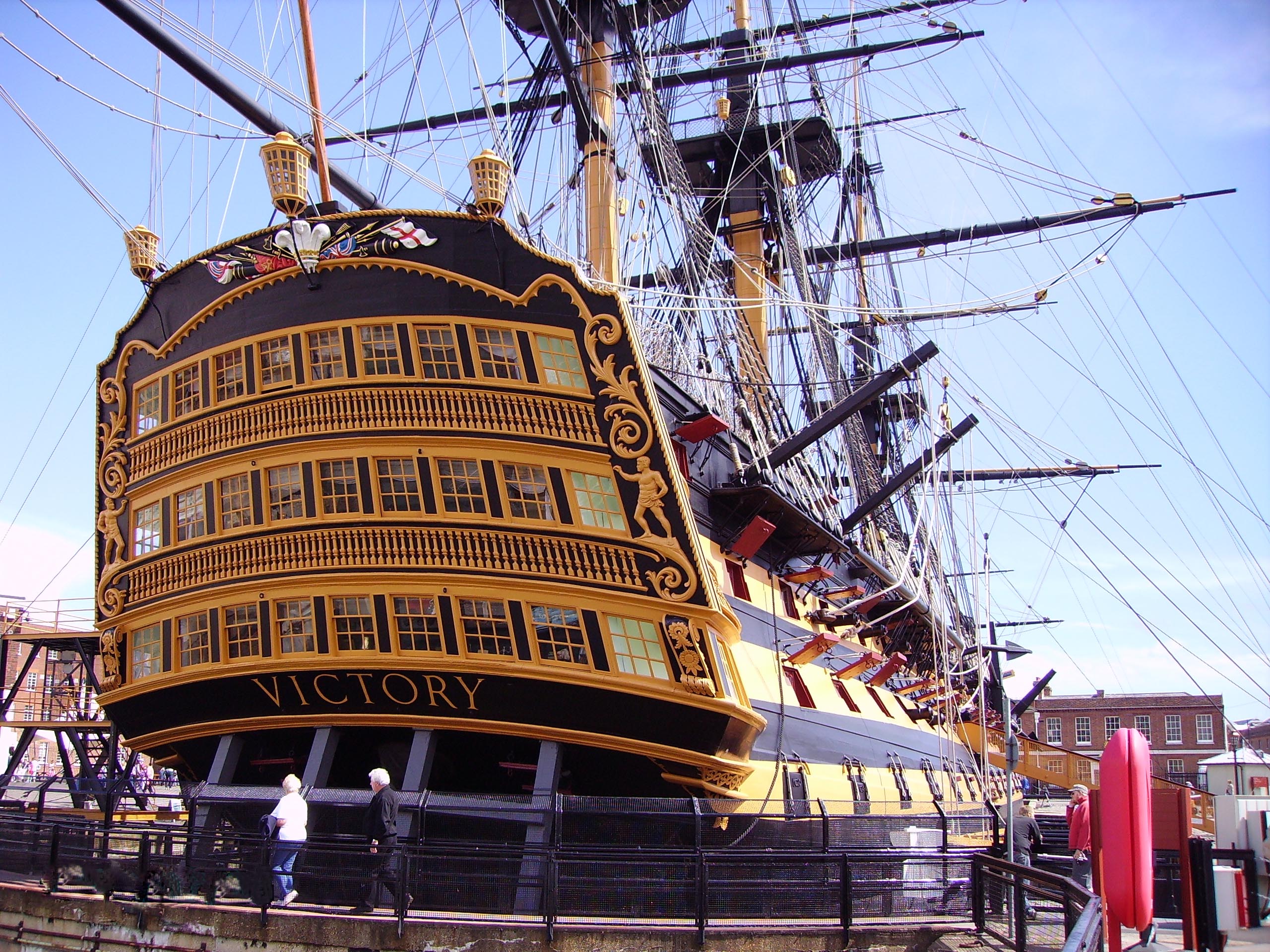
HMS Victory in drydock at Portsmouth Historic Dockyard. Date: 9 May 2008 (according to Exif data). Source/Author: Ballista

However, prizes aren’t gifts, and that means thinking of one that gets me off the floor…

Maybe a tape recorder. Recently, my wife, Juanita, bought me a recorder so I could tape crazy thoughts at night or when my laptop was asleep. Great gift and better than the high-tech digital one that was too small for my fingers in the dark. The only problem is when Juanita asks who I’m talking to. Perhaps creating an acronym, as my detective Sparkle Anwyl does, is my most accessible mnemonic device.

Looking at my desk reminds me of other cool gifts: the decorated notebooks that friends and family have given me over the years… some too attractive for my scrawl.

There are sure to be cooler gifts, but they’ve evaded recall.

**

The awesome co-hosts for the December 3 posting of the IWSG are Tara Tyler, Ronel Janse van Vuuren, Pat Garcia, Liza, and Natalie Aguirre!

Finally, don’t forget to visit other writers via the IWSG site for their invaluable insights on writing:

Insecure Writer’s Support Group

Let’s rock the neurotic writing world!

Our Twitter handle is @TheIWSG, and our hashtag is #IWSG.

Purpose: To share and encourage. Writers can express doubts and concerns without fear of appearing foolish or weak. Those who have been through the fire can offer assistance and guidance. It’s a safe haven for insecure writers of all kinds!


Posting: The first Wednesday of every month is officially Insecure Writer’s Support Group Day. Post your thoughts on your own blog. Talk about your doubts and the fears you have conquered. Discuss your struggles and triumphs. Offer a word of encouragement for others who are struggling. Visit others in the group and connect with your fellow writer – aim for a dozen new people each time – and return comments. This group is all about connecting!

U for United States Navy

My 2020 Blogging from A to Z Challenge revisits my best posts from the 2014 to 2019 Challenges.

U for United States Navy (2015)

Although there were few victors, the War of 1812 saw a power-shift at sea, from the Royal Navy to the burgeoning US Navy. Although today, the Royal Navy remains a force not to ignore.

Gregory Wendell, the author of the diary in ‘Seeking A Knife’ in my Snowdon Shadows series, is an RN officer who encounters the USN on the Great Lakes.

How much do you know about the War of 1812? Do you envisage the US Navy as always as powerful as today? Have you seen any of the early ships?

Links to my other 2020 A to Z posts can be found here: https://rolandclarke.com/blogging-from-a-to-z/blogging-from-a-to-z-challenge-2020/

To visit other participants see The OFFICIAL MASTER LIST: https://docs.google.com/spreadsheets/d/1YphbP47JyH_FuGPIIrFuJfAQiBBzacEkM7iBnq6DGDA/

I for Impressment

My 2020 Blogging from A to Z Challenge revisits my best posts from the 2014 to 2019 Challenges.

I for Impressment (2015).  

One of the many causes of the War of 1812, Impressment by the Royal Navy was resolved by the end. After the defeat of Napoleon in 1814, Britain ended the practice, although conscription continued to cover all British armed forces. Gregory Wendell, the author of the diary in ‘Seeking A Knife’in my Snowdon Shadows series, is an RN officer so sees impressment first hand.

How much do you know about the War of 1812? When I studied British history in the UK, it was a footnote to the Napoleonic Wars. But now I’m learning, initiated by spending a few years in Canada.

Links to my other A to Z posts can be found here: https://rolandclarke.com/blogging-from-a-to-z/blogging-from-a-to-z-challenge-2020/

To visit other participants see The OFFICIAL MASTER LIST: https://docs.google.com/spreadsheets/d/1YphbP47JyH_FuGPIIrFuJfAQiBBzacEkM7iBnq6DGDA/

#IWSG – In The Beginning

The countdown has begun for the new IWSG anthology, Voyagers: The Third Ghost, coming May 5, 2020. I can’t wait to see what other contributors have penned. Whether my story works with the readers remains to be seen; selection was the first hurdle.

Review copies have been ordered, and the eBooks uploaded. These are the purchase links:

Amazon – Print https://www.amazon.com/dp/193984472X/ Kindle https://www.amazon.com/Voyagers-Third-Ghost-Yvonne-Ventresca-ebook/dp/B083C4WPR5/

Barnes & Noble – https://www.barnesandnoble.com/w/voyagers-yvonne-ventresca/1135912991?ean=2940163430857

ITunes – https://books.apple.com/ca/book/voyagers-the-third-ghost/id1493413956

Kobo – https://www.kobo.com/us/en/ebook/voyagers-the-third-ghost

I will be posting more in forthcomings weeks and months—with links to other contributors’ blog posts as well.

UPDATE…STOP PRESS…NEWSFLASH: For the latest anthology news, visit the IWSG Anthologies blog at https://iwsganthologies.blogspot.com/

I’m grateful the Ninja Captain himself, Alex J. Cavanaugh created the Insecure Writer’s Support Group as they do such amazing things for writers, from the annual Anthology to the IWSG monthly blog post. Many thanks, Captain Alex.

And that IWSG day is here again – and so am I, less insecure after jumping that first Anthology hurdle.

Anyway, on to the monthly question which creates so many fascinating posts – apologies in advance for the slow visits on my part.

January 8 question – What started you on your writing journey? Was it a particular book, movie, story, or series? Was it a teacher/coach/spouse/friend/parent? Did you just “know” suddenly you wanted to write?

Do childish scribblings count? School projects? Storytelling with toys?

There were early cases, but my memory is foggy. There was a scribbled tale about a fox – stolen from an old book my father owned as a child.

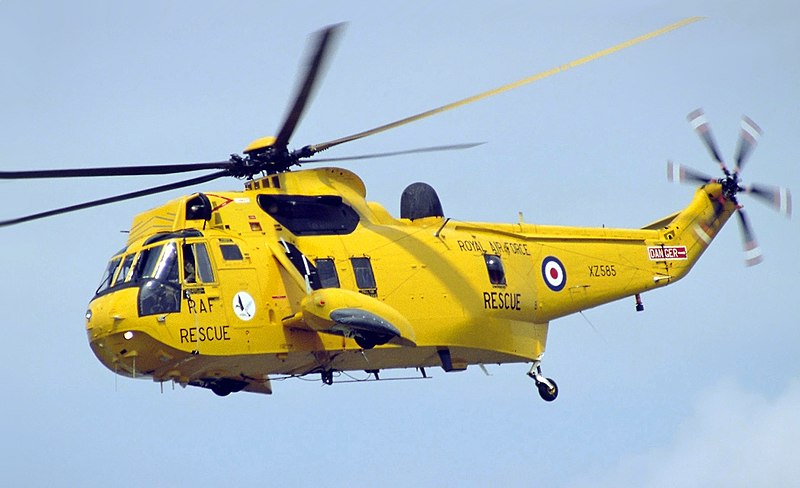
Westland WS-61 Sea King HAR3 – Photographer: Anthony Noble. GNU Free Documentation License

However, I have a letter dated 6 August 1965 – when I was eleven – confirming I won a first prize in the Frog Navy Competition, which offered three days with the Royal Navy. To win, I wrote an essay on ‘A Day in the Life of a Helicopter Pilot’. That sounds factual, but with no family knowledge, it must have been a tad fictional. I believe my imagined pilot flew a rescue chopper.

Did I explore RN/RAF rabbit holes? Probably. But, like many boys of my age, I was fascinated by war stories so read about them in comics and books. I watched some old B&W films at school. I made model planes and boats. The latter included models from Airfix, and that was how I learnt about the competition.

My reading went beyond war, fortunately. History was not just fighting. Fantasy played a major role in the choice of books – and in what I wrote. My first draft novel – a lost manuscript – was fantasy. But it was my first proper job, as a sub-editor on The Field magazine, which triggered my debut equestrian mystery – even if it didn’t emerge until I retired four decades later.

Strange, it’s taken me 55 years to win again, and the latest story merges history and fantasy.

*

The awesome co-hosts for the awesome co-hosts for the January 8 posting of the IWSG are T. Powell Coltrin, Victoria Marie Lees, Stephen Tremp, Renee Scattergood, and J.H. Moncrieff!

(You must agree these guys all have commitments too – but they volunteer. These are the best. Ticker-tape applause for all of them – plus toasts too.)

Purpose of IWSG: To share and encourage. Writers can express doubts and concerns without fear of appearing foolish or weak. Those who have been through the fire can offer assistance and guidance. It’s a safe haven for insecure writers of all kinds!

Every month, we announce a question that members can answer in their IWSG post. These questions may prompt you to share advice, insight, a personal experience or story. Include your answer to the question in your IWSG post or let it inspire your post if you are struggling with something to say.

Posting: The first Wednesday of every month is officially Insecure Writer’s Support Group day. Post your thoughts on your own blog. Talk about your doubts and the fears you you have conquered. Discuss your struggles and triumphs. Offer a word of encouragement for others who are struggling. Visit others in the group and connect with your fellow writer – aim for a dozen new people each time – and return comments. This group is all about connecting!

Let’s rock the neurotic writing world!

Our Twitter handle is @TheIWSG and hashtag is #IWSG.

Every month, we announce a question that members can answer in their IWSG post. These questions may prompt you to share advice, insight, a personal experience or story. Include your answer to the question in your IWSG post or let it inspire your post if you are struggling with something to say.

I is for Impressment

I

Impressment, or removing seamen from U.S. merchant vessels and forcing them to serve on behalf of the British, was one of the main causes of the War of 1812, according to most sources. During the Napoleonic Wars (1803-15), the Royal Navy expanded to 175 ships of the line and 600 ships overall, requiring 140,000 sailors to man. While the Royal Navy could man its ships with volunteers in peacetime, it competed in wartime with merchant shipping and privateers for a small pool of experienced sailors and turned to impressment when it could not operate ships with volunteers alone. Britain did not recognize the right of a British subject to relinquish his status as a British subject, emigrate and transfer his national allegiance as a naturalized citizen to any other country. Thus while the United States recognized British-born sailors on American ships as Americans, Britain did not.

The United States believed that British deserters had a right to become United States citizens. Britain did not recognize naturalized United States citizenship, so in addition to recovering deserters, it considered United States citizens born British liable for impressment. Aggravating the situation was the widespread use of forged identity or protection papers by sailors. This made it difficult for the Royal Navy to distinguish Americans from non-Americans and led it to impress some Americans who had never been British. (Some gained freedom on appeal.)] American anger at impressment grew when British frigates were stationed just outside U.S. harbours in view of U.S. shores and searched ships for contraband and impressed men while in U.S. territorial waters. “Free trade and sailors’ rights” was a rallying cry for the United States throughout the conflict.

We Owe Allegiance to No Crown, by John Archibald Woodside. c. 1814. Photograph copyright Nicholas S. West. Photography by Erik Arnesen.

We Owe Allegiance to No Crown, by John Archibald Woodside. c. 1814. Photograph copyright Nicholas S. West. Photography by Erik Arnesen.

Between 1803 and 1812, approximately 5,000-9,000 American sailors were forced into the Royal Navy with as many as three-quarters being legitimate American citizens. Though the American government repeatedly protested the practice, British Foreign Secretary Lord Harrowby contemptuously wrote in 1804, “The pretention advanced by Mr. [Secretary of State James] Madison that the American flag should protect every individual on board of a merchant ship is too extravagant to require any serious refutation.”

The Royal Navy also used impressment extensively in British North America from 1775 to 1815. Its press gangs sparked resistance, riots, and political turmoil in seaports such as Halifax, St John’s, and Quebec City. In 1805 this led to a prohibition on impressment on shore for much of the Napoleonic Wars. The protest came from a wide swath of the urban community, including elites, rather than just the vulnerable sailors, and had a lasting negative impact on civil–naval relations in what became Canada. The local communities did not encourage their young men to volunteer for the Royal Navy.

http://en.wikipedia.org/wiki/Impressment

http://www.marinersmuseum.org/sites/micro/usnavy/08/08a.htm

http://www.smithsonianmag.com/smithsonian-institution/1812-a-nation-emerges-opens-at-the-national-portrait-gallery-122555161/?no-ist

PREVIOUS A TO Z POSTS:

A is for Anishinaabe ~ B is for Brock ~ C is for Coloured Corps ~ D is for Detroit ~ E is for Erie ~ F is for First Nations ~ G is for Ghent ~ H is for Harrison

A2Z-BADGE-000 [2015] - Life is Good

The brainchild of Arlee Bird, at Tossing it Out, the A to Z Challenge is posting every day in April except Sundays (we get those off for good behaviour.) And since there are 26 days, that matches the 26 letters of the alphabet. On April 1, we blog about something that begins with the letter “A.” April 2 is “B,” April 3 is “C,” and so on. Please visit other challenge writers.

My theme is ‘The War of 1812’, a military conflict, lasting for two-and-a-half years, fought by the United States of America against the United Kingdom of Great Britain and Ireland, its North American colonies, and its American Indian allies. The Memoirs of a British naval officer from the war is central to my novel “Seeking A Knife” – part of the Snowdon Shadows series.

Further reading on The War of 1812:

http://www.history.com/topics/war-of-1812

http://www.eighteentwelve.ca/?q=eng

http://www.theglobeandmail.com/globe-debate/the-war-of-1812-stupid-but-important/article547554/

http://www.shmoop.com/war-1812/

http://www.pbs.org/wned/war-of-1812/essays/