The Secret Keeper – a review

Thursday_horizons

How many books deserve a re-read as soon as we turn the last page? Today’s review is one of those wonderful gems that encouraged me to re-indulge by reading large sections throughout and to see and smile at how cleverly the tapestry was crafted.

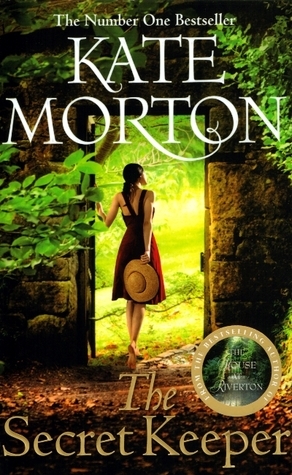
The Secret Keeper

by

Kate Morton (Goodreads Author)

During a summer party at the family farm in the English countryside, sixteen-year-old Laurel Nicolson has escaped to her childhood tree house and is happily dreaming of the future. She spies a stranger coming up the long road to the farm and watches as her mother speaks to him. Before the afternoon is over, Laurel will witness a shocking crime. A crime that challenges everything she knows about her family and especially her mother, Dorothy—her vivacious, loving, nearly perfect mother.

Now, fifty years later, Laurel is a successful and well-regarded actress living in London. The family is gathering at Greenacres farm for Dorothy’s ninetieth birthday. Realizing that this may be her last chance, Laurel searches for answers to the questions that still haunt her from that long-ago day, answers that can only be found in Dorothy’s past.

Dorothy’s story takes the reader from pre–WWII England through the blitz, to the ’60s and beyond. It is the secret history of three strangers from vastly different worlds—Dorothy, Vivien, and Jimmy—who meet by chance in wartime London and whose lives are forever entwined. The Secret Keeper explores longings and dreams and the unexpected consequences they sometimes bring. It is an unforgettable story of lovers and friends, deception and passion that is told—in Morton’s signature style—against a backdrop of events that changed the world.
SecretKeeper18140835

Review 5+ stars

The blurb and other reviews for The Secret Keeper hooked me, and I am so grateful as this novel is an amazing read – deserving more than five stars.

When sixteen-year-old Laurel Nicolson glimpses her mother, Dorothy assault a man in self-defence, the act seems justified and she hides the memory. Thus, the secrets begin – or do they? That is one of the brilliant elements of this novel as there is not just one secret but many, inter-twined over the decades from before Laurel was born. Perhaps, there is more than one Secret Keeper.

Fifty-two years later, as Dorothy is dying, the Nicolson children gather to celebrate her ninetieth birthday, and the discovery of a photograph from WWII of Ma with another young woman poses questions about their mother’s past as the other woman is a stranger from her unspoken wartime experiences. Yet the woman’s name feels familiar to Laurel, except it is only in the end that she realises why.

‘Not about Ma, I mean that young woman. She was a different person back then, with a whole other life we know nothing about.’

Laurel is now sixty-six and a much-loved actress, and she uses her abilities and resources to discover more about her mother’s past. It was great to have this older main protagonist with all her evolving attitudes, memories and experiences – not just in 2011, but when she was much younger as well. And the reader is treated to some distinctive characters in the various periods, notably the 1940s and the present day [2011]. Each one has a unique voice and that memorable feature that fixes them in a reader’s mind.

The language feels correct for the various periods as do the settings from fashion and music to the gap between rich and poor. For me, growing up in the 50s and 60s the scenes in those period stirred so many memories. The research seems to have been meticulous at every turn – many of the sources are noted in the acknowledgements.

As the past is gradually revealed, the reader discovers more through Dorothy’s eyes, and Laurel’s discoveries uncover secrets. Kate Morton makes clever use of memories – memories that change over time, memories that are interpretations of events, and memories that spark a wave of emotions.

As a crime novel reader, I know how personal observation can be faulty. Who is Dorothy? Does that depend on who is digging? Who knows what happened? As I kept reading, I learnt about secrets, misunderstandings, and dreams all conspiring as fate propelled events. There were moments when I thought that I had sussed everything out – wrong. The author did a masterly job of weaving an intricate tapestry of events with revelations that kept skewing the plot.

Although Laurel and Dorothy are central to the drama, with some excellent secondary characters, there is a strong feeling throughout that family is everything – from the Nicolson children to the families lost in the Blitz.

Loss is something that many of the characters face. There are poignant moments that becomes memories, beautifully described, especially through childhood eyes. With both Dorothy and Vivien, we get contrasting memories and reactions to events, yet they have experiences in common – and they have secrets. As does Laurel whose own observations have informed her as an actress who can empathise – as the reader does.

‘Laurel knew quite a bit about keeping secrets. She also knew that was where the real people were found, hiding behind their black spots.’

Laurel finds those real people and learns some amazing truths behind the secrets. When I reached The End, I could see the tapestry, but I had to read every key paragraph and chapter again. That re-read was as magical, especially as I could now see the pieces slotting smoothly into place – and hiding the black spots and secrets.

The Secret Keeper is an amazing novel with so many clever twists – a masterful five star plus read.

Story – five stars

Setting/World-building – five stars

Authenticity – five stars

Characters – five stars

Structure – five stars

Readability – five stars

Editing – five stars
 

Lord of the Flies – a review

Thursday_horizons

Today’s review post is of a book read for the Insecure Writer’s Support Group (Book Club). I read William Golding’s 1954 novel Lord of the Flies in February, and this is my belated addition to the group’s discussion. This novel was chosen by club members for how the author used symbolism throughout the story.

LordofFlies18964701

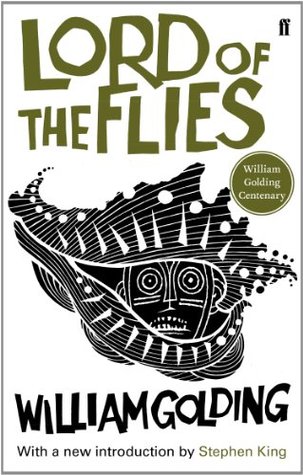
Lord of the Flies

by

William Golding

At the dawn of the next world war, a plane crashes on an uncharted island, stranding a group of schoolboys. At first, with no adult supervision, their freedom is something to celebrate; this far from civilization the boys can do anything they want. Anything. They attempt to forge their own society, failing, however, in the face of terror, sin and evil. And as order collapses, as strange howls echo in the night, as terror begins its reign, the hope of adventure seems as far from reality as the hope of being rescued. Labelled a parable, an allegory, a myth, a morality tale, a parody, a political treatise, even a vision of the apocalypse, Lord of the Flies is perhaps our most memorable tale about “the end of innocence, the darkness of man’s heart.”

Review 4.5 stars

It’s hard to review a classic that has been around in many ways all my life from novel to screen. My first reaction was that it’s a gritty and a difficult read that may be literary in style, but the messages are there. The beast lives so why should kids be immune to its power? Yes, it could be written in other ways, – and it has been. But I understand the author’s intent (as does Stephen King).

In Lord of the Flies, symbolism is everywhere, from the moment a group of schoolboys are stranded on an uncharted island along an inevitable path to the heart-wrenching climax. As we meet the boys, each one is unique and typical of certain English schoolboys – like myself. Yet each one is an archetype that plays a specific role – none more so than Ralph, Piggy, Jack and Simon. Their distinct appearances add to their character and their roles as symbols.

The early scenes realistically show the boys forming groups, their personalities coming out in how they make friends – and in how they can quickly hurt the vulnerable people like Piggy. Tragic to see that bullying still exists today, although it is more often exposed – perhaps. (I was bullied but never like Piggy is.) However, at an early stage, it seemed that Piggy should be in charge, as the most grounded – the rational symbol of common sense…even if Ralph took that role in survivor’s eyes.

There were vivid images to establish the differences – from the choirboys like black-feathered creatures to the innocent, distracted young’uns. Sometimes, the imagery and description might feel heavily applied, but that can work if the reader lets the complexity carry their imagination to another level.

Golding paints images that show the multi-facets of symbols – like fire being the tool that nurtures society but also destroys. There is a cruel irony in the role that the signal fire plays and how the novel deals with the possibility of rescue.

Simon was crafted as both the hermit and the seer, just as the reader gets the sense that the beast is always real.

It’s hard writing this without spoilers just as it was hard to ignore the memories of Peter Brook’s film as I read, knowing what came next – and I know that the actors’ experiences mirrored the novel. Yet that inevitability as the story unfolds added to the fear that the writing engendered. There’s always that sense of the Lord of the Flies, aka the beast being unrelenting and still alive today. This might have been written in 1954 and a product of an era, and yet we live with the same underlying terrors.

Maybe our self-awareness, as portrayed most notably in Jack, has kept us from stumbling over a precipice and fuels progression as well as dangerous fascination. There is some dialogue at the end that hinted at adults not having the answer. Perhaps there is something in innocence after all.

So, a hard book to enjoy in the entertainment sense, but Golding as a master craftsman does incite a multitude of thoughts. That alone is worth four or more stars.

Story – four stars

Setting/World-building – four stars

Authenticity – five stars

Characters – five stars

Structure – five stars

Readability – four stars

Editing – four stars


The Shepherdess of Siena – a review

Thursday_horizons

This week’s novel for my Thursday Creation Review was a ‘must read’ that fit two reading genres and offered more: historical and equestrian, plus it was set in Italy.

Shepherdess_Siena

The Shepherdess of Siena

by

Linda Lafferty (Goodreads Author)

Raised by her aunt and uncle amidst the rolling hills of the Tuscan countryside, young orphan Virginia Tacci has always harboured a deep love for horses—though she knows she may never have the chance to ride. As a shepherdess in sixteenth-century Italy, Virginia’s possibilities are doubly limited by her peasant class and her gender. Yet while she tends her flock, Virginia is captivated by the daring equestrian feats of the high-spirited Isabella de’ Medici, who rides with the strength and courage of any man, much to the horror of her brother, the tyrannical Gran Duca Francesco de’ Medici.

Inspired, the young shepherdess keeps one dream close to her heart: to race in Siena’s Palio. Twenty-six years after Florence captured Siena, Virginia’s defiance will rally the broken spirit of the Senese people and threaten the pernicious reign of the Gran Duca. Bringing alive the rich history of one of Tuscany’s most famed cities, this lush, captivating saga draws an illuminating portrait of one girl with an unbreakable spirit.

Review 4.3 stars

A Historical novel with horses and set primarily in Tuscany was a Must Read, and it proved enjoyable.

Virginia Tacci is the young shepherdess that loves horses and wants to ride – something that few women in the sixteenth-century can do on an even playing field with men. Even those from the nobility like Isabella de’ Medici that can attempt to ignore social expectations are prey to their male superiors – or those that believe in their right to manipulate and persecute.

This is a world of rules and rulers, and Linda Lafferty paints the period and the setting vividly, demonstrating her painstaking research. This is a realistic medieval world from attitudes to architecture, from struggling peasants to scheming nobility. Many of the characters are historical, yet the author gives them distinct personalities – at times needing to build on limited documentary evidence from the period. (The author’s notes at the end make the extent of the research clear.)

The novel is strongest when focused on the horses and on Virginia. It is their story that kept me reading from the birth of a key foal, through the event that makes Virginia the centre of a thread of plots. The equestrian elements were meticulous in their detail as well as vibrant. The choice of having the protagonist tell their own first-person story also worked and enhanced this central thread.

However, with multiple plotlines, there was a need for some of the other viewpoints used. All these were the third person, and, in most cases, these worked and gave the plotlines momentum. But, purely from this reader’s perspective, there were too many, and some characters suffered through too little ‘screen-time’. There were moments when I stopped and wondered if some of these POVs could have been amalgamated – perhaps giving one observer more chapters to record events as they experience them.

This applied to the probably accurate de Medici scenes which led me to comment, mid-reading, “Whose story is this?” At times, I wanted to get back to Virginia and the horses as those scenes had a momentum that never tailed off. Of course, to me ‘Mares rule’ – except I will always find room for a great stallion.

Virginia’s ride is not always easy and not just because of her gender, although that prejudice never lets up. The ending is unexpected, but many have argued that it is right given the era. One question was uppermost as the threads converged together: “How would the antagonists atone for their sins?”

How can a historical novel ever have a neat ending? Reality is never what we expect or desire. And life goes on beyond the end of a novel. If characters evolve, as they do here, then that is the truth.

Although this novel rates 4.3 stars adjusted to 4 stars, I would recommend this to fans of historical fiction especially if they love horses.

Story – four stars

Setting/World-building – five stars

Authenticity – five stars

Characters – four stars

Structure – four stars

Readability – four stars

Editing – four stars


Air and Ash – a review

Thursday_horizons

This is the second of my new Thursday Creation Review posts which will usually be Books, but I am still reserving the right to review Games, Films or other Works of Art – and I will add music to that.

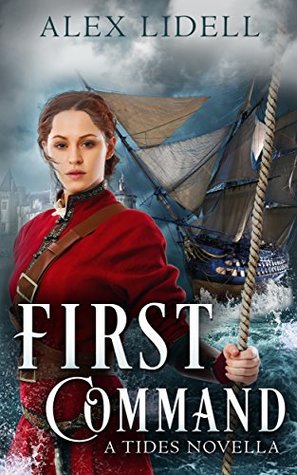
Alex Lidell’s Tides is a series of books that has been on my Want To Read list for too long – and then I won Book 3, Sea and Sand (#3) in a Goodreads Giveaway. First, though, I read and reviewed First Command (TIDES, # 0.5), which was an absorbing taster that introduced me to the main character of Lieutenant Nile Greysik and her world.

The author kindly provided me with Book 1 of the series, and this is my extended review.

AirandAsh

Air and Ash (TIDES #1)

by

Alex Lidell (Goodreads Author)

Born to privilege.
Trained for command.
Destined for danger.

After a lifetime of training, seventeen-year-old Princess Nile Greysik, a lieutenant on the prestigious Ashing navy flagship, sails into battle with one vital mission–and fails.

Barred from the sea and facing a political marriage, Nile masquerades as a common sailor on the first ship she can find. With a cowardly captain, incompetent crew, and a cruel, too-handsome first officer intent on making her life a living hell, Nile must hide her identity while trying to turn the sorry frigate battle worthy. Worse, a terrifying and forbidden magic now tingles in Nile’s blood. If anyone catches wind of who Nile is or what she can do, her life is over.

But when disaster threatens the ship, Nile may have no choice but to unleash the truth that will curse her future.

Review 4.3 stars

After reading First Command (TIDES, # 0.5), the taster that introduced me to Lieutenant Nile Greysik and her world, I had to read Tides #1. This book was provided by the author but without any requirements.

When Nile escapes her Royal obligations and masquerades as a common sailor, events conspire against her. The author ensures that the decks are stacked against Nile in unexpected ways that had me guessing where the story was heading. This was a slightly devious storyline although with few plotlines to misdirect the reader from a fast read.

The characters are varied, and some have complex personalities with backstories that are never totally revealed – there must be more to come. The cast hints at the world created from the political situation and attitudes to the crucial seafaring.

Alex Lidell’s well-imagined world blends seafaring and fantasy, and yet brings back memories of reading the Hornblower books in my teens – although it is wrong to compare the books. This protagonist is female, and the author builds on that – as well as the princess angle. But there is so much more – like magic being a very mixed curse. For Nile, this force that flows through her veins is a primary motivation – and not just for herself.

This is a world where magic is going underground through misunderstanding and a growing sense of discrimination. Attitudes, not just in magic, vary from nation to nation and between cultures. For instance, the Ashing royals serve in their navy, but in other states, the nobility and rich pamper themselves.

The social divide is clear, but onboard a ship there is promotion from the ranks. The nautical details rang true from my limited mucking-around-in-boats and from my copy of The Hornblower Companion. The confined space of a ship adds to the cruel pecking order. However, rank brings expectations as does Royal blood. Nile needs to judge who to trust beyond appearances if she is to complete her goals.

Where do events lead Nile? I’m giving nothing away – even if you keel-haul me – all I can say is ‘don’t expect all the threads to be tied up’. This entertaining read is Book 1 of a trilogy and you won’t want to stop. I’m not, although I must clear the reading decks so I can open War and Wind (#2) and the conclusion Sea and Sand (#3).

Recommended for those that enjoy their seafaring adventures spiced with fantasy – 4.3 stars adjusted to 4.

Story – four stars

Setting/World-building – four stars

Authenticity – four stars

Characters – five stars

Structure – four stars

Readability – five stars

Editing – four stars

First Command

#IWSG – Spring Inspiration

IWSGBadge

Another month and another IWSG post. Well, not just any month but the Blogging from A to Z Challenge month, so I managed to write 26 posts and got them scheduled on the correct days. But enough of that – I’ll post my reflections on the Challenge next week – this is an IWSG monthly past.

May 2 question – It’s spring!

Does this season inspire you to write more than others, or not?

Of course, Spring inspires me – to get outside and soak up the sunshine. And yes, Spring is here, and the little grey cells are sparking – despite the MS. Okay, I have my struggles with the misfiring nervous system, and my brain loses direction and thoughts. I forget what I am doing, my fingers hit too many wrong keys, and my body must sleep sporadically or suffer the painful body-wrenching attacks.

Officially, according to The Old Farmer’s Almanac, Spring arrived on March 20, 2018. That means that the Spring Equinox must have set all those A-to-Z posts in motion.

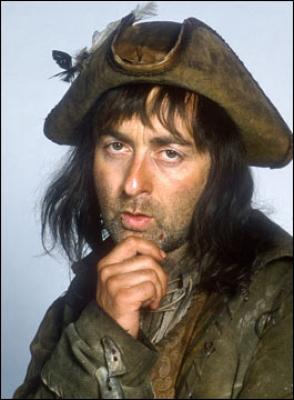
I’ve even used the last few days to devise a cunning plan. Did Baldrick help with that?

Baldrick_thumbnail

The cunning plan: to write a review once a week of one of the books I’ve read and failed to review here. Those reviews will be scheduled for every Thursday.

However, I reserve the right to write other posts – if motivated.

What about the deviously cunning Fates Maelstrom plans? Not abandoned or shelved but extended.

I wrote draft one of Book 3 in the Snowdon Shadows series for NaNoWriMo last November. Then I started editing Fates Maelstrom in December, developing all the ideas needed for the final draft prior to beta-reading.

That has led to Goth Patrol, a short story about the main protagonist, policewoman Sparkle Anwyl and how she lost her first love and joined the CID. I’m starting on another short, Face Trash, her first case as a detective, fresh from police college. Call these stories ‘character research’.

Or should I publish those stories first?

That’s what Spring does for my devious brain – seeds seeking fertile soil.

[One problem: I need a friend to sit with and chat, face-to-face over a pint or a meal. I lost that when I moved four years ago.]

**

The awesome co-hosts for the May 2 posting of the IWSG are E.M.A. Timar, J. Q. Rose, C.Lee McKenzie, and Raimey Gallant!

Purpose of IWSG: To share and encourage. Writers can express doubts and concerns without fear of appearing foolish or weak. Those who have been through the fire can offer assistance and guidance. It’s a safe haven for insecure writers of all kinds!

Every month, we announce a question that members can answer in their IWSG post. These questions may prompt you to share advice, insight, a personal experience or story. Include your answer to the question in your IWSG post or let it inspire your post if you are struggling with something to say.

Posting: The first Wednesday of every month is officially Insecure Writer’s Support Group day. Post your thoughts on your own blog. Talk about your doubts and the fears you have conquered. Discuss your struggles and triumphs. Offer a word of encouragement for others who are struggling. Visit others in the group and connect with your fellow writer – aim for a dozen new people each time – and return comments. This group is all about connecting! 

Let’s rock the neurotic writing world!

Our Twitter handle is @TheIWSG and hashtag is #IWSG


H is for Hellblade

 H


The aim of my Blogging From A to Z Challenge is to find the origins of online games, some relatively modern and some with ancient roots. Gaming might well be a modern take on an art that is almost timeless – storytelling. A perfect excuse for a writer to delve a little deeper. [Visit here for links to other A to Z participants.]

Game: Hellblade: Senua’s Sacrifice is an intense psychological action-adventure game which PCGamesN rated, “a miraculous technical feat made by a team just a fraction the size of the ones that typically dominate the triple-A space.”

Release Date: April 8, 2017

Developer/Publisher: Ninja Theory

Genre/gameplay mechanics: Award-winning game – dark fantasy action-adventure; hack and slash; puzzle-solving; psychological horror. Voice-acting integral to unique, 3D binaural audio design. Cutscenes combine motion/performance capture by video editor-turned-actress Melina Juergens and live-action performances by other actors.

Setting: A rendition of Helheim, the Norse underworld – effective use of audio and visual to submerge players in Senua’s nightmarish journey and her accurately-portrayed mental world. The world feels horrifyingly real as the sounds and graphics seem subtly distorted.

Storytelling: Hellblade follows Senua, a Pict warrior who journeys to Helheim to save the soul of her dead lover from the goddess Hela. Also, the character struggles with her mind, and the game revolves around her condition. Senua suffers from psychosis but believes it to be a curse. She is haunted by an entity known as the “Darkness”, voices in her head known as “Furies”, and memories from her past.

As Ninja Theory said in 2015, “Senua experiences psychosis, including hallucinations and delusions, as well as suffering from anxiety and depression. As a player, you will witness Senua’s living nightmare through her own eyes… Developing Hellblade independently gives us the freedom to tackle a subject as challenging as mental health. It is a subject that we are handling with all the respect it deserves, ensuring that our portrayal of Senua’s condition is both accurate and sensitive. To help us with this we are working closely with Professor Paul Fletcher, a professor of Health Neuroscience at the University of Cambridge, as well as arranging to consult directly with people who have experience of mental health difficulties. We are also very proud to say that Hellblade is being supported by Wellcome Trust, which is a global charitable foundation which aims to build a greater public understanding of science and in particular health.”

Releases:

  1. August 8, 2017 – Windows, PlayStation 4
  2. April 11, 2018 – Xbox One

Origins (Chronological):

  1. 2010 – Ninja Theory released Enslaved: Odyssey to the West, a video game that saw the Ninja team develop their motion capture with Andy Serkis.
  2. 8th century – The Roman Empire was unable to conquer a group of Celts in the northern reaches of Great Britain known as the Picts. Towards the end of the century, the first Vikings arrived in the islands of Orkney and replaced them as the main population of the land. Senua is portrayed as a Celtic warrior on Orkney.
  3. 793-1066 – Norse Mythology in the Viking Age: “Before the Norse (a.k.a. the Vikings) were converted to Christianity during the Middle Ages, they had their own vibrant native pagan religion that was as harshly beautiful as the Nordic landscape to which it was intimately connected.”
  4. The 1st century and earlier – The main inspiration of Senua’s character was the Iceni queen Boudica, while her name came from Senuna, a Celtic whose name was at first read incorrectly as Senua. The team researching Celtic culture and the Celts’ views on mental disorder, found out that they used the term ‘gelt’ for a man or woman who had been driven mad by a curse, grief, or the trauma of a battle. A gelt would take to a life in the woods in search of penance, punishment and purgatory. The team decided to make Senua a gelt, who had left her home in exile for those reasons.

Recommendation: Hellblade was a commercial success and was well received by critics, who praised it as a work of art and applauded its uncommon choice of revolving around psychosis, the quality and uniqueness of its approach of the condition, and its story and main character. Reviews included this  7 August 9 stars review from IGN: “An incredible atmospheric story reinforces Hellblade’s serious subject matter in this vivid tale of harrowing darkness.” 2017 Players were equally enthusiastic in their reactions.

Hellblade_02

4.55 Stars: Before I played the game, I watched numerous video reviews, diaries and walkthroughs, and I was excited. The game ticked so many boxes, and elements tied into my current WIP, whose second protagonist suffers from a form of psychosis. The actual experience was intense. As expected the voices-in-the head and confused images created a disturbing atmosphere, at times nightmarish. The combat should have been simple, but not for this nerve-jangled oldie who can’t hit the right keys fast enough – so died repeatedly…frustrating. I’ll keep trying though.

  1. Setting: 4.5*
  2. Storyline: 5*
  3. Gameplay: 3.75*
  4. Entertainment: 4.5*
  5. Genesis: 5*

Alternative ‘H’ thoughts:

H is also for Philip Pullman’s trilogy His Dark Materials, but I’ve yet to find a suitable game. Is there one?

+ ‘H’ Games played: Heroes of Might & Magic – but that comes under M.

Hela da