The War of 1812

atoz-theme-reveal-2015

The Great and Powerful A to Z Theme Reveal Blogfest!

 What were you taught about The War of 1812 in school? Who actually won it? Who lost? Okay it happened two hundred years ago, but for me it matters. Why?

First, it is the theme that I have chosen for this year’s A to Z Challenge in April – I was told having a theme was fun, and last year the guys that know these things were right. I took part in 2014 and now have a collection of shorts almost ready – Gossamer Flames. I also enjoyed other people’s themes, which were varied and in many cases clever.

Second, The War of 1812 is one plotline in my current WIP, “Seeking A Knife”, in which a young journalist in Texas receives a Memoir written in the war by a Royal Navy Officer. The ‘why’, the disappearance of the officer’s knife, and the death of the sender, only add to the mystery.

Third, I get a chance to give you an overview of my research into the events that mattered two hundred years ago to the people living in the United States and Canada. It might even help me find some hidden gems that I can use as I write the Memoir sections of the novel.
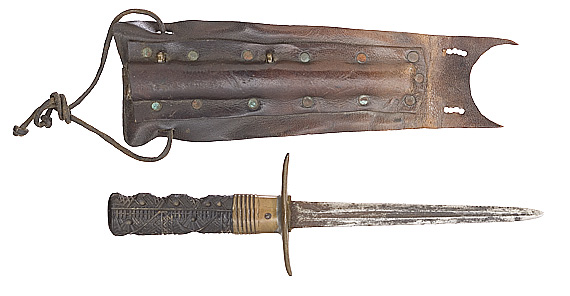
Early English Naval Dirk with Sheath

Early English Naval Dirk with Sheath

Your perspective on the War will change according to where you grew up and were educated, although judging by some online comments, I wonder.

The War of 1812, which lasted from 1812 to 1814, was a military conflict between the United States and Great Britain. As a colony of Great Britain, Canada was swept up in the War of 1812 and was invaded a number of times by the Americans. For the First Nations this was a chance to halt American expansionism west, and to preserve their land and culture. However, in war there are winners and losers, and often the losers are on both sides.

So join me in April and find out how the British Navy met its match, how the White House was burned to the ground, when The Star Spangled Banner was written, who the Coloured Corps were, who was Tecumseh, and who was betrayed once the conflict ended.

War_of_1812_Montage

War of 1812 Montage from Wikipedia

Oh, and being English, I never learnt about the War of 1812, except as a theatre in the Napoleonic Wars – a theatre that was not as significant to our History teacher as the Peninsular War. Then I went to Canada, and now I’m married to an American.

Finally, this War of 1812 theme gives me the chance today to participate in this whole separate blogfest!

As the organisers say, “Two years ago A to Z participant Mina Lobo started the Theme Reveal, and we thought it was such a great idea that we made it tradition. It is now our very own, grand and festive way of rolling out our themes together!”

Finally, apologies for those that read this a month ago, when I posted a few weeks early. And my thanks to Sarah Zama for pointing out the error.

Best of luck everyone with A to Z next month.

Visit other participants by clicking here – and have fun.

K is for Kitsune

K

K is for Kitsune: Japanese folklore in origin, Kitsune is the nickname of one of the protagonists in “Wyrm Bait”, the cyber-mystery set against the MMORPG set in the world of Gossamer Steel,.

Kitsune are Japanese foxes, which are common in their folklore. There are two types of Kitsune: the zenko, who are benevolent, celestial foxes associated with the god Inari; and there are the mischievous yako, who sometimes are malicious as well. In some stories Kitsune’s intelligence and magical abilities increase with age. Foremost among these abilities is that of assuming human form, sometimes to trick people but more often featuring as guardians, friends, lovers and wives.

Kitsune can have up to nine tails, as they become older, wiser and more powerful. In some legends one tail is dominant and only by removing this tail, can a Kitsune be subdued. Because of their potential power and influence, some people make offerings to them as to a deity.

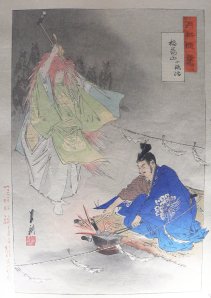
Inari and its fox spirits help the blacksmith Munechika forge the blade kogitsune-maru (Little Fox) at the end of the 10th century. The legend is the subject of the noh drama Sanjō Kokaji. By Ogata Gekkō

Inari and its fox spirits help the blacksmith Munechika forge the blade kogitsune-maru (Little Fox) at the end of the 10th century. The legend is the subject of the noh drama Sanjō Kokaji. By Ogata Gekkō

Kitsune feature in art down the ages, including modern art forms like mangas and video games.  They are the basis for the venomancer class in Perfect World, characters who are a woman with a few fox-like features including ears and a tail, but they can turn into a fox while fighting.

K is for two other creatures from folklore, the korrigan and the kornblock. In Breton folklore, a Korrigan is a fairy or dwarf-like spirit, while in Germany and Scandinavia the kornblockes are goat-bodied creatures that are said to help grow grain and corn, but will steal or spoil it if given a reason.

K is also for the Kainga, the corporation behind the solar array that triggers the apocalypse in Gossamer Steel.

PREVIOUS A TO Z POSTS:

A is for Array ~ B is for the Blood-Marked ~ C is for Corylus Avellana ~ D is for Duskweald ~ E is for Energy ~ F is for Feeniks ~ G is for Garuda ~ H is for Herders ~ I is for Ithaka ~ J is for Junk

*

The brainchild of Arlee Bird, at Tossing it Out, the A to Z Challenge is posting every day in April except Sundays (we get those off for good behaviour.) And since there are 26 days, that matches the 26 letters of the alphabet. On April 1, blog about something that begins with the letter “A.” April 2 is “B,” April 3 is “C,” and so on. Please visit other challenge writers.

My theme is ‘The World of Gossamer Steel, the SF-fantasy setting for a series of short stories and novellas that portray the tales behind the MMORPG that is central to my crime novel ‘Wyrm Bait’.

A2Z-BADGE-000 [2014] (1)

I is for Ithaka


II is for IthakaIthaka: The Tapestry is a game developed by Prinaka, the company behind the ‘Gossamer Steel’ MMORPG that appears in the cyber-mystery ‘Wyrm Bait’.

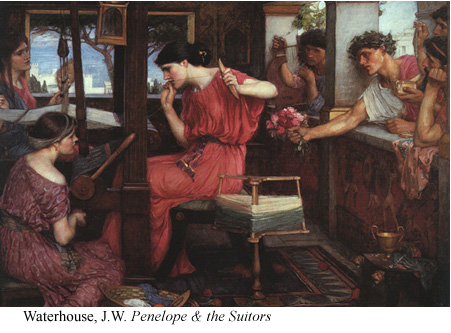
Ithaca is the home of the legendary Greek hero Odysseus, and Ithaka is also a famous poem by the Greek poet C P Cavafy that pays homage to Homer’s Odyssey, one of the greatest epic poems written. After the victory of the Greeks in the Trojan War, Odysseus sets sail for his home on Ithaca. But, as the mastermind behind the Trojan Horse deception, he had incurred the wrath of the God Poseidon, who tries to ensure that he never reaches his wife Penelope and their son Telemachus. On his ten year journey, Odysseus faces cyclops, lotus-eaters, sea monsters, and hostile giants, then finds himself trapped by the beautiful nymph Calypso on an island. When he finally reaches home, Odysseus reclaims control of Ithaca. But if you don’t know the full story read more here.

Cavafy’s poem addresses our personal journey to Ithaka, and pays homage to Homer’s epic poem. For an excellent article on “Ithaka” with a link to a powerful Sean Connery reading, with music by Vangelis, go to: http://ninaalvarez.net/2008/08/09/poem-video-of-the-day-ithaca/

PenelopeSuitors

I is also for Inventors and for India, which as Bhārata is central to the world’s survival. In the world of Gossamer Steel an Indian engineer attempts to unlock the secret to teleportation. Without inventors and inventions going back to the wheel and earlier, humanity would not have progressed as far as we have. The inventions have been made by people all over the globe, not just in the West. There have been periods, such as the Industrial Revolution, when enormous strides have been made, although sometimes these periods have been times of war. Not every invention has been beneficial, although are the scientist to blame or the paymasters? Many of the inventions that arise in the world of Gossamer Steelare rooted in our current world, although the apocalypse precipitates their creation.

I is also for the ice-wraiths that terrorise The Country, imps and idad or yew, one of the Ogham trees.


PREVIOUS A TO Z POSTS:

A is for Array ~ B is for the Blood-Marked ~ C is for Corylus Avellana ~ D is for Duskweald ~ E is for Energy ~ F is for Feeniks ~ G is for Garuda ~ H is for Herders

*

The brainchild of Arlee Bird, at Tossing it Out, the A to Z Challenge is posting every day in April except Sundays (we get those off for good behaviour.) And since there are 26 days, that matches the 26 letters of the alphabet. On April 1, blog about something that begins with the letter “A.” April 2 is “B,” April 3 is “C,” and so on. Please visit other challenge writers.

My theme is ‘The World of Gossamer Steel, the SF-fantasy setting for a series of short stories and novellas that portray the tales behind the MMORPG that is central to my crime novel ‘Wyrm Bait’.

A2Z-BADGE-000 [2014] (1)

H is for Herders

H

H is for Herders: In our tour of the world of Gossamer Steel the herders are descended from the nomads of Eurasia and the Sámi, the indigenous people of The Country. They have common roots and to them the land and its spirits are sacred, and they revere the world that has always been called Sapmi.

For centuries herders have practised Nomadic Pastoralism, moving their livestock to fresh pastures on which to graze. The herded livestock include cattle, yaks, sheep, goats, reindeer, horses, donkeys or camels, or a mix of species. Nomadic pastoralism is commonly practised in regions with little arable land, with the herders seeking out the grazing wherever available. Historically this lifestyle has, in some instances, led to warrior-based cultures that have made them fearsome enemies of settled people, notably in the case of the Mongols and Magyars.

Of the estimated 30–40 million nomadic pastoralists worldwide, most are found in central Asia and the Sahel region of West Africa. Other areas include the Arabian Peninsula inhabited by Bedouins, as well as Northeast Africa inhabited by Somalis.

In areas of harsh climate, the nomadic pastoralists have traditional grazing grounds that they move their herds between. These herders, found in Northern Europe and Russia, include the indigenous Sami, Nenets, Tsaatans, and Chukchis. These are the basis for the Herders in Gossamer Steel, with their lifestyles revolving around reindeer herding.

Dhuka herder moving his reindeer ~ Image: Uluc Kecik

Dhuka herder moving his reindeer ~ Image: Uluc Kecik

H is also for HAV – Hybrid Air Vehicles, which are modified airships designed for freight or surveillance. With the rising cost of fuel, HAV are becoming one way forward in aviation, especially when attempting to access remote areas with heavy loads. In the 21st century many of the drawbacks with conventional airships are being resolved, and this is a growth area. In a world without oil, this technology will become crucial to a new world.

In our tour of the world of Gossamer Steel, H is also for antagonist Hubert Green, and for the Hearthalls, centre of learning and of pilgrimage in The Country.

PREVIOUS A TO Z POSTS:

A is for Array ~ B is for the Blood-Marked ~ C is for Corylus Avellana ~ D is for Duskweald ~ E is for Energy ~ F is for Feeniks ~ G is for Garuda

*

The brainchild of Arlee Bird, at Tossing it Out, the A to Z Challenge is posting every day in April except Sundays (we get those off for good behaviour.) And since there are 26 days, that matches the 26 letters of the alphabet. On April 1, blog about something that begins with the letter “A.” April 2 is “B,” April 3 is “C,” and so on. Please visit other challenge writers.

My theme is ‘The World of Gossamer Steel, the SF-fantasy setting for a series of short stories and novellas that portray the tales behind the MMORPG that is central to my crime novel ‘Wyrm Bait’.

A2Z-BADGE-000 [2014] (1)

G is for Garuda

G

G is for Garuda: The Garuda (from the Sanskrit: Garuḍa गरुड or “devourer”) is a large mythical bird or bird-like creature that appears in both Hindu and Buddhist mythology. In the world of ‘Gossamer Steel’ it exists in the self-reliant land of Bhārata, where myth and a greenpunk solutions exist alongside each other. An airship called Garuda, piloted by Captain Devaki, is essential to the exploits of Dravidian pirates. Garudas also play a central role in the cyber-mystery ‘Wyrm Bait’, appearing in the ‘Gossamer Steel’ MMORPG in the climactic in-game battle.

Appearing in several legends and venerated all over South East Asia, the Garuda is the mount of Lord Vishnu in Hinduism but has his own independent scriptures. In Buddhism, the Garudas are a race of winged beings that were the enemies of the Nagas, serpent beings, until the Buddha made peace between them. Both Thailand and Indonesia use the Garuda in various forms as their national symbols, including the sign of the Thai Royal family, and in stylised form as the logo of Garuda Indonesia, the national airline of Indonesia.

"Garuda Statue" by antpkr

“Garuda Statue” by antpkr

G is also for Gliders, engine-less heavier-than-air craft, capable of sustained flight. With recreational, sport and military applications, they have ranged from solo use to landing military units with equipment; although the latter have been superseded by helicopters and short-take-off and landing (STOL) aircraft.

Towed into the air or carried by a plane as payload, then released, glider’s aerodynamic shape allows them to remain aloft longer. Certain types can climb and soar using updrafts and thermals, in the same was as large gliding birds, such as owls and hawks, which are often seen circling inside a thermal to gain altitude without flapping their wings.

For sport/recreation there are three types of gliders, sailplanes, hang-gliders and para-gliders, although the latter are used by the military for dropping troops into remote areas. The latter two are primarily solo craft are either made of an aluminium alloy or composite-framed fabric wing, or are wing-shaped parachutes. They are light and manoeuvrable enough to be launched by the user from a high location such as a hill or cliff. In one Gossamer Steel tale, Captain Devaki uses a hybrid hang/para-glider that is more akin to the aerobatic wings used for Parabatix.

Hang Glider ~ Image courtesy of Dominic Harness / FreeDigitalPhotos.net

Hang Glider ~ Image courtesy of Dominic Harness / FreeDigitalPhotos.net

In our tour of the Gossamer Steel world, G is also for giants, goblins, gremlins, gnomes, ghosts, protagonist Niels Gundersson and the antagonist Hubert Green.

PREVIOUS A TO Z POSTS:

A is for Array ~ B is for the Blood-Marked ~ C is for Corylus Avellana ~ D is for Duskweald ~ E is for Energy ~ F is for Feeniks

*

The brainchild of Arlee Bird, at Tossing it Out, the A to Z Challenge is posting every day in April except Sundays (we get those off for good behaviour.) And since there are 26 days, that matches the 26 letters of the alphabet. On April 1, blog about something that begins with the letter “A.” April 2 is “B,” April 3 is “C,” and so on. Please visit other challenge writers.

My theme is ‘The World of Gossamer Steel, the SF-fantasy setting for a series of short stories and novellas that portray the tales behind the MMORPG that is central to my crime novel ‘Wyrm Bait’.

A2Z-BADGE-000 [2014] (1)

F is for Feeniks

F

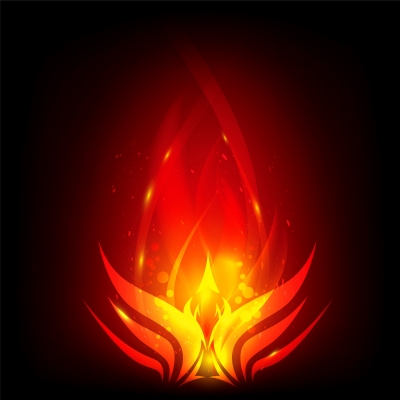
F is for Feeniks: Feeniks is the Finnish for the constellation Phoenix, and the name given to a falcon companion of a key shaman character in the world of Gossamer Steel. The phoenix is a potent mythological figure and symbol of rebirth or renewal so central to the Renascence of the earth. One of its equivalents, the Hindu Garuda, plays a crucial role in the cyber-mystery ‘Wyrm Bait’, appearing in the ‘Gossamer Steel’ MMORPG.

"Phoenix In Fire" by fotographic1980

“Phoenix In Fire” by fotographic1980

Another equivalent, the Firebird appears in many Slavic folk tales, and can symbolize many things. Some legends portray the Firebird as a creature of blessing, while in other tales characters believe that it will bring doom to anyone who captures it. In some stories the Firebird is a symbol of wealth and of power, and in others a prize to be captured, such as that of Prince Ivan. Many artists have been inspired by the legends. Most notably Igor Stravinsky, who on June 25th 1910 immortalized the legend in his ballet score for choreographer, Serge Diaghilev.

F is also for Food – from cloudberries to dosas – and for Fashion – from embroidered Sami gákti to Indian shalwar kameez. Both are key in any world building but an essential part of my two enclaves, The Country and Bhārata, at times being intrinsic to a particular character.

The musical group Duolva Duottar in traditional Sami dress. The man on the left, Ole Mahtte Gaup, is wearing a luhkka. The woman and the other two men are wearing gákti ~ Photo by Petr Brož


PREVIOUS A TO Z POSTS:

A is for Array

B is for the Blood-Marked

C is for Corylus Avellana

D is for Duskweald

E is for Energy

A2Z-BADGE-000 [2014] (1)


The brainchild of Arlee Bird, at Tossing it Out, the A to Z Challenge is posting every day in April except Sundays (we get those off for good behaviour.) And since there are 26 days, that matches the 26 letters of the alphabet. On April 1, blog about something that begins with the letter “A.” April 2 is “B,” April 3 is “C,” and so on. Please visit other challenge writers.

My theme is ‘The World of Gossamer Steel’, the SF-fantasy setting for a series of short stories and novellas that portray the tales behind the MMORPG that is central to my crime novel ‘Wyrm Bait’.