Time Exchange

English: timeline example

English: timeline example (Photo credit: Wikipedia)

Does your favourite book capture a sense of time? Does time play out slowly or race along? How does an experienced writer catch such an intangible element as time in words?

Pacing is a key element to crafting a novel and wiser people have addressed it much better than I can in this beginner’s blog. However, I can address the lessons that I have learnt in my sporadic journey.

When I first started writing my first novel ‘Spiral of Hooves’, I resorted to simply inserting the date at the beginning of each scene or chapter. But although that works if the writer builds more subtle temporal clues onto this, I think for me it became a crutch. Although I had an initial timeline to guide me, I made the mistake of straying too far from it in order to make incidents occur in sequence. So when I was asked recently by my editor to check my timeline, I realised it was hopelessly out of date. Fortunately the juggling needed to bring scenes and chapters into line with the correct timeline was not too complicated, and the novel benefited.

As for the actual time scale of the story, that went from two years in the initial draft to nine months in the final one, which tightened the pace considerably. Faster pacing seems to make sense for a mystery, although I was never aiming for a thriller-type race against time.

Of course pacing is more than just saying: ‘Next morning’ or ‘Two hours later’ and I have tried to vary what happens in scenes and the words I have used. For instance, over the drafts I made better use of the seasonal changes in weather, vegetation and animal life. Keeping dialogue leisurely or snappy depending on the mood has helped I hope, although that will be up to my readers to decide. Have I been too overt by resorting to characters mentioning how many days or hours before a specific event or deadline?  Hopefully not and the readers will be caught up in the story.

Using beta readers, after about the third draft, has helped assess whether the timeline and pacing worked. Adding an editor into the mix has been invaluable – many thanks Yen, you’ve been great to work with. However, I have had to adapt a few things to an American readership, and explain some of the equestrian terminology. As ‘Spiral of Hooves’ enters the final furlong, I feel that the novel has evolved thanks to the input and the lessons learned. What occurs in the time before publication will be another blog tale.

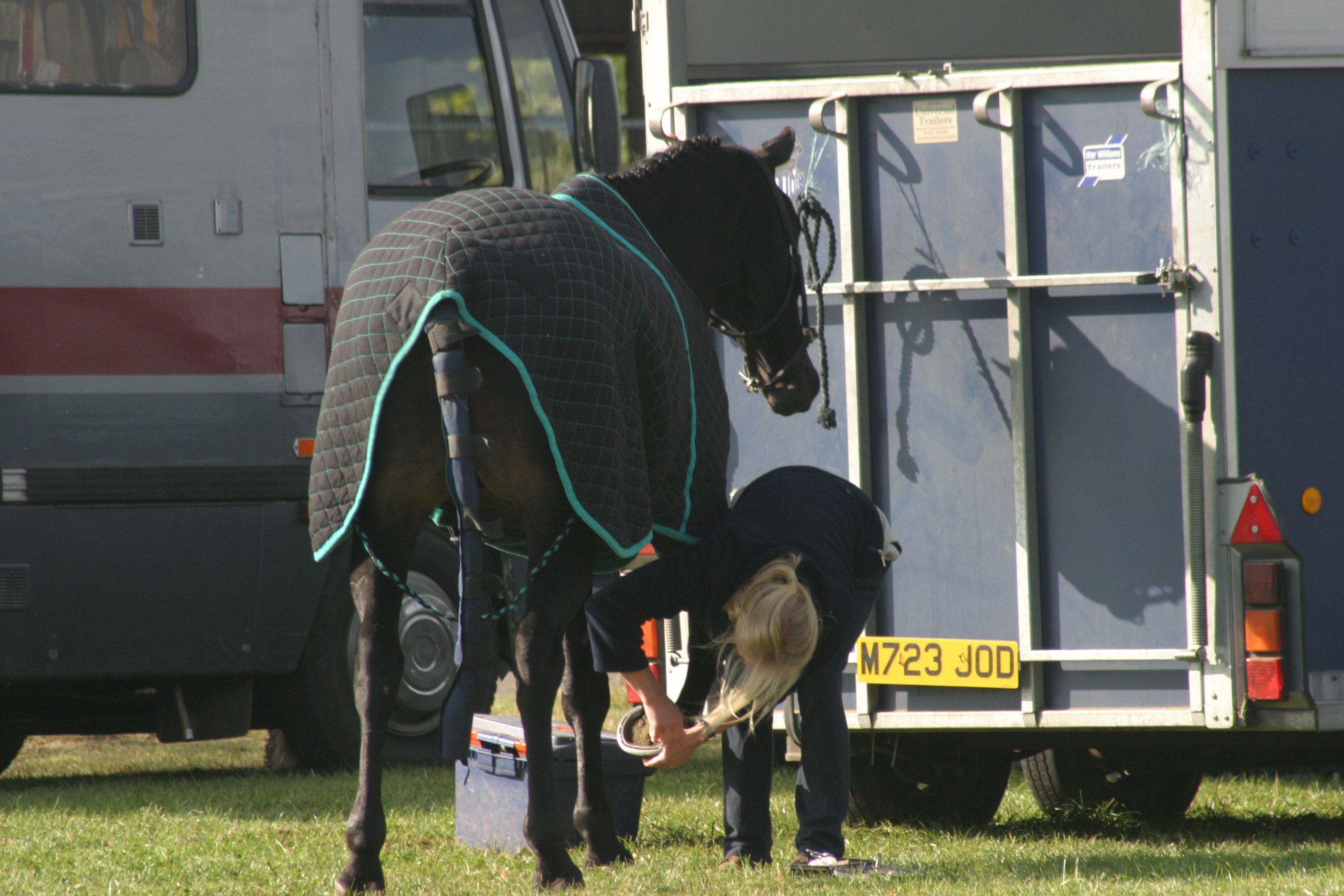
Animated sequence of a horse pacing. Photos ta...

Animated sequence of a horse pacing. Photos taken by Eadweard Muybridge (died 1904), first published in 1887 at Philadelphia (Animal Locomotion). Animation by Waugsberg, 2006-10-8. (The sequence is set to motion using frames of Human and Animal Locomotion, plate 591, “Pronto” pacing) (Photo credit: Wikipedia)

For other drafted novels, I have tried to keep a closer eye on the timeline as I work on the plot. However, when I get round to editing them I need to take care that I keep the timeline updated. I also need to evolve the date/day references into more subtle and clever ways of showing the passage of time that work with the pace of the plot.

I’ve just outlined the sequel to ‘Spiral of Hooves’, which has the working title of ‘Tortuous Terrain’. Its timeline was complicated to plot due its background against two different equestrian competitions in the USA. Hopefully, as I write the first draft I can find the right words to capture time as well as the setting and characters. There’s an historical mystery in the wings too, set in both 1812 and the present day – ‘Seeking A Knife’. That presents an interesting challenge, but sometime in the future.

As for the blog title ‘Time Exchange’ that was Inspiration Monday – http://bekindrewrite.com/2013/07/15/inspiration-monday-look-at-me-now/. Not the requirement, but the title seemed to fit this piece: an exchange of experiences from me to you.

Now it’s your turn: what do you find gives inspiring writing a sense of time?

Interview by a kindred spirit

When an opportunity to be interviewed comes along take it. That’s my advice as a retired journalist, who enjoyed interviewing people, and now as a fledgling novelist, when fantasy writer Ailsa Abraham kindly approached me. While I’m talking about Ailsa, I recommend that you all explore her inspiring blog with more than a few uplifting insights into the pagan world plus writing.  Over to you Ailsa:

Everyone always starts these “guest spots” by saying how thrilled they are etc. etc. but today I really AM delighted because my guest today is someone with whom I think I have a lot in common. We’ll see, shall we?………………… READ ON

Disintegrating Characters

PhotonQ-Homer' s Evolution Theory

How should a novel’s characters evolve? Should one create the characters before the plot or as the story unfolds? Do you do sketches before writing your novel?

My first novel, Spiral of Hooves, began life as a rough outline back in 2000, but went through various versions, with characters changing their names, motives, roles, and in some cases ceasing to exist. Other writers in my novel writing group tried to suggest improvements, which I attempted to integrate into my evolving patchwork of plot and counterplot. Thirteen years later and I am taking on board the comments from my US e-book publisher’s editors. And I need to check the voice of some of my characters and their motives.

Time to check my character sketches. Except the 2000 versions are sketchy, if they even exist; probably on dusty floppy discs. But it seems that they only evolved in my head, not as updated notes. Bad move.

English: Spiral made of Floppy discs

English: Spiral made of Floppy discs (Photo credit: Wikipedia)

So now I am producing new sketches and timelines as I check through the current manuscript. In most cases no old sketch exists so the page is blank, although I have an unfolding story to refer to, plus the scribbles in my head. Reminds me of writing character profiles in English Literature classes at school. Oh, and I need to create a timeline that matches the manuscript or at least shows where I have made errors.

Sounds like I’ve written my first novel in fits and starts, using multiple maps and asking the way from friendly faces that sent me via their favourite attractions. Just the basics to guide me so I must be a Pantser.

And here I am claiming to be a plotter. However I confess that almost all subsequent novels, now in various draft stages, have been plotted: detailed character sketches, timelines, scene by scene OR chapter by chapter outlines, and even research notes. But never set in stone, so when the first draft pours out, the unexpected and inspirational can happen. And my characters are often the ones driving the plots.

But which is best for characters sake? Pantser or Plotter? Will my plotted novels suffer the same fate as my first novel and spiral out of control, character sketches disintegrating as the timeline fractures?

Perhaps I need to upgrade my sketches more often, as the story evolves and the characters mature – like wine rather than cheese, I hope.

What do you do? What are your words of wisdom?

Creative Chinese Character Art

Creative Chinese Character Art (Photo credit: sinosplice)

Beyond the Monotony

A foggy evening 01

A foggy evening 01 (Photo credit: AnneCN)

What would you do after three months of editing?

Variety is the spice of life they say, but how do you achieve it? Stop editing and write? Switch projects? What happens if you have five draft novels all needing editing and two new plots pounding at your mind?

Most sensible writers seem to blend the editing and writing successfully, judging by their Blogs and their Facebook posts. But living with MS makes that hard. If I work at the revision then I no longer have the energy to do anything more than chill out. Which is why it has just taken me three months to complete the third revision of my 97k novel Wyrm Bait. Yesterday I sent it off to my editor for detailed analysis; also sent it to four beta readers for their thoughts.

Some time ago, I would have switched into writing mode and produced another draft novel, which is why there are so many lurking around, waiting to be edited. Heading the queue is that blast from my past, my first novel Spiral of Hooves. It’s been with the editors for the US ebook publishers – one English, one American – and is due back any day.

Decision made, therefore: I have to revise that next, addressing their input = another month or so of editing.

You Want Me To Go Down Where?!

You Want Me To Go Down Where?! (Photo credit: tobym)

Do I scream? It’s a change of setting, characters, plot and of problems to be addressed. But it’s still editing – NOT writing.

But editing is part of the writing process, the experts tell us. I need to learn to love the revision stage. The short cut of editing as I write is a gag on my creative flow. I prefer to plot carefully, write freely, and edit gradually. Except three times five novels = 15 months of editing. But total revision for each novel is far longer, which cuts out the creation. Doesn’t it?

However no new novels won’t work, not if I want to satisfy my urge to create and my potential readers urge for new words. When Spiral of Hooves sells, the readers should want the sequel, but it’s not written.

One source of new material has been NaNoWriMo in November and I have heard rumours of a June challenge as well. Is that the solution? NaNoWriMo has produced two first drafts: The Last Leaf (2011) and Wyrm Blood (2012). One took a month but the other was almost three to first draft completion. Even have two ideas in plotting process; if I can decide which one comes first in the penning order. Probably Tortuous Terrain the sequel to Spiral of Hooves. However Seeking A Knife is more alive in my mind. Decisions, decisions.

Image representing Facebook as depicted in Cru...

Image via CrunchBase

Need more time. Maths not looking good. Something needs to give. But what? Social media? Emails? Gaming? All cut to a minimum and part of my survival plan, whether to maintain contact or to chill and reward myself.

One solution is to blog rather than create new novels. Still writing and far faster, requiring quick editing. Revert to short stories and simplify my inspiration. Even novellas not novels. All ideas to be swept along in the tide of editing. And high tide is approaching. With MS lurking to dash the plans with exhaustion and pain.

So what do you do? What advise can you give the Silver Scribbler?

Sadness in April……

Writing about my mother is hard just day’s after her death. Writing anything has been difficult recently – MS ill health; emotional upheaval; trying to focus on editing; emails & blogs to read; writing tips to learn….

I’m trying to get past a blockage that has been growing since I completed the NaNoWriMo a few months ago. Some days it’s easier to escape into another world than write.

One day I will start blogging properly again – when I have something people want to hear. Am I talking to myself, I ask as I type away? Not just now but in earlier posts. Does anyone want to read the thoughts of an unpublished writer without insights? I thought not.

Until I have something worthwhile to say, then as Abraham Lincoln said: ‘Tis better to be silent and be thought a fool, than to speak and remove all doubt.

So read what my wife says instead…….

snowlass's avatarTHE DUSKWEALD


Here it is the12th day of April 2013 and it is raining outside…..when does it not ever rain here in England? For now I am just going to think that all these raindrops are “tears” from heaven.

We lost Rolands mum, Nidia, on the 8th at age 84, and this just added to the ever mounting sadness that the first part of April brings to this family. Two years ago on the 9th we lost our daughter and on the 12th we lost my step-dad. So it has been very trying to say the least.

I sit and wonder about Nidia………and why I felt like she did not like me at all……it didn’t matter what I did to try and please her, it just didn’t seem to be enough……..she burned many bridges with me in the short 3 years that I knew her……oh I…

View original post 403 more words

Editorial Work

Editorial Work.

An interesting post that is very relevant as I edit ‘Wyrm Bait’ (and have to miss blogging properly today).

As I say in my comment, below the post: I used some beta readers for my first novel, and got some valuable advice from some of them at least. Going to do same with novel revising at moment BUT also sending it to a professional editor. Having both sets of comments will help me decide how much gets hacked or honed. Read too much self-published stuff that feels as if the writer never got any help.

Will be interested to see comments and thoughts.