Hi everyone! Today’s an exciting day because I’ve been helping Angela and Becca at Writers Helping Writers keep a BIG secret: what the next book in their thesaurus series will be.
It might seem strange for an author to not tell their readers about the book they plan to release…unless your names are Becca and Angela. They are known for writing books on showing, not telling, and couldn’t pass up a chance to do just that by waiting for the cover reveal, which is today!
You might have heard of The Emotion Thesaurus before, or even have a copy. The original released in 2012 and quickly became the go-to guide on expressing character emotion. The book’s lists of body language, thoughts, and visceral sensations for 75 unique emotions made brainstorming character expressions and reactions so much easier.
The Emotion Thesaurus is one of my primary writing resources – well-thumbed in my quest to improve my characters’s emotional behaviour.
In this second edition, the authors have added 55 entries, bringing the total to 130 emotions.
That’s not all, either. This book is almost double in size with lots of new content. You can find a full write up for it HERE and a list of all the entries (plus some samples!)HERE.
Angela & Becca are giving away a free webinar recording of one of their popular workshops on Emotion, sohead overif this is an area of struggle for you. It might really help!
Her instincts are telling her something isn’t right…
On a chilly morning in rural Suffolk, Cassandra Hawke is woken by a gunshot. Her mother is clinging on to her life, the weapon still lying nearby. Everyone thinks it’s attempted suicide—but none of it makes any sense to Cass. She’s certain there’s more to it than meets the eye.
With her husband and father telling her she’s paranoid, Cass finds an unlikely ally in student paramedic Holly. Like Cass, she believes something is wrong, and together they try to uncover the truth. But is there more to Holly’s interest than she’s letting on?
With her family and loved ones at risk, Cass must ask herself: is she ready to hear the truth, and can she deal with the consequences?
**
Review 4.4 stars
If I went by the blurb, this book would be Cassandra Hawke’s
tale – but that’s just part of this novel which starts twenty years earlier
when eight-year-old Holly Redwood sees a ghost shot at a remote farm on
Halloween. The unresolved experience lurks
in her past until as a trainee paramedic she is called out to help with an
attempted suicide – at the same farm.
Cass doesn’t believe that her mother committed suicide but
her husband and her father behave as if she is paranoid. However, she befriends
Holly who believes her as the explanations don’t feel right. And Holly suffers
from synaesthesia, a condition where the person can feel the emotions of others
as if they are their own – a mixed blessing it seems for Holly.
The setting pulled me in, in part as I know Suffolk and
Norfolk. The descriptions were immersive, blending imagined places with the real
ones that matched my memories.
The author uses two POVs to differentiate the two protagonists
– first person for Cass and third for Holly. First allows the reader to see
into Cass’s confused thoughts – the mind some say is paranoid. There are
reasons for that, but I’ll just say that those are cleverly unclear at first.
Who is telling the truth?
Holly as a protagonist stood out for me – and not just because of the prologue that set the unsettling feelings going.
As a fan of first person and deep POV, I kept wanting to get inside Holly’s head more than was possible. However, two first person POVs is hard for some readers, and the author made the necessary choice choosing Cass – a mind that twists the plot. And the suspicions. Would Holly as first person POV instead been a different book?
Suicide or murder? What starts as an ‘open and shut’ case, works
through murder suspects at a steady pace that was in danger of losing me –
especially when I identified the culprit or thought I did. But there was enough
drama for me to read on and meet all the secondary characters – including the
suspects. They all had their own traits and worked. But too many felt irritating,
even if there was some justification for their attitudes. Death and murder have
repercussions. Or do they for everyone? Who profits?
This is not a rushed mystery but as the plot deepens, the
pace picks up. I had my suspicions, but my suspect remained hidden from the
police for a long time. There was a point where I felt the story was being
drawn-out, but I was also teased and tested. Suicide can be instigated, and I
have experienced that. But that may or may not be the resolution?
Am I teasing or tempting you? Read this recommended novel to
find out what happens in this cleverly crafted story. The twist works even if…well,
you’ll see what I mean.
Story – four stars
Setting/World-building
– five stars
Authenticity –
five stars
Characters – four
stars
Structure – four
stars
Readability – four
stars
Editing – five
stars
**
Falling Future
I was aiming to write this review for Thursday 3rd
January, but I was still working through New Year emails, my IWSG post, and
other messages that overwhelmed me into Friday and beyond. And then came the
weekend, and writing was not easy as my mind was fractured by my MS. Plus, the
emails kept coming.
Anyway, this review was delayed until I could make a realistic space – and create a new banner that lets me post any day of the week.
UPDATE: Added the banner as I forgot yesterday – distracted by this new WordPress layout.
It didn’t help that I fell on the floor – or rather crashed
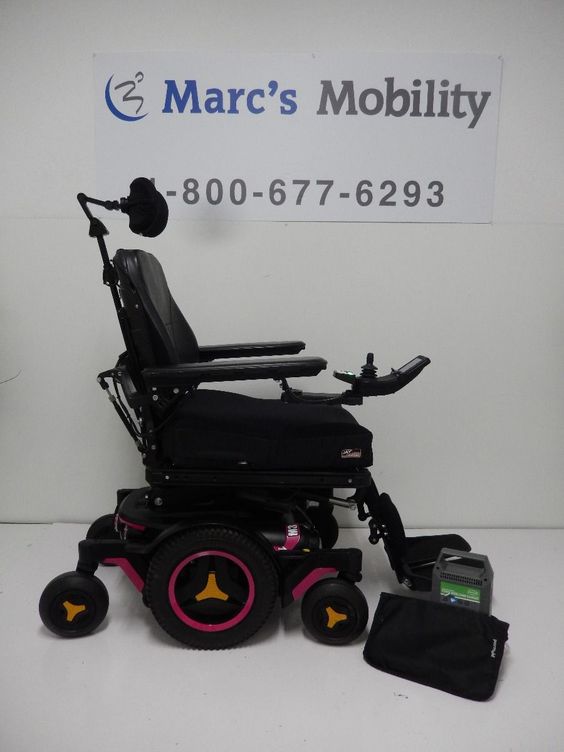
out of my manual wheelchair transferring to a power chair. We’ve been looking
at buying a power wheelchair, but they are expensive – especially on two
retirement incomes. Second-hand is more manageable so that is the route we are
going.
Falling hurts – especially when I smashed my head, broke a
tooth, and bruised my right arm; I’m right-handed. Falling could be a theme too
– for my memoir. Falling in love, falling from horses (or ponies) and falling
ill – which means falling on the ground.
So, do I start working on / distracting myself with my life story? Should it be called ‘The Art of Falling’ or ‘A Life of Falling’ or something else?
Apologies for the two weeks of silence, but it was those midwinter
distractions, and even now I feel inundated with emails that subtly hint at
what I should be doing.
But I hesitate to reflect on 2018 or make resolutions for
2019. Okay, I may review my reading tomorrow and I have resolved decided
to develop and focus on Fevered
Few, my NaNoWriMo novel. But more about that another day/week/month.
First, the IWSG post which got me scribbling in my little
black notepad over midwinter-fest.
January 2 question – What are your favourite and least favourite questions people ask you about your writing?
“What are you writing
now?” is my favourite question and lets me ramble about my WIP – or attempt
to explain it as briefly as possible. Answer:Fevered
Few
“Why haven’t you
published anything since 2013?” is THE question that I dread so my least
favourite. Answer: Because I take
years to finish anything and change novels mid-edit.
“So, you never submit
anything?” annoys me because I dislike the Answer: Nothing of value it seems.
“Why are you being rejected?” is another least favourite,
and enough to make me feel dejected. Answer:
What do you think?
“But you’ve been a winner?”
is a question/comment that hovers midway between favourite and not. Answer: This is a chance to crow about
a writing prize as a kid and the giveaways that make up my TBR pile. Or the
point when I confess that my writing has yet to win a prize this century – so,
that’s why I’m an Insecure Writer in an Ace group called IWSG.
And now the real question: “What are the questions to ask – or not ask – about your writing?”
Purpose of IWSG: To share and encourage. Writers
can express doubts and concerns without fear of appearing foolish or weak.
Those who have been through the fire can offer assistance and guidance. It’s a
safe haven for insecure writers of all kinds!
Every month, we announce a question that members can answer
in their IWSG post. These questions may prompt you to share advice, insight, a
personal experience or story. Include your answer to the question in your IWSG
post or let it inspire your post if you are struggling with something to say.
Posting: The first Wednesday of every month is
officially Insecure Writer’s Support Group day. Post your
thoughts on your own blog. Talk about your doubts and the fears you
I had intended to post today’s Thursday Creation Review last Thursday, but cold ravaged our household. The younger members of the family recovered within a day or so, but us old folk are still recovering ten days later. I’m forcing myself to write this as the book deserves a good review, although it will be late and briefer than usual.
Method Acting For Writers: Learn Deep Point Of View Using Emotional Layers
Are you struggling with writing characters readers care about? Critique partners, editors or agents saying you need to write vivid emotions? Do you want to write deep scenes and emotional arcs into your stories to keep readers engaged and turning the pages?
Writing deep point of view is like handing your reader a virtual reality headset; it’s dynamic, visceral, and immediate. This intimate and emotive style of writing resonates with contemporary readers, if you’ve got the guts to “go there” with your characters. This writing skill isn’t difficult to master, but it requires a shift in how you tell stories and sometimes those shifts don’t seem intuitive.
What Will You Learn?
• Eliminate unnecessary telling
• Create immediacy
• Effectively use internal dialogue
• Understand and use subtext
• Strategies to make words pull double duty
• Create unique character voice
• Tap into your emotive memory (just like actors do)
• Learn tips from psychology to write emotions with visceral authenticity
• Learn layering and blending techniques for writing emotions
• Identify and eliminate author intrusion
• Learn effective pacing strategies to intensify emotional impact
• Recognize POV breaks
• Know when not to use deep point of view
• Recognize areas where you’re not going deep enough
• Learn what an emotional story arc is and how to employ it
Take this deep dive and get back to writing FAST! Put Deep POV to work on your whole novel (or just key scenes) for an emotional punch readers can’t resist.
Review 5 stars
This short but excellent book was everything that I’ve needed as a struggling advocate of deep POV. I’d attempted to go deep a few times over recent years and tried to use guidance in online articles. Sometimes my writing felt as though it was getting deeper, other times it felt like another failed attempt.
Now, at last, I have a convenient guide on my desk. And as I was reading her book, I was writing another short story, and, with Lisa Hall-Wilson’s guidance, phrases traced salt-runs on my cheeks.
Okay, that’s more purple than deep, but this gem of non-fiction was full of so much immense value that my current writing makes me feel more confident. From simple ways to eliminate unnecessary telling and ways for going deeper, to creating voice and layering emotions, there are so many simple techniques to help a writer tackle deep point of view,
I felt that I was ready to delve far more in my writing with every page I read and I wrote. For me, this was essential and invaluable. (Apologies for weird phrases pulled from a catarrh-addled brain.)
I won’t remove a star for the lack of page numbers as there is great advice on every page. And it doesn’t end there as Lisa Hall-Wilson has a Facebook page – Confident Writers – and she runs courses and offers online help.
When my Kindle died recently, I had to revert to my pile of reconstituted trees and so today’s Thursday Creation Review is the most recent paperback I finished. Beyond that, I will be reviewing a book that I’m reading – drum-roll – on my new Kindle Fire 7.
That new acquisition was a problem as almost all my 500+ Kindle titles are on my UK account – and Amazon stopped me buying a new device from their UK site to send to my US address. So, the new Kindle is linked to my US account which has only a couple of dozen titles – enough for now, even if some are in my paperback collection.
Stand by your beliefs – even if it means going to the end of the Earth.
By standing up for his principles, horse farrier Joseph Barnaby lost everything. Now, when a personal vendetta goes too deep to fight, he escapes to the Portuguese island of Madeira where he finds work on a small farm only accessible by boat.
The balmy climate and never-ending supply of exotic fruit, vegetables, and honey make it sound like paradise. But, for Joseph, it’s the ideal place to hide from the world.
Not everyone is prepared to give up on life’s misfortunes. The local fishing village has its own surprises and the inhabitants of Quinta da Esperança have more grit in them than the pebbled beach that borders the property.
Review 4.6 stars
When I discovered that the main protagonist was “horse farrier Joseph Barnaby”, my ears pricked, and the Portuguese island of Madeira made this a Must Read. When I won this excellent novel in an Advance Giveaway from author Susan Roebuck – but with no obligation to write anything about Joseph Barnaby – the book moved to the top of my reading pile.
The exact reason why Joe Barnaby escapes his life with horses in England is carefully revealed in flashbacks that felt at moments like a Dick Francis mystery. In contrast, his new life working on a small farm near the fishing village of Quinta da Esperança became a wonderful romance with both the island and with a young deaf woman, Sofia – although there are obstacles thrown in their path, including Joe’s past.
For me, the romance worked, and I was swept along; plus, the horseracing mystery spurred my ‘detective’ skills. I began to suspect what might have happened as the clues were slipped out, and the resolution satisfied me – as did the romantic denouement.
I must admit that there were some minor moments where my equestrian brain questioned the odd bit of phrasing, but slight, and even as an equestrian journalist, I have made mistakes. I was interested in the way that Riding for the Disabled featured – having personal connections to that inspiring movement.
The settings were vividly described, and I was immersed in the story because of those descriptions – and through the wonderful cast.
There were some great characters, from the main protagonists of Joe and Sofia to the supporting cast, from memorable fishermen to the two principal antagonists. The latter were not as devious as the ones that challenge my brain in crime novels, but they displayed traits that kept the protagonists challenged. Sofia’s bees are characters themselves as well as an inspirational community. And I must mention Ed the donkey – just read and find out.
One woman was elusively mysterious, adding a clever thread to the story that wove through so many elements – I’m avoiding spoilers here. I want to say that there are a few clever threads, from the island’s past to the medical themes.
Sofia’s deafness seemed to be understood by the author and sensitively handled – adding to my engagement with the character. How others interacted with her was well contrasted, with some signing, others lip-reading, and those frustrated by her.
This novel was the perfect combination for me – horses and romance in a Portuguese setting. A strong 4.6 stars and a recommended quick read.
My headline is not exactly the question prompt for this month’s Insecure Writer’s Support Groupmonthly blog post, but it’s what I have to keep saying to avoid a meltdown.
October 3 question – How do major life events affect your writing? Has writing ever helped you through something?
The real questions – well, two questions.
I can’t pretend that one critical life event didn’t impact my writing. When I was diagnosed with multiple sclerosis in January 2000, my career as an equestrian journalist began to wind in; not immediately, but as I lost the ability to do the job efficiently, retirement loomed. By 2005, I had quit writing reports and by 2010, my involvement with horse shows had ended.
However, writing fiction filled some of the gaps in my life, and my debut novel, Spiral of Hooves was mainly written after I retired. My ongoing health problems do make writing every day hard, but sometimes the writing can distract from having a chronic illness– well two as I also have blood cancer, chronic lymphoblastic leukaemia (CLL).
But MS doesn’t distract from noisy step-great-grand-kids as the disease makes me sensitive to noise (as well as other things like temperature). Maybe I can use the experience for a children’s story.
As I began writing with some seriousness in my teens, there are possibly other life events of relevance. One day, I might remember.
Our current crisis is financial and could lead to a house move/down-sizing. Again, writing is a distraction, although I envisage obstacles like having no computer for some days – but not for so long as the move from Wales to the US.
NaNoWriMo might be a fail though. At least, I can scribble things down, even if MS makes my handwriting illegible – plus, I have plenty of notepads.
My muse will help me through this crisis.
Do you juggle major life events and writing? Or do they feed each other?
Purpose of IWSG: To share and encourage. Writers can express doubts and concerns without fear of appearing foolish or weak. Those who have been through the fire can offer assistance and guidance. It’s a safe haven for insecure writers of all kinds!
Every month, we announce a question that members can answer in their IWSG post. These questions may prompt you to share advice, insight, a personal experience or story. Include your answer to the question in your IWSG post or let it inspire your post if you are struggling with something to say.
Posting: The first Wednesday of every month is officially Insecure Writer’s Support Group day. Post your thoughts on your own blog. Talk about your doubts and the fears you have conquered. Discuss your struggles and triumphs. Offer a word of encouragement for others who are struggling. Visit others in the group and connect with your fellow writer – aim for a dozen new people each time – and return comments. This group is all about connecting!
Let’s rock the neurotic writing world!
Our Twitter handle is @TheIWSG and hashtag is #IWSG






 Writing Wings