Blaze – a review

Having finished two novels in quick succession last week, there will be two book reviews this week as well as my Insecure Writers Support Group monthly post tomorrow.

First though a review of another mystery novel that gave me some more insights into writing an engrossing and exciting read.

Blaze_27218007

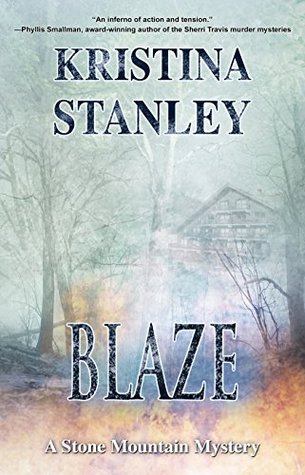
Blaze (A Stone Mountain Mystery #2)

by Kristina Stanley 

Instead of exchanging vows, Kalin Thompson spends her wedding day running from a forest fire near Stone Mountain Resort, and the pregnant friend trapped with her has just gone into labor. Meanwhile, Kalin’s fiancé, Ben Timlin, hangs from the rafters of a burning building, fighting for his life. Can the situation get any hotter?

When the fire is declared as arson, finding the firebug responsible becomes Kalin’s personal mission. In the course of her investigation as Director of Security, she discovers that some people will go to extreme measures to keep her from exposing their secrets.

Having enjoyed Kristina Stanley’s winter mystery Descent, Book 1 of the Stone Mountain series, I was looking forward to No 2 Blaze, and I wasn’t disappointed.

From the moment the forest fire ruins Kalin and Ben’s wedding plans, I was swept up in the crises and life-threatening situations. There are moments of calm, time for reflection, but there are always questions driving the reader along. So I didn’t tarry too long.. We know that nothing runs smoothly for a busy Director of Security, even when the RCMP are doing their job. Kalin has to be involved.

The plot was fast-paced and well-structured, with enough neat red herrings to keep me guessing almost to the end – just like in Descent. Although this works as a standalone, it’s best to read Descent first, as other reviewers have said. Then you become familiar with some of the characters, as well as some past events. Nothing crucial but that adds colour.

The clever interaction between the well-painted characters, many new, gives the novel sub-plots that enrich the read, and take Blaze beyond a mystery. Yet these emotional subplots interplay with the crises that weave through the lives at Stone Mountain Resort. And the dog characters are well integrated – not surprising as the author owns one.

Once again, Kristina Stanley has captured the atmosphere of her setting, whether it’s being ravaged by fire or in the vistas from the slopes that attract other outdoor pursuits suited to the season. Here skiing has given way to mountain biking.

The winter beckons though and I can’t wait for Avalanche, Book 3 of the Stone Mountain Mystery series.


The Road – a review

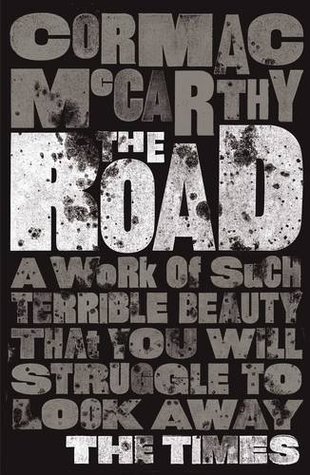
11329121

 A father and his son walk alone through burned America, heading through the ravaged landscape to the coast. This is the profoundly moving story of their journey. The Road boldly imagines a future in which no hope remains, but in which two people, ‘each the other’s world entire’, are sustained by love. Awesome in the totality of its vision, it is an unflinching meditation on the worst and the best that we are capable of: ultimate destructiveness, desperate tenacity, and the tenderness that keeps two people alive in the face of total devastation.

As I prepare myself for the next re-write of Gossamer Flames, my post-apocalyptic series of interconnected tales, I continue looking for similar fiction to read, not just to see how the best fiction works, but for the details about how the world is affected and how people react.

When I read and reviewed the anthology “Prep for Doom”, I said, “As to my own post-apocalyptic saga, I feel there are lessons to learn and I will attempt to embrace them.”

I knew that the next read would be “far bleaker and darker… like grey ash”, and it was, but here is my full review of ‘The Road’ by  Cormac McCarthy.

“Bleak, tragic, moving and poetic,” was my immediate reaction when I finished “The Road”, a novel that has divided readers.

My initial reaction to the early pages was driven by my inner editor as a writer – why such sparse punctuation? Why no quote marks? Why no speech tags?

“What is it?
Nothing. I had a bad dream.
What did you dream about?
Nothing.
Are you okay?
No.
He put his arms around him and held him. It’s okay, he said.
I was crying. But you didnt wake up.
I’m sorry. I was just so tired.
I meant in the dream.”
― Cormac McCarthyThe Road

Then my mind focused on the words themselves. The way that Cormac McCarthy used them to weave the tale. Not like in commercial fiction, but more like a storyteller around a campfire. For me, the phrases evoked images and feelings. Many of them stood out for me, so here is an example.

“The nights were blinding cold and casket black and the long reach of the morning had a terrible silence to it.”
― Cormac McCarthyThe Road

The novel is bleak but then this is a dying world where little survives. Passages might seem repetitive but then the ash shrouded landscape is endless. Endless like the road itself to the man and the boy, to the reader travelling with them.

“He got up and walked out to the road. The black shape of it running from dark to dark. Then the distant low rumble. Not thunder. You could feel it under your feet. A sound without cognate and so without description. Something imponderable shifting out there in the dark. The earth itself contracting with the cold. It did not come again. What time of year? What age the child? He walked out into the road and stood. The silence. The salitter drying from the earth. The mudstained shapes of flooded cities burned to the waterline.
― Cormac McCarthyThe Road

It’s not just these two characters “carrying the fire” that keeps being mentioned strategically. I trudged along with them, mourning the lost world as the man remember the past, the things lost and destroyed.

“Years later he’d stood in the charred ruins of a library where blackened books lay in pools of water. Shelves tipped over. Some rage at the lies arranged in their thousands row on row. He picked up one of the books and thumbed through the heavy bloated pages. He’d not have thought the value of the smallest thing predicated on a world to come. It surprised him. That the space which these things occupied was itself an expectation.”
― Cormac McCarthyThe Road

While the devastated world is bleak and monotonous in some respects, McCarthy captures the man’s memories of the past in wonderful passages that evoke the lost wonder of life and nature. These contrast well with the dying world.

Yet the novel has been heavily criticised, not just for the grammar but also the empty plot. Amazingly the reviewers go to great lengths to described what they didn’t like. Some even ape the author’s style in their reviews, but in that they fail. The criticisms vary from the lack of ‘few concrete details’ about the disaster and the world, to “McCarthy didn’t do it purposefully, he just writes in an ostentatiously empty style which is safe and convenient to praise.” To me that misses the crux of the novel, the tragedy of this dying world.

I know that fans of the apocalyptic genre and science fiction expected something different, and some were even confused about the cause of the apocalypse. However, I understood that the world had been devastated by nuclear war and the constant snow was a sign of a nuclear winter. The details were sparse but enough to help me realise what I was reading about. A reader has to invest some effort, I feel.

Knowing about this negative feeling, I tried to dislike the novel but failed. The title said so much. This was a road-story in a bleak world, where surviving from day to day requires a dream. There is plenty of conflict, not least with death and fear. I kept reading, hoping that there was a light at the end, just as the man and the boy have the sea as one of their concrete goals.

For me there was hope and in part that was ‘the fire’ carried by these forlorn travellers. Someone has to ensure that love for humanity is handed on when the world is ready. Not an easy read but a worthwhile one.

So have you read “The Road? What did you think? A masterpiece or garbage?

Would you give it a try?

P for… Prep for Doom – a review

P


Prepper  –  NOUN  –  chiefly North American

A person who believes a catastrophic disaster or emergency is likely to occur in the future and makes active preparations for it, typically by stockpiling food, ammunition, and other supplies:there’s no agreement among preppers about what disaster is most imminent whether you’re a doomsday prepper or simply like to be prepared, emergency foods should be kept on hand


Since I’m working on Gossamer Flames, a post-apocalyptic series of interconnected tales, I’m looking for similar fiction to read, not just to see how the best fiction works, but for the details about preppers and how they behave. “Prep for Doom” was therefore a must read. So on to the review.

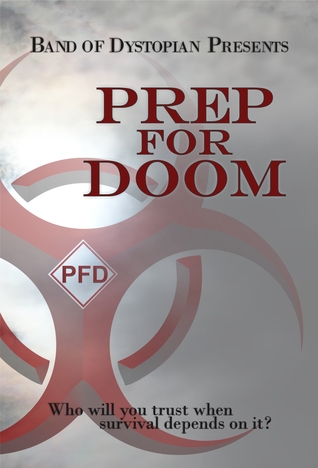
PFD25629151

From the imaginations of twenty authors of dystopian and post-apocalyptic fiction comes PREP FOR DOOM – an integrated collection of short stories that tell the tale of a single catastrophe as experienced by many characters, some of whom will cross paths. What begins with a seemingly innocuous traffic accident soon spirals into a global pandemic. The release of Airborne Viral Hemorrhagic Fever upon New York City’s unsuspecting populace brings bloody suffering within hours, death within a day, and spreads worldwide within a month. An online community called Prep For Doom has risen to the top of a recent doomsday preparation movement. Some have written them off as crazy while others couldn’t be more serious about the safety the preppers could provide in a global disaster. But when AVHF strikes, their preparation may not be enough to save them.


Prep For Doom” is a clever anthology by different authors, each contributing a stand-alone story connected by the pandemic apocalypse, so building into one large story from multiple points of view. The level of collaboration on this project must have been impressive, as is the resulting work.

The characters of each story reflect different reactions to the growing crisis, some more intense and visceral than others. Each protagonist takes the stage in a unique way, and plays out their fate in the disaster – some as victims, some as opportunists, even killers, and some as saviours. Some are committed preppers or have known one for good or bad. But most are ordinary people trying to survive.

Much of the time I was asking how I would react in such a situation. Panic? Help?

Each of the writers tells a facet of the story in their characters’ words. So inevitably, some stories are stronger than others, painting more vivid images. Most wrenched at my emotional responses.

Many characters reappear in other stories, whether in supporting roles or even as people in the ‘crowd’. Some get swept up as casualties, others survive and give hope. Memorably one antagonist is seen in one story from a victim’s viewpoint, yet later another writer vividly shows that antagonist’s desperation and driven fall from survivor to killer.

I wanted to give “Prep for Doom” five stars, but a few things let it down in my opinion.

Setting: although the virus spreads worldwide, we only get to see its impact on US communities, predominantly around the epicentre of New York. The opening chapter is the exception as it’s set somewhere in Africa, but I wanted a few more non-US viewpoints.

Resources: food runs out fast as does water, which makes total sense so some people are surviving on granola bars. The desperate looters feel realistic, but I kept wondering why cell phones worked for so long? Why do some people have the power to keep watching the world die on TV? For a few days perhaps, but this felt longer. Since the hospitals are swamped very quickly, I struggled to believe that some services survived for long. Maybe the emergency facilities are far better than I thought, or Americans are better prepared.

Chronology: inevitably many of the stories start at roughly the same point – the virus release – so the editors will have struggled to place them in order. Unfortunately, at times I was lost and wished there were clearer indicators of time and date in some instances. But most were clear from the words.

Stereotyping: in most cases, the race/sex/religion of the characters didn’t adversely reflect on their actions in an unrealistic way. But one crucial episode grated as the minority concerned gets a trite apology and the story gives them a raw deal. Not wishing to spoil the plot, I will say no more.

Missing elements: there were a few things left unexplained, although maybe there is more to come. For instance, I wanted to know about the initials PFD, which appear throughout and not just for Prep For Doom. Is the link a coincidence, or a reasoned choice?

However, these criticisms are minor and don’t detract from an excellent anthology that I recommend. It has the right blend of realistic actions and reactions, weaving a sense of despair as the reader is carried towards hope.

As to my own post-apocalyptic saga, I feel there are lessons to learn and I will attempt to embrace them.

And for my next read, I am tackling a very different novel in this genre – far bleaker and darker… like grey ash: The Road by Cormac McCarthy.


Talking to the Dead – a review

Time for another review of a novel linked to my own writing.

Some months ago, my character of D.S. Sparkle Anwyl began to emerge, becoming the detective embroiled in “Seeking A Knife”. However, I had some problems making her believably Welsh. It was no good just living in Snowdonia, I needed more to work with.  So I embarked on extensive research. There was fiction reading as well, since I wanted to avoid plagiarising Welsh detectives, like Constable Evan Evans.

Then I discovered DC Fiona Griffiths and the bar was raised.

 TalkingToTheDead17552649

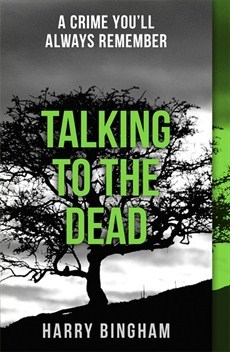
Talking to the Dead (Fiona Griffiths #1)

by Harry Bingham

The first novel in a powerfully original new crime series featuring a young policewoman haunted by her own dark past.

It’s DC Fiona Griffiths’ first murder case – and she’s in at the deep end. A woman and her six-year-old daughter killed with chilling brutality in a dingy flat. The only clue: the platinum bank card of a long-dead tycoon, found amidst the squalor.

DC Griffiths has already proved herself dedicated to the job, but there’s another side to her she is less keen to reveal. Something to do with a mysterious two-year gap in her CV, her strange inability to cry – and a disconcerting familiarity with corpses.

Fiona is desperate to put the past behind her but as more gruesome killings follow, the case leads her inexorably back into those dark places in her own mind where another dead girl is waiting to be found…

My review:

Fiona ‘Fi’ Griffiths might be a junior officer assigned to a fraud investigation, but she’s willing to manoeuvre herself onto the team investigating the murders in a dingy flat. Her intelligence, among other clever moves and clandestine activities, is a key factor in her unravelling the links between the two cases. I knew that she would struggle until the justice that she demanded was implemented; but I was never quite sure whether she would prevail.

Those brains have earned her a degree, and set her apart from many colleagues. [Note: The College of Policing has proposed that, “Every new constable from 2019 could be required to have a degree – or agree to work towards an equivalent qualification.]

This active mind is a facet of a complex character that is well described through her POV. That voice is distinctive, revealing and never feels like the author. The voice of Fi kept me reading, wanting her to battle through everything thrown at her, some from outside and some from in herself, or in her past.

But it becomes clear from Fi’s words that she struggles to be part of ‘Planet Normal’ and the author makes that part of her engrossing personality. Her weirdness worked for me, leading the reader down murky paths on Cardiff’s darker side, and in her mind.

Fi is not your conventional detective, nor are her methods. She is a complex character and she shoves the investigation in unexpected directions. The author weaves words and phrases with style, bringing this world of Cardiff alive, for me at least. This was a different Wales from the area I know – Snowdonia – and yet there were glimpses of the rural roots at the country’s heart, and those roots are an intrinsic part of Fi.

Some readers have criticised the writer for creating a policewoman that would fail her first psych test. But I’m with those that realise that her intelligence gives Fi the edge in working the system in her favour. There were moments when I felt she might be bending the rules precariously, but she has the ability – and luck – to evade crashing over the precipice, this time. And if she can confuse her colleagues, what chance have the criminals.

The novel is not just about an investigation – that would make this just another crime read. This is about Fi and her personal attitudes, demons, and questions, so I’m full of praise for the way that Harry Bingham pulls this off, especially in the final chapter. A superb read that compels me to read the rest of the series.

*

As for my own detective and similarities, Fi and Sparkle are… a whole country apart, and more. Fi is from South Wales, Sparkle from the North and Snowdonia. Both quirky yes but not in the same way. No University education for Sparkle, she’s got her experience on the beat…and with the bullies at school. Sparkle’s deductive techniques are not Fi’s, although they might work together. And their means of dealing with criminals is very different.

No real comparison, but a definite benchmark.


The Element Trilogy – a review

Pageflex Persona [document: PRS0000040_00067]

Pageflex Persona [document: PRS0000040_00067]

For a change, I decided to produce a blog post around two reviews on two books from the same author Donna Galanti. In fact, they are the first two books in The Element Trilogy and, although I’m a slow reader, I’m looking forward to the release of the final book.

I won the second book in the trilogy in a competition that Donna Galanti ran on her website at http://www.donnagalanti.com, so I bought the first and read them in order. That proved to be the right decision, even if it meant delaying the first review.

A Human Element (The Element Trilogy #1)

The blurb starts off, “Evil comes in many forms…” and that is very true of both books. I was quickly drawn into the tragic life of Laura Armstrong, whose “friends and adoptive family members are being murdered, and despite her unique healing powers, she can do nothing to stop it.”

Donna paints her characters in vivid detail, and applies her same graphic description to the unfolding events. As a writer, she doesn’t hold back, and for some readers that might be too much. But for me the graphic details work, as Donna weaves images and emotions with her words.

As the savage killer emerged, haunting her dreams, and killing her friends, I became incensed with this cruel antagonist. But then I tempered my anger, much like Laura learnt to do, and there seemed to be echoes in my head of the creature in Mary Shelley’s Frankenstein; or, The Modern Prometheus.

A second protagonist is woven into the story, Ben Fieldstone, and his storyline leads him to the same place and back to the night when a meteorite struck, killing his parents. The plotlines that bring Ben and Laura together kept me reading, and rooting for them.

The questions that they both face, also challenged me, and although the face-to-face showdown with the killer was an emotional one, it was inevitable. So I had to keep reading more… which meant Book 2.

However, A Human Element is still and excellent stand-alone read. And I would recommend this novel, which blends suspense, science fiction and romance.

Pageflex Persona [document: PRS0000040_00067]

Pageflex Persona [document: PRS0000040_00067]

A Hidden Element (The Element Trilogy #2)

Once again, “Evil lurks within…”, although fifteen years on the stakes are raised as Laura and Ben Fieldstone face a secret alien community with the powers that they confronted in Book 1.

Their son, Charlie, has inherited his mother’s alien powers and from early on in the story, the reader wonders which path he will choose – his parents or the community that offers him so much more. His feeling of being different is akin to the alienation so many youngsters feel, and Donna Galanti portrays that well.

However, not all the community share the extreme views of the leader, and his son, Caleb Madroc, provides another viewpoint and a plotline that throws up many of the twists and resolutions.

The graphic descriptions of his father’s attempts to breed a secret alien community are in keeping with his tormented mind. The description also captures the desperation of a community struggling for survival. They might have unique powers, but that brings emotional turmoil and life-changing decisions that are cleverly described.

As the season changes to winter, I could envisage every drifting snowbank and feel the biting wind, elements that echoed the story as it spiralled towards the finale.

I was swept along with Laura and Ben as they risked everything to defeat this new nemesis that wanted to rule the world with their son. I kept wanting Caleb to not just be their only hope — I wanted him to survive as well, and save his own children.

By the end of the novel, I still wanted more, although there were passages that I felt were a trifle overwritten – but I never flicked through. Bring on the ‘unknown’ element.

*

Despite my slow reading pace, there will be more reviews… when I get to the next indulgence tackled. Next up is Friar Tuck and the Christmas Devil by Steven A. McKay.