The Pearl Thief – a review

When I was compiling my list for the 2019 Cloak and Dagger Challenge, I missed off a number of books including Elizabeth Wein’s The Pearl Thief. As Wein’s Code Name Verity was my top read in 2018, I was looking forward to reading this prequel. Well listening to what was my first Audible novel, though not my first audio book.

I’m now listening to another Elizabeth Wein novel – Black Dove, White Raven – but back to the review of my sixth read for the Challenge

The Pearl Thief

(Code Name Verity 0.5)

by

Elizabeth E. Wein

Before Verity . . . there was Julie.

When fifteen-year-old Julia Beaufort-Stuart wakes up in the hospital, she knows the lazy summer break she’d imagined won’t be exactly like she anticipated. And once she returns to her grandfather’s estate, a bit banged up but alive, she begins to realize that her injury might not have been an accident. One of her family’s employees is missing, and he disappeared on the very same day she landed in the hospital.

Desperate to figure out what happened, she befriends Euan McEwen, the Scots Traveller boy who found her when she was injured, and his standoffish sister Ellen. As Julie grows closer to this family, she experiences some of the prejudices they’ve grown used to firsthand, a stark contrast to her own upbringing, and finds herself exploring thrilling new experiences that have nothing to do with a missing-person investigation.

Her memory of that day returns to her in pieces, and when a body is discovered, her new friends are caught in the crosshairs of long-held biases about Travellers. Julie must get to the bottom of the mystery in order to keep them from being framed for the crime.

In the prequel to Printz Honor Book Code Name Verity, this exhilarating coming-of-age story returns to a beloved character just before she learned to fly.

Review 5 stars

After I was bowled over by the brilliance of Elizabeth Wein’s Code Name Verity, I enjoyed re-connecting with the memorable Julia Beaufort-Stuart – albeit when she was fifteen.

This is a different genre – a mystery and coming-of-age story that my wife and I listened to engrossed. This was our first Audible book and the narration by actress Maggie Service was excellent, bringing to life the characters.

The mystery begins when Julia wakes up in hospital and realises that her injury might not have been an accident. Desperate to figure out what happened, she befriends Euan McEwen, the Scots Traveller boy who found her when she was injured, and his standoffish sister Ellen. As Julie grows closer to this family, she experiences some of the prejudices they’ve grown used to first-hand, a stark contrast to her own upbringing, and finds herself exploring thrilling new experiences.

Wein artfully weaves pearl gathering in the river and a missing-person investigation into Julia’s evolving relationships. Facts are slipped into scenes in subtle ways, and the author even adds a useful addendum about Pearls and Travellers at the very end. Wein always strikes me as a writer that does her research and knows how to knit it into a tale – as she does here.

The characters were distinctive and grew over time, not just as their layers were unpeeled but also by their interactions. For instance, the complex relationship between Julia and Ellen grows from social divide to mutual understanding and deep friendship. Others grow from their shells or achieve deserved recognition in a similar way.

The Scottish setting echoed my own time there, especially along stretches of riverbank. And some of the prejudices were familiar from the class world I know.

By the end, the mysteries – yes, there I far more than one- have been solved in unexpected ways. For me, some seeds had been sown that foreshadowed Code Name Verity – subtle and poignant.

An excellent listen – and another memorable character.

Story – five stars

Setting/World-building – five stars

Characters – five stars

Authenticity – five stars

Structure – five stars

Narration – five stars

Editing – five stars
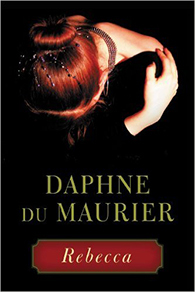
Rebecca – a review


I was unsure whether I could count Daphne du Maurier’s Rebecca as my fifth Cloak and Dagger read of 2019, but at least it is the February/March book for  The Insecure Writer’s Support Group Book Club group so I can tick that off.

Then, I read the word ‘mystery’ in a description of the book.

Rebecca

by

Daphne du Maurier

Last night I dreamt I went to Manderley again…

The novel begins in Monte Carlo, where our heroine is swept off her feet by the dashing widower Maxim de Winter and his sudden proposal of marriage. Orphaned and working as a lady’s maid, she can barely believe her luck. It is only when they arrive at his massive country estate that she realizes how large a shadow his late wife will cast over their lives–presenting her with a lingering evil that threatens to destroy their marriage from beyond the grave. 

First published in 1938, this classic gothic novel is such a compelling read that it won the Anthony Award for Best Novel of the Century.

Review 5 stars

This was a classic that I thought I had read, but I hadn’t. Now I’m glad I did as it’s memorable and worthy of multiple reads.

Although the novel is described as gothic – and by some as a romance – for me it was also a mystery. Its style by today’s standards might be called dated and yet it was ahead of its time – as was the author.

Much of the narration is as chunks of description mixed with reflection and conjecture by the un-named protagonist living in the shadow of Rebecca. In comparison with the title character, this new Mrs de Winter seems naïve, powerless and at the mercy of others. At first, it would be easy to dismiss her – even the novel – without giving either a chance…without understanding the heroine or the shy author.

I grew up in a world not dissimilar to Manderley, albeit one that had lost its glitter but not its attitudes. I felt myself intimidated by scary and overbearing people – especially when I did something wrong. Society and doing the right thing frightened me.

Especially when such amazing people as Rebecca were being fawned over.

Rebecca may be the deceased wife of Maxim de Winter, but she pervades the story, the house and the grounds. She’s on everyone’s lips. It’s a clever device making her so dominant, giving the novel her name, and naming her, not the protagonist. And it works. The reader is fooled along with the new Mrs de Winter into believing the myth – until the doubts appear.

Mrs Danvers, doth protest too much, methinks. She is the archetypal retainer that creates fear and doubts. Rebecca haunts Manderley in one way, Mrs Danvers in another – a brilliant creation, reminiscent of other classic scary presences. A living vampire?

All the characters are distinctive. All reminded me of people I had met – even worked with. The mannerisms felt familiar, whether Beatrice, the loquacious sister, or Frank Cawley, the faithful agent for Manderley. Even Maxim de Winter was real with all his faults and guilt buried.  

If I had to befriend just one, it would be Jasper. The dog? Yes, the faithful exuberant spaniel.

One other character enfolds the novel – Manderley. The house becomes character, atmosphere and setting. At first magnificent and untouchable with buried secrets. Manderley fills the narrator’s thoughts, not just the house but the gardens and the sea coves. As the protagonist’s thoughts change so do the descriptions of setting, of home, of the weather, of the vegetation. Or is it vice versa? The weather changes and then her thoughts?

But they are all one, interacting as the plot unfolds – setting and thought and events. The past even before Rebecca. Even before Manderley. The sea and the fog.

Cliffhanging language that I need to immerse myself in again.

Story – five stars

Setting/World-building – five stars

Characters – five stars

Authenticity – five stars

Structure – five stars

Readability – five stars

Editing – five stars

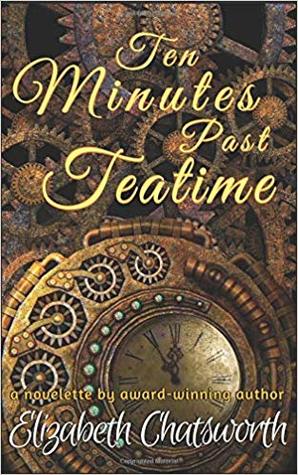
Ten Minutes Past Teatime – a review


This is the first post written with my new ‘one-handed’ keyboard – well, smaller than my UK-bought one so easier to use when my left-hand cramps and claws. Just need to adapt to its idiosyncrasies.

On to my review of a short story that a writer I follow sent her subscribers.

Ten Minutes Past Teatime

by

Elizabeth Chatsworth (Goodreads Author)

Please note, this is a short story/novelette.

A Victorian spinster-scientist and a Viking shield-maiden find passion and danger in dark-age Ireland.

1896: Forty-three-year-old scientist Miss Minerva Minett is determined to become the first female member of an exclusive inventor’s club. To win their annual membership competition, she invents a time-traveling submersible, and launches her vessel into the Irish sea for a quick trip to the dark ages. But when she sinks a Viking longship, accidentally joins a monastery raid, and falls into the arms of a grizzled shield-maiden, she discovers that time may not be on her side.

Review 4.3 stars

This entertaining steampunk short story had me amused and entertained as forty-three-year-old Victorian scientist Miss Minerva Minett attempted to become the first female member of an exclusive inventor’s club, by launching her time-traveling submersible into the Irish sea for a quick trip to the dark ages.

From the amusing opening through her encounter with the grizzled shield-maiden, Alfhild to the twist at the end, I chuckled at the inventive mind of Minerva and her creator.

The experiments and inventions were as memorable as the characters, including the one that delivered the twist at the end. Being steampunk, I expected alternative history, so I won’t over-judge the authenticity beyond wondering about some oddities such as a misplaced dragon-head.   

The romance between Alfhild and Minerva is a bonus with neat contrasts across cultures and time. And with a name like Minerva, there had to be goddess references.

Alfhild was the true goddess, not she. Or maybe they both were?

It was a thesis she would have to explore in more detail. For the sake of science.

But the humour is always there.

Minerva cocked her head. Surely, she didn’t hear the word goldfish in the chorus? “ . . . Minerva’s Magic Goldfish. Answers every sailor’s wish . . .” Oh, dear.

A fun read, although short.

Story – five stars

Setting/World-building – four stars

Characters – five stars

Authenticity – three stars

Structure – four stars

Readability – five stars

Editing – four stars

Tremor Warnings

Two recent events have shaken my routine. One a post and one a game. Nothing earth shattering, more tremors – warnings of what might or will occur.

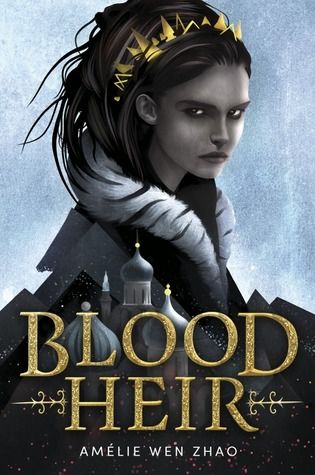
This post about ‘diversity’, Social Justice Warriors, and the withdrawal of Amélie Wen Zhao’s Blood Heir set me thinking about my current WIP, Fevered Few and what I was attempting.

I’m a WASP hetero male trying to write a novel with a female queer protagonist in the North Wales Police. Am I heading for the pillory or worse – even if I am trying to use diversity readers?

I had already realised I needed to tread carefully after a somewhat different controversy arose over the sexuality choices in the game Assassin’s Creed: Odyssey.

It probably doesn’t help that I’m making my protagonist Welsh with a deaf sister, since I’m English and I’ve never even committed a crime – other than parking illegally or speeding. Okay, I’m disabled, with Quaker abolitionist ancestors and splashes of Latin and Scottish blood. But none of those are qualifications.

Okay, SF writers write about aliens but aren’t from another planet. However, we don’t see the aliens protesting; or is that why there are abductions and experiments?

Is the solution to stop writing my Welsh police procedural series and tackle a topic that I know about? Horses?

Dang, I’ve done that and got criticised for my lack of knowledge.

Falling? My life-story could be fictionalised, but who is inspired by that? Not me.

Insecurity 1. Meltdown imminent.

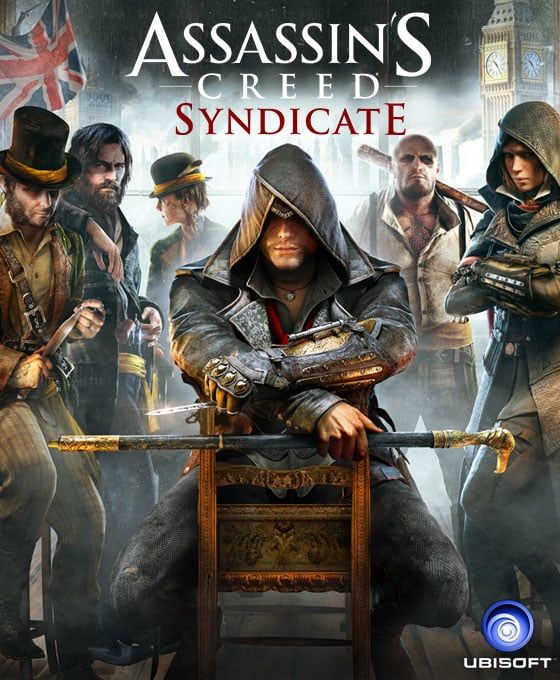
Later the same day, I went into Assassin’s Creed: Syndicate and got thrown into a quest that required me to press/punch/mash keys in quick succession.

Fail. Retry. Fail. Retry.

Fail. Retry. Fail. Retry.

Fail. Retry. Fail. Retry.

The fingers on my left hand locked up, and my hand became a useless claw while my head thumped.

Insecurity 2. Meltdown imminent.

That was not the first time that my hand and my reactions failed.  I had the same problem in Shadow of the Tomb Raider last week. Plus, it occurs when I type so when I’m working on a novel or a post – like now.

Meltdown

The harsh reality is that my multiple sclerosis is threatening to disrupt my life again – if I let it. I need to amend the rules…move the goalposts. Or change rackets.

Well, keyboards.

But not the typing element as half the keys are missing.

  • Step Two – Dictation software. I’ve ordered Dragon NaturallySpeaking Premium 13 – arriving on Saturday. However, training my Dragon will take time, especially as my speech is slurred – MS side-effect. It will mean that in a few weeks, I might get to write as fast as I talk.

Even after spending this money, I still need to decide if I’m writing the right novel – the one that will cover all these extravagances.

MS is a frustrating MonSter, and I must learn to roll with its punches and fight back. There will be other rounds, but I’ve got this one.

Yes, I need to consider Audible as my eyes are at risk – not just from reading. Double vision was my initial symptom back in 1999, so the warning is there.

More rabbit holes beckon.

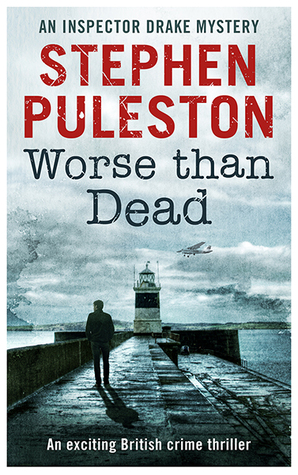
Worse than Dead – a review

My fourth Cloak and Dagger read of 2019 was a return to familiar territory with Stephen Puleston’s Inspector Drake series, set like my current ‘work in progress’ in North Wales. I have already reviewed Brass in Pocket, the first book in the series.

On then to my review of Book 2.

Worse than Dead

(Inspector Drake #2)

by Stephen Puleston (Goodreads Author)

A ferry leaves Dublin…The chief engineer lies dead on the car deck …There’s a killer on board…
Inspector Drake is called from a seminar on cyber crime to meet the ferry docking at the port of Holyhead. Frank Rosen the chief engineer lies on the car deck a knife through his heart. For the first time Drake knows where the killer is but he doesn’t know who. 
When Rosen’s house is ransacked the night after he’s killed Drake knows the killer was looking for something. The data stick Rosen’s wife finds may hold the clues. But the codes and numbers on it only complicate the investigation.
And then Drake’s cousin makes contact and tells him he has information. But can Drake rely on him or does he have another agenda? And when the team discover a direct link to drug dealing in North Wales and beyond there are powerful forces at work. 
Drake’s cousin drags Drake’s family into the middle of the case that piles the pressure on Drake who’s facing regular counselling for his OCD and the prospect of losing his father to cancer.
When Drake’s superior demotes him and acts entirely against protocols Drake knows that something is wrong. Establishing the evidence takes him to Dublin and Cardiff and then on a last minute chase over North Wales to the ancient Fort Belan hoping that he will catch the killer.

Review 4.3 stars

I was hoping that this second Book in Stephen Puleston’s Inspector Drake series would transport me back to North Wales. I was not disappointed.

This was the country I remembered from living there a few years – without the criminal element. That darker side was the world of the first book, providing Detective Inspector Ian Drake with another baffling case.

When Frank Rosen, a ferry’s Chief Engineer is found murdered on the car deck, Drake knows that the killer must still be onboard. But the investigation is complicated when his team is forced to let everyone disembark before a suspect can be identified. A link to drug dealing complicates matters further, especially when different police departments must be involved.

Puleston uses his background as a retired criminal lawyer to lend authenticity and detail to the working of the police and the criminals. Both sides play devious games – fortunately, Drake is not easily fooled in the end.

But he continues to struggle with his OCD as he did in the first book. This idiosyncrasy and his addiction to Sudoku make him a memorable protagonist, although I don’t warm to him. The rest of his team – Caren Waits, Dave Howick and Gareth Winder – have their own traits that we see through Drake’s OCD eyes primarily. I wondered if this was an unusual team or maybe not.

Drake’s Detective Sergeant, Caren had more scenes in her POV than in Book 1, and these helped me get to know her better. POV scenes for Howick and Winder added their perspective but to a lesser extent. Even though Puleston called Caren by her first name throughout, and all the male officers by their surname – which felt strange – I still couldn’t relate to even her.

Conflict weaves its way in the story but comes with the territory even for police with their own rivalries. The domestic tensions are there for Drake and others, echoing real-life experiences of police families as well as the impact of crime on lives.

There are again too many cast members – especially with multiple suspects and witnesses. This is a failing in many books so perhaps forgivable in the final analysis when the plot comes together. A few surprises were in store and most complexities were resolved. But one scene from a different POV confused me – or is to be resolved in the next case.

This is a recommended read and I will be checking out Book #3 as this novel whet my appetite for more from North Wales. The place and people of this beautiful country infused the writing, from scenery to language.

Story – four stars

Characters – four stars

Setting/World-building – five stars

Authenticity – five stars

Structure – four stars

Readability – four stars

Editing – four stars

#IWSG – Creative Outlets

Created and hosted by the Ninja Captain himself, Alex J. Cavanaugh, the Insecure Writer’s Support Group monthly blog post is here again – and so am I.

My plans to develop and focus on Fevered Few, my NaNoWriMo novel are on hold for another week/month until a backlog of junk is clear and my depressed mind clears.

But I’ve been reading though – all pleasure and some as favours. Which brings me in a way to the topic of this month’s IWSG post:

February 6 question – Besides writing what other creative outlets do you have?

Nada – Zilch

Writing is my sole remaining creative outlet – unless I can count dreaming. But that’s linked to writing. I attempted sculpture – once – and struggled to play the flute, but that was decades ago. And the nearest to acting was my failed career as a producer.

So, writing remains my sole creative outlet – unless I cheat and add:

Reading and gaming

But those are both someone else’s creation, even if I spend my chilling time pursuing them. Anyway, in 2019, I have managed to read six books so far. One of those was the novelisation of a game that I have 90% completed, Assassin’s Creed: Odyssey – that’s the link to my review.

Writing again. So…Nada y Zilch.

Or do I count my photography? Mostly for work though. Creative? Or is that the poser? Anyway, I can no longer hold any camera steady so that is no longer any sort of outlet.

Zara Phillips competing at Windsor CIC*** – photo by Roland Clarke

What is your non-writing talent/creative outlet?

***

The awesome co-hosts for the February 6 posting of the IWSG are Raimey Gallant, Natalie Aguirre, CV Grehan, and Michelle Wallace!

Purpose of IWSG: To share and encourage. Writers can express doubts and concerns without fear of appearing foolish or weak. Those who have been through the fire can offer assistance and guidance. It’s a safe haven for insecure writers of all kinds!

Every month, we announce a question that members can answer in their IWSG post. These questions may prompt you to share advice, insight, a personal experience or story. Include your answer to the question in your IWSG post or let it inspire your post if you are struggling with something to say.

Posting: The first Wednesday of every month is officially Insecure Writer’s Support Group day. Post your thoughts on your own blog. Talk about your doubts and the fears you