The Road Ahead

Llywdro_SWTOR

Apologies for the silence. I had hoped to blog about our moving plans, as we thought we were finally in a position to advance. But again we have to wait. Maybe next week.

For now, here is a link to an interview with me, just published on Tasha’s Thinkings. It was a great chance to talk about myself, my writing, and most crucially… about Star Wars.

Read on and enjoy.

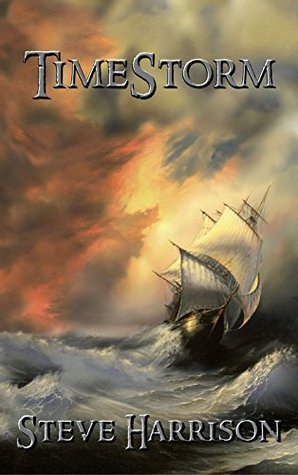
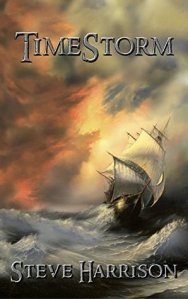
TimeStorm – a review

23489695

Time for another review – TimeStorm by Steve Harrison, which my critique partner suggested that I read to see the way that the author handles multiple viewpoints.

From a writing perspective, the technique worked well. Each chapter has the POV character’s name as the title, and sometimes this is a one-off, other times it is a recurring character. I will return to those POVs as part of the ‘review proper’.

As I read this enjoyable novel by Steve Harrison, I could feel that he is – as the blurb says – “A great fan of the grand seafaring adventure fiction of CS Forester, Patrick O’Brien and Alexander Kent.” That atmosphere is captured in the telling, without feeling over-researched.

The book was inspired by a replica 18th century sailing ship on Sydney Harbour and a question from Steve’s brother, Tony: “What if that was a real convict ship?”

From that premise came this clever tale of the crew and ‘passengers’ from a convict ship swept by a storm from 1795 to 21st century Sydney. The ‘stranger in a strange land’ scenario is carefully played out, with all the characters reacting convincingly to their dangerous situation, whether ship’s officer, convict leader, or the ‘present day’ characters confronted with something more than unexpected.

The central character of Lieutenant Christopher ‘Kit’ Blaney, is – as the blurb says – “an old-fashioned hero, a man of honour, duty and principle”, but he has human failings that make him believable. For some of the chapters, he is the POV, with chapters carrying his name.

But there are other points of view (POV), with their own chapters, and this multi-POV approach keeps the story flowing, showing different facets – some of which would normally be missed out.

Each POV feeds into the evolving plot, which had me gripped. There are two main characters – Blaney, from the 18th century, and a 21st century journalist. But the other POVs with their stories and subplots, are integral to the unfolding plot.

From the first chapter, I was intrigued by one other character, wondering how he would fit in, but sensing he might return. Read TimeStorm to discover how, but I won’t spoil the crafty twist in the tail.

For those that logged on for my post last week – Why read? – there was a second lesson in this novel: How to bookend your novel, by linking the opening and ending. But explaining more would be a spoiler.


Why read?

InsecureWritersSupportGroup2

It’s February 3rd and time for another Insecure Writer’s Support Group monthly post. I may be Insecure but I’m putting aside the whining and complaining – for a few days at least.

Today I want to be positive and talk about the benefits of reading from a writer’s point of view. And by that I don’t mean just reading what you write, although as writers we should to do that a few times from a reader’s perspective.

For now, I’m talking about other books, not just for the sheer pleasure but for the lessons that we can learn. We can learn what works and what doesn’t from both great reads that keep us hooked from the first sentence, and from those shockers that are an endless struggle. In each novel there should be at least one lesson – even if it’s ‘make sure you use an editor’ or ‘flowing words are like magic’.

So what have I learned over the decades?

roger-woddis

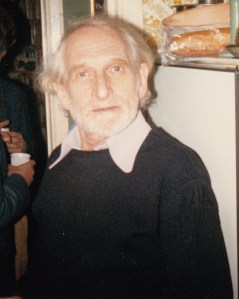
Roger Woddis in 1986 – photo by BG

When I started out on my writer’s journey, my writing tutor, the late great Roger Woddis said that my writing suffered from too much ‘purple prose’. The problem stemmed from my passion for “Lord of the Rings” and the style of J.R.R. Tolkien. I was trying to emulate him without understanding the way that he used language. However, over the decades and with many re-reads, I am learning to see the master at work. And as I read other writers, I see that a writer can effectively use beautiful language without obscuring the meaning.

23489695

The current lesson is about ‘Multiple POVs’, which is relevant since my current WIP, “Storms Compass”, tells the stories of various characters struggling to survive after a mega solar storm devastates the Earth. My critique partner suggested that I look at how Steve Harrison handles multiple viewpoints in TimeStorm”. The POVs each have their own chapter with the character’s name as the title. Each one feeds into the evolving plot, which has me gripped – so a review will follow very soon.  There is a main POV character and the other POVs add to his story.

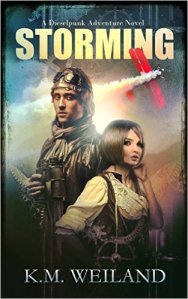
I could go on, giving examples from books that I have read, but I want to end by directing you to K.M. Weiland, a writer whose website is an invaluable resource, and includes many articles that refer to novels and movies as examples. For instance, I am working through my character’s arcs at present, and she gives some great examples – see: http://www.helpingwritersbecomeauthors.com/character-arcs-3/. This and other articles show the importance of reading other novels. The added bonus is that K.M Weiland writes novels in which she practices what she preaches, from her early novels Behold the Dawn and Dreamlander – both of which I enjoyed – to Storming, which is next on my To Read list.

519rEmGPimL._SX311_BO1,204,203,200_

And beyond that I may be delving into the real classics like Machiavelli ‘s “The Prince” and the stories in “The Mabinogion“. We can all learn from the master storytellers of the past.

So read on dudes!

*

The first Wednesday of every month is officially Insecure Writer’s Support Group day. We post our thoughts on our own blogs. We talk about our doubts and the fears we have conquered. We discuss our struggles and triumphs. We offer a word of encouragement for others who are struggling.

Please visit others in the group and connect with my fellow writers.

Let’s rock the neurotic writing world!

Our Twitter hashtag is #IWSG

And be sure to check out our Facebook group –https://www.facebook.com/groups/IWSG13/

The awesome co-hosts for the February 3 posting of the IWSG are Allison Gammons,Tamara Narayan, Eva E. Solar, Rachel Pattison, and Ann V. Friend! 


Friar Tuck and the Christmas Devil – a review

51SPgEme4tL._SX322_BO1,204,203,200_

Time for another review. Yes, just a week after my last one, but then this tasty Tuck-sized treat, “Friar Tuck and the Christmas Devil“, was a novella that I had to keep reading.

This was my introduction to the world of ‘The Forest Lord’ that Steven A. McKay has created, and a perfect one at that – even if Robin Hood, the main character in the books, was only mentioned. But Wolf’s Head (The Forest Lord Book 1) is now a MUST READ.

In this tale, Friar Tuck investigates a series of burglaries committed by the Devil and another fiend. The setting felt accurate and I realised that Steven A. McKay had done a lot of research for his world. But it slotted into the story seamlessly.

The plot was clever, and the Devil faced a formidable foe in the friar. Given the length, the novella couldn’t twist and turn as much as a full-length book, but there was more than enough to get my teeth into – even after Tuck had ate and drank his fill. He’s more than a well-rounded character, and for me there was a bonus in an Foreword by Phil Rose, who played the character in the great TV series “Robin of Sherwood”.

Of course, being set at Christmas there were traditions and festivities adding to the atmosphere, and Steven A. McKay even gives some additional insight into how the season was celebrated in medieval times, in his author’s note at the end.

NO MOTIVATION?

Source: NO MOTIVATION?

The Element Trilogy – a review

Pageflex Persona [document: PRS0000040_00067]

Pageflex Persona [document: PRS0000040_00067]

For a change, I decided to produce a blog post around two reviews on two books from the same author Donna Galanti. In fact, they are the first two books in The Element Trilogy and, although I’m a slow reader, I’m looking forward to the release of the final book.

I won the second book in the trilogy in a competition that Donna Galanti ran on her website at http://www.donnagalanti.com, so I bought the first and read them in order. That proved to be the right decision, even if it meant delaying the first review.

A Human Element (The Element Trilogy #1)

The blurb starts off, “Evil comes in many forms…” and that is very true of both books. I was quickly drawn into the tragic life of Laura Armstrong, whose “friends and adoptive family members are being murdered, and despite her unique healing powers, she can do nothing to stop it.”

Donna paints her characters in vivid detail, and applies her same graphic description to the unfolding events. As a writer, she doesn’t hold back, and for some readers that might be too much. But for me the graphic details work, as Donna weaves images and emotions with her words.

As the savage killer emerged, haunting her dreams, and killing her friends, I became incensed with this cruel antagonist. But then I tempered my anger, much like Laura learnt to do, and there seemed to be echoes in my head of the creature in Mary Shelley’s Frankenstein; or, The Modern Prometheus.

A second protagonist is woven into the story, Ben Fieldstone, and his storyline leads him to the same place and back to the night when a meteorite struck, killing his parents. The plotlines that bring Ben and Laura together kept me reading, and rooting for them.

The questions that they both face, also challenged me, and although the face-to-face showdown with the killer was an emotional one, it was inevitable. So I had to keep reading more… which meant Book 2.

However, A Human Element is still and excellent stand-alone read. And I would recommend this novel, which blends suspense, science fiction and romance.

Pageflex Persona [document: PRS0000040_00067]

Pageflex Persona [document: PRS0000040_00067]

A Hidden Element (The Element Trilogy #2)

Once again, “Evil lurks within…”, although fifteen years on the stakes are raised as Laura and Ben Fieldstone face a secret alien community with the powers that they confronted in Book 1.

Their son, Charlie, has inherited his mother’s alien powers and from early on in the story, the reader wonders which path he will choose – his parents or the community that offers him so much more. His feeling of being different is akin to the alienation so many youngsters feel, and Donna Galanti portrays that well.

However, not all the community share the extreme views of the leader, and his son, Caleb Madroc, provides another viewpoint and a plotline that throws up many of the twists and resolutions.

The graphic descriptions of his father’s attempts to breed a secret alien community are in keeping with his tormented mind. The description also captures the desperation of a community struggling for survival. They might have unique powers, but that brings emotional turmoil and life-changing decisions that are cleverly described.

As the season changes to winter, I could envisage every drifting snowbank and feel the biting wind, elements that echoed the story as it spiralled towards the finale.

I was swept along with Laura and Ben as they risked everything to defeat this new nemesis that wanted to rule the world with their son. I kept wanting Caleb to not just be their only hope — I wanted him to survive as well, and save his own children.

By the end of the novel, I still wanted more, although there were passages that I felt were a trifle overwritten – but I never flicked through. Bring on the ‘unknown’ element.

*

Despite my slow reading pace, there will be more reviews… when I get to the next indulgence tackled. Next up is Friar Tuck and the Christmas Devil by Steven A. McKay.