TimeStorm – a review

23489695

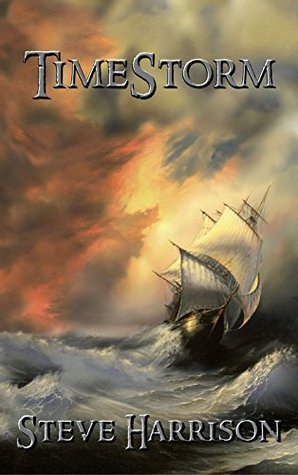
Time for another review – TimeStorm by Steve Harrison, which my critique partner suggested that I read to see the way that the author handles multiple viewpoints.

From a writing perspective, the technique worked well. Each chapter has the POV character’s name as the title, and sometimes this is a one-off, other times it is a recurring character. I will return to those POVs as part of the ‘review proper’.

As I read this enjoyable novel by Steve Harrison, I could feel that he is – as the blurb says – “A great fan of the grand seafaring adventure fiction of CS Forester, Patrick O’Brien and Alexander Kent.” That atmosphere is captured in the telling, without feeling over-researched.

The book was inspired by a replica 18th century sailing ship on Sydney Harbour and a question from Steve’s brother, Tony: “What if that was a real convict ship?”

From that premise came this clever tale of the crew and ‘passengers’ from a convict ship swept by a storm from 1795 to 21st century Sydney. The ‘stranger in a strange land’ scenario is carefully played out, with all the characters reacting convincingly to their dangerous situation, whether ship’s officer, convict leader, or the ‘present day’ characters confronted with something more than unexpected.

The central character of Lieutenant Christopher ‘Kit’ Blaney, is – as the blurb says – “an old-fashioned hero, a man of honour, duty and principle”, but he has human failings that make him believable. For some of the chapters, he is the POV, with chapters carrying his name.

But there are other points of view (POV), with their own chapters, and this multi-POV approach keeps the story flowing, showing different facets – some of which would normally be missed out.

Each POV feeds into the evolving plot, which had me gripped. There are two main characters – Blaney, from the 18th century, and a 21st century journalist. But the other POVs with their stories and subplots, are integral to the unfolding plot.

From the first chapter, I was intrigued by one other character, wondering how he would fit in, but sensing he might return. Read TimeStorm to discover how, but I won’t spoil the crafty twist in the tail.

For those that logged on for my post last week – Why read? – there was a second lesson in this novel: How to bookend your novel, by linking the opening and ending. But explaining more would be a spoiler.


The Element Trilogy – a review

Pageflex Persona [document: PRS0000040_00067]

Pageflex Persona [document: PRS0000040_00067]

For a change, I decided to produce a blog post around two reviews on two books from the same author Donna Galanti. In fact, they are the first two books in The Element Trilogy and, although I’m a slow reader, I’m looking forward to the release of the final book.

I won the second book in the trilogy in a competition that Donna Galanti ran on her website at http://www.donnagalanti.com, so I bought the first and read them in order. That proved to be the right decision, even if it meant delaying the first review.

A Human Element (The Element Trilogy #1)

The blurb starts off, “Evil comes in many forms…” and that is very true of both books. I was quickly drawn into the tragic life of Laura Armstrong, whose “friends and adoptive family members are being murdered, and despite her unique healing powers, she can do nothing to stop it.”

Donna paints her characters in vivid detail, and applies her same graphic description to the unfolding events. As a writer, she doesn’t hold back, and for some readers that might be too much. But for me the graphic details work, as Donna weaves images and emotions with her words.

As the savage killer emerged, haunting her dreams, and killing her friends, I became incensed with this cruel antagonist. But then I tempered my anger, much like Laura learnt to do, and there seemed to be echoes in my head of the creature in Mary Shelley’s Frankenstein; or, The Modern Prometheus.

A second protagonist is woven into the story, Ben Fieldstone, and his storyline leads him to the same place and back to the night when a meteorite struck, killing his parents. The plotlines that bring Ben and Laura together kept me reading, and rooting for them.

The questions that they both face, also challenged me, and although the face-to-face showdown with the killer was an emotional one, it was inevitable. So I had to keep reading more… which meant Book 2.

However, A Human Element is still and excellent stand-alone read. And I would recommend this novel, which blends suspense, science fiction and romance.

Pageflex Persona [document: PRS0000040_00067]

Pageflex Persona [document: PRS0000040_00067]

A Hidden Element (The Element Trilogy #2)

Once again, “Evil lurks within…”, although fifteen years on the stakes are raised as Laura and Ben Fieldstone face a secret alien community with the powers that they confronted in Book 1.

Their son, Charlie, has inherited his mother’s alien powers and from early on in the story, the reader wonders which path he will choose – his parents or the community that offers him so much more. His feeling of being different is akin to the alienation so many youngsters feel, and Donna Galanti portrays that well.

However, not all the community share the extreme views of the leader, and his son, Caleb Madroc, provides another viewpoint and a plotline that throws up many of the twists and resolutions.

The graphic descriptions of his father’s attempts to breed a secret alien community are in keeping with his tormented mind. The description also captures the desperation of a community struggling for survival. They might have unique powers, but that brings emotional turmoil and life-changing decisions that are cleverly described.

As the season changes to winter, I could envisage every drifting snowbank and feel the biting wind, elements that echoed the story as it spiralled towards the finale.

I was swept along with Laura and Ben as they risked everything to defeat this new nemesis that wanted to rule the world with their son. I kept wanting Caleb to not just be their only hope — I wanted him to survive as well, and save his own children.

By the end of the novel, I still wanted more, although there were passages that I felt were a trifle overwritten – but I never flicked through. Bring on the ‘unknown’ element.

*

Despite my slow reading pace, there will be more reviews… when I get to the next indulgence tackled. Next up is Friar Tuck and the Christmas Devil by Steven A. McKay.


Bring on the Revolution

8c0f7cace7e07a1222df576da5e02f77

As there is no progress on the Idaho front, I am reverting to another aspect of my weekly Pick’N’Mix Theme – Books.

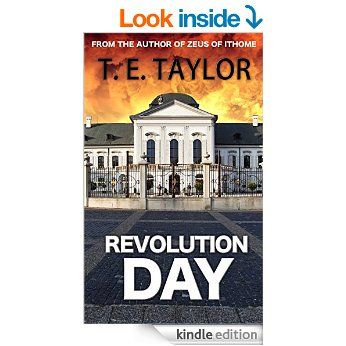
So we start with my review of the last book that I’ve read, T E Taylor’s Revolution Day.

Who can a revolutionary trust?

As an autocratic and repressive ruler hanging onto power after 37 years, Carlos Almanzor seems to have little choice as he tries to survive. The scenario that Tim Taylor paints so vividly echoes the real-life situations of so many abusers of power, and the downward spirals of many dictators. And the scheming of Carlos’ colleagues proves very Machiavellian – very appropriate since I won a copy of “The Prince” on the launch day of Tim’s engrossing novel.

In a way, I could relate being part-Chilean and having known both refugees from Pinochet and supporters of the Sandinista Revolution. The Latin flavour worked as well as the political elements, and through it all I had to root for Carlos’ estranged and imprisoned wife Juanita, as she reflected on the revolution and what could have been. In her character there were clever echoes of other imprisoned leaders that represent hope. Perhaps for liberty there is light at the end of the darkness.

cc0b2c5919b76cb9c53035ad59145bfc

Peering into the Unknown

Since reading “Revolution Day”, I’ve scanned the bookshelves in my office and in my Kindle. Too many books to read, and I can’t stop buying more. For everyone that I finish, I buy three more.

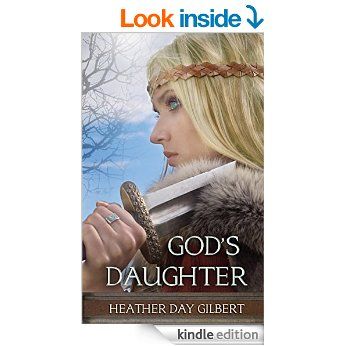
The dilemma was resolved when I had an idea for a short story and began looking into the Viking foothold in Vinland. Having read an interview with author Heather Day Gilbert when God’s Daughter (Vikings of the New World Saga Book 1) was published, I’ve chosen that as my next foray.

There are other books that I’m reading or rather have on the go, like “The Welsh Gypsies” by A.O.H. Jarman and “Four Years on the Great Lakes, 1813-1816: The Journal of Lieutenant David Wingfield, Royal Navy” by Don Bamford, & Paul Carroll. But they are non-fiction research, so I dip in and out of them for my own writing. They will be on my desk for a few more months.

Have you read any of these books, even Machiavelli’s “The Prince”?