The Cowgirl Jumped Over the Moon – a review

Engrossed in promoting my equestrian thriller, escaping to read about another horse world was strange and yet satisfying. This is my review:

Cowgirl_25613310

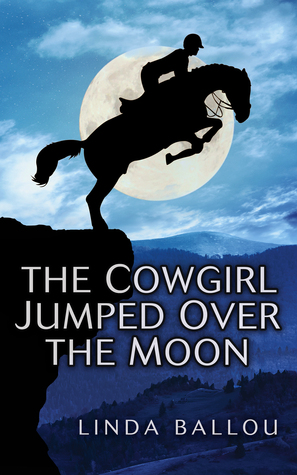
The Cowgirl Jumped Over the Moon

by Linda Ballou (Goodreads Author)

Gemcie and her Irish Hunter, Marshal, are about to capture the World Cup when a nasty fall dashes their chances. While she is mending, her arch rival seizes this opportunity to catch a ride on Marshal, and to seduce her young husband. Confused and dazed by her new circumstances, Gemcie heads for the high Sierras hoping the majestic spires that captured the heart of the father she never met will provide the answers she seeks. She finds strength and solace riding solo on the John Muir Trail, but a bear attack ends her time of introspection and places her in the care of a solitary cowboy manning a fire lookout. Brady, who seems to love animals more than people, shows her love and gives her the courage to get back in the saddle. Haunted by images of Marshal being abused by his owners, Gemcie returns to rescue him and fly high with him once more. Ballou’s prose gallops ahead at breakneck speed as she takes you along on this wild ride.

Review 5*

From the opening hook, Linda Ballou’s The Cowgirl Jumped Over the Moon paints a rich picture of not just the show jumping world that Gemcie had earned her place in through hard work and dedication. The accident that dashes the ambitions of Gemcie and her Irish Hunter, Marshal, leads to other events that unravel her life, create new sub plots and take Gemcie into another world dominated by the high Sierras and a different style of riding – western.

The language continues to evoke images and sensations, whether in the actions or the descriptions. We meet new characters, including horses, and, in the mountains, we meet Brady. His portrayal triggers questions for Gemcie and, for this reader, but the challenge is a crucial peak in the novel, handled well. She might baulk at the challenges in the high Sierras, at first, but she is drawn on as the reader is by the plotlines.

However, although I liked how the story unfolded and the descriptive richness, two elements threw me from my ride-read. In Ballou’s defence, these are style issues, I suspect. First, I had problems with the transitions in scenes that changed from one paragraph to another – I am used to a scene break. The other area was Point of View – POVs. At first, I thought the story was head-hopping too much from one character to another then back. But I began to sense that this was ‘limited omniscient POV’ which I am less familiar with, but I accepted it and read on absorbed by the story.

Through the author’s extensive expertise, the novel resonates with accuracy, from descriptions of the wilderness to the various riding elements. Ballou works even vaulting into Gemcie’s recovery, as well as trekking and jumping, and in the ‘author’s note,’ we discover why this feels so right.

Ballou also neatly weaves the various characters and themes into the satisfying ending. Most of the characters feed into the climax as does the power of love and nature. The natural world is described with words that unleash all the senses, and this reader kept nodding at the importance of respecting nature as Brady does – a respect that Gemcie learns, marking her growth.

A satisfying and enjoyable read that I recommend. I await the sequel hinted at in the author’s final comments.

Story – five stars

Setting/World-building – five stars

Structure – five stars

Readability – five stars

Editing – five stars

Style – four ½ stars


Traitor’s Knot – a review

As anyone knows that has read my guest post ‘From Ostler to Eventer’ on Cryssa Bazos’s website, I found a strong connection to this book through horses. But there was so much more, so, read on for my review.

Traitor's Knot

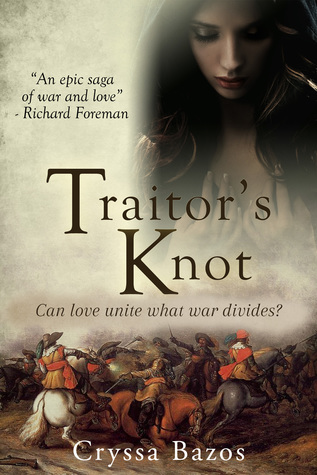
Traitor’s Knot

by Cryssa Bazos (Goodreads Author)

England 1650: Civil War has given way to an uneasy peace in the year since Parliament executed King Charles I.

Royalist officer James Hart refuses to accept the tyranny of the new government, and to raise funds for the restoration of the king’s son, he takes to the road as a highwayman.

Elizabeth Seton has long been shunned for being a traitor’s daughter. In the midst of the new order, she risks her life by sheltering fugitives from Parliament in a garrison town. But her attempts to rebuild her life are threatened, first by her own sense of injustice, then by falling in love with the dashing Hart.

The lovers’ loyalty is tested through war, defeat and separation. James must fight his way back to the woman he loves, while Elizabeth will do anything to save him, even if it means sacrificing herself.

Review 5*

When I first read the reviews, I added Traitor’s Knot to my Must-Read list. However, I was lucky enough to win a copy in a Giveaway – so many thanks, Cryssa Bazos.

Growing up in England, it was hard not to take sides over the English Civil War so this excellent novel stirred all the right passions and unleashed memories. As a child, I was a Royalist but then switched my loyalties to Parliament as I read more. Then I saw yet another side and wavered again. Therefore, I can feel how many of the characters in Traitor’s Knot struggled with their consciences, although through the author’s words the emotional and physical strife comes vividly alive.

From the first page, I was swept into the past, drawn in by the characters and the action. The setting of the Civil War era felt real and the characters’ behaviour seemed appropriate for the time. I am not a historical expert but nothing jarred and, in fact, there were moments where I nodded my head thinking, ‘That sounds right’. I am convinced that Cryssa Bazos did a great deal of intense research. As a retired equestrian journalist, everything horse-related was accurate and one horse was a character in himself.

The plot was cleverly crafted, with the characters being carefully drawn together as events weaved fate. This was never going to be a smooth ride for James Hart and Elizabeth Seton, and the author made sure of that at every stage. No surprise that I wrote, ‘Beware those Roundheads and their twisted ways’, especially after the opening. One stirred my old animosities and I was ready to make him suffer – that takes great writing.

But knots have ways too. The novel’s title is clever, and knots tie things up in so many ways -I even wanted a ‘knot garden’ and the author delivered. Throughout, there was clever plot development and world building – constructing fiction that felt historical. As a mystery writer, I enjoyed the twists and turns as the plot wove around and away from the obvious. Although I knew my English Civil War, so expected one inevitable outcome – no spoilers, there were unexpected turns of events and I could easily ignore what I knew from school. This was on another more realistic level than dry history text books.

The crafting of the climax was exceptional, building on the strands of the plot, weaving them together in an intricate knot. And the final denouement was so devious and edge of the seat thrilling that I was unable to put the book down even to get some work done.

I look forward to the next novel from Cryssa Bazos.

Story – five stars

Setting/World-building – five stars

Structure – five stars

Readability – five stars

Editing – five stars


Followers of Writing Wings will know that over the last month I have been fortunate to connect with Cryssa Bazos through the English Historical Fiction Authors Blog, and subsequently promoting my novel. Therefore, we have chatted and I may have an idea about what her next novel might be about. But I leave that for her to say.

Cryssa’s website, where there is more about her novel, highwaymen, and the 17th Century, is: https://cryssabazos.com


The Secret Garden – a review

I have joined the Insecure Writers Support Group Bookclub on Goodreads and for June/July, we are reading Frances Hodgson Burnett’s classic children’s book The Secret Garden.  The Club says, “This book was chosen to demonstrate characterization, which was voted #1 for what you would like to learn to do better. Even if you’ve read this book in the past, reread it with fresh eyes, keeping a look out for characterization examples.” So, this is my review.

The Secret Garden

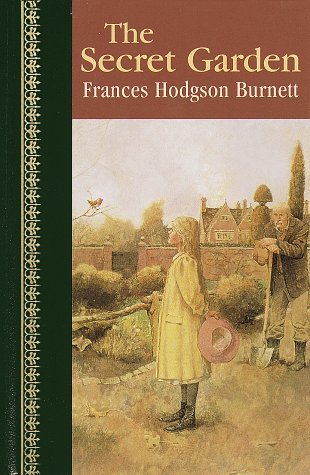
The Secret Garden

by Frances Hodgson Burnett

When orphaned Mary Lennox comes to live at her uncle’s great house on the Yorkshire Moors, she finds it full of secrets. The mansion has nearly one hundred rooms, and her uncle keeps himself locked up. And at night, she hears the sound of crying down one of the long corridors.

The gardens surrounding the large property are Mary’s only escape. Then, Mary discovers a secret garden, surrounded by walls and locked with a missing key. One day, with the help of two unexpected companions, she discovers a way in. Is everything in the garden dead, or can Mary bring it back to life?


Review *****

I never read ‘The Secret Garden’ as a child, nor any of Frances Hodgson Burnett’s books. Now in my second childhood, this was, therefore, my first encounter and I enjoyed the read even if there are failings from a writer’s perspective in the 21st century.

However, as I started reading I found the descriptions and characterisations were pulling me into a secret world. The author had a way of using short phrases to capture a sense of the characters and settings. Maybe the technique would be hard to replicate today, but it worked in the context of the novel and the period in which it is set. This was a time before the First World War for both characters and author. This may explain a certain innocence that two world wars dispelled.

Locked into the words and images, I was drawn deeper into Mary’s world and her explorations. Robin was a cute character that felt almost human in his mannerisms. Some might say anthropomorphic – Anthropomorphism is the attribution of human traits, emotions, and intentions to non-human entities – but for me, the characteristics fitted the bird I knew from growing up in England. He becomes the character that ‘unlocks’ the secret garden and the healing that Mary and others need.

When she was in the garden, I could see it and sense it. Some might feel that Dickon is unreal and yet he came alive for me, first in what his sister Martha said about him and then when Mary met him. I’ve been lucky that I have known a few special people like him and the character echoed memories of those that have a rapport with wild animals.

When Mary found the source of the crying, the book added another character and another level. Damaged characters and healing is a theme from the start of the novel, but it’s the secret garden that’s the catalyst. I liked all the interactions between the characters, and the use of mirror images that Mary and others must face to grow.

When Spring arrived, there was magic is in the air. That is what makes this book work for me and why I suspect that it still survives alongside other children’s classics. Frances Hodgson Burnett captures that feeling of magic that in many ways exist in the natural world around us. There are elements that felt wrong to me reading in 2017, but omniscient POV, idealised social situations, and outdated attitudes were, unfortunately, the norm when the novel was written so they didn’t spoil my enjoyment – just deducted one star as a writer with a conscience. But that star magically re-appeared.

Talking to the Dead – a review

Time for another review of a novel linked to my own writing.

Some months ago, my character of D.S. Sparkle Anwyl began to emerge, becoming the detective embroiled in “Seeking A Knife”. However, I had some problems making her believably Welsh. It was no good just living in Snowdonia, I needed more to work with.  So I embarked on extensive research. There was fiction reading as well, since I wanted to avoid plagiarising Welsh detectives, like Constable Evan Evans.

Then I discovered DC Fiona Griffiths and the bar was raised.

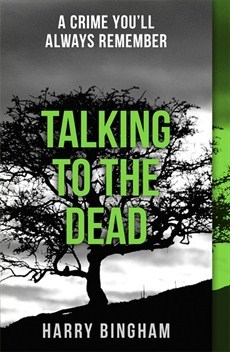
 TalkingToTheDead17552649

Talking to the Dead (Fiona Griffiths #1)

by Harry Bingham

The first novel in a powerfully original new crime series featuring a young policewoman haunted by her own dark past.

It’s DC Fiona Griffiths’ first murder case – and she’s in at the deep end. A woman and her six-year-old daughter killed with chilling brutality in a dingy flat. The only clue: the platinum bank card of a long-dead tycoon, found amidst the squalor.

DC Griffiths has already proved herself dedicated to the job, but there’s another side to her she is less keen to reveal. Something to do with a mysterious two-year gap in her CV, her strange inability to cry – and a disconcerting familiarity with corpses.

Fiona is desperate to put the past behind her but as more gruesome killings follow, the case leads her inexorably back into those dark places in her own mind where another dead girl is waiting to be found…

My review:

Fiona ‘Fi’ Griffiths might be a junior officer assigned to a fraud investigation, but she’s willing to manoeuvre herself onto the team investigating the murders in a dingy flat. Her intelligence, among other clever moves and clandestine activities, is a key factor in her unravelling the links between the two cases. I knew that she would struggle until the justice that she demanded was implemented; but I was never quite sure whether she would prevail.

Those brains have earned her a degree, and set her apart from many colleagues. [Note: The College of Policing has proposed that, “Every new constable from 2019 could be required to have a degree – or agree to work towards an equivalent qualification.]

This active mind is a facet of a complex character that is well described through her POV. That voice is distinctive, revealing and never feels like the author. The voice of Fi kept me reading, wanting her to battle through everything thrown at her, some from outside and some from in herself, or in her past.

But it becomes clear from Fi’s words that she struggles to be part of ‘Planet Normal’ and the author makes that part of her engrossing personality. Her weirdness worked for me, leading the reader down murky paths on Cardiff’s darker side, and in her mind.

Fi is not your conventional detective, nor are her methods. She is a complex character and she shoves the investigation in unexpected directions. The author weaves words and phrases with style, bringing this world of Cardiff alive, for me at least. This was a different Wales from the area I know – Snowdonia – and yet there were glimpses of the rural roots at the country’s heart, and those roots are an intrinsic part of Fi.

Some readers have criticised the writer for creating a policewoman that would fail her first psych test. But I’m with those that realise that her intelligence gives Fi the edge in working the system in her favour. There were moments when I felt she might be bending the rules precariously, but she has the ability – and luck – to evade crashing over the precipice, this time. And if she can confuse her colleagues, what chance have the criminals.

The novel is not just about an investigation – that would make this just another crime read. This is about Fi and her personal attitudes, demons, and questions, so I’m full of praise for the way that Harry Bingham pulls this off, especially in the final chapter. A superb read that compels me to read the rest of the series.

*

As for my own detective and similarities, Fi and Sparkle are… a whole country apart, and more. Fi is from South Wales, Sparkle from the North and Snowdonia. Both quirky yes but not in the same way. No University education for Sparkle, she’s got her experience on the beat…and with the bullies at school. Sparkle’s deductive techniques are not Fi’s, although they might work together. And their means of dealing with criminals is very different.

No real comparison, but a definite benchmark.


The Element Trilogy – a review

Pageflex Persona [document: PRS0000040_00067]

Pageflex Persona [document: PRS0000040_00067]

For a change, I decided to produce a blog post around two reviews on two books from the same author Donna Galanti. In fact, they are the first two books in The Element Trilogy and, although I’m a slow reader, I’m looking forward to the release of the final book.

I won the second book in the trilogy in a competition that Donna Galanti ran on her website at http://www.donnagalanti.com, so I bought the first and read them in order. That proved to be the right decision, even if it meant delaying the first review.

A Human Element (The Element Trilogy #1)

The blurb starts off, “Evil comes in many forms…” and that is very true of both books. I was quickly drawn into the tragic life of Laura Armstrong, whose “friends and adoptive family members are being murdered, and despite her unique healing powers, she can do nothing to stop it.”

Donna paints her characters in vivid detail, and applies her same graphic description to the unfolding events. As a writer, she doesn’t hold back, and for some readers that might be too much. But for me the graphic details work, as Donna weaves images and emotions with her words.

As the savage killer emerged, haunting her dreams, and killing her friends, I became incensed with this cruel antagonist. But then I tempered my anger, much like Laura learnt to do, and there seemed to be echoes in my head of the creature in Mary Shelley’s Frankenstein; or, The Modern Prometheus.

A second protagonist is woven into the story, Ben Fieldstone, and his storyline leads him to the same place and back to the night when a meteorite struck, killing his parents. The plotlines that bring Ben and Laura together kept me reading, and rooting for them.

The questions that they both face, also challenged me, and although the face-to-face showdown with the killer was an emotional one, it was inevitable. So I had to keep reading more… which meant Book 2.

However, A Human Element is still and excellent stand-alone read. And I would recommend this novel, which blends suspense, science fiction and romance.

Pageflex Persona [document: PRS0000040_00067]

Pageflex Persona [document: PRS0000040_00067]

A Hidden Element (The Element Trilogy #2)

Once again, “Evil lurks within…”, although fifteen years on the stakes are raised as Laura and Ben Fieldstone face a secret alien community with the powers that they confronted in Book 1.

Their son, Charlie, has inherited his mother’s alien powers and from early on in the story, the reader wonders which path he will choose – his parents or the community that offers him so much more. His feeling of being different is akin to the alienation so many youngsters feel, and Donna Galanti portrays that well.

However, not all the community share the extreme views of the leader, and his son, Caleb Madroc, provides another viewpoint and a plotline that throws up many of the twists and resolutions.

The graphic descriptions of his father’s attempts to breed a secret alien community are in keeping with his tormented mind. The description also captures the desperation of a community struggling for survival. They might have unique powers, but that brings emotional turmoil and life-changing decisions that are cleverly described.

As the season changes to winter, I could envisage every drifting snowbank and feel the biting wind, elements that echoed the story as it spiralled towards the finale.

I was swept along with Laura and Ben as they risked everything to defeat this new nemesis that wanted to rule the world with their son. I kept wanting Caleb to not just be their only hope — I wanted him to survive as well, and save his own children.

By the end of the novel, I still wanted more, although there were passages that I felt were a trifle overwritten – but I never flicked through. Bring on the ‘unknown’ element.

*

Despite my slow reading pace, there will be more reviews… when I get to the next indulgence tackled. Next up is Friar Tuck and the Christmas Devil by Steven A. McKay.