Apologies for the two weeks of silence, but it was those midwinter
distractions, and even now I feel inundated with emails that subtly hint at
what I should be doing.
But I hesitate to reflect on 2018 or make resolutions for
2019. Okay, I may review my reading tomorrow and I have resolved decided
to develop and focus on Fevered
Few, my NaNoWriMo novel. But more about that another day/week/month.
First, the IWSG post which got me scribbling in my little
black notepad over midwinter-fest.
January 2 question – What are your favourite and least favourite questions people ask you about your writing?
“What are you writing
now?” is my favourite question and lets me ramble about my WIP – or attempt
to explain it as briefly as possible. Answer:Fevered
Few
“Why haven’t you
published anything since 2013?” is THE question that I dread so my least
favourite. Answer: Because I take
years to finish anything and change novels mid-edit.
“So, you never submit
anything?” annoys me because I dislike the Answer: Nothing of value it seems.
“Why are you being rejected?” is another least favourite,
and enough to make me feel dejected. Answer:
What do you think?
“But you’ve been a winner?”
is a question/comment that hovers midway between favourite and not. Answer: This is a chance to crow about
a writing prize as a kid and the giveaways that make up my TBR pile. Or the
point when I confess that my writing has yet to win a prize this century – so,
that’s why I’m an Insecure Writer in an Ace group called IWSG.
And now the real question: “What are the questions to ask – or not ask – about your writing?”
Purpose of IWSG: To share and encourage. Writers
can express doubts and concerns without fear of appearing foolish or weak.
Those who have been through the fire can offer assistance and guidance. It’s a
safe haven for insecure writers of all kinds!
Every month, we announce a question that members can answer
in their IWSG post. These questions may prompt you to share advice, insight, a
personal experience or story. Include your answer to the question in your IWSG
post or let it inspire your post if you are struggling with something to say.
Posting: The first Wednesday of every month is
officially Insecure Writer’s Support Group day. Post your
thoughts on your own blog. Talk about your doubts and the fears you
I fell behind with my reading during NaNoWriMo in November, although I did finish Book 2 in a fantasy trilogy, but my review of that is pending my reading Book 2.
After my November focus on writing, this month has seen me focused on a beta read – and my WEP/IWSG contribution.
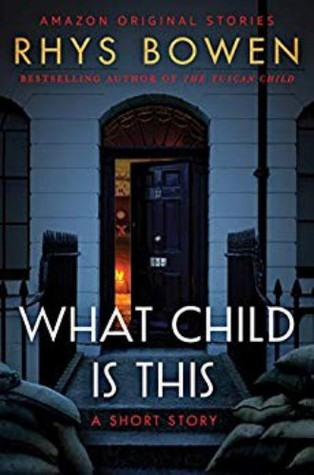
However, I have been reading a novel as well, plus the short story that earns today’s Thursday Creation Review as this was seasonal with an uplifting message.
Christmas during World War II is a time for small miracles in this bittersweet short story by the New York Times bestselling author of The Tuscan Child and In Farleigh Field.
Jack and Maggie Harris are adrift on ravaged streets during the London Blitz. Their home is gone. They have nowhere to go and nothing left to lose. With only the memories of their greatest loss—the death of their child during a Christmas years before—Jack and Maggie settle in a seemingly deserted mansion for the night.
Inside they find shelter, warmth, and a bit of cheer. They also discover a surprise. Now, in the darkest of times, the unexpected compassion of strangers will make this Christmas one to remember forever.
Review 5 stars
As the festive season drew on, I was treated to this wonderful Christmas read – an Amazon First Reads free with my Prime membership, but I would have willingly bought this.
Set during one of the darker moments in Britain’s history, when the country was locked in the midst of WWII, this short story paints a snapshot of the London Blitz. An image of a time when people tried to remain strong and strive to be positive – as these characters do.
Jack and Maggie Harris are bombed out of their home in the East End, already scarred with the loss of a child during another Christmas. Their unfolding attempt to find shelter, warmth, and a bit of cheer on Christmas Eve was uplifting – light in the darkness.
I liked all the background detail of the period which echoed what I knew of the Blitz from other books and my own research. Having lived in and explored London, I could envisage where this occurred.
And I related to the characters, who, even in this tight tale, rang true with reactions and emotions that added to the story’s magic. The main characters especially had understandable flaws within their positivism.
The ending was a reward for all – including this reader – and it had me smiling and feeling festively satisfied.
My #WEP/IWSG post for December is a continuation of my Halloween/Deja Vu or Voodoo post, White Lady. I continued to explore the incident during NaNoWriMo so this is derived from what I wrote in November.
However, the incident is too long to conclude her, but the conclusion will be in 28 writing days – more or less. This incident in the career of Sparkle Anwyl plays a key part in Fevered Few, Book 1 of the Snowdon Shadows police procedural series.
Rushlight Wreathes
Ghost hunting doesn’t fall into my remit as a police officer, but my inquisitive nature wanted to identify our ‘White Lady’ during off-duty hours at home. Why had the ghost appeared on the old track between Porthmadog and Tremadog on Halloween?
My tingling tattoos and the mnemonic CALENDS had stirred up this cold case investigation. C for Coach, A for Accident, L for Lady, E for Eerie N for Night, D for Dreams, S for Spirits.
With no local police records before 1857, I trawl the old North Wales papers for coach-related incidents after 1811 and the founding of the ‘new town’ of Tremadog.
Fist pump as details match.
On November 1st, 1836, Dinah Adelaide Quinlan, the seventeen-year-old daughter of a retired soldier, Major Bernard Algernon Quinlan living in Tremadog was run down and crushed under the hooves of a sporty Phaeton carriage, driven by an unknown but uniformed person that was seen leaving the battered body at Major Quinlan’s house off Isgraig. The reporter was unclear why Dinah was on foot as her family owned a Berlin carriage, but she never requested the vehicle from their coachman.
Delving further, I discover that Major Quinlan served with the British East India Company’s Madras Army in Southern India between 1790-1805. On his retirement, he acquired a substantial property in the new town, and invested in the area. A photo shows a middle-aged Major Quinlan in his uniform decorated with medals on ribbons.
If Dinah was the ghost and died in 1836, there must be a grave or family tomb. Where if the family were Church of England? Her funeral details state the church of St Cynhaearn, known as Ynyscynhaearn.
Familiarity warms my spine – my tad’s parents are buried there. A visit to the place where they rest in peace, alone, yet surrounded by the sleeping graves of more than three centuries worth of parishioners.
A click as the door of the flat opens. I look at the mantel clock – midnight. As Kama walks into the kitchen I embrace her.
“More cold research? Found anything, cariad?”
“After three evenings of digging, chellam.” I stroke her face. “Are you up for visiting a graveyard? One where our ghost might be buried?”
Kama blinks and hangs up her biker jacket, then peels off her leather pants. “I’m free on Friday – isn’t that your day off as well?”
“If crime takes a slow day – yes. Date then.”
##
The stone walls seem part of the white-dotted green fields beyond that were once filled with water centuries earlier. There is an atmosphere of serenity, as few other than sheep wander down the narrow track.
Slate gravestones, orphaned from their corpses, are lined up along the side benches. Tears start to trickle as we read the names and imagine past lives. Welsh and English at peace in this corner of our troubled land.
My ancestors lie in a simple family plot awaiting the next member. I shudder, fearing who is most at risk. At least, my tad is now a desk sergeant and no longer front-line like me. I shake off the fear and focus on searching.
“Major Bernard Algernon Quinlan.” Kama points at a family grave comprising a more ostentatious mounted urn surrounded by a yew and an ornate railing. “There’s not just one person in here.”
“Died in 1840 aged 73. Buried alongside his wife – and his daughter Dinah Adelaide Quinlan.” My heart tightens, and my throat constricts. “She was the first to be buried here – a tragedy. I wish we knew more. Burial records before 1837 are less organised and vary between churches.”
“Does that mean more cold research?”
“That carriage killed her – accident or murder? Cold case so I’m hooked as ever.”
Gravestones are never cold names. Gateways to memories beckon.
##
Kama has the addiction too – but she’s the real detective.
“This ancestry site has descendants of Major Quinlan.” She points to our desktop screen. “A direct descendant of his son posted this – Edwin Quinlan.”
“Who has a daughter called Dinah. But the family is from the West Country – Truro.” The mother lode or a red herring. “This Edwin is named after the Major’s oldest son, the dead Dinah’s brother. And Dinah occurs down the generations. Do the family know more?”
Kama opens another link. A black and white photo of a family group taken in 1840, the year Major Quinlan died. The group is in what must have been a lavish sitting room in the family home. Soft lighting comes from strategic candles and rushlights. The photo shows Major Quinlan, his son Edwin Owen Quinlan and his wife, another daughter with her Royal Navy uniformed husband.
Kama points to the son-in-law. “It’s only a photo but that man is hiding something – or am I being too suspicious?”
Rushlight – Public Domain
Not CALENDS but CANDLES.
The tingling of my tattoos agrees with her, and I tap out a new mnemonic on my studded bracer. S-I-N.
S for Suspect. I for Inheritance. N for Naval. In Celtic folklore, there is a tale of bringing candles to the church to count sins. Was this the unknown figure that retrieved the body?
I zoom in to a mirror – reflecting a carriage and two horses outside.
“If that’s a phaeton then you may be right. Unfortunately, our suspect is dead, and the crime is more than cold. But we can resolve something.”
“What make of carriage that is and did the family own that type – although the latter will be problematic.”
Finding a photo of a 19th century phaeton that matches proves difficult as the reflection is indistinct. However, our search for records on period vehicles in Snowdonia yields a name – Raimund Virtanen, a horsebox builder who knows about 19th century vehicles.
A recent group photo of him presenting rosettes with long ribbons at a horse show suggests that he is respected – or has influential contacts.
A lead or a dead end?
***
Comments are welcome as usual, but for the WEP Challenge, the following applies:
Word Count 999: MPA
(FCA welcome – if you want to send one, just let me know in the comments.)
This Insecure Writer’s Support Groupmonthly blog post is a few hours late as I’ve been dealing with the backlog from November, primarily from NaNoWriMo. But more about that at the end.
First, the IWSG post which got me thinking – in a lateral way.
December 5 question – What are five objects we’d find in your writing space?
Clutter – where do I start?
In fact, my space is organised clutter as I know where everything is when I need it – I just forget to take the pills sitting in front of me. There’s the usual computer-related paraphernalia, notebooks with writing projects and piles of books including – but not limited to – writing guides. Okay, there are my gaming notes as well.
However, my five are indicative of my writing life:
Water jug – as keeping my body refreshed after my coffee fix is important. Water is the better fluid for this body although, the Brit part of me likes a cup of tea.
Spiro-meter – as my MS health problems include breathing – and talking sense – and… Well, the hospital gave this to me, and I’m meant to use it every to keep my lungs active – or something. I don’t use it enough though.
Union Jack dart – from the stepson that helps around the garden as it is a reminder of my nationality.
Dog treats – as they need attention at key writing moments. Feed the muse, I say. (We now have two kittens as well – for the dogs to chase).
Snowdon – or rather a blown-up photo of the view from our old house in Wales. The reminder of where my heart is, where my police procedural series is set, and where I need to go once this post is written.
Five – so, that’s all folks. Okay, one more: Method Acting for Writers by Lisa Hall-Wilson. My highly recommended writing guru/guide as I’m learning how to write Deep Point of View. Here’s the reviewI wrote recently.
Purpose of IWSG: To share and encourage. Writers can express doubts and concerns without fear of appearing foolish or weak. Those who have been through the fire can offer assistance and guidance. It’s a safe haven for insecure writers of all kinds!
Every month, we announce a question that members can answer in their IWSG post. These questions may prompt you to share advice, insight, a personal experience or story. Include your answer to the question in your IWSG post or let it inspire your post if you are struggling with something to say.
Posting: The first Wednesday of every month is officially Insecure Writer’s Support Group day. Post your thoughts on your own blog. Talk about your doubts and the fears you have conquered. Discuss your struggles and triumphs. Offer a word of encouragement for others who are struggling. Visit others in the group and connect with your fellow writer – aim for a dozen new people each time – and return comments. This group is all about connecting!
Let’s rock the neurotic writing world!
Our Twitter handle is @TheIWSG and hashtag is #IWSG
*
NaNoWriMo – #NaNoWinner2018. This was my fifth win since 2011, although I also forgot to validate another two years. So, just one year when I wrote nothing.
This year, I was aiming to get the first draft down for Fevered Few, a collection of shorts within a framing device. The ‘collection’ deals with the backstory for the main protagonist in the Snowdon Shadows series. Plotting in advance helped immensely, although trying to fit writing around screaming great-grand-kids was frustrating as my MS-ravaged brain doesn’t handle noise or interruptions.
However, I scraped past the 50k target by the end of November. But the draft was unfinished, so I’ve had to spend the last few days writing the closing chapters. And the ‘collection’ has evolved into a novel – the first book in the Snowdon Shadow series.
Now, I’ll leave it for about a month – to ‘marinade’ – then return to it in the New Year and tackle the daunting editing-revision phase. My insecurity phase.
For fans of All the Light We Cannot See, Beneath a Scarlet Sky, and The Nightingale comes an emotionally gripping, beautifully written historical novel about extraordinary hope, redemption, and one man’s search for light during the darkest times of World War II.
Germany, 1942. Franciscan friar Anton Starzmann is stripped of his place in the world when his school is seized by the Nazis. He relocates to a small German hamlet to wed Elisabeth Herter, a widow who seeks a marriage—in name only—to a man who can help raise her three children. Anton seeks something too—atonement for failing to protect his young students from the wrath of the Nazis. But neither he nor Elisabeth expects their lives to be shaken once again by the inescapable rumble of war.
As Anton struggles to adapt to the roles of husband and father, he learns of the Red Orchestra, an underground network of resisters plotting to assassinate Hitler. Despite Elisabeth’s reservations, Anton joins this army of shadows. But when the SS discovers his schemes, Anton will embark on a final act of defiance that may cost him his life—even if it means saying goodbye to the family he has come to love more than he ever believed possible.
Review 5 stars
Although the pace was slower than many of my usual reads, the setting of a rural village in World War II Germany made for an underlying threat that drove the story forward. The pace matched the reality portrayed.
The influence of Hitler and his Nazis seeped into the story, although the main protagonist Anton Starzmann was building a new life with Elisabeth Herter, a widow with three children in rural surroundings. His past as a Franciscan friar, whose pupils have been ‘relocated’ by the SS, haunts his gradual attempt to take a stand against the Nazi evil.
Early on he hears a conversation that becomes fundamental:
“Her companion is quick to answer, quick to defend. “It’s only this: I’ve never seen God. Why should I credit Him for a blessing, or leave Him any blame? Men are quite capable of destroying the world on their own, as we can plainly see. They don’t need any help from above.”
Anton observes that he hasn’t met Hitler, but the Fuehrer’s evil exists – and he resists. The musical instruments of his condemned pupils become central to that stand, and not just in their re-use – far better than what the Nazis plan for them.
“I’ve heard the Party are paying good money for brass. The Schutzstaffel want it for casings—ammunition.”
I wondered if music could foil the savage beast and, in a way, it became a means to take a stand. I shared the fear that the resistance within Germany and the village of Unterboihingen, called the Red Orchestra would be exposed and killed.
It didn’t matter that I knew the outcome of WWII as I didn’t know whether anything about that resistance. It’s a sad fact that it became easier for others to see all Germans as evil. Having had a German girlfriend, I know that isn’t true. And this book confirms that there was a lot of good alive, and people trying to survive.
The characters from Anton to minor characters come alive as the story builds and I became invested in their lives.
The village and its surroundings are beautifully described, and the language is so evocative of the hard but special life that Anton and his new family are living. The war rages and the nightly bombing of nearby Stuttgart threaten behind the village life that attempts to continue, using lessons and practises of the past. Barter replaces money – as it did in many countries.
There are highlights to enrich the children’s lives like precious Easter eggs, chocolates and simple handmade gifts.
The end and the impending terror draws closer when a ruthless act forces a final act of defiance.
The story resonated so much with me that I was pleased to discover that it is based on real events. And that makes it relevant to today when Neo-Nazis are on the rise everywhere.
But as the author says:
“We are Widerstand—resistance—you and I. No force can silence us, unless we permit silence. I prefer to roar.”
This book was an Amazon First Reads free with my Prime membership, and even if I’d paid the proper price The Ragged Edge of Night would be a recommended must read.
I’m snatching a few precious minutes from doing NaNoWriMo to write this Insecure Writer’s Support Groupmonthly blog post – and hoping to resume normal service next month.
November 7 question – How has your creativity in life evolved since you began writing?
From’ Purple to Deep’ was my placeholder/headline/reminder for my writing evolution
Purple Phase – when I began scribbling with intent, in my teens, I revelled in writing long descriptive passages, resulting in long paragraphs that were meant to be ‘Tolkienesque’. My creative writing teacher, the late Roger Woddis, classed most of my writing as ‘purple prose’ without Tolkien’s mastery of language.
I still have a few of those fantasy/sci-fi attempts and I can see the dire ‘purple prose’ and where I learned to curb my excesses – I have one short on which Roger has commented that I’m learning.
Over the decades, I like to believe that I kept improving. Attempting haiku and senryu helped, writing short pieces as a journalist added restraints, and eventually I was published – once. From there, I’m trying harder with online guidance and support – like IWSG.
Deep Determination – as I focus on my Snowdon Shadows series, I am learning how to use Deep POV. The voice of my MC requires tighter sentences, and Deep POV disciplines me to make every word count. Lisa Hall-Wilson’s Method Acting for Writers is now my guide.
Is my writing any better? Ask my beta-readers – or watch this space.
Purpose of IWSG: To share and encourage. Writers can express doubts and concerns without fear of appearing foolish or weak. Those who have been through the fire can offer assistance and guidance. It’s a safe haven for insecure writers of all kinds!
Every month, we announce a question that members can answer in their IWSG post. These questions may prompt you to share advice, insight, a personal experience or story. Include your answer to the question in your IWSG post or let it inspire your post if you are struggling with something to say.
Posting: The first Wednesday of every month is officially Insecure Writer’s Support Group day. Post your thoughts on your own blog. Talk about your doubts and the fears you have conquered. Discuss your struggles and triumphs. Offer a word of encouragement for others who are struggling. Visit others in the group and connect with your fellow writer – aim for a dozen new people each time – and return comments. This group is all about connecting!
Let’s rock the neurotic writing world!
Our Twitter handle is @TheIWSG and hashtag is #IWSG







 Writing Wings