Writing A Series

Today, as promised, I have the pleasure of welcoming Canadian author Kristina Stanley as my Guest on Writing Wings. Kristina is the author of “Blaze“, which is Book 2 in the Stone Mountain Mystery series. I recently reviewedBlaze” and I am looking forward to the release of Book 3, “Avalanche“, tomorrow.

Over to you, Kristina.

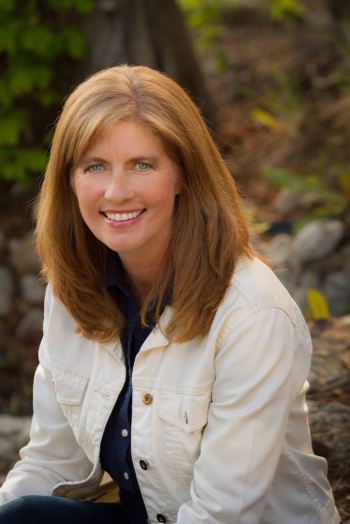
KS 75 High Res

Thank you, Roland for having me on your site today. It’s a pleasure to be here to write about writing.

Writing a Series

Can you imagine being buried alive in an avalanche? Did you know a buried person can hear rescuers searching for him but can’t speak about because the pressure from the snow is keeping his mouth closed?

This terrifying knowledge is what I first learned about avalanches when I was researching BENEATH THE SNOW. I spoke to a man who’d been buried and survived, of course. He was generous enough to share details that I wouldn’t have known otherwise.

THE HISTORY:

So why am I telling you about this when the title of the post is Writing a Series?

BENEATH THE SNOW was the working title for AVALANCHE. It’s the first novel I wrote. I then went on to write DESCENT and BLAZE (working title BURNT).

As I wrote the first novel, I wasn’t aware I was writing a series. When I finished the novel, I knew Kalin Thompson and Ben Timlin had more to say.

By the time I had three novels in the Stone Mountain series finished, I learned a great deal about writing. Working with my agent, together we decided BENEATH THE SNOW should be retitled as AVALANCHE and rewritten to be the third in the series instead of the first.

Kalin Thompson (the protagonist) needed more knowledge and experience at a ski resort if she was to investigate a large theft and the disappearance of her brother at the same time. The title changed because by then we knew all the titles in the series had to be a one-word titles.

THE BENEFIT OF WRITING 3 NOVELS:

Having three novels in a series written gave me the opportunity to develop the character arcs across the series, plant information in the first two novels that would lead to the third, and be consistent with the setting.

I also believe writing three novels before approaching a publisher gave me time to develop needed skills.

CONSISTENCY IN MARKETING:

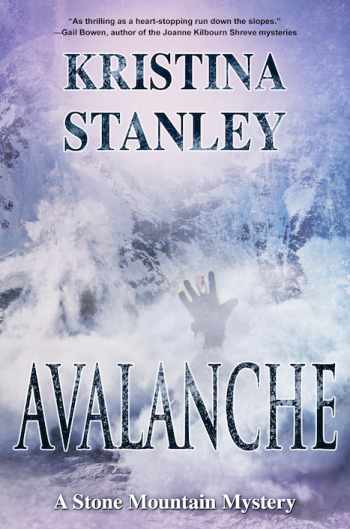
The covers for all three novels have a similar look and feel. The fabulous Ryan Doan created the artwork based on the setting of the series. The font, the text placement and cover layout are the same for each book. If a readers see my books on a shelf, they will know they go together. Because we knew ahead of time where the series going, the DESCENT cover was designed with the long term goal in mind.

Avalanche Cover Final

A Little About AVALANCHE

(To Be Released Tomorrow!):

On a cold winter morning, the safe at Stone Mountain Resort is robbed, and Kalin Thompson’s brother, Roy, suspiciously disappears. As Director of Security, Kalin would normally lead the investigation, but when her brother becomes the prime suspect, she is ordered to stay clear.

The police and the president of the resort turn their sights on Kalin, who risks everything to covertly attempt to clear Roy’s name. As threats against her escalate, she moves closer to uncovering the guilty party. Is Kalin’s faith in her brother justified? Or will the truth destroy her?

A Little About Kristina Stanley:

Kristina Stanley is the best-selling author of the Stone Mountain Mystery Series. Her first two novels garnered the attention of prestigious crime writing organizations in Canada and England. Crime Writers of Canada nominated DESCENT for the Unhanged Arthur award. The Crime Writers’ Association nominated BLAZE for the Debut Dagger. Her short stories have been published in the Ellery Queen Mystery Magazine and The Voices From the Valleys anthology. She is also the author of THE AUTHOR’S GUIDE TO SELLING BOOKS TO NON-BOOKSTORES.

Before writing her series, Kristina was the director of security, human resources and guest services at a resort in the depths of the British Columbian mountains. The job and lifestyle captured her heart, and she decided to write mysteries about life in an isolated resort. While writing the first four novels, she spent five years living aboard a sailboat in the US and the Bahamas.

Find out more about her at www.KristinaStanley.com.


Links to the Stone Mountain Mystery Series:

DESCENT: myBook.to/Descent

BLAZE: myBook.to/BlazebyKristinaStanley

AVALANCHE: myBook.to/Avalanche (on sale for a few more days only.)

Writers, Have You Rocked The Vault?

Yesterday, I posted a review of The Urban Setting Thesaurus: A Writer’s Guide to City Spaces, and today I’m celebrating its release date with authors Becca Puglisi and Angela Ackerman. Congratulations ladies. 🙂 

#myfavoritethesaurus

As this is there day, they have the comm, or the floor, here at Writing Wings.


It is a writer’s job to draw readers into the fictional story so completely that they forget the real world. Our goal is to render them powerless, so despite the late hour, mountain of laundry, or workday ahead, they cannot give up the journey unfolding within the paper-crisp pages before them.

Strong, compelling writing comes down to the right words, in the right order. Sounds easy, but as all writers know, it is anything BUT. So how do we create this storytelling magic? How can we weave description in such a way that the fictional landscape becomes authentic and real—a mirror of the reader’s world in all the ways that count most?

The Setting Thesaurus DuoWell, there’s some good news on that front. Two new books have released this week that may change the description game for writers. The Urban Setting Thesaurus: A Writer’s Guide to City Spaces and The Rural Setting Thesaurus: A Writer’s Guide to Personal and Natural Spaces look at the sights, smells, tastes, textures, and sounds a character might experience within 225 different contemporary settings. And this is only the start of what these books offer writers.

In fact, swing by and check out this hidden entry from the Urban Setting Thesaurus: Police Car.

And there’s one more thing you might want to know more about….

Rock_The_Vault_WHW1Becca and Angela, authors of The Emotion Thesaurus, are celebrating their double release with a fun event going on from June 13-20th called ROCK THE VAULT. At the heart of Writers Helping Writers is a tremendous vault, and these two ladies have been hoarding prizes of epic writerly proportions.

A safe full of prizes, ripe for the taking…if the writing community can work together to unlock it, of course.

Ready to do your part? Stop by Writers Helping Writers to find out more!


The Urban Setting Thesaurus: A Writer’s Guide to City Spaces

Tomorrow, June 13th, Becca Puglisi and Angela Ackerman are expanding their indispensable Thesaurus family by adding The Rural Setting Thesaurus: A Writer’s Guide to Natural and Personal Places and The Urban Setting Thesaurus: A Writer’s Guide to City Spaces.

“We are very excited about these books, and hope they’ll change how you think about setting and description. Sensory detail, a large part of each book, is an especially powerful way to draw readers into our story’s world, so we really need to get it right.”

For Angela’s taster visit: http://writershelpingwriters.net/2016/06/launch-mock-post/

However, here is my review of The Urban Setting Thesaurus: A Writer’s Guide to City Spaces.

Pageflex Persona [document: PRS0000046_00072]


As a writer, one of my most referred to books is The Emotion Thesaurus: A Writer’s Guide to Character Expression, so I was excited to find the Thesaurus family had new additions. I was not disappointed when I delved into The Urban Setting Thesaurus: A Writer’s Guide to City Spaces.

The Thesaurus is well laid out, with three parts, starting with some insightful and useful sections that explain why setting is so important, and how writers can enhance their creations by using it well. Setting is too often the poor relation of characterization and plot, but, as Ackerman and Puglisi demonstrate, it can lift your writing.

As they say, “We are very excited about these books, and hope they’ll change how you think about setting and description. Sensory detail, a large part of each book, is an especially powerful way to draw readers into our story’s world, so we really need to get it right.”

These eight sections include: The Setting as a Vehicle for Characterization; The Setting as a Vehicle for Delivering Backstory; The Crown Jewel of Settings: Sensory Details; and Common Setting Snags. These were informative, and made me aware of all the opportunities that I was missing in my own writing.

The main body of the Thesaurus contains a collection of over 100 diverse settings arranged under helpful headings: IN THE CITY; RESTAURANTS; RETAIL STORES; SPORTS, ENTERTAINMENT AND ART VENUES; and TRANSPORTATION. There is plenty of options to choose from when finding the most suitable location – for instance I choice the settings ALLEY, BAR, RACETRACK, and POLICE CAR as the starting points for my exploration, and just these locations led down a multitude of avenues.

Each setting contains a wealth of suggestions on the SIGHTS, inside and outside, although you definitely don’t need every one. These are just great prompts and reminders. Then you get the same on SOUNDS, SMELLS, TASTES, TEXTURES AND SENSATIONS.  The suggestions don’t stop there. There are POSSIBLE SOURCES OF CONFLICT, PEOPLE COMMONLY FOUND HERE, SETTING NOTES AND TIPS, and another thought-provoking paragraph that demonstrates techniques – the SETTING DESCRIPTION EXAMPLE for each setting.

For me, these EXAMPLEs demonstrated what was possible and the techniques available to a writer. Full marks to the authors for their well-crafter slices of fiction, that demonstrate what is possible with Settings.

Perhaps the feature that got me dashing along other avenues most, was the RELATED SETTINGS THAT MAY TIE IN WITH THIS ONE. This lists those other settings, and in the eBook links to them. So POLICE CAR took me to the Police station. Prison, Courtroom etcetera. It was hard to stop exploring this Urban world. If that’s not enough, there are even related settings in The Rural Setting Thesaurus: A Writer’s Guide to Natural and Personal Places, so the two books work in tandem.

The final part of the book contains tools to aid you in applying all these gems, as well as a list of all the Rural Settings, Recommended Reading, and more information on the first class team behind the Thesaurus family.

After this wordy exploration of the invaluable Urban Setting Thesaurus, I’m off to buy The Rural Setting Thesaurus: A Writer’s Guide to Natural and Personal Places as its sister thesaurus is a tempting taster of what to expect. Both have to be an essential part of any fiction writer’s library. They will be part of mine.

The Secret of Lakeham Abbey – a review

Yesterday, I posted “What earns Stars?” about my dilemma over review stars, and mentioned the book that rates more than five. Well this is the one that I had in mind, so read on.

30118466

The Secret of Lakeham Abbey

by Sally Quilford (Goodreads Author)

1948

When Percy Sullivan’s family take over Lakeham Abbey for the summer, it was a chance to get away from battered post-war London and be cossetted by the capable and pretty housekeeper, Anne Pargeter.

They soon learn that the Abbey conceals a dark secret; one that someone was willing to kill to hide. When Anne is convicted of murder and sentenced to execution, Percy is determined to do all he can to save his friend from the gallows.

He encourages everyone to tell their side of the story. This leads to some startling revelations, including a shocking secret that Percy’s mother tried to hide from him.


The blurb hooked me on the book’s launch day, and I immediately read the opening pages online. Then I had to read more. This was a beautifully crafted mystery in the tradition of the Golden Age of Detective Fiction, and I found it hard to put down. Despite life’s interruptions, I finished it in just over a day – close to my record.

From the first sentence, I loved the voices of the characters, especially Percy Sullivan’s. He’s a teenager driven by his desire to prove his friend Anne Pargeter, and his encouragement of everyone to tell their side of the story is genius. Genius on his part, and on the author’s.

All of them have great voices that reveal so much about them and their part in the clever plot. Everyone has something to hide, however insignificant – but then don’t we all. For the sleuths like Percy, the art is reading between the lies and half-truths to unravel the hidden truths. True to the Golden Age detectives, Percy and the police gather everyone for a neatly located revelation that surprises all.

Although secrets and murder are the driving force, and Percy’s focus in on solving the mystery, there is romance between various characters – but I won’t say whom. In fact, there is plenty of emotional interactions between characters, all well-painted.

This was not only an excellent read, and a ‘read-again’ book, but it also made me work back through the novel looking for the crafty techniques that Sally Quillford used. “The Secret of Lakeham Abbey” reminded me of a clever Agatha Christie mystery.


As a writer, this novel was a lesson in how to craft a mystery, which was why I studied all the scenes that gave clues to the murder. Learning how to use red herrings, deceit, and well-timed distractions, is something that I still have to take on board. Thanks Sally Quillford for helping show me some of the how. And that’s why I wish I could give “The Secret of Lakeham Abbey” six stars.


What earns Stars?

Insecure Writers Support Group Badge


Writing book reviews makes me insecure when it comes to awarding stars. Hence this post on the official Insecure Writer’s Support Group day.

At one point, in the dim past, it seemed simple: if it was a book that I would re-read, then it earned five stars, like J.R.R. Tolkien’s Lord of the Rings. If it was a disappointment, then it earned three (or less). Nothing earned less, as one and two star books didn’t get past the initial blurb-opening-cover test – although I admit to a few mistakes.

Anyway, here’s my latest guide to the Stars based on reviewing as a fellow writer and as a reader.

One Star: The author managed the awesome feat of publishing a book.

Two Stars: Published and with almost no formatting/proof-reading/typo/spelling errors etcetera.

Three Stars: Published, error-free-ish, and with a logical, understandable plotline. Okay read.

Four Stars: As three, plus engaging story, characters, setting, and well-crafted sub-plots. Recommended read.

Five Stars: Not just a recommended read, but a book that demonstrates the craft of writing. Enjoyable and inspirational.

Although this star system avoids judging books against each other, which I hate doing, there is one major problem with this rating method. My review tomorrow demonstrates that failing. What score should I give a book that deserves five stars, is a ‘read-again’ book, and demands that I work through it looking for the clever techniques that the writer used. Do I need to have a Six Star grade?

31c70d96800cdc7b9006c55d54c15c7b

I remember doing that when I got to the end of Agatha Christie’s The Murder of Roger Ackroyd. I needed to know how she had got away with Rule 1 of the 10 Rules of Golden Age Detective Fiction, producing a clever twist ending that worked. Of course, that rule is now broken in many instances, as are many others.

Anyway, I’m not sure how I will apply my Stars grading to non-fiction, but what are your measures of a fiction book’s qualities? Do you avoid giving five stars? Do you want to give five stars to most books that you choose to read? Have you ever given a book one star, even if it was mine?

*

The first Wednesday of every month is officially Insecure Writer’s Support Group day. We post our thoughts on our own blogs. We talk about our doubts and the fears we have conquered. We discuss our struggles and triumphs. We offer a word of encouragement for others who are struggling.

Please visit others in the group and connect with my fellow writers.

Let’s rock the neurotic writing world!

Our Twitter hashtag is #IWSG

And be sure to check out our Facebook group –https://www.facebook.com/groups/IWSG13/

The awesome co-hosts for the June 1st posting of the IWSG are  Murees Dupe, Alexia Chamberlynn, Chemist Ken, and Heather Gardner. 


The Liebster Award

liebster-award-main

I hinted yesterday that today’s post would be a response to some good news. Sarah Zama from The Old Shelter nominated me for the Liebster Award. Her A to Z blog on the Jazz Age Jazz was entertaining and informative. And her Reflections post is a must-read for the advice on preparing for A to Z – there’s a lot there that I’ll be attempting to take on-board

I always get both nervous and excited when I’m nominated for such an award, especially from a blogger that I respect. Excited about the recognition – nervous as I need to deal with some crucial questions.

This is actually the second time that I have been nominated for the Liebster – first was way back in October 23, 2013, so my answers may have changed since then.

Rules of the Liebster Award

If you have been nominated for The Liebster Award and you chose to accept it, write a blog post about the Liebster Award in which you:

  • Thank the person who nominated you, and post a link to their blog in your post.
  • Display the award on your blog — by including it in your post and/or displaying it using a “widget” or a “gadget”.
  • Answer 11 questions about yourself, which will be provided to you by the person who nominated you.
  • Provide 11 random facts about yourself.
  • Nominate 5 – 11 blogs that you feel deserve the award, who have a less than 1000 followers. [Some claim that this is a flexible rule, so I’m ignoring it. In fact, I don’t qualify. 😉 ]
  • Create a new list of questions for the nominees to answer
  • List these rules in your post (copy and paste from here). Once you have written and published it, you then have to:
  • Inform the people/blogs that you nominated that they have been nominated for the Liebster Award and provide a link for them to your post so that they can learn about it (they might not have ever heard of it!)

bakingbabybrownliebster

11 questions Sarah asked me

  1. When your started your blog, did you know what you were doing?

It was trial and error, but it always will be as the learning process never stops – no exceptions. I started when I began following blog-maestro Robert Lee Brewer  and his introduction to creating a Writer’s Platform. His ‘challenge’ took me through the early stages of blogging and social media.

  1. Many writers I know tell me they don’t blog because they prefer to write their own stories. Why do you?

Blogging for me is not the same as creating my fictional stories. The posts are a chance to address other issues from writing quandaries to health issues. However, a few posts do stray into fictional areas, such as my interviews with characters in my novels, and this year’s A to Z mystery.

  1. Do you plan your posts?

I start scribbling ideas for posts days ahead of when I want to schedule them. I have a black notebook with sketched out ideas, some of which have yet to be developed – like “The First Terrorists”. As the scheduled day approaches, I select the most appropriate idea. Right now I have a review of “The Road” imminent.

  1. Do you stick to a posting schedule?

I have a flexible posting schedule of a weekly post on Tuesday or Wednesday. There’s no particular theme as my readers went for Pick N’Mix. At the moment, that’s enough of a commitment. Looking way ahead, I might have to schedule “The First Terrorists” for October 10th (Columbus Day), especially as this desktop will be in transit to the USA. That will mean some clever scheduling for almost two months.

honoring-terrorists


  1. When you signed up for the A to Z Challenge the first time, did you know what you were doing?

I’d seen a few posts in 2013 so had a rough idea what I was getting into when I did the Challenge in 2014. I chose posts themed around what I was researching for a WIP, but admit that it was a learning process. However, I wrote some posts in advance so wasn’t a complete wreck by the end of April 2014.

  1. What were you thinking when you signed up the second time?

That I needed to write more posts in advance to give myself time to visit others. However, I stuck to a theme related to research for a WIP, although that book is now on a back-burner. This year I resisted the temptation to go with a research theme, as I said in my Reflection above. On further reflection, my research approach might be okay for 2017. Counterfactual history or maybe Snowdon Snippets.

  1. I can hardly resist a blogging challenge. Do you participate in many?

I resist the temptation to do more than A to Z, especially if they are over many days. I have done a few one-off challenges, like posting specific sentences from a manuscript, or details on my current main character.

  1. What is the blogging challenge which was the most fun for you?

In general, trying to select a weekly post that will be of interest to my readers and followers is a challenge. I’m still working on that one, hoping that I will suss what sparks their attention. And what dictates that? The number of comments? Likes? Visits? Probably, the overall reaction. Being ignored is the pits though. In terms of particular posts and fun, I would say that writing the mystery part of “A Brilliant Conspiracy” my A to Z Challenge this year. Challenging because of my rules, but fun as those same rules played a part in the plot and the climax. But I keep worrying that it was too obscure. Was it?

  1. Did you ever produce a vlog? If not, would you consider doing it?

Never have, and won’t consider doing it as I stammer and swallow words because of my disability. That’s also the reason why my days of public speaking ended last century and I won’t do any readings.

  1. Have you ever read articles about marketing to learn promoting your blog?

Read a few but tend to feel that most suggest things that I’m unlikely to do. Perhaps tweaks. Most of the great strides were in the early years. Is that where my blog fails?

  1. Do you think writing a blog is the same as writing a book?

Very different from writing fiction, as different products. However, not in terms of commitment. Both require persistence and perseverance. I find them complimentary – like wine and cheese.


11 random things about myself

  1. Although I’m British, in terms of my maroon passport, I’m actually part Chilean. My maternal grandmother was from Chile and met my grandfather when he was working for a nitrate mining company out there. My mother was born in Santiago.
  2. My office has a view towards Snowdon, which I will miss when we move to the US. However, Idaho has plenty of spectacular mountains and wild scenery.
  3. I went to school in Canada, for a few terms, so got a taste for the outdoor lifestyle over there – especially the skiing. I even went white-water rafting.
  4. My first time on a ski slope I was ready to chuck it all in. I was scared of the nursery slopes. My instructor sent me up the next level run, telling me to try that one. I struggled down, but never looked back. Taking slopes head-on became a regular thrill. I even raced a bit…but not down the nursery slope.
  5. My first success in writing was winning three days with the Royal Navy, when aged about ten I wrote an essay on A Day In The Life of a Helicopter Pilot.
  6. That RN adventure was the last time that I sailed around the Isle of Wight in a large ship – the guided missile destroyer HMS Devonshire – Displacement 5,440 tonnes (6,850 tonnes full load). On September 20th I will sail around the Isle of Wight again but on RMS Queen Mary 2, bound for New York – Displacement 75,000 tonnes.
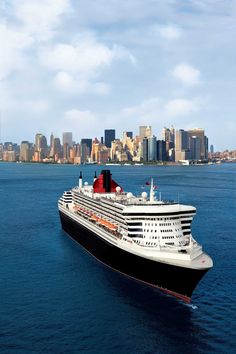
    862aa8c7d3a3a172a1b352d9bc0d0e1c

    Queen Mary 2 in New York Harbor

  7. I still have one of the books that I read and adored as a child, George Brooksbank’s “Old Mr Fox”. With a cover by celebrated artist Archibald Thorburn, this was my father’s copy, which he was given in 1932 for Christmas, the same year the book was published.
  8. My favourite author is J.R.R Tolkien, but I first discovered him when I read the essay based on his lecture “Beowulf: The Monsters and the Critics“. Reading “The Hobbit” and “Lord of the Rings” came a few months later.
  9. I read the whole of “Lord of the Rings” over one very long weekend when I was at Eton College in 1969. I still have the three hardback copies with their wonderful fold-out maps.
  10. History has always fascinated me, so it was one of my specialist subjects at school and at college. I even enjoy Virtual or Alternative Histories, so one day I might work out how the Vikings colonised Kanata.
  11. I’ve had Multiple Sclerosis since 2000 but writing keeps my brain on track, although it can be exhausting. And I now call it the MaelStrom MonSter.


With the A to Z Challenge in mind, I’d first like to nominate a few fellow A to Z-ers for this award.

Tasha @ Tasha’s Thinkings Wrote 2.5 blogs during A to Z, including her entertaining spooky one on Fictional Phantoms.

Miriam @ An’ de walls came tumblin’ down  Her A to Z was clever stories in which each sentence began with the chosen letter of the day.

Jen @ Lexical Creations This children’s writer tackled a double theme for A to Z. Each post featured an Alphabet book and an instalment of her own fun alphabetical story with letters as characters.

Cheryl @ Plucking Of My Heartstrings Her 2016 theme was non-profit organizations that deserve support, so please visit as many as you can.

Maryann @ if i only had a time machine Her informative and detailed A to Z posts were A 1970s Time Capsule from A to Z. Facts and video clips galore.

Archie @ Travel With Archie – and finally a great travelogue with A to Z posts on US cities. Wonderfully informative and great photos.

Finally, I’m choosing two other bloggers that are deserving of the Liebster Award.

Chrys @ Write with Fey Catching sparks for stories and passing on torches of inspiration.

Mark @ Time Present and Time Past        Author/Lecturer who knows how to tell his facts in an informative and engrossing way.

quill

And these are the questions for them, and of course most are about blogging:

  • Do you have goals for your blog? What are they?
  • Do you have a blogging schedule?
  • I can hardly resist a blogging challenge. Do you participate in many?
  • What is your favourite way to interact with other bloggers?
  • What is your own personal favourite of your own blog posts, and why?
  • What kind of blogs do you like to read the most?
  • Where would you most like to visit?
  • If you could have any kind of pet, what would it be?
  • If you could choose to live in another time, when would you choose?
  • Would you change your chosen career path?
  • Do you have a favourite book that you re-read?


Again, thanks so much to Sarah for giving me the possibility to share the love. And thanks to all those that have inspired me to nominate them.