The Book Thief – a review

Last month, I found my reading had a theme – Books – and that began with  Rachel Caine’s Ink and Bone, which I reviewed on July 23rd.

Now I have finished The Book Thief by Markus Zusak, which I review below, but I lied when I said, “I don’t intend to move on from there to Ray Bradbury’s Fahrenheit 451…” That’s my current read, but I promise a change of direction next time.

However, it was weird to stumble on a short by Kristine Kathryn Rusch that echoed that book theme, burning books, and the Library of Alexandra. If you can find it, The Midbury Lake Incident is part of the Uncollected Anthology Magical Libraries.

Anyway, all this synchronicity is giving me goose-bumps. But then Death was a quirky character in Jackie Moore Kessler’s Hunger, and now in The Book Thief, the narrator is Death with opinions and frailties.

So before I give my latest review, and as we are on the subject of reviews, I came across this topical post: http://terrytyler59.blogspot.co.uk/2016/07/augustreviews-because-every-little-helps.html


BookThief22824478

The Book Thief

by Markus Zusak

The Book Thief by Marcus Zusak was the best-selling debut literary novel of the year 2007, selling over 400,000 copies. The author is a prize-winning writer of children’s books, and this, his first novel for adults, proved to be a triumphant success. The book is extraordinary on many levels: moving, yet restrained, angry yet balanced — and written with the kind of elegance found all too rarely in fiction these days. The book’s narrator is nothing less than Death itself, regaling us with a remarkable tale of book burnings, treachery and theft. The book never forgets the primary purpose of compelling the reader’s attention, yet which nevertheless is able to impart a cogent message about the importance of words, particularly in those societies which regard the word as dangerous (the book is set during the Nazi regime, but this message is all too relevant in many places in the world today).
Nine-year-old Liesel lives with her foster family on Himmel Street during the dark days of the Third Reich. Her Communist parents have been transported to a concentration camp, and during the funeral for her brother, she manages to steal a macabre book: it is, in fact, a gravediggers’ instruction manual. This is the first of many books which will pass through her hands as the carnage of the Second World War begins to hungrily claim lives. Both Liesel and her fellow inhabitants of Himmel Street will find themselves changed by both words on the printed page and the horrendous events happening around them.

I have no hesitation in standing alongside those readers that loved this book. Words are important to me as a writer and a reader, so I could feel for the title character, Liesel, and for all those swept in different directions by the power of the word.

On the one hand, the novel shows how easily the sweet insidious words of Hitler could sway so many ordinary people. Most of the characters are German citizens reacting like so many of us do…with knee-jerk responses. Life goes on. It’s too easy to sit back and then realise too late what is really going on. Sadly, just glancing at current politics, we haven’t learnt from those dark days.

On the other hand, words are the beacon of hope for Liesel and others. Books create possibilities, whether classics or stories written on the paint covered pages of Mein Kampf. They inspire.

“When she came to write her story, she would wonder when the books and the words started to mean not just something, but everything.”

Although the Holocaust is building in the background, and the plight of one particular Jew, Max, touches Liesel and our lives, this is a novel about the way that German people reacted to the events at that time. Markus Zusak might be Australian but his mother Lisa is originally from Germany and his father Helmut is from Austria. So they would have known about those times, and having had German friends, I know that the perspective of the citizens was similar to what Liesel experienced. And this novel is from the viewpoint of a child – well except for when Death paints the darker aspects of events, as he/it is always there, especially when the atrocities happen or a child dies senselessly.

Death is a tragic narrator, struggling to understand humanity and trying to take a caring approach to a distasteful job, because “even death has a heart”.

“Please believe me when I tell you that I picked up each soul that day as if it were newly born. I even kissed a few weary, poisoned cheeks. I listened to their last, gasping cries. Their vanishing words. I watched their love visions and freed them from their fear.”

Death’s observations enhance the unfolding story, and in places Death gets the best lines:

“The question is, what color will everything be at that moment when I come for you? What will the sky be saying?”

And then says, “I am haunted by Humans.” And Death is drawn to Liesel’s story in which there are so many rich characters, from Papa to Rudy Steiner to the Mayor’s Wife, and so many others.

In fact, there was so much to love, from poetic passages and images, to emotion wringing incidents, that I must re-read “The Book Thief”.

The final words must be Liesel’s, and to discover more pick up the novel.

“Sometimes I think my papa is an accordion. When he looks at me and smiles and breathes, I hear the notes.”


Ink and Bone – a review

It seems that my reading has found a theme…for now. Books. Or rather novels in which Books play a central role, like today’s review, Rachel Caine’s Ink and Bone, and my current read (and next review), The Book Thief by Markus Zusak. However, I don’t intend to move on from there to Ray Bradbury’s Fahrenheit 451 or Umberto Eco’s The Name of the Rose – well not yet. (Those two are both influences already though not as a reader.)

Anyway, on to the review:

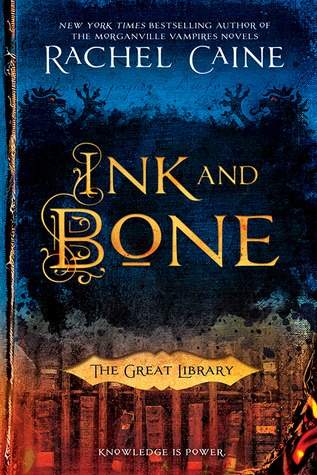
InkBone20643052

Ink and Bone (The Great Library #1) by Rachel Caine 

In an exhilarating new series, New York Times bestselling author Rachel Caine rewrites history, creating a dangerous world where the Great Library of Alexandria has survived the test of time.…

Ruthless and supremely powerful, the Great Library is now a presence in every major city, governing the flow of knowledge to the masses. Alchemy allows the Library to deliver the content of the greatest works of history instantly—but the personal ownership of books is expressly forbidden.

Jess Brightwell believes in the value of the Library, but the majority of his knowledge comes from illegal books obtained by his family, who are involved in the thriving black market. Jess has been sent to be his family’s spy, but his loyalties are tested in the final months of his training to enter the Library’s service.

When his friend inadvertently commits heresy by creating a device that could change the world, Jess discovers that those who control the Great Library believe that knowledge is more valuable than any human life—and soon both heretics and books will burn…

Ink and Bone” was a novel that I couldn’t stop reading from the moment that the blurb hooked my attention. This is an alternative history based around a radical shift in events two millennia ago, when the first burning of the Library at Alexandria took place.

This alternative history’s direction has been dictated by the Great Library, who controls everyone’s lives through their stranglehold on knowledge. We are used to having books all around us, freely available – well in fact not everywhere. But this situation is frighteningly different and Rachel Caine has created a believable society, with a clever twist on how people read – or don’t.

The twists and deceptions kept me thinking, but this novel was very readable and everything made sense – in its parallel world way. Everyone had some sort of relationship with books, and those interactions dictated their roles and how the Great Library viewed them. Whether the authorities know about Jess Brightwell ’s smuggling background is a crucial plot element – information rules.

The descriptions of Jess and his fellow students at the Great Library draw you into their lives and concerns. The machinations of the Great Library mean that you can never be sure who to trust, or even who will survive to enter the Library’s service.

Ink and Bone reaches a chilling conclusion that sets up Book 2 Paper and Fire with plenty of questions to motivate reading on.


Dying for a Living Boxset – a review

Time for another review, this time of a Boxset, usually a daunting reading prospect and yet a great way to tackle a series. However, they are hard to review without giving away too much, so beware there may be spoilers ahead.

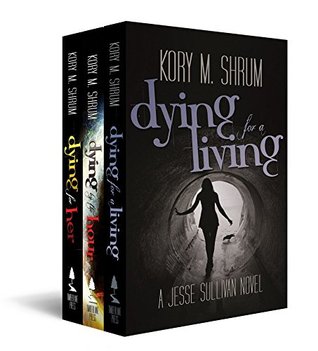
Dying25360086


“This boxset includes the first three novels in the Jesse Sullivan series, for one lower price. Books Dying Light (Book 4) and Worth Dying For (Book 5) are not included.

Fans of contemporary and urban fantasy will enjoy this series. Don’t be surprised to find dark humor, lots of snark, and a murder mystery, all wrapped up in a single thrilling, action-packed narrative.

Called “addictive” by New York Times Bestseller Darynda Jones, those interested in strong female protagonists are sure to take a shine to Jesse Sullivan, the reluctant anti-hero of the series.”


As I said when I reviewed the first novel in the Jesse Sullivan series, I was “hooked from the first few words of the blurb”, immersing myself in the light-hearted style the author used. The opening novel portrays a quirky heroine, a young woman that dies for a living, a ‘necronite’. who can be sarcastic in the face of death.

I liked Jesse and warmed to her, her kooky habits, like wearing shoes that didn’t match, and to her best friend, lover, and sidekick, Ally Gallagher. Their relationship is complicated not only by Lane, Jesse’s comic-store running boyfriend, but also by the attempts to kill her for good. Yes, ‘necronites’ can die in certain circumstances, so I was never able to relax and think that Jesse would always survive.

The tone of the first novel might have been light-hearted, with great humour, but it had darker moments especially towards the end as we discover who is opposed to the ‘necronites’. Book 2 builds on all the elements, with Jesse and her friends in mounting danger. Without spoilers, I can say that everything I enjoyed about Book 1 is there as we learn more about the dangers they face.

I found the writing swept me along with its mix of humour and mounting threat. Jesse’s relationships complicate events, and this area of personal conflict – told from her first person perspective and from Ally’s 1st POV – worked well. The sexual dilemmas felt realistic, even if the lesbian emotions and thoughts were outside my experience. However, unsurprisingly when you read her bio, Kory M. Shrum captures this with taste and style.

The third novel departs from the first two Books, in being told from the perspective of Jesse’s boss Brinkley. In many ways this darker Book is backstory to the events in the opening two volumes, and yet it closes at the same point as Book 2. As I read the revelations, I was even more engrossed in the characters. Gradually, I began to realise that there was a whole side to events that neither Jesse nor Ally were aware of. After reading Book 2, I was ready to take a break from the series, but now that I have learned so much more, I want more.

One niggling problem is the antagonist, whose abilities reminded me as the Books progressed of a successful TV show that aired from 2006 to 2010. That will stop me re-reading the three Books, although not from tackling the next one. Maybe the protagonist will change in ways that I can’t envisage.

*

Here is the link to my 23 Jun. 2015 four star review on Amazon for Book 1 Dying for a Living (Kindle Edition). I wrote…

Chuckled as she died

“Hooked when I read the first few words of the blurb for “Dying for a Living”, I was unable to put down this first novel in the Jesse Sullivan series.

“On the morning before her 67th death, it is business as usual for Jesse Sullivan: meet with the mortician, counsel soon-to-be-dead clients, and have coffee while reading the latest regeneration theory. Jesse dies for a living, literally.”

You have to read on, especially when confronted with Jesse, a ‘necronite’ that can be sarcastic in the face of death. The irritation was more amusement than frustration, as I had to keep laughing and loving her. The light-hearted style and the humour seeps through the novel, especially when Jesse’s clients make such comments as: “Ms Sullivan is like a human Chihuahua who barks at anything that moves.”

There are other well-portrayed characters, like Ally her assistant/lover/friend, and Lane her comic-store running boyfriend, and her boss Brinkley. Their contribution is crucial to the unfolding story in which someone is trying to kill Jesse and her necronite colleagues. And yes, necronites can die if they lose their head. Literally.”


Bad Moon Rising – a review

I’ve been sticking with the crime fiction for my reading, although my next review is of a darker offering. But I was engrossed once again, not least because the forensics in this was so well researched and described.

BadMoon21618187

Bad Moon Rising (D.I. Paolo Storey #1)

by Frances di Plino (Goodreads Author)

*** SEMI-FINALIST in the KINDLE BOOK REVIEW 2012 competition ***
*** FINALIST for THE PEOPLE’S BOOK PRIZE 2014***

One more soul is safe.

Brought up believing sex is the devil’s work, a killer only finds release once he has saved his victims’ souls. Abiding by his vision, he marks them as his. A gift to guide his chosen ones on the rightful path to redemption.

Detective Inspector Paolo Storey is out to stop him, but Paolo has problems of his own. Hunting down the killer as the death toll rises, the lines soon blur between Paolo’s personal and professional lives.

For anyone that likes their crime fiction dark and gritty, then I recommend “Bad Moon Rising” by Frances di Plino. The killer is believably twisted by his religious calling, and his identity is cunningly hidden from Detective Inspector Paolo Storey, his colleagues and the reader.

Frances di Plino has crafted a memorable detective, complex and tragic like some of the finest flawed characters. When I finished the novel, I wanted to know more about him and where his life was going. I must read the next book in the series.

The depth of characterisation doesn’t end with the protagonist and antagonist. Even the minor characters are well portrayed, and stand out in their own right. There is also a strong sense of the complex workings of all aspects of the police, including forensics, but told believably.

The personal interactions weave around the investigation, especially with Paolo Storey, whose own attitudes often drive the action. This takes the story to another level, where all the elements are working seamlessly to create a relentless story…a dark tale that seeps into unexpected crannies.

The twist was unusual, but that is the sign of a clever author. Find a new angle and make it work. I’m intrigued what Someday Never Comes (D.I. Paolo Storey, #2)  will add to this excellent series opener.

The Secret of Lakeham Abbey – a review

Yesterday, I posted “What earns Stars?” about my dilemma over review stars, and mentioned the book that rates more than five. Well this is the one that I had in mind, so read on.

30118466

The Secret of Lakeham Abbey

by Sally Quilford (Goodreads Author)

1948

When Percy Sullivan’s family take over Lakeham Abbey for the summer, it was a chance to get away from battered post-war London and be cossetted by the capable and pretty housekeeper, Anne Pargeter.

They soon learn that the Abbey conceals a dark secret; one that someone was willing to kill to hide. When Anne is convicted of murder and sentenced to execution, Percy is determined to do all he can to save his friend from the gallows.

He encourages everyone to tell their side of the story. This leads to some startling revelations, including a shocking secret that Percy’s mother tried to hide from him.


The blurb hooked me on the book’s launch day, and I immediately read the opening pages online. Then I had to read more. This was a beautifully crafted mystery in the tradition of the Golden Age of Detective Fiction, and I found it hard to put down. Despite life’s interruptions, I finished it in just over a day – close to my record.

From the first sentence, I loved the voices of the characters, especially Percy Sullivan’s. He’s a teenager driven by his desire to prove his friend Anne Pargeter, and his encouragement of everyone to tell their side of the story is genius. Genius on his part, and on the author’s.

All of them have great voices that reveal so much about them and their part in the clever plot. Everyone has something to hide, however insignificant – but then don’t we all. For the sleuths like Percy, the art is reading between the lies and half-truths to unravel the hidden truths. True to the Golden Age detectives, Percy and the police gather everyone for a neatly located revelation that surprises all.

Although secrets and murder are the driving force, and Percy’s focus in on solving the mystery, there is romance between various characters – but I won’t say whom. In fact, there is plenty of emotional interactions between characters, all well-painted.

This was not only an excellent read, and a ‘read-again’ book, but it also made me work back through the novel looking for the crafty techniques that Sally Quillford used. “The Secret of Lakeham Abbey” reminded me of a clever Agatha Christie mystery.


As a writer, this novel was a lesson in how to craft a mystery, which was why I studied all the scenes that gave clues to the murder. Learning how to use red herrings, deceit, and well-timed distractions, is something that I still have to take on board. Thanks Sally Quillford for helping show me some of the how. And that’s why I wish I could give “The Secret of Lakeham Abbey” six stars.


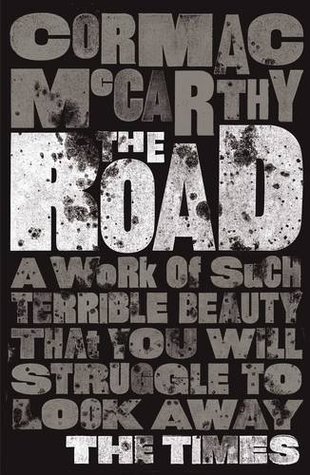
The Road – a review

11329121

 A father and his son walk alone through burned America, heading through the ravaged landscape to the coast. This is the profoundly moving story of their journey. The Road boldly imagines a future in which no hope remains, but in which two people, ‘each the other’s world entire’, are sustained by love. Awesome in the totality of its vision, it is an unflinching meditation on the worst and the best that we are capable of: ultimate destructiveness, desperate tenacity, and the tenderness that keeps two people alive in the face of total devastation.

As I prepare myself for the next re-write of Gossamer Flames, my post-apocalyptic series of interconnected tales, I continue looking for similar fiction to read, not just to see how the best fiction works, but for the details about how the world is affected and how people react.

When I read and reviewed the anthology “Prep for Doom”, I said, “As to my own post-apocalyptic saga, I feel there are lessons to learn and I will attempt to embrace them.”

I knew that the next read would be “far bleaker and darker… like grey ash”, and it was, but here is my full review of ‘The Road’ by  Cormac McCarthy.

“Bleak, tragic, moving and poetic,” was my immediate reaction when I finished “The Road”, a novel that has divided readers.

My initial reaction to the early pages was driven by my inner editor as a writer – why such sparse punctuation? Why no quote marks? Why no speech tags?

“What is it?
Nothing. I had a bad dream.
What did you dream about?
Nothing.
Are you okay?
No.
He put his arms around him and held him. It’s okay, he said.
I was crying. But you didnt wake up.
I’m sorry. I was just so tired.
I meant in the dream.”
― Cormac McCarthyThe Road

Then my mind focused on the words themselves. The way that Cormac McCarthy used them to weave the tale. Not like in commercial fiction, but more like a storyteller around a campfire. For me, the phrases evoked images and feelings. Many of them stood out for me, so here is an example.

“The nights were blinding cold and casket black and the long reach of the morning had a terrible silence to it.”
― Cormac McCarthyThe Road

The novel is bleak but then this is a dying world where little survives. Passages might seem repetitive but then the ash shrouded landscape is endless. Endless like the road itself to the man and the boy, to the reader travelling with them.

“He got up and walked out to the road. The black shape of it running from dark to dark. Then the distant low rumble. Not thunder. You could feel it under your feet. A sound without cognate and so without description. Something imponderable shifting out there in the dark. The earth itself contracting with the cold. It did not come again. What time of year? What age the child? He walked out into the road and stood. The silence. The salitter drying from the earth. The mudstained shapes of flooded cities burned to the waterline.
― Cormac McCarthyThe Road

It’s not just these two characters “carrying the fire” that keeps being mentioned strategically. I trudged along with them, mourning the lost world as the man remember the past, the things lost and destroyed.

“Years later he’d stood in the charred ruins of a library where blackened books lay in pools of water. Shelves tipped over. Some rage at the lies arranged in their thousands row on row. He picked up one of the books and thumbed through the heavy bloated pages. He’d not have thought the value of the smallest thing predicated on a world to come. It surprised him. That the space which these things occupied was itself an expectation.”
― Cormac McCarthyThe Road

While the devastated world is bleak and monotonous in some respects, McCarthy captures the man’s memories of the past in wonderful passages that evoke the lost wonder of life and nature. These contrast well with the dying world.

Yet the novel has been heavily criticised, not just for the grammar but also the empty plot. Amazingly the reviewers go to great lengths to described what they didn’t like. Some even ape the author’s style in their reviews, but in that they fail. The criticisms vary from the lack of ‘few concrete details’ about the disaster and the world, to “McCarthy didn’t do it purposefully, he just writes in an ostentatiously empty style which is safe and convenient to praise.” To me that misses the crux of the novel, the tragedy of this dying world.

I know that fans of the apocalyptic genre and science fiction expected something different, and some were even confused about the cause of the apocalypse. However, I understood that the world had been devastated by nuclear war and the constant snow was a sign of a nuclear winter. The details were sparse but enough to help me realise what I was reading about. A reader has to invest some effort, I feel.

Knowing about this negative feeling, I tried to dislike the novel but failed. The title said so much. This was a road-story in a bleak world, where surviving from day to day requires a dream. There is plenty of conflict, not least with death and fear. I kept reading, hoping that there was a light at the end, just as the man and the boy have the sea as one of their concrete goals.

For me there was hope and in part that was ‘the fire’ carried by these forlorn travellers. Someone has to ensure that love for humanity is handed on when the world is ready. Not an easy read but a worthwhile one.

So have you read “The Road? What did you think? A masterpiece or garbage?

Would you give it a try?