A is for Anishinaabe


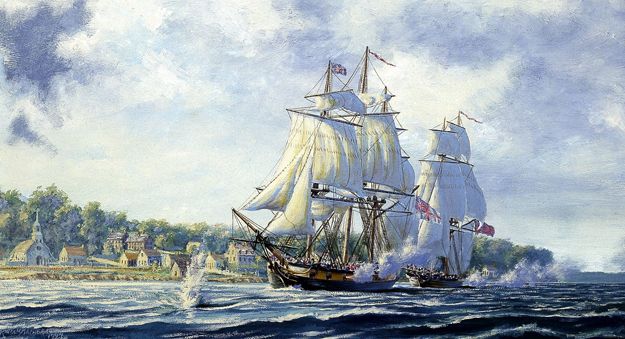
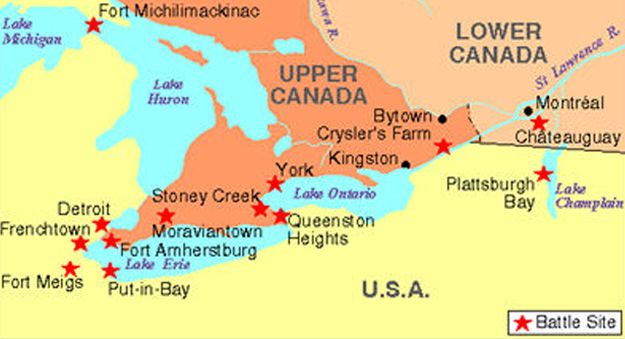
For the first day of my A to Z Challenge, I resisted choosing the arena for the War of 1812 – America. But first what caused the conflict? Unsettled issues between the British and the United States after the War of Independence were a factor, as was the Royal Navy attempting to press gang American sailors. However, the US also thought that American settlers in the territory that would become Canada would support their invasion across the border. Canada then consisted of the maritime colonies and parts of southern Quebec and Ontario.  But let’s start with the First Nations, who were the other major players on both sides.

A

A is for the Anishinaabe (Ojibwe, Odawa, Potowatomi), who were among two dozen tribal nations that were involved in the conflict.

When war was declared, there were 8,410 warriors of the Western Confederacy, who included Ojibwe, Odawa, Potowatomi, Huron, Shawnee, Mississaugas, Nipissings and Algonkians. The Anishinaabe made up 7,410 of this number, an overwhelming majority. Although the Shawnee war chief Tecumseh is most associated with the war, it was the Anishinaabe that formed the majority.

The tribes met for military and political purposes and maintained relations with fellow Anishinaabeg nations (Mississauga, Algonquin, and Nipissing) from Michilimackinac, an island between Lake Huron and Lake Michigan, It’s always been revered, although opinion is divided whether it is because the island is the turtle of creation or the place of origin of the spirits now called Bgoji-anishnaabensag.

Mackinac Island, William Dashwood – A Painting Commissioned by Robert McDouall

Mackinac Island, William Dashwood – A Painting Commissioned by Robert McDouall

Major General Brock, aware that there were not enough regular forces available to defend Upper Canada, suggested that capturing Michilimackinac and Detroit, from the US, would allay the suspicions of the natives who no longer trusted the British after the Battle of Fallen Timbers in 1796. The chiefs constantly recalled when the Americans overpowered the Western Confederacy and the British abandoned the retreating Anishinaabeg to massacre, by locking the gates to Fort Miami.

When Brock’s forces fought alongside the Anishinaabe to secure Fort Michilimackinac, many more of the western nations joined the British.

Throughout the war, the Anishinaabe were repeatedly told that their interests would not be forgotten when peace was made. So much so that at the conclusion of the War of 1812, the Odawa suggested that the British negotiators offer the Americans a greater quantity of Anishinaabe land on the mainland in order to keep Michilimackinac in their possession.

The possibility was there, but in the end the British meekly vacated Michilimackinac to the United States. It is totally conceivable that at least a portion of upper Michigan or Wisconsin could have been set aside as an “Indian country” as the British had promised. The mechanisms were in place but not the honour. This is why the Anishinaabeg say that “we did not lose the war but we lost the peace”.

Further reading on the Anishinaabe and the War of 1812:

http://activehistory.ca/tag/anishinaabeg/

http://activehistory.ca/2014/09/anishnaabeg-in-the-war-of-1812-more-than-tecumseh-and-his-indians/

http://en.wikipedia.org/wiki/Anishinaabe

http://www.theworldofgord.com/2012/11/heritage-toronto-talk-anishinaabe-first.html


A2Z-BADGE-000 [2015] - Life is Good

The brainchild of Arlee Bird, at Tossing it Out, the A to Z Challenge is posting every day in April except Sundays (we get those off for good behaviour.) And since there are 26 days, that matches the 26 letters of the alphabet. On April 1, we blog about something that begins with the letter “A.” April 2 is “B,” April 3 is “C,” and so on. Please visit other challenge writers.


My theme is ‘The War of 1812’, a military conflict, lasting for two-and-a-half years, fought by the United States of America against the United Kingdom of Great Britain and Ireland, its North American colonies, and its American Indian allies. The Memoirs of a British naval officer from the war is central to my novel “Seeking A Knife” – part of the Snowdon Shadows series.


Further reading on The War of 1812:

http://www.eighteentwelve.ca/?q=eng

http://www.theglobeandmail.com/globe-debate/the-war-of-1812-stupid-but-important/article547554/

Myth Creation

InsecureWritersSupportGroup2

Today, Wednesday 1st April is the moment that sees great events collide – and for some that means never believe anything – there could be a prank lurking.

For me this is the first day of the Blogging from A to Z (April 2015) Challenge, the monthly Insecure Writers Support Group post, and the day when submissions open at Crooked Cat – very relevant as I am an avid Cat reader with dozens of their books on my Kindle.

After all the valuable comments from my beta readers, and the involvement of my excellent editor, Sue Barnard, I intend to be submitting “Storms Compass”, the first part of my “Gossamer Flames” saga. Whether it is suitable remains to be seen.

LATEST NEWS ON APRIL  3rd: I have decided that I will not be submitting “Storms Compass” to Crooked Cat, as (a) it is not suitable due to the overt fantasy/shamanic aspect; (b) it still needs a stronger overarching plot-line with the distinct protagonist and antagonist appearing more; (c) it’s too short still at 45,600 words..

On to IWSG and today’s insecurity – or rather an insecurity that’s been told to wait in the garden. Many experts talk about the right arcs/stages to make a novel work – and the wrong ones. Which method do you use?

I’ve been looking at my WIPs to see if the stages are in the right place. I admit that I am a plotter, but I structure as the story unfolds in my head, then scrawl notes, and then make an outline/guideline. But I don’t use arcs or stages to work anything out – when the story reaches 25% it moves on of its own accord. No forceful persuasion.

And my first drafts, especially the most recent? They are, without consciously plotting them that way, following those prescribed arcs. Why?

6837eccf9d84f42792d7367187de5150

I recollect that Joseph Campbell, in Hero with a Thousand Faces, mentioned the ancient story tellers and how their plots were structured. He termed it the monomyth and found it in most world mythology.

Is there something in a storyteller’s makeup that allows us to instinctively weave a plot that works? Perhaps the process matures over time, the more tales we read, watch or write. How did the writers of the classics achieve this without the guidance that we have in the 21st century? Or is that where the Muses come in?

All Nine often used to come to me, I mean the Muses:
But I ignored them: my girl was in my arms.
Now I’ve left my sweetheart: and they’ve left me,
And I roll my eyes, seeking a knife or rope.
But Heaven is full of gods: You came to aid me:
Greetings, Boredom, mother of the Muse.

Epigram 27 * Venetian Epigrams (1790)

Johann Wolfgang von Goethe (28 August 1749 – 22 March 1832)

 That epigram or poetic observation had a significance for Goethe that is shared by one of my characters in “Seeking A Knife”, the second novel in the Snowdon Shadows series, and at present it is positioned before the tale begins. It could even be significant that the Venetian Epigrams were published in 1790, so available to any well-bred gentleman that fought in the War of 1812, like the naval officer whose Memoirs play such a key role in “Seeking A Knife”.

As for my A to Z Challenge post, that follows once you have recovered.

 ***

Purpose of the IWSG day: To share and encourage. Writers can express doubts and concerns without fear of appearing foolish or weak. Those who have been through the fire can offer assistance and guidance. It’s a safe haven for insecure writers of all kinds!

Posting: The first Wednesday of every month is officially Insecure Writer’s Support Group day. Post our thoughts on our own blog. Talk about our doubts and the fears we have conquered. Discuss our struggles and triumphs. Offer a word of encouragement for others who are struggling. Visit others in the group and connect with our fellow writers – aiming for a dozen new people each time.  Let’s rock the neurotic writing world!

Our Twitter hashtag is #IWSG
Alex Cavanaugh’s awesome co-hosts for the April 1 posting of the IWSG are Suzanne Furness,Tonja Drecker, Toi Thomas, Rachna Chhabria, Fundy Blue, and Donna Hole!

The Very Inspiring Blogger Award

very-inspiring-blogger-award1

I’m beginning to catch up after a hectic month attempting to address all the comments on “Storms Compass” that I got back from my brave beta readers. I tried to address all the points, even if some didn’t feel right – until I gave them proper consideration and explored them fully. Today I passed this first Book in the Gossamer Flames saga to my editor friend Sue Barnard.

Now it’s time to address the nomination that I received a few weeks ago for Very Inspiring Blogger Award, from talented Italian friend, Sarah Zama.

Sarah is a wonderful jeweller and a budding writer so I recommend visiting her blog, The Old Shelter, which has a fascinating collection of articles, stories and links. I liked her jewellery so much that I bought a steampunk pendant for my wife.

Steampunk Heart from JazzFeathers

Steampunk Heart from JazzFeathers

Anyway, on to today’s task. In order to accept the award, I have to do a few things:

Display the award on your blog.

Link back to the person who nominated you.

State 7 things about yourself.

Nominate 15 bloggers, link to them, and notify them about their nominations.

7 Things about me

Having been interviewed a few times, these are the more obscure facts.

1. Although I sound English, was born in England and most of the time went to school in England, I am actually a quarter Chilean. My mother was born in Chile to a Chilean mother and an English father. Although my grandmother lived near us and spoke Spanish with my mother, I didn’t learn the language from them. But I had an ear for it, so with the right encouragement I learnt enough to survive.

2. The only time that I didn’t go to school in England, was when I was in Canada. For two years I did my GCSE A levels at Bransons, a school in the Laurentians, north of Montreal. Think I spent as much time skiing as I did studying. Suspect that my French – learnt at school in England – didn’t improve as Quebecois felt like a different language; in fact it evolved from Breton French.  I also spent a further year living in Toronto, the city that I vowed never to visit. Never make rash statements. I was intending to train as a journalist, but the Canadian system didn’t recognise my A levels. So I spent a year doing a General Studies course that was a step back in some respects. But it turned me green and into a vegetarian.

3. While in Canada, I went on a white-water expedition. The Beaver River trip took a few weeks and entailed the first navigation of this river from The Yukon to British Columbia – by white skins. Don’t ask how many times I tipped the rubber raft over.

4. I may live in Wales now, with a view of the mountains and the sea, but I have no Welsh blood – just second cousins that grew up here. I can claim a touch of Celtic blood though, as some of my ancestors were from Scotland, and proudly wore the Grant tartan. But I speak more words of Welsh than Gaelic.

ScreenShot00051

5. [Thanks to Sara for this one] “I was a Tolkien fan way before the Lord of the Rings movie trilogy came out.”

In fact, “Lord of the Rings” is the book that influenced me most as a writer, and I re-read it when I can. It has always headed my list of favourite books and has always inspired me whether I need to escape into another world or in my writing. Is that the same thing? And I have been able to see my vision of Middle Earth on screen plus been there in a gaming world. I also have the hardback set that I read in my late teens back in the late 1970’s. Strange fact is that it was not the first Tolkien piece of writing that I devoured – that was his lecture paper “”Beowulf: The Monsters and the Critics”, followed by “Tree and Leaf”, which contains the essay ‘On Fairy Stories’, which Sara Zama says, “any writer should read…Tolkien says it takes a lot more than dragons and magic to make a fantasy story. Magic has to be part of that world, it has to be woven in its very fabric to the point you can’t imagine that world without that kind of magic. And that world with that magic has to have the intimate consistency of reality.”

6. I hate roller-coasters to the point that I once bit my ex-wife on the shoulder because I was terrified on some runaway train at Disneyland. No that wasn’t why she left me for a better man. I also tried to throw myself out of a rickety big wheel that had nothing holding us in – except a useless bar. Is there a murder mystery there? Funfair Fiasco?

7. I worked for a few years in the TV/film industry, losing a lot of money trying to make a movie in Malta. During that time, I worked with a few amazing people ranging from Doctor Who actors like Jon Pertwee and Tom Baker, to musicians like Keith Emerson (Emerson, Lake & Palmer) and my best friend Steve Hackett (Genesis).

Image courtesy of FreeDigitalPhotos.net

Image courtesy of FreeDigitalPhotos.net

And now comes the hardest part, choosing the fifteen blogs to nominate. Apologies if you have been nominated, don’t accept nominations, got missed out, or even wonder if I actually know anybody.

http://ailsaabraham.com/

http://nancyjardine.blogspot.co.uk/

https://ashleighgalvin.wordpress.com/home/

http://www.ericstaggs.com/

http://broad-thoughts-from-a-home.blogspot.co.uk/

https://vanessacouchmanwriter.wordpress.com/

http://alexjcavanaugh.blogspot.co.uk/

http://mark-patton.blogspot.co.uk/

http://ginamc.blogspot.co.uk/

http://wendyswritingnow.blogspot.co.uk/

http://theequestrianvagabond.blogspot.co.uk/

http://jbwye.com/

https://awomanswisdom.wordpress.com/

http://elizabethducie.blogspot.co.uk/

http://lonitownsend.com/

Next port of call/task on the To Do list is a new page on this site, called ‘Snowdon Shadows’ and those book reviews that have never got written. Oh and there’s A to Z, IWSG, and so much more.

A visit from Nancy Jardine

I’m really pleased to welcome my friend and fellow writer Nancy Jardine to my Writing Wings blog. She’s a true Celtic writer whereas I only live in a Celtic land further south. Please tell you about your new releases, Nancy. 

Hello Roland, I’m totally delighted that you’ve let me come to share my new launch news with your readers.

Those who already know me a little will have learned that my writing spans the fiction sub-genres of historical romantic adventures; contemporary romantic mysteries; and time travel adventures for a middle grade/YA market. My next two books to hit the launch pad are from these quite different styles of writing – though both were delightful to create!

MonogamyTwistNancyJardine+x360

I’m very excited that on the 27th March 2015, Crooked Cat Publishing is re-launching a new general reading edition of Monogamy Twist, a light-hearted contemporary romantic mystery. The fabulous quirky new cover, designed by Laurence Patterson of Crooked Cat, reveals a grand house at the centre of the story which is a really excellent image since the plot is based around a Dickensian theme. Luke Salieri finds he’s been bequeathed a dilapidated mansion in Yorkshire…but he can only fully inherit after some weird and antiquated stipulations are fulfilled! He’s never met his benefactress; hasn’t even heard of her but Luke’s never one to back down from a challenge. He needs expert help, though, to find out why Amelia Greywood chose him and Rhia Ashton seems ideal. Rhia, a historian and family tree researcher, seems perfect but it turns out that she has her own ideas of what will make Luke’s strange request worthwhile. Compromise is the name of the game for Luke…and for Rhia.

It’s probably no surprise that the plot for the novel came about as a combination of my watching the current BBC TV Charles Dickens serial of late 2010 and while I was also doing the first forays in researching my own ancestral background. I found a decided black sheep in one of my great-grandfathers: Rhia finds a good few family surprises for Luke in Monogamy Twist! Rhia and Luke were lovely characters to invent but some readers have told me that they love Thor, the Irish wolfhound, even more!

I extend a warm welcome to your readers to join my Facebook Launch Party for Monogamy Twist on the 27th March 2015. Quirky goodies can be won. There’ll be music; food; lovely locations in Yorkshire… Why not pop in and say hello!

https://www.facebook.com/events/1092788957413601/

PRE-ORDER AVAILABLE NOW FROM AMAZON:

http://www.amazon.co.uk/Monogamy-Twist-Nancy-Jardine-ebook/dp/B00V1I59TW/ref=sr_1_1?ie=UTF8&qid=1427017128&sr=8-1&keywords=Monogamy+Twist

Final+Nancy+Jardine+x+488

My other new launch – The Taexali Game, a time travel historical adventure for a middle grade/ YA readership − will be in April 2015. Set in northern Roman Britannia (current Aberdeenshire) in AD 210, my valiant trio – Aran, Brian and Fianna – must work through a set task list, part of which is to help both the ‘baddies’ and the ‘goodies’ in the story. The problem is that there are local Celtic tribespeople who are just as nasty as the invading Roman Emperor Severus and his barbaric son Caracalla. Working out who to trust is a perilous business. Literally sparring with death is a daily occupation back in AD 210, but in The Taexali Game, my teens are up to the challenges facing them! Graphic designer, Neil Saddler, has done a fabulous job of blending the main elements of the story in the wonderful cover design he’s created for me − depicting locally recognised background scenery in Aberdeenshire; the threat of invasion from the Ancient Roman Legions; my time trio who are about to launch themselves into the adventure!  The Taexali Game will be available in both paperback and ebook formats.

3528770Nancy Jardine lives in Aberdeenshire, Scotland. She currently shares a home with her husband, daughter, son-in-law, 3 year old granddaughter and 1 year old grandson. It’ll continue to be a busy household till late summer of 2015 when the new build home will be completed for the young ‘uns on what was Nancy’s former back garden. The loss of that part of the garden won’t be missed since there should now be more writing time available this spring and summer! Childminding is intermittent over the day and any writing time is precious. (If interested in how a new house is built these days, follow my blog posts named ‘Gonna build a house’ )

All matters historical are a passion; Ancestry research a lovely time-suck. Nancy regularly blogs and loves to have guests visit her blog. Facebooking is a habit she’s trying to keep within reasonable bounds! Any time left in a day is for leisure reading and the occasional historical series on TV.

Author links:

http://nancyjardine.blogspot.co.uk   http://nancyjardineauthor.com/    Twitter @nansjar  Facebook: http://on.fb.me/XeQdkG

Amazon Author page for books and to view book trailer videos:

US http://amzn.to/RJZzZz   UK  http://www.amazon.co.uk/Nancy-Jardine/e/B005IDBIYG/ref=ntt_dp_epwbk_0

Novels also available from Barnes and Noble; W.H. Smith; Waterstones.com; Smashwords; TESCO Blinkboxbooks; and various other places.

Thank you for the opportunity to share my news with your readers!

A pleasure to have you visit. And for those that missed my review of Nancy’s “Topaz Eyes”, read the Goodreads review here.

The War of 1812

atoz-theme-reveal-2015

The Great and Powerful A to Z Theme Reveal Blogfest!

 What were you taught about The War of 1812 in school? Who actually won it? Who lost? Okay it happened two hundred years ago, but for me it matters. Why?

First, it is the theme that I have chosen for this year’s A to Z Challenge in April – I was told having a theme was fun, and last year the guys that know these things were right. I took part in 2014 and now have a collection of shorts almost ready – Gossamer Flames. I also enjoyed other people’s themes, which were varied and in many cases clever.

Second, The War of 1812 is one plotline in my current WIP, “Seeking A Knife”, in which a young journalist in Texas receives a Memoir written in the war by a Royal Navy Officer. The ‘why’, the disappearance of the officer’s knife, and the death of the sender, only add to the mystery.

Third, I get a chance to give you an overview of my research into the events that mattered two hundred years ago to the people living in the United States and Canada. It might even help me find some hidden gems that I can use as I write the Memoir sections of the novel.

Early English Naval Dirk with Sheath

Early English Naval Dirk with Sheath

Your perspective on the War will change according to where you grew up and were educated, although judging by some online comments, I wonder.

The War of 1812, which lasted from 1812 to 1814, was a military conflict between the United States and Great Britain. As a colony of Great Britain, Canada was swept up in the War of 1812 and was invaded a number of times by the Americans. For the First Nations this was a chance to halt American expansionism west, and to preserve their land and culture. However, in war there are winners and losers, and often the losers are on both sides.

So join me in April and find out how the British Navy met its match, how the White House was burned to the ground, when The Star Spangled Banner was written, who the Coloured Corps were, who was Tecumseh, and who was betrayed once the conflict ended.

War_of_1812_Montage

War of 1812 Montage from Wikipedia

Oh, and being English, I never learnt about the War of 1812, except as a theatre in the Napoleonic Wars – a theatre that was not as significant to our History teacher as the Peninsular War. Then I went to Canada, and now I’m married to an American.

Finally, this War of 1812 theme gives me the chance today to participate in this whole separate blogfest!

As the organisers say, “Two years ago A to Z participant Mina Lobo started the Theme Reveal, and we thought it was such a great idea that we made it tradition. It is now our very own, grand and festive way of rolling out our themes together!”

Finally, apologies for those that read this a month ago, when I posted a few weeks early. And my thanks to Sarah Zama for pointing out the error.

Best of luck everyone with A to Z next month.

Visit other participants by clicking here – and have fun.

Writing Tension

Today I am welcoming the first of many – I hope – guest bloggers, Eric Staggs the founder of Spectacle Publishing, who were insightful enough to publish my debut novel, Spiral of Hooves. Creating Tension is a key part of a writer’s art and getting it right, keeps readers wanting more. And without further delay, here’s Eric.

Smoke On The Water ~ Image courtesy of Evgeni Dinev / FreeDigitalPhotos.net

Smoke On The Water ~ Image courtesy of Evgeni Dinev / FreeDigitalPhotos.net


What makes a real page-turner? Think about it. What is that single thing that makes you want to find out what happens next? In almost all cases the answer is anticipatory tension.

Good writers will use this technique on audiences all the time, even if the audience doesn’t know it. Here are a few examples – starting with the obvious, and then working into some you may not have thought of. Get your ratchet up the tension with some tried and true techniques, for your crime genre stories and beyond.

The Timer

Tick-tock typically gets the heart going. In film and literature, it’s usually associated with something bad. Think about all those bombs with timers, counting down ominously, whether its five minutes or fifty, or five days, the timer represents the loss of future opportunity, as well as a count down until something inevitable but unpredictable happens.

Time is the only thing we can’t change – this concept is so ingrained into audiences, it’s almost an instinct (though, new physics are telling us that time is affected by gravity and velocity, for most of us, time is time). This instinct regarding the immutable march of time is something that terrifies the human on a deep, hindbrain level. Way back in the primitive part of the human mind, we know that time is a marker, defining segments until we reach our own demise. Whew!

Your novel can’t always have a bomb-timer, well at least it shouldn’t. So, what are some other methods you can use to raise the tension? There’s really no need to vary from the tried and true method of a countdown. But sometimes you need to disguise it. Here are some non-standard timer ideas to get the creative juices flowing.

Image courtesy of hywards at FreeDigitalPhotos.net


Days and Nights

The natural passage of time is expected in most narratives – but the situation becomes much more exciting when the event at the allotted amount of is dangerous. For example, in Isaac Asimov’s classic Nightfall, the timer is counting down to the moment when the planet is engulfed in darkness. For the people of a world that never sees sunset, this is a big deal – it might as well have been a bomb.

The Stars Are Right

The motivations of criminals are sometimes hard to fathom, but when they’re cultists waiting for the proper cosmological alignment, the timer can be down right world shattering. When an inevitable planetary conjunction brings murderous cultists out seeking sacrifices, the “timer effect” is in full swing.

Further Down The Road

Travel is a form of timer as well. Getting from point A to point B is often the bulk of the story (just ask those Hobbits), but travel and distance are a form of timer as well. Perhaps the best kind – the journey eats up supplies as fast as miles, the psychological cost of being on the run cannot be overstated. Refugees, escapees or even willful migration is more taxing than most characters are expecting. In the crime genre the journey often manifests as an escape or a hunt – depending upon which side of the law the protagonists fall. Making good an escape is another form of timer – will the protagonists make the rendezvous and escape the relentless lawman? Will the lawman catch the kidnapper before leaving his jurisdiction?


Vintage Train Placards ~ Image courtesy of artur84 at FreeDigitalPhotos.net

Vintage Train Placards ~ Image courtesy of artur84 at FreeDigitalPhotos.net

These are just a few examples of how writers employ time and timers to elevate tension. Tension comes from expectation – realistic expectation of actual events or anticipation of the unknown – and that tension grows with delay of that expected event. Use it wisely!


eric_pic

    Eric Staggs (www.ericstaggs.com) is a writer and publisher. As founder of Spectacle  Publishing and Great Lakes Games, Eric works with authors at all stages in their writing careers. Learn more at his website.