U is for Uppsala

A2Z-BADGE-100 [2017]

My 2017 A to Z Challenge theme is “The History of Kanata”, the parallel world that is the setting for “Eagle Passage”, my alternative history novel that all began when I wondered, “What would have happened if Leif Eriksson had settled Vinland permanently in 1000 AD? For further details and links to my other A to Z posts – and hints at the ones to come visit “Kanata – A to Z Challenge 2017”.

U (1)

U is for Uppsala: 19 March 1756, Uppsala, Sweden –  Renowned Swedish mathematician and scientist, Samuel Klingenstierna, invites German-born engineer and entrepreneur, Carl Wilhelm Siemens, from his adopted home in northern Albion to Uppsala University. His contacts at St Andrews University in Scotland say that Siemens has been experimenting on improving the blister and cast steel production.

Setting up a site on the edge of eastern banks of the River Fyris, with access to Uppsala’s trade centre, Klingenstierna ensures ready access by water to Sweden’s phosphorus-free ore. At the new works, Siemens succeeds in manufacturing quality durable steel efficiently and sustainably using a regenerative furnace, or open hearth process.

Siemens calculates that the furnace recovers enough heat to save 70–80% of the fuel. Applying the knowledge that he gained as a student at St Andrews, where energy and fuel saving was taught as a primary endeavour, he has discarded the older notions of heat as a substance and accepted it as a form of energy. The two scientists combine forces to revolutionise and advance the production of steel and the efficient use of steam engines, essential to Nordic trade and industrialisation
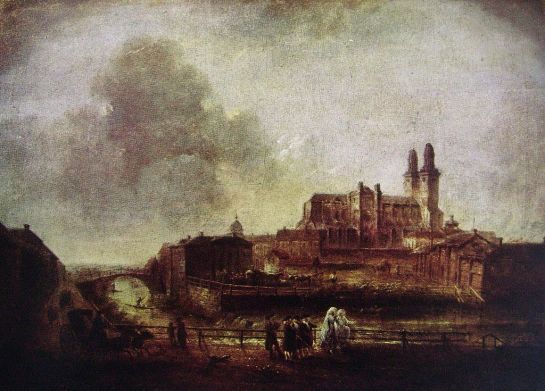
Utsikt_av_Uppsala_med_domkyrka,_Elias_Martin._Malmö_museum

Uppsala in the 18th century – Elias Martin – Malmo museum (Public domain)


In our timeline: One of the earliest forms of steel, blister steel, began production in Germany and England in the 17th century and then improved as cast-steel, but the cost ensured that was only ever used in speciality applications. The first major breakthrough was in 1856 when Henry Bessemer came up with a more effective way to introduce oxygen into molten iron in order to reduce the carbon content – the Bessemer Process. In the 1860s, German engineer Carl Wilhelm Siemens further enhanced steel production through his creation of the regenerative furnace or open-hearth process, which largely replaced the Bessemer Process.

Samuel Klingenstierna was a very renowned Swedish mathematician and scientist, and a professor at Uppsala University from 1728-1752.

***

Important Links for the A to Z Challenge – please use these links to find other A to Z Bloggers

Website: http://www.a-to-zchallenge.com

Facebook page: https://www.facebook.com/atozchallenge/

Twitter handle: @AprilAtoZ

Twitter hashtag: #atozchallenge

T is for Texas

A2Z-BADGE-100 [2017]

My 2017 A to Z Challenge theme is “The History of Kanata”, the parallel world that is the setting for “Eagle Passage”, my alternative history novel that all began when I wondered, “What would have happened if Leif Eriksson had settled Vinland permanently in 1000 AD? For further details and links to my other A to Z posts – and hints at the ones to come visit “Kanata – A to Z Challenge 2017”.

T (1)

T is for Texas: 1836 – Thirty-three years after the Dixie States acquired territory from France by the Louisiana Purchase, the Mēxihcans attempt to claim Texas. The port of New Orleans is no longer in Kanatian hands, as it was the only concession that the Dixies received after invading the Chesapeake Bay area in 1812 and instead lost their capital at Richmond in the peace talks. From their new capital in Memphis, the Dixie States control the Mississippi all the way to the Gulf of Mēxihco, but Kanata still has trading posts all along the coast.

On the 13 February 1836, Antonio Lopez de Santa Anna leads a Mēxihca army of six thousand troops north to wipe out the massively outnumbered Texian army garrisoned at the Alamo Mission in San Antonio de Béxar.  From there, seizing Texas will be straightforward. However, the unusually low temperatures in Texas, including snow, slow his progress and he is unaware that Kimantsi scouts have detected the army as it heads north and alerted the Mjölnir Militia at the trading post on the Nueces estuary. As the senior merchant, Donat Migisi values dealing with the Texians over the Mēxihcans. Kanata is anxious to see the buffer territory in the south of the continent strengthened.

With two hundred Kimantsi and Mjölnir guerrillas divided into two groups, Santa Anna’s army is harassed by a fast-moving enemy. After two weeks of ceaseless assaults, and with his forces disillusioned, Santa Anna reaches the Medina, where a final ambush decimates the invaders and only a thousand remain. The delays allow reinforcements from the other Dixie States to reach the Alamo, along with another fifty Mjölnir Militia led by Donat’s sister, Daina. Traps are set everywhere from covered pits, fire trenches and barricades creating pinch points for sharpshooters. The harassed army is driven forward by relentless marauders, and Santa Anna is forced to sue for peace. “We’ve ensured the Mexicans remember the Alamo, and remember to stay south of the Nueces,” say Colonels Travis and Bowie.


Fall-of-the-alamo-gentilz_1844

The Fall of the Alamo, painted by Theodore Gentilz in 1844, depicting the Alamo complex from the south. The Low Barracks, the chapel. and the wooden palisade connecting them are in the foreground. – Texas State Library – Public Domain.


In our timeline: Richmond, Virginia was the most permanent capital of the Confederacy in the American Civil War. Although 25% of the city’s buildings were destroyed, by departing Confederate troops, the city recovered – as did Washington which the British burnt during the War of 1812, when the US invaded the British provinces of Canada.

Memphis did see some action during the Civil War as a strategic location on transportation routes. Its access by water was key to its initial development, with steamboats plying the Mississippi river. Railroad construction strengthened its connection to other markets to the east and west.

Tragically, “Remember the Alamo” is linked to a heroic but bloody defeat of the brave Texian defenders under Colonels Travis and Bowie. Snow did hamper the Mexican army, and Comanche warriors did harass the advancing troops, many of whom were conscripts, but the reinforcements were delayed and there were Mexican settlers in Texas spreading false information as well as spying for Santa Anna. Texian Army General Sam Houston was only able to exact revenge afterwards, at the Battle of San Jacinto.

Could the combined strategies of the Kimantsi warriors and the Mjölnir Militia with their generations of elite fighting prowess have bought the crucial time for the reinforcements? Was Kanata correct to side with a neighbour that had invaded them twenty-four years earlier?

***

Important Links for the A to Z Challenge – please use these links to find other A to Z Bloggers

Website: http://www.a-to-zchallenge.com

Facebook page: https://www.facebook.com/atozchallenge/

Twitter handle: @AprilAtoZ

Twitter hashtag: #atozchallenge

S is for Stadacona

A2Z-BADGE-100 [2017]

My 2017 A to Z Challenge theme is “The History of Kanata”, the parallel world that is the setting for “Eagle Passage”, my alternative history novel that all began when I wondered, “What would have happened if Leif Eriksson had settled Vinland permanently in 1000 AD? For further details and links to my other A to Z posts – and hints at the ones to come visit “Kanata – A to Z Challenge 2017”.

S (1)

S is for Stadacona: 13 September 1759 – France has been making desperate attempts to expand its territories in North America, but Captain Benning Migisi and his Odawa militia lieutenant, Obwandiyag, watch at night from their ship as French scouts scale the cliff onto the plains beyond Stadacona, capital of Kanata [Quebec City]. Benning, Obwandiyag, and their force of Mjölnir Militia attack the French scouts but encounter other French troops. They evade French patrols to reach their own lines and warn the Kanatian commander, General Jakob Ulve, of the impending French assault.

On the morning of the 13 September, the Kanatian forces, regular and Mjölnir Militia, repel the repeated attacks of the French. However, Benning Migisi dies saving his friend Obwandiyag, and in his dying breath says, “We are one people. We are one within Manitou’s sight.”

This is the last attempt by the French to invade Kanatian soil, although the Dixie States declare war on their northern neighbours forty-three years later.


Benjamin_West_005

Death of General Wolfe (1770) – Artist: Benjamin West (1738-1820) – National Gallery of Canada, Ottawa, Ontario – Public Domain.


In our timeline: On the 13 September 1759, at the Battle of the Plains of Abraham, also known as the Battle of Quebec, British forces led by General James Wolfe successfully resisted the column advance of French troops and Canadien militia under General Louis-Joseph, Marquis de Montcalm. Wolfe received three gunshot wounds that ended his life within minutes of the beginning of the engagement and Montcalm died the next morning after receiving a musket ball wound just below his ribs. In the wake of the battle, the French evacuated the city; their remaining military force in Canada and the rest of North America came under increasing pressure from British forces.

France ceded most of its possessions in eastern North America to Great Britain in the Treaty of Paris. However, from 1763 to 1791, the British retained Quebec as the capital of the Province of Quebec; from 1791 to 1841, it was the capital of Lower Canada; from 1852 to 1856 and from 1859 to 1866, it was capital of the Province of Canada; and since 1867, it has been capital of the Province of Quebec.

As Kanata chose Stadacona (Quebec City) as their capital and major trading port, would there have been other nations that would attack the city? Or would the 1759 victory have been sufficient deterrent, except for the Dixie States?

***

Important Links for the A to Z Challenge – please use these links to find other A to Z Bloggers

Website: http://www.a-to-zchallenge.com

Facebook page: https://www.facebook.com/atozchallenge/

Twitter handle: @AprilAtoZ

Twitter hashtag: #atozchallenge

R is for Rurikid Diarchy

A2Z-BADGE-100 [2017]

My 2017 A to Z Challenge theme is “The History of Kanata”, the parallel world that is the setting for “Eagle Passage”, my alternative history novel that all began when I wondered, “What would have happened if Leif Eriksson had settled Vinland permanently in 1000 AD? For further details and links to my other A to Z posts – and hints at the ones to come visit “Kanata – A to Z Challenge 2017”.

R (1)

R is for Rurikid Diarchy: 23 April 1933, Kiev – With the peaceful future of international relations thriving after the creation of the Union of World Nations in 1930, Tsaritsa Irina Feodorovna, co-ruler of the Rurikid Diarchy agrees with her co-ruler Patriarch Yaroslav Pieracki of the Kievan Orthodox Church that they should abdicate in favour of a true democracy. Despite the opposition of Georgian authoritarian, Josef Stalin, her Ukrainian advisors, Dariya Stasiuk and Havryil Chayka, draw up a constitution that addresses the existence in the Rurikid territories of various ethnic groups and states, using the example set by their trading partner, Kanata.

Fears of another European war diminish with the successful election of the Social Democratic Party of Germany, and the defeat of the Nazi party struggling after the death from syphilis of their psychotic leader Adolf Hitler.

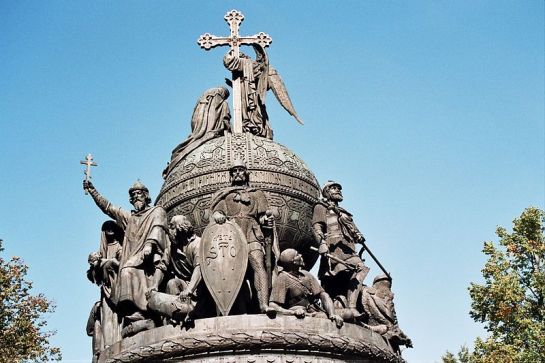
A year later the Rurikid Confederation is born, with the Tsaritsa agreeing to represent Rurikid and perform speeches or attend any important ceremonial events as a symbolical guide to the people, but she agrees to hold no actual power in decision-making, appointments, etcetera. The Rurikid dynasty has ruled the Rus territories since 862, when her Varangian ancestor, Prince Rurik, originally from Norway, settled Novgorod before conquering Kievan Rus′.


800px-Top_of_the_Millennium_of_Russia_Monument_in_Novgorod,_2005

Millenium of Russia monument in Novgorod with Prince Rurik at the centre and Vladimir the Great at the left and Dmitry Donskoy at the right (both Rurikids) – Creative Commons

In our timeline: The Rurikid Dynasty was founded by the Varangian Prince Rurik, around the year 862, and they ruled in parts of Russia for over 700 years. The Varangians was a name given to the Vikings by the East Slavs and Greeks. Many served as mercenaries with the Byzantine Empire.


The last Tsars, the Romanovs, were descended from the Rurikids through marriage, but their reign ended with the Russian Revolution in 1917. Joseph Vissarionovich Stalin was a Georgian by birth and took part in the Revolutions of 1917. He was the leader of the Soviet Union from the mid-1920s until his death in 1953. Some have argued that he would have forced his way into power under any system and was never a true communist.

The Russian Orthodox Church was founded around 988 and survived through the Soviet period despite persecution. Some of the former states now have separate Orthodox Churches over which the ROC does not have full autonomy, notably the Ukrainian Orthodox Church.

The Social Democratic Party of Germany was the main opposition to Adolf Hitler and the Nazis, but in 1930, its deputies were either arrested or fled into exile. Adolf Hitler is reputed to have had various medical conditions, including syphilis.

Could a move to genuine democracy in Germany and Russia, and the death of Hitler, have avoided World War II? What kind of influence could a Kanata Confederation with allies in Northern Europe have wielded?

***

Important Links for the A to Z Challenge – please use these links to find other A to Z Bloggers

Website: http://www.a-to-zchallenge.com

Facebook page: https://www.facebook.com/atozchallenge/

Twitter handle: @AprilAtoZ

Twitter hashtag: #atozchallenge

M is for Maid of Norway

A2Z-BADGE-100 [2017]

My 2017 A to Z Challenge theme is “The History of Kanata”, the parallel world that is the setting for “Eagle Passage”, my alternative history novel that all began when I wondered, “What would have happened if Leif Eriksson had settled Vinland permanently in 1000 AD? For further details and links to my other A to Z posts – and hints at the ones to come visit “Kanata – A to Z Challenge 2017”.

M (1)

M is for Maid of Norway:  8 July 1317 – Dunfermline Palace, Scotland: Margaret of Scotland, known as The Maid of Norway’ due to her birthplace, and her husband, Edvard II of England have united the lands of Albion with their marriage in 1300 and established diplomatic marriages with influential nobles. Christina, the daughter of their Lord Protector in Scotland, Robert the Bruce, is married to their son Alexander, and the Bruce has invited them back to the royal residence.

They are introduced to the scholar Cináed Giselbert who has travelled extensively from the heartlands of Kanata to the academic centres of the Islamic caliphates. He claims that an integrated, holistic view of science is the way forward. His observations have led to some conclusions that could benefit Albion and its allies. The charcoal and tar industries thrive under the support of enlightened merchants. But he has observed that burning timber, most especially in funeral pyres, wastes gases and vapours that are blown away in the wind. He demonstrates a device based on ancient drawings that can harness these gases and vapours. But he apologises that it is crude and craves support from the monarchs and their supporters, saying that other scholars share his beliefs. Margaret persuades Edvard to found a scholastic guild of higher learning in St Andrews, where Cináed Giselbert can gather other academics, explore devices to enhance society, and pass on their knowledge to students.

Margaret,_Maid_of_Norway
Stained glass window depicting Margaret, Maid of Norway, who was briefly Queen regnant of Scotland.  Creative Commons Attribution – Colin Smith

In our timeline: Undiscovered Scotland – “Margaret, Maid of Norway lived from 9 April 1283 to 26 September 1290 and was Queen of Scotland from 19 March 1286 to 26 September 1290. She was the granddaughter of Alexander III [of Scotland]. …In September 1290, Margaret set sail in a Norwegian ship from Bergen … Storms drove the ship off course to Orkney, and it eventually landed at St Margaret’s Hope, South Ronaldsay. Here Margaret, Maid of Norway, died, apparently from the effects of sea-sickness, still aged only eight. Had her marriage to [the future] Edward {II] gone ahead, the crowns of Scotland and England would have been united some three hundred years earlier than they eventually were, in 1603. And three hundred years of bloody history would probably have been very different.”

St Andrews University was not founded until 1413, after Oxford (1167), Cambridge (1209), and Northampton (1261).

Charcoal production is an ancient method of fuel production from wood that does require careful forest management, and in Britain led to extensive coppicing, as well as deforestation when demand exceeded demand. Similar deforestation occurred in Scandinavia and Finland where charcoal was a by-product of wood tar production. Charcoal is produced most extensively today in Brazil where it is used to transform ore into pig iron, and from there into mass-produced steel.

The first efficient steam engine to be applied industrially was designed by Thomas Savery in 1698. However, there were some ancient designs.

Aeon – In ‘Could we reboot a modern civilization without fossil fuels’, Lewis Dartnell writes, “Another, related option might be wood gasification. The use of wood to provide heat is as old as mankind, and yet simply burning timber only uses about a third of its energy. The rest is lost when gases and vapours released by the burning process blow away in the wind. Under the right conditions, even smoke is combustible. We don’t want to waste it.” Later, he writes, “For a society to stand any chance of industrialising under such conditions, it would have to focus its efforts in certain, very favourable natural environments: not the coal-island of 18th-century Britain, but perhaps areas of Scandinavia or Canada that combine fast-flowing streams for hydroelectric power and large areas of forest that can be harvested sustainably for thermal energy.”

Could Kanata industrialise itself if its inventors, like Cináed Giselbert, take the correct steps along a different energy path, focusing more on renewable wood derived fuel than coal? In my 2020 scenario, solar has become a major source, but how could they get there without ravaging the planet?

***

Important Links for the A to Z Challenge – please use these links to find other A to Z Bloggers

Website: http://www.a-to-zchallenge.com

Facebook page: https://www.facebook.com/atozchallenge/

Twitter handle: @AprilAtoZ

Twitter hashtag: #atozchallenge

C is for Cristóbal Colón

A2Z-BADGE-100 [2017]

My 2017 theme is “The History of Kanata”, the parallel world that is the setting for “Eagle Passage, and the theme reveal is here. I also wrote about this world in my blog post ‘This could be Kanata.

C

C is for Cristóbal Colón: On 12 October 1492, the three ships of Cristóbal Colón are met off the Bahamas by two well-armed vessels that echo Viking longships with dragon prows, but with caravel features like three masts and lateen sails. Although the Spanish are armed so are the ‘Vikings’, who also have swivel cannons on their ships. The Norse commander says that he is, “Njal Migisi, follower of Thor, here by the blessings of the people of these islands. The Lukku-Cairi are under the protection of the Kanata Konføderasjon.”

Cristóbal Colón orders his men to stand down and the Spaniards are granted anchorage and re-supplied from an established trading port, but then sent away. The Kanatians know that the Spanish will try to settle on the mainland, but will face a Mesoamerican alliance that is prepared for Europeans, their weapons, and diseases.

The Spanish do establish settlements but are forced to co-operate with the Mesoamericans, although with consequences for their neighbours.


Columbus Day 2012 watermark

This is how Courtney imagines things would have happened in 1492 if Simon and River were present. Copyright and more at http://bunnies-and-sunshine.blogspot/2012/happy-columbus-day.html


In our timeline:

“In fourteen hundred ninety-two
Columbus sailed the ocean blue.

He had three ships and left from Spain;
He sailed through sunshine, wind and rain.

He sailed by night; he sailed by day;
He used the stars to find his way.”

Do I need to recite the rest of the poem, or remind people of all the controversy surrounding Columbus’ arrival in the New World and how the continent was settled by Europeans and other nations? History  is a good starting link for the Columbus story, and then there is the view from the other perspective that some might call revisionist. Although, this is a 1992 article, the movement keeps growing, especially on Columbus Day. Personally, as a historian and of Chilean origin, I lean heavily towards the indigenous rights viewpoint, as will become clear as Kanata evolves.

But if Leif Eriksson and the Vikings had stayed in Newfoundland and spread inland, would the First Nations have fared any better, although Eriksson had converted to Christianity? I have chosen a Saami shamaness as my catalyst for change, but what would have been needed to avoid the terrible mistakes made by the later Europeans?


***

Important Links for the A to Z Challenge – please use these links to find other A to Z Bloggers

Website: http://www.a-to-zchallenge.com

Facebook page: https://www.facebook.com/atozchallenge/

Twitter handle: @AprilAtoZ

Twitter hashtag: #atozchallenge