#IWSG – Book Dawn

It’s time for another Insecure Writer’s Support Group post, and an opportunity to reflect on the dawn of my book adventure.

First, it’s just a month since I submitted my Snowdon Shadows police procedural, Fevered Fuse, to London-based publisher Joffe Books. Not surprisingly, I’m still waiting for the publisher to answer. I’ve yet to start rewriting ‘Fates Maelstrom’, the second book in my Snowdon Shadows series, but I have written another episode of my Ukraine saga, Freedom FlightsStrategy and Tactics.

Slava Ukraini

Heroiam slava!

**

Every month, IWSG announces a question that members can answer in their IWSG posts. These questions may prompt you to share advice, insight, a personal experience, or a story. Include your answer to the question in your IWSG post or let it inspire your post if you are struggling with something to say. 

Remember, the question is optional!

June 4 question – What were some books that impacted you as a child or young adult?

My distant memory of books I read in my childhood throws up a few titles that have endured.

Initially, I had to research Fingerling, whom I vaguely recalled was a gnome in the illustrations. Actually, his original name is Pinkeltje, and he’s “a fictional character from the eponymous children’s book series by the Dutch writer Dick Laan. Pinkeltje is a white-bearded gnome and wears a pointed hat and is as big as a pinky finger, hence his name, meaning “fingerling” (literally “little pinky”) in Dutch.” I’m unsure how many English translations of the original twenty-nine books my parents bought for my siblings and me, but I remember enjoying a few.

However, I vividly remember devouring The Story of Ferdinand (1936), “the best-known work by the American author Munro Leaf. Illustrated by Robert Lawson…” This wonderful children’s book tells “the story of a bull who would rather smell flowers than fight in bullfights. He sits in the middle of the bull ring, failing to take heed of any of the provocations of the matador and others to fight.” I adored the illustrations and the story even more, especially as the ending felt perfect, and it probably had an impact on my storytelling. I’m certain the fact that my Chilean grandmother had a Pekinese called Ferdie, aka Ferdinand, added to the appeal. Perhaps, he was named after the bull.

 As I recall my childhood, there are other books, like A.A. Milne’s stories, especially those about Winnie the Pooh, many of Beatrix Potter’s stories, and another favourite, The Happy Lion, which I received on my birthday, being a Leo. This 1954 children’s picture book by Louise Fatio, illustrated by Roger Duvoisin, “follows a Happy Lion in France who, after escaping the small zoo where he lives, is surprised that people, who loved visiting him there, are now scared of him.”

I still have one of the books that I read and loved as a child, George Brooksbank’s ‘Old Mr Fox’. With a cover by celebrated Scottish wildlife artist Archibald Thorburn, this was my father’s copy, which he was given in 1932 for Christmas, the same year the book was published. This treasured book inspired me to write my first short story… about a fox running free.

C.S. Lewis’s The Chronicles of Narnia fed my passion for fantasy, which became the first genre I embraced in my writing. I read all the books in the series, some numerous times, and again, I still have the set. Lewis was the first of the Inklings, whose works I read fervently. Two more were later discoveries.

I could list other books I read as a child, but none were truly influential until, in my teens, I added Science Fiction to my reading addiction. The authors included Isaac Asimov, Arthur C. Clarke, Robert Heinlein, Douglas Adams, Philip J. Farmer, Harry Harrison, Karl Vonnegut, Frank Herbert, Harry Harrison, Poul Anderson, …and the list goes on. Imagine my surprise when I found Anne McCaffrey’s Dragonriders of Pern series crossed from engrossing fantasy into space, and became gripping Science Fiction.

Inkling three would be Owen Barfield, but not until I was in my twenties. Before then, though, for me, there was only one masterful Inkling.

My favourite author, even now, is J.R.R. Tolkien, whom I first discovered when I read his essay based on his lecture “Beowulf: The Monsters and the Critics“. So, reading “The Hobbit” and “The Lord of the Rings” came a few months later. I read the whole of “The Lord of the Rings” over one very long weekend when I was at Eton College in 1969, age 16. I still have the three hardback copies with their detailed fold-out maps.

Although most of these books had some influence on my writing, Tolkien’s works had a much greater impact. Ironically, my first effective creative writing teacher, the poet and writer Roger Woddis, said my writing was becoming ‘purple prose’ as I wanted to imitate Tolkien. Fortunately, I restrained myself from writing ‘purple prose’ while improving. I also read more  books as I grew older. But that’s another chapter.

*

The awesome co-hosts for the June 4 posting of the IWSG are PJ Colando, Pat Garcia, Kim Lajevardi, Melisa Maygrove, and Jean Davis!

Finally, don’t forget to visit more active writers via the IWSG site:

Insecure Writer’s Support Group

Let’s rock the neurotic writing world!

Our Twitter handle is @TheIWSG, and our hashtag is #IWSG.

Purpose: To share and encourage. Writers can express doubts and concerns without fear of appearing foolish or weak. Those who have been through the fire can offer assistance and guidance. It’s a safe haven for insecure writers of all kinds!


Posting: The first Wednesday of every month is officially Insecure Writer’s Support Group Day. Post your thoughts on your own blog. Talk about your doubts and the fears you have conquered. Discuss your struggles and triumphs. Offer a word of encouragement for others who are struggling. Visit others in the group and connect with your fellow writer – aim for a dozen new people each time – and return comments. This group is all about connecting!

#IWSG – Fantasy Dreams

It’s time for another Insecure Writer’s Support Group post. Although I started writing this on April 1st, I’ll stick to the truth and avoid fooling you.

Fact 1. Yesterday, as promised, I received the final edit from my editor’s assistant of my police procedural, Fevered Fuse. Hopefully, this means I will submit the manuscript to the first publisher by the end of this month and should hear back within three months. While waiting for the publisher to answer, I’ll begin rewriting ‘Fates Maelstrom’, the second book in my Snowdon Shadows Mysteries.

Fact 2. In late March, I began writing Episode 36 of my Ukraine saga, Freedom Flights, but it’s now on hold, unlike the deadly war, the fragile peace negotiations, and treacherous Putin’s machinations. Hopefully, the rational leaders can negotiate a dependable and lasting peace in the next few months.

Slava Ukraini

Heroiam slava!

**

Every month, IWSG announces a question that members can answer in their IWSG posts. These questions may prompt you to share advice, insight, a personal experience, or a story. Include your answer to the question in your IWSG post or let it inspire your post if you are struggling with something to say. 

Remember, the question is optional!

April 2 question – What fantasy character would you like to fight, go on a quest with, or have a beer/glass of wine with?

Fact or Fiction? I guess most fantasy is fiction, although centuries ago the first storytellers based their tales on fact. Like some of the heroes and heroines in the Icelandic Eddas were possibly real people, so they could be considered as ‘fact’.

Unlike my choices. First, Geralt of Rivia, aka The Witcher, No. 1, for questing with.

No. 2. Drinking companion: harder as some like Gimli the Dwarf would drink me under the table. However, another of the Nine Companions in The Lord of the Rings, Frodo Baggins, might be preferable with a similar consumption to me.

No. 3. I don’t fancy fighting any of my favourite fantasy characters, as I’d start at a disadvantage, unless, as a Leo, I faced the Cowardly Lion from author L. Frank Baum’s The Wonderful Wizard of Oz.

The title page of The Wonderful Wizard of Oz, also known as The Wizard of Oz, a 1900 children’s novel written by L. Frank Baum and illustrated by W. W. Denslow.

Instead, why couldn’t I choose someone to marry? Perhaps Menolly, the Harper heroine in some of the early novels in the Dragonriders of Pern series, written by American-Irish author Anne McCaffrey.

Or maybe the shieldmaiden Éowyn from The Lord of the Rings, or my favourite female character from The Witcher novels by Andrzej Sapkowski, and in the Witcher games, the redheaded medic Shani, who’d be the perfect drinking companion… and invaluable in a fight.

The Witcher 3: How Shani’s Role Evolved from the Books to the Games

https://gamerant.com/the-witcher-3-shani-role-purpose-evolution-books-to-games/

*

The awesome co-hosts for the April 2 posting of the IWSG are Jennifer Lane, L Diane Wolfe, Jenni Enzor, and Natalie Aguirre!

Finally, don’t forget to visit more active writers via the IWSG site:

Insecure Writer’s Support Group

Let’s rock the neurotic writing world!

Our Twitter handle is @TheIWSG, and our hashtag is #IWSG.

Purpose: To share and encourage. Writers can express doubts and concerns without fear of appearing foolish or weak. Those who have been through the fire can offer assistance and guidance. It’s a safe haven for insecure writers of all kinds!


Posting: The first Wednesday of every month is officially Insecure Writer’s Support Group Day. Post your thoughts on your own blog. Talk about your doubts and the fears you have conquered. Discuss your struggles and triumphs. Offer a word of encouragement for others who are struggling. Visit others in the group and connect with your fellow writer – aim for a dozen new people each time – and return comments. This group is all about connecting!

E for Elder Scrolls

My 2020 Blogging from A to Z Challenge revisits my best posts from the 2014 to 2019 Challenges.

E for Elder Scrolls (2018)

This was one of the games I was playing when I began my investigation into the creative Origins of various On-line Games. However, it was a challenge delving for the literature and folklore behind this one. Maybe given the massive success, I could have dug deeper.

Since then, I’ve not played this one again, although my wife has. And there are games I would now add to my A to Z selection – like the excellent G for Greedfall. However, I will visit other games that I got immersed in and did highlight in 2018.

Links to my other A to Z posts can be found here: https://rolandclarke.com/blogging-from-a-to-z/blogging-from-a-to-z-challenge-2020/

To visit other participants see The OFFICIAL MASTER LIST: https://docs.google.com/spreadsheets/d/1YphbP47JyH_FuGPIIrFuJfAQiBBzacEkM7iBnq6DGDA/

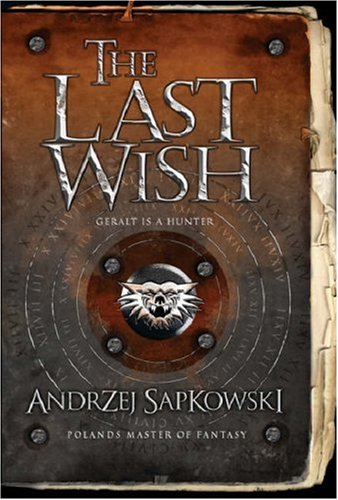
The Last Wish – a review

Thursday_horizons


Yesterday, I posted about my favourite A to Z post which was about the game, The Witcher 3: The Wild Hunt. Today, I’m doing a review of the short stories that brought that world of Geralt of Rivia into being. Sadly, although I read a great deal of fantasy, I had failed to encounter the creations of Andrzej Sapkowski – until now.

His first short story, “The Witcher” (“Wiedźmin”), also translated as “The Hexer” or “Spellmaker”, was published in Polish science fiction and fantasy magazine Fantastyka. By 2017, The Witcher series encompassed two collections of short stories (1992-1993) and five novels (1994-1999).

This is my review of the first collection of short stories.

LastWish

The Last Wish (Saga o Wiedźminie #1)

by

Andrzej Sapkowski,

Danusia Stok (Translator)

Geralt of Rivia is a witcher. A cunning sorcerer. A merciless assassin.

And a cold-blooded killer.

His sole purpose: to destroy the monsters that plague the world.

But not everything monstrous-looking is evil and not everything fair is good. . . and in every fairy tale there is a grain of truth.

The international hit that inspired the video game: The Witcher.

Review 5 stars

Although I read fantasy, I first encountered Geralt of Rivia in the video game, The Witcher 3: The Wild Hunt and as I explored this gaming world, I was inspired to discover Andrzej Sapkowski’s books – starting with this first collection of short stories.

The last story in the book deservedly took third place in a magazine competition and sowed the first seed that created a universe. I enjoyed these original stories, discovering Geralt’s origins in pre-game events. (And these stories are echoed in-game.}

The collection is assembled to reflect the chronology of Geralt’s life, although we have yet to learn many things – and I look forward to reading more books. Sapkowski creates a brilliant and exemplary framing structure for these stories that gives them more impact – and adds to the unfolding plotlines that I know develop. (This is a writing technique that I need to learn.)

Some amazing and complex characters are introduced, including the sorceress, Yennefer, whose life is woven into a complicated relationship with Geralt that opens great possibilities. And then there is Dandelion, the bard whose tales and exploits are something else amusingly different. These are origin stories perhaps before the Witcher-universe had fully-formed, but the characters are relatable.

The tales are rooted in heroic deeds – even if Dandelion has a habit of re-telling them differently. The author demonstrates that he has been inspired by folklore. However, while the echoed fairy stories have a germ of truth, this is a grimmer tradition than Grimm, in a cutthroat environment. There are the Slavic monsters that a reader might expect but other mythologies play their part, adding to a rich tapestry.

The world rings with the realism of bloody steel and fangs, the smells of soiled streets and tempting food. The era doesn’t feel static, even across so few stories. The times are changing and so are the people. Evolving? Maybe not – but sowing many seeds. This is a medieval world of superstition and persecution – and torn apart by discrimination that resonates today. Witch-burnings are inevitable, and nothing is black-and-white. Not all monsters are obvious or what they seem.

Is my interpretation coloured by exploring the game-world? Perhaps, but these are the roots of the legend that is Geralt of Rivia. I look forward to discovering how the writing evolved, and how the world of The Witcher builds in later stories and novels. This was definitely the place to start on my quest to enjoy how Sapkowski grew from a very good writer into a master craftsman.


Story – five stars

Setting/World-building – five stars

Authenticity – five stars

Characters – five stars

Structure – five stars

Readability – five stars

Editing – five stars

Air and Ash – a review

Thursday_horizons

This is the second of my new Thursday Creation Review posts which will usually be Books, but I am still reserving the right to review Games, Films or other Works of Art – and I will add music to that.

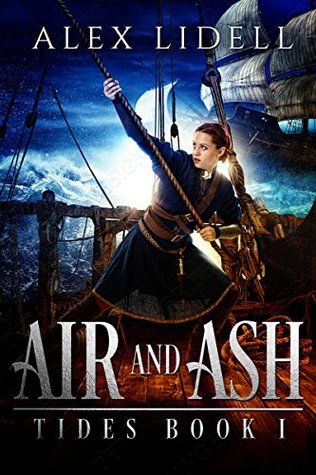
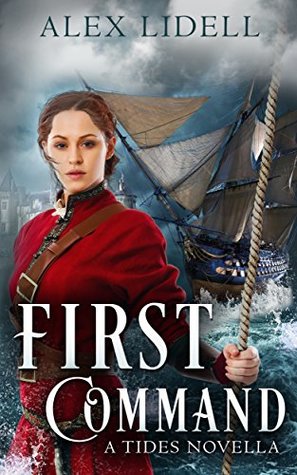
Alex Lidell’s Tides is a series of books that has been on my Want To Read list for too long – and then I won Book 3, Sea and Sand (#3) in a Goodreads Giveaway. First, though, I read and reviewed First Command (TIDES, # 0.5), which was an absorbing taster that introduced me to the main character of Lieutenant Nile Greysik and her world.

The author kindly provided me with Book 1 of the series, and this is my extended review.

AirandAsh

Air and Ash (TIDES #1)

by

Alex Lidell (Goodreads Author)

Born to privilege.
Trained for command.
Destined for danger.

After a lifetime of training, seventeen-year-old Princess Nile Greysik, a lieutenant on the prestigious Ashing navy flagship, sails into battle with one vital mission–and fails.

Barred from the sea and facing a political marriage, Nile masquerades as a common sailor on the first ship she can find. With a cowardly captain, incompetent crew, and a cruel, too-handsome first officer intent on making her life a living hell, Nile must hide her identity while trying to turn the sorry frigate battle worthy. Worse, a terrifying and forbidden magic now tingles in Nile’s blood. If anyone catches wind of who Nile is or what she can do, her life is over.

But when disaster threatens the ship, Nile may have no choice but to unleash the truth that will curse her future.

Review 4.3 stars

After reading First Command (TIDES, # 0.5), the taster that introduced me to Lieutenant Nile Greysik and her world, I had to read Tides #1. This book was provided by the author but without any requirements.

When Nile escapes her Royal obligations and masquerades as a common sailor, events conspire against her. The author ensures that the decks are stacked against Nile in unexpected ways that had me guessing where the story was heading. This was a slightly devious storyline although with few plotlines to misdirect the reader from a fast read.

The characters are varied, and some have complex personalities with backstories that are never totally revealed – there must be more to come. The cast hints at the world created from the political situation and attitudes to the crucial seafaring.

Alex Lidell’s well-imagined world blends seafaring and fantasy, and yet brings back memories of reading the Hornblower books in my teens – although it is wrong to compare the books. This protagonist is female, and the author builds on that – as well as the princess angle. But there is so much more – like magic being a very mixed curse. For Nile, this force that flows through her veins is a primary motivation – and not just for herself.

This is a world where magic is going underground through misunderstanding and a growing sense of discrimination. Attitudes, not just in magic, vary from nation to nation and between cultures. For instance, the Ashing royals serve in their navy, but in other states, the nobility and rich pamper themselves.

The social divide is clear, but onboard a ship there is promotion from the ranks. The nautical details rang true from my limited mucking-around-in-boats and from my copy of The Hornblower Companion. The confined space of a ship adds to the cruel pecking order. However, rank brings expectations as does Royal blood. Nile needs to judge who to trust beyond appearances if she is to complete her goals.

Where do events lead Nile? I’m giving nothing away – even if you keel-haul me – all I can say is ‘don’t expect all the threads to be tied up’. This entertaining read is Book 1 of a trilogy and you won’t want to stop. I’m not, although I must clear the reading decks so I can open War and Wind (#2) and the conclusion Sea and Sand (#3).

Recommended for those that enjoy their seafaring adventures spiced with fantasy – 4.3 stars adjusted to 4.

Story – four stars

Setting/World-building – four stars

Authenticity – four stars

Characters – five stars

Structure – four stars

Readability – five stars

Editing – four stars

First Command

O is for Onigiri

O

The aim of my Blogging From A to Z Challenge is to find the origins of online games, some relatively modern and some with ancient roots. Gaming might well be a modern take on an art that is almost timeless – storytelling. A perfect excuse for a writer to delve a little deeper.

 [Visit here for links to other A to Z participants.]

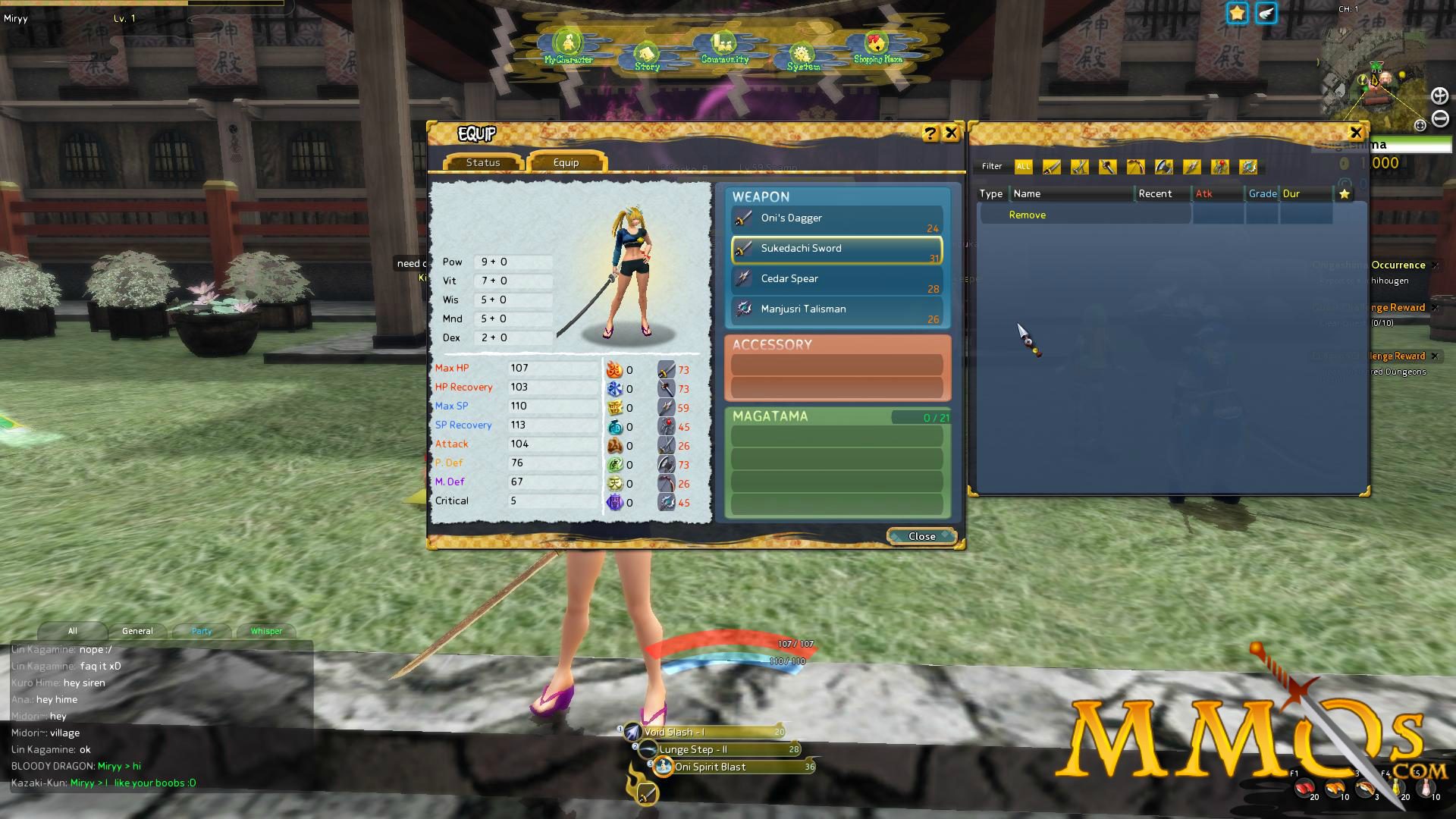
Game: Onigiri is an action MMORPG set in a fantasy land reminiscent of ancient Japan in which humans and non-humans such as Oni and other Yōkai coexist. The game has a unique progression system – rather than picking classes, players swap between weapons which each have different skills available.

This is the second of the oriental games that I am looking at – here originating with Japanese mythology.

Release Date: JP: February 6, 2014; NA: July 1, 2014

Developer/Publisher: CyberStep

Genre/gameplay mechanics: players choose one of five traits that will determine which weapons they can use; each player unlocks eight NPC partners that each have distinct personalities and abilities; real-time combat and multiple difficulty modes for each dungeon; stylish anime graphics and Japanese voice acting.

Setting: The game is set in a fantasy version of ancient Japan that is filled with creatures of myth. Landscape and inhabitants have a firm basis in myths, even though anime graphics reduce realism.

Storytelling: Ages ago the terrible Kamikui wreaked a trail of death and destruction across the land before being stopped by the goddess of the Sun, Amaterasu Oomikami. The goddess places three great Seals that forced the Kamikui to retreat. Now one of the Seals has shattered. The player character is an Oni whose peaceful life in the Western island of Onigashima is disturbed by the revival of the Kamikui

All the NPCs have backgrounds and stories.

Formats: Microsoft Windows, PlayStation 4, PlayStation Vita, Xbox One

Origins (Chronological):

  1. 1st century – Japanese myths were originally transmitted orally, as in most cultures. An early source of Japanese mythology is the Nihongi, or Nihonshoki (Chronicles of Japan). Completed in 720, this work includes various myths and legends, and it helps establish the genealogy of the imperial family. The Nihongi was greatly influenced by Chinese and Korean history and mythology.
  2. The first written version of the mythology was in A.D. 712 when the Kojiki (Records of Ancient Matters) was compiled for the Japanese imperial The tales tell of the creation of the world, the origin of the gods, and the ancestry of the Japanese emperors, who claimed descent from the sun goddess Amaterasu. Both the Kojiki and the Nihongi contain elements of Taoism, a Chinese religious movement that was introduced to Japan by the 600s. 

Adaptations set in the ‘Onigiri’ universe:

  1. TV Anime – An anime television adaptation of the game was aired from April 7, 2016, on Tokyo MX and BS Fuji until June 30, 2016.

onigiri-equipment

Recommendation: Onigiri has garnered a number of favourable reviews, from Bradly Storm of Hardcore Gamer saying it was “a fairly competent and enjoyable hack-and-slash experience” even though the launch suffered from server-side latency issues to Crunchyroll calling it “a very solid title.”

However, the game has remained low-key with a moderate anime fanbase. Many players have criticized the game for its monotony after reaching a certain level.

MMOs.com gave the following summary:

Pros: +Unique weapon system. +Great NPC Companion feature. +Stylish visuals.
Cons: -Repetitive dungeon designs. -Appeal limited to anime fans. -Collision and imprecise control issues.

Alternative ‘O’ thoughts:

O is also for Oz, as in the L Frank Baum’s wonderful book The Wonderful Wizard of Oz or the subsequent films, including the strange prequel in 2013, Oz the Great and Powerful. There were numerous adaptations, including games, but none that sparked my research brain – despite Baum’s origins.

Plus, I needed to look much further East to make my gaming POV representative’ of the breadth of gaming origins. So, tomorrow we are in China.


Enter this portal to reach other Worlds in my A2ZMMORPG

Hela da