#IWSG – Distracted Writer?

September has been another of those catch-up month – sporadic fail – after I was ill in August. In short, backlog has multiplied.

Therefore, this month’s Insecure Writer’s Support Group post crept up before I’d found the time/energy/motivation/space/whatever to visit last month’s visitors. Apologies to you all – or is that excuse getting stale?

Anyway, I can’t disappoint the Ninja Captain himself by missing a month – especially as he’s such a stalwart follower. Thanks Alex J. Cavanaugh for creating the Insecure Writer’s Support Group where you can find better answers to this month’s challenging question.

October 7 question – When you think of the term working writer, what does that look like to you? What do you think it is supposed to look like? Do you see yourself as a working writer or aspiring or hobbyist, and if latter two, what does that look like?

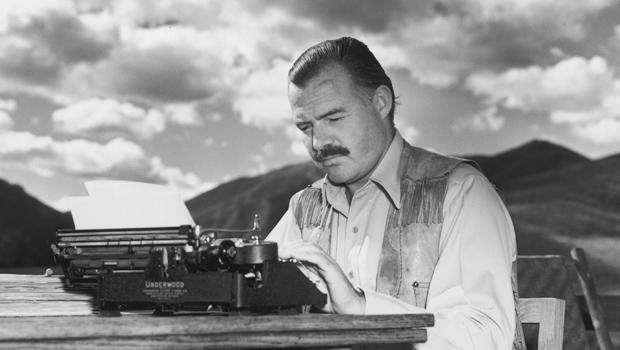
My image of a successful working writer is possibly Ernest Hemingway, at the end of his life an Idaho resident – like me, but I avoid the drink and guns, or the suicide ending.

7th October 1939: American writer Ernest Hemingway (1899 – 1961) works at his typewriter while sitting outdoors, Idaho.
(Photo by Lloyd Arnold/Hulton Archive/Getty Images)

When I started down my writing path, I took the journalist calling – like Hemingway sin estimulantes. In fact, I was interested in warcos, such as Hemingway’s 3rd wife Martha Gellhorn. But I wandered along sylvan paths following country pursuits, and my image of a writer scribbling in notepads evolved into a writer at a typewriter with a wastebin of discarded pages.

Even now I have the image of a serious working writer in their dedicated space transforming the notepad scribbles into a manuscript – albeit on a laptop. Whatever the means, that still means dedicated time -a space of regular time set aside each day to go to that space and work. Yet, J K Rowling was forced to use coffee shops and why do I see Mary Wesley writing in her garden?

There’s as many different types of writers as genre variations multiplied by sheets in a ream.

Time to answer the hardest question: what sort of writer am I?

First, a retired equestrian journalist with a notepad/recorder and a desktop PC.

Second, a writer who aspires to release another book into the world, probably set in Snowdonia.

Third, a distracted writer who too easily finds other things to do whether that’s wading through and deleting endless emails, sleeping, or attempting to beat a game.

Are role-playing games my version of Hemingway’s addictions?

Or fourth, at this time of year, I transform into a NaNoWriMo writer. Come November and I usually manage 50,000 words plus in the month. Most of my draft novels were written or revised in November – although one was written at the same breakneck speed one April.

Does that make me a hobbyist? Or a spasmodic writer? That fits the spasms in my limbs/nerves as well as the tingling tattoos of my MC, Sparkle Anwyl.

For the record, I’m prepping my 2020 NaNoWriMo entry called ‘Lost Sheep’ with a premise linked to Sparkle:

A retired Welsh farmer faces challenges to his faith when his legacy is threatened.

Clue: Grandfather.

My thanks to Debs Carey for triggering my NaNo brain with this insightful post:

https://fictioncanbefun.wordpress.com/2020/09/27/secondthoughts-older-people-in-books/

 Also thanks to Fundy Blue who encouraged me to contribute a post the IWSG Anthologies blog today:

https://iwsganthologies.blogspot.com/

And a footnote: Hemingway disapproved of the 1939 Idaho photograph, saying, “I don’t work like this.”

Hemingway on Writing

*

The awesome co-hosts for the October 7 posting of the IWSG are Jemima Pett, Beth Camp,Beverly Stowe McClure, and Gwen Gardner! 

How can I be repetitive asking you to agree these guys are the best? Especially as they all have concerns, fears, and insecurities. But they struggle on, so ticker-tape applause for all of them – plus toasts with the best brew available. They are truly the best.

Purpose of IWSG: To share and encourage. Writers can express doubts and concerns without fear of appearing foolish or weak. Those who have been through the fire can offer assistance and guidance. It’s a safe haven for insecure writers of all kinds!

Every month, we announce a question that members can answer in their IWSG post. These questions may prompt you to share advice, insight, a personal experience or story. Include your answer to the question in your IWSG post or let it inspire your post if you are struggling with something to say.

Posting: The first Wednesday of every month is officially Insecure Writer’s Support Group day. Post your thoughts on your own blog. Talk about your doubts and the fears you you have conquered. Discuss your struggles and triumphs. Offer a word of encouragement for others who are struggling. Visit others in the group and connect with your fellow writer – aim for a dozen new people each time – and return comments. This group is all about connecting!

Let’s rock the neurotic writing world!

Our Twitter handle is @TheIWSG and hashtag is #IWSG.

Every month, we announce a question that members can answer in their IWSG post. These questions may prompt you to share advice, insight, a personal experience, or story. Include your answer to the question in your IWSG post or let it inspire your post if you are struggling with someth

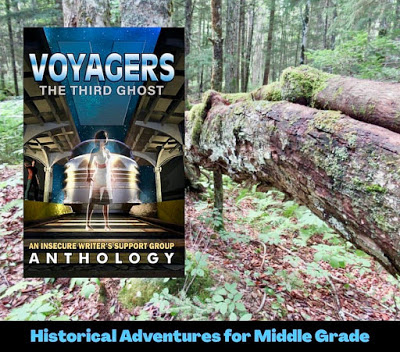
Featuring ‘Voyagers: The Third Ghost’ and so much more

The IWSG on Instagram 
                         Background Photo by Louise MacBeath Barbour

This week on the IWSG Anthology blog, fellow author and blog-co-ordinator, Louise MacBeath Barbour continues to share from her teacher perspective. She has recapped each of our stories, focusing on the historical aspect in every tale. Read more and get inspired here:

https://iwsganthologies.blogspot.com/2020/08/voyagers-third-ghost-great-book-for.html

Apologies, but I also failed to share the link to last week’s post on the Anthology blog – a timely book launched by author acquaintance and IWSG Bookclub organiser, Chrys Fey.

So, here that post is as well:

https://iwsganthologies.blogspot.com/2020/08/catch-some-writers-sparks-and-fuel-your_5.html

#IWSG – Planned or random?

I have to confess to not being on the write page for this month’s Insecure Writer’s Support Group post. OK, I’m still willing to ask where would I be without the Ninja Captain himself, Alex J. Cavanaugh who created the Insecure Writer’s Support Group?

But I must admit to pulling out of the race to create an entry for the annual Anthology Competition. Many thanks, Captain Alex, but not this time.

However, before I forget, here are the details if you want to enter the 2020 IWSG Anthology Contest. It’s a challenging theme again – Dark Matter –but I’m sure you’ll be inspired. For the contest visit:

https://www.insecurewriterssupportgroup.com/p/the-2019-annual-iwsg-anthology-contest.html

My mind is insecure and struggling enough with my Sparkle Anwyl cases. Plus, I’m totally snowed under with the mounting emails and outstanding blog posts to read. So, apologies and more apologies to all that may concern.

Anyway, on to the monthly question which is another challenge – and possibly a chance to digress.

August 5 question – Quote: “Although I have written a short story collection, the form found me and not the other way around. Don’t write short stories, novels or poems. Just write your truth and your stories will mould into the shapes they need to be.” 
Have you ever written a piece that became a form, or even a genre, you hadn’t planned on writing in? Or do you choose a form/genre in advance?

I rarely stray from my chosen genre, although I moved from fantasy and SF shorts as a teenager to crime/mystery novels as a retiree. With a few exceptions, although Crime has merged with my Speculative and Alternative History diversions.

The main exception was my MG short ‘Feathered Fire’ for the Voyagers: The Third Ghostanthology. That was my only attempt at writing Middle Grade or historical – although, not fantasy.

However, my intention is to remain in my current genre – Crime – even if the form fluctuates between novel and shorts/flash.

But for NaNoWriMo this November, I may consider writing a longer piece with my characters from ‘Feathered Fire’.

Unless Crime never sleeps.

*

The awesome co-hosts for the August 5 posting of the IWSG are Susan Baury Rouchard, Nancy Gideon, Jennifer Lane, Jennifer Hawes, Chemist Ken, and Chrys Fey! 

How can I be repetitive asking you to agree these guys are the best? Especially as they all have concerns, fears, and insecurities. But they struggle on, so ticker-tape applause for all of them – plus toasts with the best brew available.

Purpose of IWSG: To share and encourage. Writers can express doubts and concerns without fear of appearing foolish or weak. Those who have been through the fire can offer assistance and guidance. It’s a safe haven for insecure writers of all kinds!

Every month, we announce a question that members can answer in their IWSG post. These questions may prompt you to share advice, insight, a personal experience or story. Include your answer to the question in your IWSG post or let it inspire your post if you are struggling with something to say.

Posting: The first Wednesday of every month is officially Insecure Writer’s Support Group day. Post your thoughts on your own blog. Talk about your doubts and the fears you you have conquered. Discuss your struggles and triumphs. Offer a word of encouragement for others who are struggling. Visit others in the group and connect with your fellow writer – aim for a dozen new people each time – and return comments. This group is all about connecting!

Let’s rock the neurotic writing world!

Our Twitter handle is @TheIWSG and hashtag is #IWSG.

Every month, we announce a question that members can answer in their IWSG post. These questions may prompt you to share advice, insight, a personal experience, or story. Include your answer to the question in your IWSG post or let it inspire your post if you are struggling with something to say.

Writing craft books ~ Part 2

On the IWSG Anthology blog this week we have more great writing craft books to recommend, with more Voyagers:  The Third Ghostwriters and IWSG founder Alex J. Cavanaugh sharing favourite references of theirs. 

Check them out ~ perhaps you will find a new favourite to inspire your writing – and as blog-co-ordinator, Louise MacBeath Barbour says, she’ll “have to expand my writing references shelves in my study bookcase.  That’s a great problem to have ~ LOL.  Enjoy!”

https://iwsganthologies.blogspot.com/2020/07/favorite-writing-craft-books-part-2.html

The Occupation Thesaurus – a review

I was privileged and excited to read an ARC of The Occupation Thesaurus. This is my rambling review and I’ll start with the crucial and deserved rating:

5 stars *****

The core of this non-fiction reference book is – as the title suggests – an extensive selection of Occupations with details on them all. I should mention the US emphasis, although the authors clearly state aspects like training/requirements for a job might vary between states and countries. As an ex-pat Brit, I was aware of this but never felt that aspect distracted from the immense value of the information.

The excellent opening sections on numerous aspects of job selection, motivation, and their value to writers, are essential reading. They are jammed full of ideas, observations, and suggestions on how to apply Occupations in your writing.

They triggered some interesting thoughts for me. Topics covered are: It’s All in the Details; The Motivations behind Career Choice; Careers that Characterize; Jobs as Sources of Tension and Conflict; Jobs Can Support Story Structure and Character Arc; Vocations as Thematic Devices; Choosing a Career for Your Character; Additional Tips for Writing about Occupations.

These sections alone make this book invaluable. Many of the comments felt topical in the light of the effect of the Covid-19 pandemic on the economy, society, and job issues. The authors reference how the trickle-down effect from such a crisis causes a wider economic crisis across multiple industries.

From the opening sections onwards, it’s “a matter of figuring out which ones [Occupations] will work for your characters…” Over 125 jobs are covered from Actor to Yoga Instructor with sections for each job on: Overview; Necessary Training; Useful skills, talents, and abilities; Helpful character traits; Sources of Friction; People they might interact with; How this occupation might impact the character’s needs; Twisting the fictional stereotype; Characters might choose this profession because they…

Plenty to set the grey cells sparking.

I could relate to so much in the light of my own characters’ occupations and my own diverse careers. Some occupations seemed absent at first – until I applied some lateral thinking. For instance, the female protagonist of my debut novel was a horse rider – not included. But as a Professional Athlete her traits were represented. There is enough variety in the detailed Occupations in other related fields presented. Plus, the Animal Trainer applies to horses – and other creatures including marine.

Just think sideways. I have a secondary character who is the PA to a Fashion Designer. No PA, but the Personal Assistant to a Celebrity has relevant elements.

Or to quote the authors, “explore ones with similar responsibilities, risk, or theme to get you started,” using the appendices especially.

Warning – with a wink – rabbit-holes galore abound here. Or triggers for lateral plotting.

For instance, “…even an innocent nosebleed that turns the entryway into a murder scene can create imaginative and embarrassing complications…” That snippet is now my favourite image – and idea rabbit-hole. Don’t ask what Occupation that came from. Real Estate Agent?

Anyway, I didn’t read every Occupation entry in detail, but I ensured I read ones familiar to me – e.g. Actor, Farmer, Police Officer, Reporter – my own profession – and Talent Agent. These all were accurate with aspects I would have forgotten but agree with.

Plus, I read ones I was intrigued by – e.g. Astronaut, Funeral director, Palaeontologist, Robotics Engineer, and Treasure Hunter.

I was tempted to read every entry. My secondary characters have jobs and so should yours. This book will always prove useful – and I’ve found more material for ongoing characters – like that Fashion Designer. And there are enough unusual professions like Dream Interpreter, Glassblower, Podcaster, Reiki Master, and Tattoo Artists, to set your ideas flowing.   

Even the familiar – or not – Novelists, ??!!***

My approach might skim the surface, but this is the way most will use this invaluable resource. Dipping in-&-out, researching for specific Occupations, marker on that key profession, these are some of the ways I use the other thesauri in the indispensable series.

There are also inspirational appendices to spark more thoughts and plotlines.

Appendix A: Occupation Speed Dating: Where you start by identifying a standout trait for your character, then using some graphics find an occupation match.

And Appendix B contains a Career Assessment that can help you put all the pieces together.

In addition, this is not a static reference tool. The list will be updated since “the Occupation Thesaurus at One Stop for Writers isn’t limited by page count, so you will find more of our entries there…”

Navigation in this thesaurus and others in the series is simple, with a clear table of contents including links to external resources. To quote a recent reply I made about the authors’ Emotion Thesaurus, “…I have a Kindle for PC version of ET, The Rural Setting T., and The Urban Setting T., as well – and all three are easy to use. In fact, the Kindle Index facility helps. I’m reading an ARC of the new Occupation Thesaurus as a PDF – also extremely useable.”

This addition to the stable is already proving another winner and an essential in this writer’s library. And as one friend suggested, it could help anyone struggling to figure out what kind of job they want in real life.

Or as another writer friend wrote, “What a totally brilliant idea and resource.”

What better why to improve existing characters or even spark story ideas.

Now to weave in “a part-time pastor or priest doing ethical hacking as a way to supplement his income” as Angela and Becca suggested. Or was it a Ghost doing my writing?

Writers, Have You Heard About The Occupation Thesaurus?

Hi everyone! As promised, today I have something fun to share…a special chance to win some help with your writing bills. Awesome, right?

Some of you may know Angela Ackerman and Becca Puglisi of Writers Helping Writers. Well, today they are releasing a new book, and I’m part of their street team. I’m handing the blog over to them so they can tell you about their Writer’s Showcase event, new book, and a great freebie to check out. Read on!


Certain details can reveal a lot about a character, such as their goals, desires, and backstory wounds. But did you know there’s another detail that can tie your character’s arc to the plot, provide intense, multi-layered conflict, AND shorten the “get to know the character” curve for readers?

It’s true. Your character’s occupation is a GOLD MINE of storytelling potential.

Think about it: how much time do you spend on the job? Does it fulfill you or frustrate you? Can you separate work from home? Is it causing you challenges, creating obstacles…or bringing you joy and helping you live your truth?

Just like us, most characters will have a job, and the work they do will impact their life. The ups and downs can serve us well in the story.

Maybe you haven’t thought much about jobs in the past and how they act as a window into your character’s personality, interests, and skills. It’s okay, you aren’t alone. The good news is that The Occupation Thesaurus: A Writer’s Guide to Jobs, Vocations, and Careers is going to do all the heavy lifting for you. (Here’s one of the job profiles we cover in this book: FIREFIGHTER.)

GIVEAWAY ALERT: THE WRITER’S SHOWCASE

To celebrate the release of a new book, Writers Helping Writers has a giveaway happening July 20th & July 23rd. You can win some great prizes, including gift certificates that can be spent on writing services within our Writer’s Showcase. Stop by to enter!

Resource Alert: A List of Additional Jobs Profiles for Your Characters

Some of the amazing writers in our community have put together additional career profiles for you, based on jobs they have done in the past. What a great way to get accurate information so you can better describe the roles and responsibilities that go with a specific job, right? To access this list, GO HERE.

Happy writing to all!

________________________________________________________

My review is imminent, although I’m still researching for the right job for a secondary character. Maybe a Ghost who’s a Writer or a Priest who moonlights as a hacker.

Anyway, tomorrow I’ll attempt posting my thoughts on what is already a five star essential in this writer’s reference library.

Stay tuned – as well as safe, secure, and inspired.