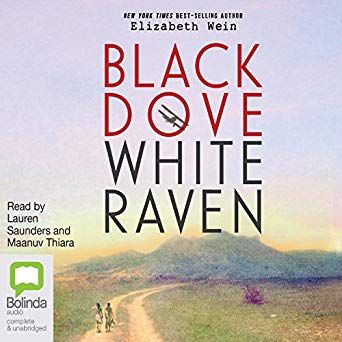
Black Dove, White Raven – a review

After choosing Elizabeth Wein’s Code Name Verity as my top read in 2018, I have read – well, listened to two more of her novels on Audible. I was not disappointed.

After listening to The Pearl Thief, I moved on to another Elizabeth Wein novel – historical but not a mystery in the strict sense. I’m also reading her non-fiction account of Russian airwomen in WWII – A Thousand Sisters.

But let’s head to Ethiopia.

Black Dove, White Raven

By Elizabeth E. Wein

A story of survival, subterfuge, espionage, and identity.

Emilia and Teo’s lives changed in a fiery, terrifying instant when a bird strike brought down the plane their stunt pilot mothers were flying. Teo’s mother died immediately, but Em’s survived, determined to raise Teo according to his late mother’s wishes—in a place where he won’t be discriminated against because of the color of his skin. But in 1930s America, a white woman raising a black adoptive son alongside a white daughter is too often seen as a threat.

Seeking a home where her children won’t be held back by ethnicity or gender, Rhoda brings Em and Teo to Ethiopia, and all three fall in love with the beautiful, peaceful country. But that peace is shattered by the threat of war with Italy, and teenage Em and Teo are drawn into the conflict. Will their devotion to their country, its culture and people, and each other be their downfall or their salvation?

In the tradition of her award-winning and bestselling Code Name Verity, Elizabeth Wein brings us another thrilling and deeply affecting novel that explores the bonds of friendship, the resilience of young pilots, and the strength of the human spirit.

Review 4.4 stars

After I was bowled over by the brilliance of Elizabeth Wein’s Code Name Verity, I had to read another of Wein’s novels – and was not disappointed. Black Dove, White Raven was another enjoyable tale, sympathetically narrated by Lauren Saunders and Maanuv Thiara.

Flying is a major thread to the novel and the author captures that – not surprising for a writer with a private pilot’s licence; and I’m already engrossed in her non-fiction book about Soviet airwomen in WWII.

However, at the heart of the story is the unfolding lives of best friends, Em and Teo brought up together after Teo’s mother Delia dies when the plane their stunt pilot mothers – Black Dove & White Raven – were flying crashes. Em’s mother Rhoda survives and takes the children to Ethiopia away from the prejudice of 1930s America. Delia dreamt of going to the country as Teo’s late father was from there.

Weing vividly portrays the attitudes towards a white woman with her own white daughter and an adopted black son in the USA and in Ethiopia. The latter might seem more accepting but has other issues being addressed – an added challenge for Rhoda and Em’s Quaker upbringing – and the reader is confronted with these through the eyes of the kids as they become teens.

The children adopt their mother’s stunt names for the characters in the stories they create. These fantasy tales become the basis of their diaries which form the structure of the novel, alternating from Em to Teo and back. When they start to fly as passengers then pilots, the POVs take on the form of flight logs as well as diary entries. But they are never dry, instead each adds to the characterisation of the siblings.

Wein cleverly weaves other details into these accounts, so the reader/listener learns about Ethiopia as Rhoda and her family do. I knew a bit about the country and its history, but this novel added to my knowledge – the author does comprehensive research for her novels.

Alongside Em and Teo, the reader is given a complex portrait of Rhoda, who must adapt to raising her late friend’s son alongside her daughter in a new country with fresh challenges. Rhoda is forced to juggle everything to keep the family together and safe. The supporting characters, from the Ethiopians on the coffee farm and in the towns to the Italians like Em’s father, are well portrayed.

While Em discovers her background early in her life, she doesn’t meet her Italian father until she is older. Teo is also confronted with his Ethiopian parentage as the family unravels the mystery of the country – and the ties to the man his uncle works for. This discovery adds tension and intrigue that keeps the tale moving. Although Teo finds some resolution, the ending left me wanting more answered.

But this is the brink of the Second World War, so everything is becoming uncertain. Perhaps there will be a sequel with Em and Teo.

Ethiopia was one of the tragic prequels to WWII. Everyone is becoming aware of the Italian military on the borders. Mussolini has ambitions. Fascism is on the rise and war seems inevitable. This impacts on the lives of Rhoda, the teens and the people around them.

Which side will Rhoda choose? Has she a choice? Can the under-dogs soar above the war? The author paints a contrast between the relative idylls of the early years in Ethiopia and the country and lives torn about by the conflict. However, relative idylls as there are hints and future tensions in those quieter years.

Black Dove, White Raven was not up there with Code Name Verity as there are moments where the tension dips, and the tale drags. In part perhaps because of the diary approach, in part from having two calendars – the Gregorian and the Ethiopian one – for every chapter, and from the extended timeline – linear and tied to real events. And the ending left unanswered questions.

But still this earns four stars and was a good listen. On to another engrossing Wein book.

Story – four stars

Setting/World-building – five stars

Characters – four stars

Authenticity – five stars

Structure – four stars

Narration – five stars

Editing – four stars

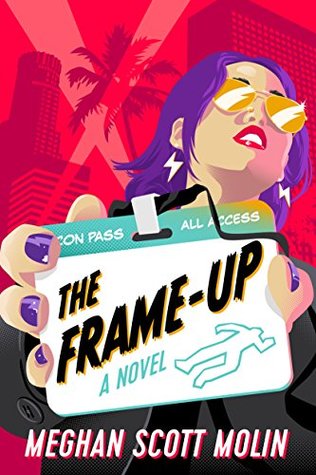
The Frame-Up – a review

Today, I intended to review a book from my backlog – six are left from March-May – but I read faster than I write.

Rather than add another book to my backlog and forget its essence, here’s my thoughts fresh from my head.

The Frame-Up (The Golden Arrow #1)

by Meghan Scott Molin

By day she writes comic books. By night, she lives them.

MG Martin lives and breathes geek culture. She even works as a writer for the comic book company she idolized as a kid. But despite her love of hooded vigilantes, MG prefers her comics stay on the page.

But when someone in LA starts recreating crime scenes from her favorite comic book, MG is the LAPD’s best—and only—lead. She recognizes the golden arrow left at the scene as the calling card of her favorite comic book hero. The thing is…superheroes aren’t real. Are they?

When the too-handsome-for-his-own-good Detective Kildaire asks for her comic book expertise, MG is more than up for the adventure. Unfortunately, MG has a teeny little tendency to not follow rules. And her off-the-books sleuthing may land her in a world of trouble.

Because for every superhero, there is a supervillain. And the villain of her story may be closer than she thinks…

Review 4.4 stars

The blurb sparked my interest – even if my comic reading days are behind me; well, some months I gaze at one on my Kindle. I still find room for geek culture so in that respect I was not disappointed. In fact, I was nodding my head throughout, smiling at the references to superheroes and shows I knew.

Some I didn’t, but no matter as the plot kept me reading and wanting super-reveals. MG was amusingly quirky, and her detective distraction, the cute but tough Matteo Kildaire, was not the dumb policeman of too many cozy mysteries.

I’ve stopped reading cozies for that reason – reckless sleuths and stupid police. This was different – even though MG had a reckless streak to her sleuthing. But she made up in other aspects – and Matteo gave her the justification – as far as MG was concerned. The police need her to resolve a crime with possible comic connections – golden arrows.

However, MG can be irritating in her willingness to trust some people not others – when she has made specific observations. Avoiding a spoiler so just saying.

The supporting roles are a mix of fun characters, questionable colleagues, and shadowy suspects. Who will the real superhero prove to be? Who is the supervillain that could be one step ahead of MG and Matteo?

Someone that knows more about comics than Matteo?

Detective Kildaire has some amusing encounters with the Geekdom that MG inhabits, from a Sorting Hat to a Star Wars movie marathon – building a world around a culture that comes over as well-portrayed. Add in the wonderful drag queen who might or might not be The Golden Arrow and the plotline shimmers. That superhero/vigilante identity kept me wondering. Who can pull this off?

The Comic Con and costumes climax is neatly worked in – all the right seeds sown. Satisfying ending to a fun novel that earns four stars plus.

Story – four stars

Setting/World-building – five stars

Characters – five stars

Authenticity – four stars

Structure – four stars

Readability – five stars

Editing – four stars

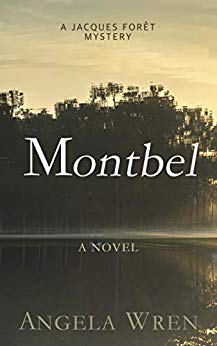
Montbel – a review

One day I will catch up with reviewing the books I read over the last few months. Anyway, here’s a review of the third Jacques Forêt mystery, Montbel. This was on the target list for my 2019 challenges, and has counted towards my 2019 Goodreads Challenge– and it’s my seventh Cloak and Dagger read of 2019; with two more to review.

Montbel

by

Angela Wren (Goodreads Author)

A clear-cut case? A re-examination of a closed police case brings investigator, Jacques Forêt, up against an old adversary.

After the murder of a key witness, Jacques finds himself, and his team, being pursued. When a vital piece of evidence throws a completely different light on Jacques’ case, his adversary becomes more aggressive, and Investigating Magistrate Pelletier threatens to sequester all of Jacques papers and shut down the case. Can Jacques find all the answers before Pelletier steps in?

The Jacques Forêt mystery series: 
Messandrierre
Merle
Montbel

Review 4.4 stars

This was another intriguing case for Jacques Forêt with a plot that involved chefs and identities, clouded by family intrigue.

It was great to be back in the Cevennes with Jacques, Beth and co. I savoured the familiarity of the setting and the characters, despite the speed at which I devoured the pages. At 178 pages, this was always going to be a fast read, and the dual plots ensured I was wanting more.

Hence, also the brevity of this review.

One plot even builds on the previous book Merle. Plus, Beth, as a photographer gets her own leads to follow – her own mystery to solve – while proving indispensable to Jacques with his investigation. Their romance adds to the novel in a satisfying way.

As before, the French elements imbue the storylines and makes for a rich atmosphere.

One plot ends with a cliff-hanger, and I missed having a resolution. In a way, that sets up the next anticipated book. Jacques and Beth are such memorable characters, I can’t wait to see what happens next.

A fun read, although short – so, four stars plus.

Story – four stars

Setting/World-building – five stars

Characters – five stars

Authenticity – five stars

Structure – four stars

Readability – four stars

Editing – four stars

I Am the Chosen King – a review

Over the next two or three weeks, I intend to review the seven books read in recent months. Some of these were on my list for my 2019 challenges, and all have counted towards my 2019 Goodreads Challenge.

First is a novel I won in a giveaway on the author’s website that I follow. As it is a thick book, I had some difficulty carrying it around in my old wheelchair. But over time, I found a solution and read the novel.

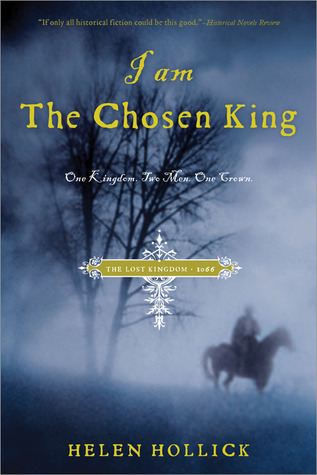
I Am the Chosen King

(Saxon #1)

by

Helen Hollick

Original Title when published in the UK: Harold the King

In this beautifully crafted tale, Harold Godwinesson, the last Saxon King of England, is a respected, quick-witted man both vulnerable and strong, honorable and loving-and yet, in the end, only human. After the political turmoil and battles leading up to 1066, we all know William the Conquerer takes England. But Helen Hollick will have readers at the edge of their seats, hoping that just this once, for Harold, the story will have a different ending.

Review 5 stars

This beautifully written novel was well worth spending time reading. In summary, I loved all the details and characters. Although I already opposed the Normans, Helen Hollick turned me into a fan of Harold Godwinesson. But I’ve never liked William the Conqueror – even when I discovered the Normans had Norse ancestors. The novel felt well-researched.

On a superficial level and the one I learnt at school decades ago, the story is straightforward. But the reality and the twists, intrigues and rivalry as it unfolds is complex. Helen Hollick captures all the nuances and fills in history’s gaps convincingly.

The settings in England and Normandy evoked a sense of what the 11th century was possibly like. Some of the places I glimpsed from my own travels. For instance, London and its environs were very different and yet the descriptions triggered images and memories in my imagination. I lived for a few years near Waltham Abbey, so could picture it as it was.

One negative could be the portrayal of the original Britons – the Welsh. Were the Welsh worse than other peoples around that period? Ruling England is a tough job, but does it mean all one’s enemies are violent savages? Or is that my Welsh bias?

Anyways, the Godwinesson family take centre stage, led by Harold’s influential father, Earl Godwin. Early on there are indications that sibling rivalry is inevitable, and as the story unfolds it becomes more intense leading to the fatal actions of one brother, Tostig. How the role of other family members weaves into this is well-portrayed and justified.

Then there is royal intrigue. Again, inevitable given the characters, a reluctant King, his powerful mother – Emma, Queen and wife of the late Cnut the Great – and then Harold’s politically astute father. Emma, who is the protagonist of Hollick’s next book in the series, The Forever Queen – chronologically a prequel – is reluctant to let her son, Edward rule as if he’s weak. But this ‘confessor’ is distracted by spiritual matters – until he tastes power.

I’m not going to accuse the author of treating her characters as black and white as others have. They take sides and few of them waver. Even the despicable William has his moments of introspection. So, the characters felt realistic, reacting and creating events. Some lived dangerously, wanting what others had and failing – or in William’s case succeeding.

Emma must teach Harold’s ambitious sister Edith about her duties as Queen when she marries Edward, becoming the next Queen of England. And what does power do when petty sibling rivalry plays its role? Hollick weaves that rivalry into the historical facts, and the tale unfolds as it did in 1066. Fortunately, Harold’s hand-fast wife, Edith Swanneck rises above this rivalry, and their love endures even when he has to marry another in the eyes of the church – another relationship well-portrayed.

When Edward dies and Harold is chosen as the King of England, other claimants emerge inevitably. One is Duke William of Normandy. Historically he claimed both Edward and Harold had promised him the crown, but the records are questionable enough for the writer to expand on the facts and give Harold justification for accepting the crown himself.

Result – invasions north and south. The pace builds as the ending unfolds that most English know from school. So, we know what happens in this timeline. Tostig creates tension and trouble with his Norwegian allies. And as made clear in the scenes of him securing his dukedom, William never gives up. History can’t be changed.

Damn that Norman bastard.

The tension of those final days gripped me as I marched up and down England. Hollick had me praying for an English victory. ‘What if’ kept playing through her words. But this wasn’t the clever alternative history collection, 1066 Turned Upside Down which Hollick contributed to. This was the actual year 1066 but crafted brilliantly and enjoyably.

Story – five stars

Setting/World-building – five stars

Characters – five stars

Authenticity – five stars

Structure – five stars

Readability – five stars

Editing – five stars

#WRiTECLUBDFW – WRiTE CLUB 2019


Although I’m struggling through the Blogging from A to Z tail end/aftermath, I’m about to follow  WRiTE CLUB 2019.

Just what is WRiTE Club? In short, it “started off as a modest competition loosely derived from the movie FIGHT CLUB, and from there it has grown into a writing community sensation…”

Here’s the link for all the details: https://www.dlhammons.com/p/write-club-2019.html 

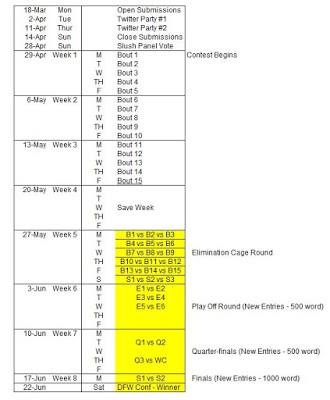
Monday April 29th is the start of the competition and hard work/thought for us reader-followers:

WRiTE CLUB Calendar

“Over the course of the next eight weeks, we’ll hold daily bouts (M-F) right here on this blog – randomly pitting the anonymous 500-word writing samples against each other. The winners of these bouts advance into elimination rounds, and then playoffs, quarter-finals, and then ultimately a face-off between two finalists to determine a single champion.”

There were a record-breaking 189 WRiTE Club entries from 137 writers!  They received writing samples from writers around the globe that represent 40+ different genres and sub-genres. The twenty clever and avid slush pile readers have narrowed the entries down to the 30 contestants for the daily bouts.

Now it’s our turn. Anyone who visits the WRiTE Club blog during the contest can vote for the sample that resonates with them the most – leaving a critique to help writers hone their craft.

Plus, the readers can win too – if we vote. If you check out all the cool prizes at https://www.dlhammons.com/p/write-club-2019.html  you will find all the rules, prizes and links.

So, if you are tempted to read and vote for some great pieces of short writing, visit  WRiTE CLUB 2019 from Monday April 2019. You might even pick the WRITE CLUB Champion or be a reader/voter winner.

Survival of the Fittest – Blog Hop

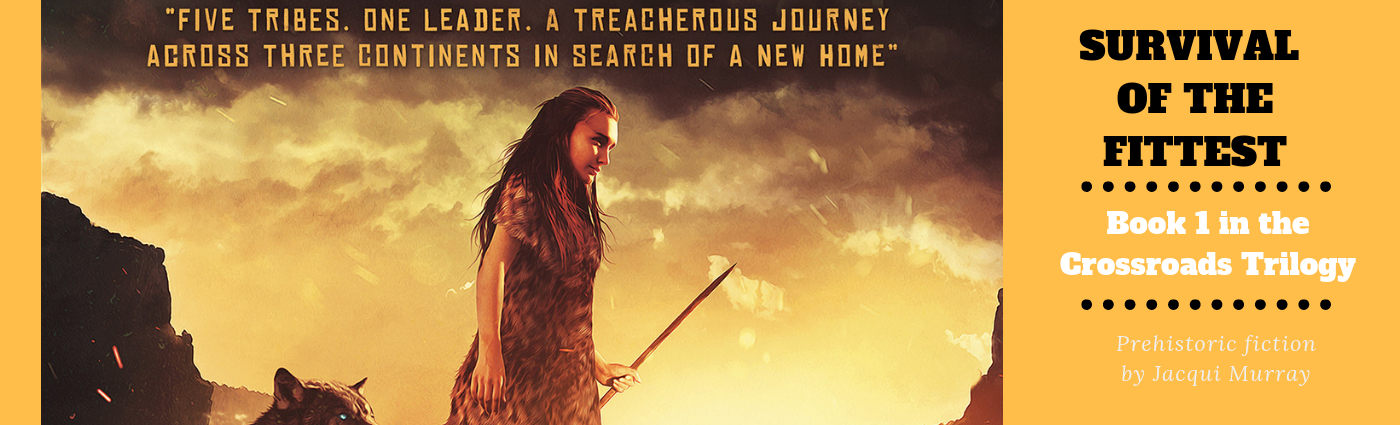
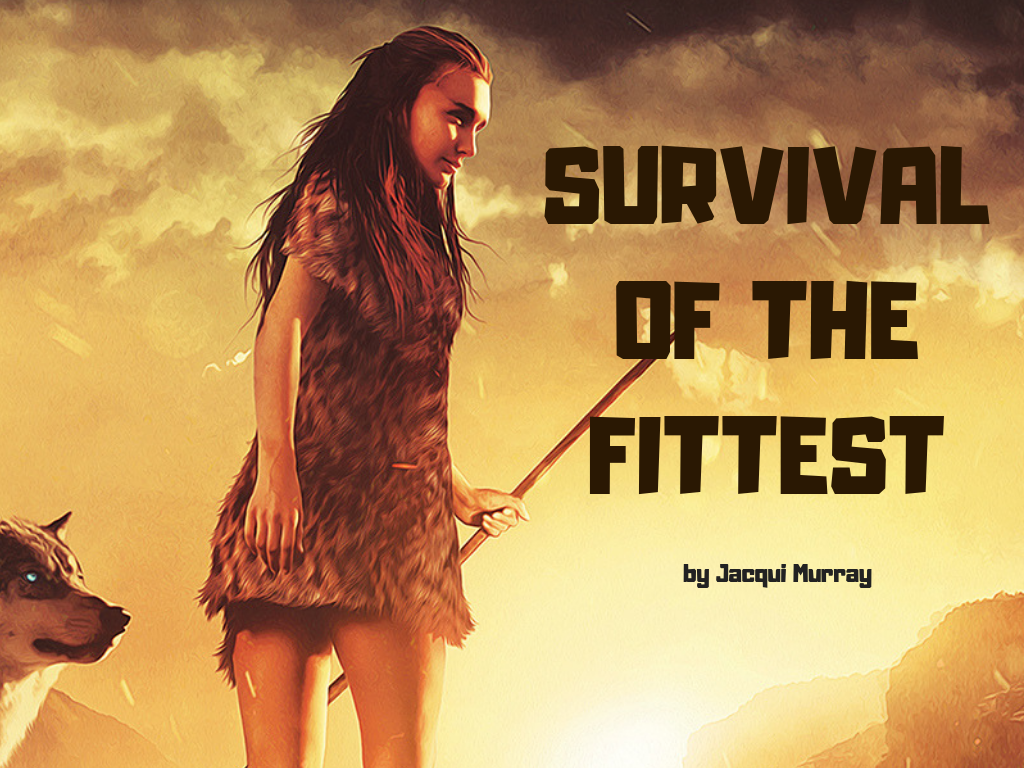
Today I am joining the Blog Hop for my writer friend, Jacqui Murray’s latest novel, Survival of the Fittest. So, first what is the story?

Short Summary:

Chased by a ruthless and powerful enemy, Xhosa flees with her People, leaving behind a certain life in her African homeland to search for an unknown future. She leads her People on a grueling journey through unknown and dangerous lands but an escape path laid out years before by her father as a final desperate means to survival. She is joined by other homeless tribes–from Indonesia, China, South Africa, East Africa, and the Levant—all similarly forced by timeless events to find new lives. As they struggle to overcome treachery, lies, danger, tragedy, hidden secrets, and Nature herself, Xhosa must face the reality that this enemy doesn’t want her People’s land. He wants to destroy her.

One question among many fascinated me as I agree with Xhosa’s choice of companion:

Could Xhosa (the main character of Survival of the Fittest) really have traveled with a wolf companion?

Dogs weren’t domesticated until about 10-15,000 years ago, long after Xhosa lived 850,000 years ago. But her understanding of man and animal were not what ours is. To Xhosa, the line between man and animal was blurry. She didn’t think of animals as lesser creatures. Why would she? As far as she knew, like her, they could plan, think, problem-solve, and display emotions just as she did.

So, for Xhosa to partner with a wolf made perfect sense.

Book information:

Title and author: Survival of the Fittest

Series: Book 1 in the Crossroads series, part of the Man vs. Nature saga

Genre: Prehistoric fiction

Cover by: Damonza 

Available at: Kindle US Kindle UK Kindle CA Kindle AU

Author bio:

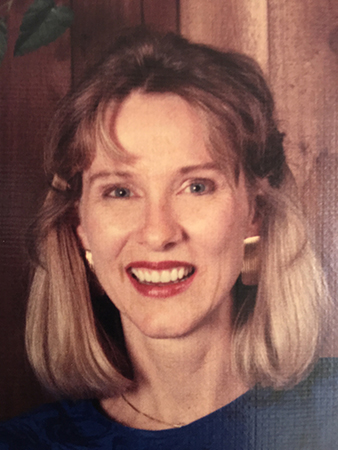
Jacqui Murray is the author of the popular Building a Midshipman, the story of her daughter’s journey from high school to United States Naval Academy, the Rowe-Delamagente thrillers, and the Man vs. Nature saga. She is also the author/editor of over a hundred books on integrating tech into education, adjunct professor of technology in education, blog webmaster, an Amazon Vine Voice,  a columnist for TeachHUB and NEA Today, and a freelance journalist on tech ed topics. Look for her next prehistoric fiction, Quest for Home, Summer 2019. You can find her tech ed books at her publisher’s website, Structured Learning

Social Media contacts:

http://twitter.com/worddreams

http://pinterest.com/askatechteacher

http://linkedin.com/in/jacquimurray

https://worddreams.wordpress.com

https://jacquimurray.nethttps://jacquimurray.net

Sample:

Chapter 1

Her foot throbbed. Blood dripped from a deep gash in her leg. At some point, Xhosa had scraped her palms raw while sliding across gravel but didn’t remember when, nor did it matter. Arms pumping, heart thundering, she flew forward. When her breath went from pants to wheezing gasps, she lunged to a stop, hands pressed against her damp legs, waiting for her chest to stop heaving. She should rest but that was nothing but a passing thought, discarded as quickly as it arrived. Her mission was greater than exhaustion or pain or personal comfort.

She started again, sprinting as though chased, aching fingers wrapped around her spear. The bellows of the imaginary enemy—Big Heads this time—filled the air like an acrid stench. She flung her spear over her shoulder, aiming from memory. A thunk and it hit the tree, a stand-in for the enemy. With a growl, she pivoted to defend her People.

Which would never happen. Females weren’t warriors.

Feet spread, mouth set in a tight line, she launched her last spear, skewering an imaginary assailant, and was off again, feet light, her abundance of ebony hair streaming behind her like smoke. A scorpion crunched beneath her hardened foot. Something moved in the corner of her vision and she hurled a throwing stone, smiling as a hare toppled over. Nightshade called her reactions those of Leopard.

But that didn’t matter. Females didn’t become hunters either.

With a lurch, she gulped in the parched air. The lush green grass had long since given way to brittle stalks and desiccated scrub. Sun’s heat drove everything alive underground, underwater, or over the horizon. The males caught her attention across the field, each with a spear and warclub. Today’s hunt would be the last until the rain—and the herds—returned.

“Why haven’t they left?”

She kicked a rock and winced as pain shot through her foot. Head down, eyes shut against the memories. Even after all this time, the chilling screams still rang in her ears…

The People’s warriors had been away hunting when the assault occurred. Xhosa’s mother pushed her young daughter into a reed bed and stormed toward the invaders but too late to save the life of her young son. The killer, an Other, laughed at the enraged female armed only with a cutter. When she sliced his cheek open, the gash so deep his black teeth showed, his laughter became fury. He swung his club with such force her mother crumpled instantly, her head a shattered melon.

From the safety of the pond, Xhosa memorized the killer—nose hooked awkwardly from some earlier injury, eyes dark pools of cruelty. It was then, at least in spirit, she became a warrior. Nothing like this must ever happen again.

When her father, the People’s Leader, arrived that night with his warriors, he was greeted by the devastating scene of blood-soaked ground covered by mangled bodies, already chewed by scavengers. A dry-eyed Xhosa told him how marauders had massacred every subadult, female, and child they could find, including her father’s pairmate. Xhosa communicated this with the usual grunts, guttural sounds, hand signals, facial expressions, hisses, and chirps. The only vocalizations were call signs to identify the group members.

“If I knew how to fight, Father, Mother would be alive.” Her voice held no anger, just determination.

The tribe she described had arrived a Moon ago, drawn by the area’s rich fruit trees, large ponds, lush grazing, and bluffs with a view as far as could be traveled in a day. No other area offered such a wealth of resources. The People’s scouts had seen these Others but allowed them to forage, not knowing their goal was to destroy the People.

Her father’s body raged but his hands, when they moved, were calm.  “We will avenge our losses, daughter.”

The next morning, Xhosa’s father ordered the hunters to stay behind, protect the People. He and the warriors snuck into the enemy camp before Sun awoke and slaughtered the females and children before anyone could launch a defense. The males were pinned to the ground with stakes driven through their thighs and hands. The People cut deep wounds into their bodies and left, the blood scent calling all scavengers.

When Xhosa asked if the one with the slashed cheek had died, her father motioned, “He escaped, alone. He will not survive.”

Word spread of the savagery and no one ever again attacked the People, not their camp, their warriors, or their hunters.

While peace prevailed, Xhosa grew into a powerful but odd-looking female. Her hair was too shiny, hips too round, waist too narrow beneath breasts bigger than necessary to feed babies. Her legs were slender rather than sturdy and so long, they made her taller than every male. The fact that she could outrun even the hunters while heaving her spear and hitting whatever she aimed for didn’t matter. Females weren’t required to run that fast. Nightshade, though, didn’t care about any of that. He claimed they would pairmate, as her father wished, when he became the People’s Leader. 

Until then, all of her time was spent practicing the warrior skills no one would allow her to use.

One day, she confronted her father. “I can wield a warclub one-handed and throw a spear hard enough to kill. If I were male, you would make me a warrior.”

He smiled. “You are like a son to me, Daughter. I see your confidence and boldness. If I don’t teach you, I fear I will lose you.”

He looked away, the smile long gone from his lips. “Either you or Nightshade must lead when I can’t.”

Under her father’s tutelage, she and Nightshade learned the nuances of sparring, battling, chasing, defending, and assaulting with the shared goal that never would the People succumb to an enemy. Every one of Xhosa’s spear throws destroyed the one who killed her mother. Every swing of her warclub smashed his head as he had her mother’s. Never again would she stand by, impotent, while her world collapsed. She perfected the skills of knapping cutters and sharpening spears, and became expert at finding animal trace in bent twigs, crushed grass, and by listening to their subtle calls. She could walk without leaving tracks and match nature’s sounds well enough to be invisible.

A Moon ago, as Xhosa practiced her scouting, she came upon a lone warrior kneeling by a waterhole. His back was to her, skeletal and gaunt, his warclub chipped, but menace oozed from him like stench from dung. She melted into the redolent sedge grasses, feet sinking into the squishy mud, and observed.

His head hair was sprinkled with grey. A hooked nose canted precariously, poorly healed from a fracas he won but his nose lost. His curled lips revealed cracked and missing teeth. A cut on his upper arm festered with pus and maggots. Fever dimpled his forehead with sweat. He crouched to drink but no amount of water would appease that thirst.

What gave him away was the wide ragged scar left from the slash of her mother’s cutter.

Xhosa trembled with rage, fearing he would see the reeds shake, biting her lip until it bled to stop from howling. It hardly seemed fair to slay a dying male but fairness was not part of her plan today.

Only revenge.

A check of her surroundings indicated he traveled alone. Not that it mattered. If she must trade her life for his, so be it.  

But she didn’t intend to die.

The exhausted warrior splashed muddy water on his grimy head, hands slow, shoulders round with fatigue, oblivious to his impending death. After a quiet breath, she stepped from the sedge, spear in one hand and a large rock in the other. Exposed, arms ready but hanging, she approached. If he turned, he would see her. She tested for dry twigs and brittle grass before committing each foot. It surprised her he ignored the silence of the insects. His wounds must distract him. By the time hair raised on his neck, it was too late. He pivoted as she swung, powered by fury over her mother’s death, her father’s agony, and her own loss. Her warclub smashed into his temple with a soggy thud. Recognition flared moments before life left.

“You die too quickly!” she screamed and hit him over and over, collapsing his skull and spewing gore over her body. “I wanted you to suffer as I did!”

Her body was numb as she kicked him into the pond, feeling not joy for his death, relief that her mother was avenged, or upset at the execution of an unarmed Other. She cleaned the gore from her warclub and left. No one would know she had been blooded but the truth filled her with power.

She was now a warrior.

When she returned to homebase, Nightshade waited. Something flashed through his eyes as though for the first time, he saw her as a warrior. His chiseled face, outlined by dense blue-black hair, lit up. The corners of his full lips twitched under the broad flat nose. The finger-thick white scar emblazoned against his smooth forehead, a symbol of his courage surviving Sabertooth’s claws, pulsed. Female eyes watched him, wishing he would look at them as he did Xhosa but he barely noticed.

The next day, odd Others with long legs, skinny chests, and oversized heads arrived. The People’s scouts confronted them but they simply watched the scouts, spears down, and then trotted away, backs to the scouts. That night, for the first time, Xhosa’s father taught her and Nightshade the lessons of leading.

“Managing the lives of the People is more than winning battles. You must match individual skills to the People’s requirements be it as a warrior, hunter, scout, forager, child minder, Primary Female, or another.  All can do all jobs but one best suits each. The Leader must decide,” her father motioned.

As they finished, she asked the question she’d been thinking about all night. “Father, where do they come from?”

“They are called Big Heads,” which didn’t answer Xhosa’s question.

Nightshade motioned, “Do they want to trade females? Or children?”

Her father stared into the distance as though lost in some memory. His teeth ground together and his hands shook until he clamped them together.

He finally took a breath and motioned, “No, they don’t want mates. They want conflict.” He tilted his head forward. “Soon, we will be forced to stop them.”

Nightshade clenched his spear and his eyes glittered at the prospect of battle. It had been a long time since the People fought.

But the Big Heads vanished. Many of the People were relieved but Xhosa couldn’t shake the feeling that danger lurked only a long spear throw away. She found herself staring at the same spot her father had, thoughts blank, senses burning. At times, there was a movement or the glint of Sun off eyes, but mostly there was only the unnerving feeling of being watched. Each day felt one day closer to when the People’s time would end.

“When it does, I will confess to killing the Other. Anyone blooded must be allowed to be a warrior.”

Available at:Kindle US Kindle UKKindle CA Kindle AU