L is for Louisiana Purchase

A2Z-BADGE-100 [2017]

My 2017 A to Z Challenge theme is “The History of Kanata”, the parallel world that is the setting for “Eagle Passage”, my alternative history novel that all began when I wondered, “What would have happened if Leif Eriksson had settled Vinland permanently in 1000 AD? For further details and links to my other A to Z posts – and hints at the ones to come visit “Kanata – A to Z Challenge 2017”.

L (1)

L is for Louisiana Purchase: 20 December 1803 – After eleven months of protracted negotiations, Darja Migisi is relieved when the French government formally hand over control of the Île d’Orléans to Kanata, after numerous hostile encounters all around the Louisiana and Atlantic coast ever since Napoleon Bonaparte and Spain have been attempting to disrupt the region. However, Kanata’s southern neighbours, the Dixie States, under their President, Thomas Jefferson, have offered the Napoleonic government money for all the French land settled along the Mississippi river as far as the Kanata border, knowing that the Emperor needs money to finance his European wars. The Mexican government under Governor Cuauhtémoc de Salcedo countered by offering bullion for all the land where they have settlements, although the Dixie States have made significant inroads west, mainly into Texas and Oklahoma. Darja Migisi and the Kanatian delegation are concerned that these complex land issues cannot be settled so easily, especially when almost all the land is still settled by their indigenous brethren. But for now, the greatest concerns are the ambitions of France. However, with the Mesoamerican power blocs co-operating with the Iberian crowns conflict will be hard to avoid. At least, Kanata is granted the right to patrol the Mississippi and control trade through Île d’Orléans, now called New Orleans. Whether the Dixie States will accept their influence might be another point of conflict in later years.

Louisiana_Purchase

The Louisiana Purchase. Projection = USA Contiguous Albers Equal Area Conic (EPSG: 102003) – Sources: Natural Earth and Portland State University. Author – William Morris


In our timeline: The Louisiana Purchase in 1803 was by far the largest territorial gain in U.S. history. Stretching from the Mississippi River to the Rocky Mountains, the purchase doubled the size of the United States. Before 1803, Louisiana had been under Spanish control for forty years. Although Spain aided the rebels in the American Revolutionary War, the Spanish didn’t want the Americans to settle in their territory.

The acquisition of the Louisiana Territory for the bargain price of less than three cents an acre was among Jefferson’s most notable achievements as president. American expansion westward into the new lands began immediately, and in 1804 a territorial government was established. On April 30, 1812, exactly nine years after the Louisiana Purchase agreement was made, the first state to be carved from the territory–Louisiana–was admitted into the Union as the 18th U.S. state.

[Wikipedia and History.com]

Would the Dixie States and the Mesoamerican nations accept Kanata controlling the main port on the Gulf Coast as well as the key inland waterway? Or is war between them inevitable?

***

Important Links for the A to Z Challenge – please use these links to find other A to Z Bloggers

Website: http://www.a-to-zchallenge.com

Facebook page: https://www.facebook.com/atozchallenge/

Twitter handle: @AprilAtoZ

Twitter hashtag: #atozchallenge

K is for Kalmar Union

A2Z-BADGE-100 [2017]

My 2017 A to Z Challenge theme is “The History of Kanata”, the parallel world that is the setting for “Eagle Passage”, my alternative history novel that all began when I wondered, “What would have happened if Leif Eriksson had settled Vinland permanently in 1000 AD? For further details and links to my other A to Z posts – and hints at the ones to come visit “Kanata – A to Z Challenge 2017”.

K (1)

K is for Kalmar Union: 12 June 1397 – Kalmar Castle, Denmark: Outnumbered by superior forces, two rival Hanseatic merchant captains, Palle Fisker and Izaak Rusnak, are escorted to Kalmar Castle by Captain Urika Migisi and her three Kanatian warships. Queen Margaret I of Denmark is hosting a gathering of merchants and nobles from across the Baltic to form a trading alliance across Northern Europe. The delegates agree as long as Kanata sets up a neutral trading post to secure the arrangement, based at Palle’s home port of Visby, on the strategic island of Gotland. Urika wins Palle’s heart, but his rivalry with Izaak spills down the generations – all the way to 2020.


Skibsflaget_fra_Mariakirken_i_Lübeck

A medieval ship flag captured from a Danish ship by forces from Lubeck in 1427 displaying the arms of Denmark, Sweden, Norway and Pomerania – Illustration by Professor Julius Magnus Petersen. (Public Domain)


In our timeline: The Kalmar Union was created and existed from 1397 to 1523, joining under a single monarch the three kingdoms of DenmarkSweden (then including Finland), and Norway, together with Norway’s overseas dependencies (then including IcelandGreenland, the Faroe Islands and the Northern Isles). Queen Margaret of Denmark was the regent at this time and a prime mover. One main impetus for the Union’s formation was to block German expansion northward into the Baltic region. The Hanseatic League were one of the major rivals of the Scandinavians, as were the Victual Brothers, a loosely organised guild of pirate operating at one time from Visby, a former Hanseatic city.

Although the Kalmar Union suffered from all the rivalry around the Baltic, including conflicts between the Scandinavian nations, could a powerful intermediary like Kanata have safeguarded Baltic trade? This might have been feasible, especially as Visby as the main port on the island of Gotland was well-placed to monitor traffic.

***

Important Links for the A to Z Challenge – please use these links to find other A to Z Bloggers

Website: http://www.a-to-zchallenge.com

Facebook page: https://www.facebook.com/atozchallenge/

Twitter handle: @AprilAtoZ

Twitter hashtag: #atozchallenge

J is for Jasper

A2Z-BADGE-100 [2017]

My 2017 A to Z Challenge theme is “The History of Kanata”, the parallel world that is the setting for “Eagle Passage, my alternative history novel that all began when I wondered, “What would have happened if Leif Eriksson had settled Vinland permanently in 1000 AD? For further details and links to my other A to Z posts – and hints at the ones to come visit “Kanata – A to Z Challenge 2017”.

J (1)

J is for Jasper: 1813, Jasper, Kanata: Fur trader Doron Klen is negotiating with postmaster-merchant Jasper Hawes over the value of the goods that he wants to be sent on the next shipment east. Jasper agrees on a fair price given the distance from the post at the gateway to the Assinwati mountains [Rockies] to Lake Gichigami [Superior] and the main trading ports. Another fur trader sneers at Doron, condemning his Jewish ways extorting money out of good Christians like Jasper. However, Jasper reminds the angry fur trader that Kanata welcomes all settlers, especially those fleeing from persecution, and reminds him that his sect was condemned for their beliefs. Yet, the indigenous tribes welcomed them all – in fact, does he condemn them for their beliefs or the Norse founders that follow Skaði or Odin? Maybe he should complain to the Mjölnir militia. The rogue fur trader is forced to accept that Jasper is correct, and he apologises to Doron, who adds that if his Jewish homeland was ever free, many of his people might return there.


Jasper_House_National_Historic_Site_of_Canada_2012-09-23_19-35-58

Jasper House National Historic Site of Canada – Photographer: Themeancanadian


In our timeline: Until the British seized Montreal in 1760, there were no Jewish settlers in Canada, as the French required that everyone was Roman Catholic. There were several Jews in the British regiments, and from then on Jewish settlers were initially merchants and fur traders. Canada was one of the destinations of choice, alongside the United States, following the pogroms in Eastern Europe and Russia.

Jasper is named after a real Jasper Hawes who was the postmaster at the trading post established there in 1814 as part of the network controlled by the Hudson’s Bay Company.

***

Important Links for the A to Z Challenge – please use these links to find other A to Z Bloggers

Website: http://www.a-to-zchallenge.com

Facebook page: https://www.facebook.com/atozchallenge/

Twitter handle: @AprilAtoZ

Twitter hashtag: #atozchallenge

I is for Ice

A2Z-BADGE-100 [2017]

My 2017 A to Z Challenge theme is “The History of Kanata”, the parallel world that is the setting for “Eagle Passage, my alternative history novel that all began when I wondered, “What would have happened if Leif Eriksson had settled Vinland permanently in 1000 AD? For further details and links to my other A to Z posts – and hints at the ones to come visit “Kanata – A to Z Challenge 2017”.

I (1)

I is for Ice: 1264, Eyrar, Iceland:   Fishermen Thorvard Gilsson and Kjartan Jonsson are repairing their nets and discussing their concerns that the increase in drift ice around the northern coast of Iceland is threatening their safety when fishing. The spread of sea ice is also making trade harder, especially with Greenland to the west, but at least the merchants from Kanata continue to support them both, providing much-needed goods, including timber so the settlers don’t need to chop down their few precious trees.

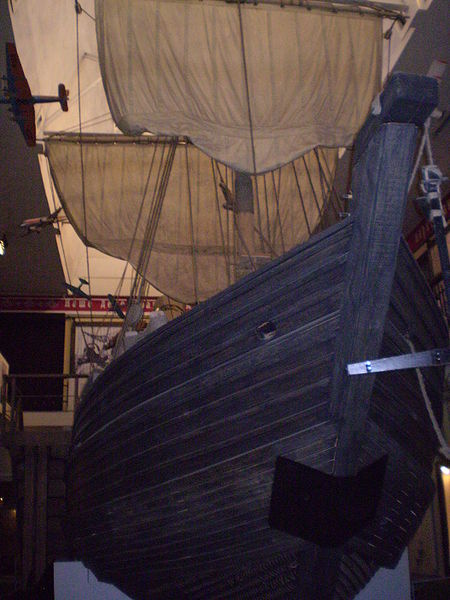
The Kanata merchants must have access to many varieties of trees, says Kjartan, as their shipwrights have crafted some rugged vessels that can navigate great storms and probably the drift ice. The fishermen suspect the vessels are reinforced, particularly around the waterline with double planking to the hull and strengthening cross members inside the ship. If they had enough iron that could be wrapped around the outside. Maybe the Kanatians will teach them the secrets so they can build safer fishing boats.

Thorvard agrees and suggests they make a formal request via the Althing. Both men are glad that the Icelandic chieftains and guild representatives rejected swearing allegiance to the king of Norway, knowing that it was Kanata that protected them and ensured peace in the country.

Krsk_koch

A 17th-century Russian koch in a museum – Public Domain

In our timeline: In 1250 the Atlantic Sea ice began to grow and by 1300 there were signs throughout Europe that the Medieval Warm Period was ending. This new period, although the dating varies, has been called the ‘Little Ice Age’. Sea ice surrounding Iceland in many years extended for miles in every direction, closing harbours to shipping. Greenland was largely cut off by ice from 1410 to the 1720s, although it is unclear if this why the Norse settlements were abandoned. Timber was scarce on both Greenland and Iceland, which was one resource the expeditions to Vinland and Markland were seeking. But these timber expeditions did not continue. Building the first wooden ships that could navigate Arctic waters was achieved in North Russia.

Wikipedia – “In the 11th century, in North-Russia started settling the coasts of the White Sea, named so for being ice-covered for over half of a year. The mixed ethnic group of the Karelians and the Russians in the North-Russia that lived on the shores of the Arctic Ocean became known as Pomors (“seaside settlers”). Gradually they developed a special type of small one- or two-mast wooden sailing ships, used for voyages in the ice conditions of the Arctic seas and later on Siberian rivers. These earliest icebreakers were called kochi. The koch’s hull was protected by a belt of ice-floe resistant flush skin-planking along the variable water-line, and had a false keel for on-ice portage. If a koch became squeezed by the ice-fields, its rounded bodylines below the water-line would allow for the ship to be pushed up out of the water and onto the ice with no damage.”

The skill of the Kanatian shipwrights with access to plenty of timber should have allowed them to build early icebreakers to navigate via Greenland and Iceland to and from Europe. Would they have access to the Pomors and their kochi because of the Eastern trade routes? [Maybe when I get to ‘N’ that might produce an answer.]

***

Important Links for the A to Z Challenge – please use these links to find other A to Z Bloggers

Website: http://www.a-to-zchallenge.com

Facebook page: https://www.facebook.com/atozchallenge/

Twitter handle: @AprilAtoZ

Twitter hashtag: #atozchallenge

H is for Honfleur

A2Z-BADGE-100 [2017]

My 2017 A to Z Challenge theme is “The History of Kanata”, the parallel world that is the setting for “Eagle Passage, my alternative history novel that all began when I wondered, “What would have happened if Leif Eriksson had settled Vinland permanently in 1000 AD? For further details and links to my other A to Z posts – and hints at the ones to come visit “Kanata – A to Z Challenge 2017”.

H (1)

H is for Honfleur: 1228 -Wischard Snekker, a shipbuilder, is waterproofing the clinker hull of his latest vessel in the old harbour of Honfleur. A passing stranger remarks in Norman French that it resembles an extended knarr, and he asks what its use will be. When they introduce themselves, they realise their common heritage – as Norwegian Vikings, so speaking in Norwegian, they discuss Wischard’s dream of a ship that can navigate the Great Sea [the Atlantic] with substantial cargo and yet manoeuvre easily and defend itself. The stranger is Keme Migisi, a merchant explorer from distant Kanata, and he shows his new friend sketches of craft that he has observed navigating the Mediterranean and the coastal areas of the Atlantic. He even arrived on a lateen-rigged ship that the Albion fleet obtained in Gascony. Together they design a three-masted ship with the traditional square sail of the Viking ships, plus a foresail and a triangular lateen mizzen, as well as oars for navigating rivers. He will fund the building.

When asked about his Migisi name, Keme admits to family connections that give him access to developments at many European courts which are aiding the Norse connections that are holding Europe together. He values those contacts and they will support their project even though the design must remain a closely guarded secret until they reach Kanata. By spring1229, the Draken Havet Hersker sails laden with a cargo of horses, jewellery, silk, spices, bronze goods, tin ingots, and new settlers willing to brave the crossing and the wilds of Kanata.

Honfleur,_le_vieux_port_(Camille_Corot) (1)

Honfleur, the old port – Jean-Baptiste-Camille Corot  (circa 1824) commons.wikimedia.org

Our timeline: Wikipedia – “Until the 15th century, Europeans were limited to coastal navigation using the barge or the balinger (barinel), ancient cargo vessels of the Mediterranean Sea with a capacity of around 50 to 200 tons. These boats were fragile, with only one mast with a fixed square sail that could not overcome the navigational difficulties of southward oceanic exploration, as the strong windsshoals and strong ocean currents easily overwhelmed their abilities.

The caravel was developed in about 1451, based on existing fishing boats under the sponsorship of Henry the Navigator of Portugal, and soon became the preferred vessel for Portuguese explorers like Diogo CãoBartolomeu Dais or Gaspar and Miguel CorteReal, and by Christopher Columbus. … They were agile and easier to navigate than the barca and barinel, with a tonnage of 50 to 160 tons and 1 to 3 masts, with lateen triangular sails allowing beating.”

However, there was a Portuguese caravel in the English fleet that returned to Gascony in 1226. Yet it was over 200 years before the Age of Discovery began.  When the Ottomans ended the Byzantine Empire with the 1453 conquest of Constantinople by Mehmed the Conqueror, control of the overland trade routes to Cathay and the Far East changed and the Iberians looked to the possibility of finding sea routes east. The Scandinavians had also established trade routes from the Baltic down the river network to Constantinople. But by then, their Greenland colony was struggling and they looked to Europe for their survival.

The shipbuilding technology to cross the Atlantic existed in 1000 AD when Leif Eriksson reached Newfoundland. The additional technology that the Portuguese and Spanish applied 250 years later, existed well before that date. What would be the right motivation for the Scandinavians to apply their extensive shipbuilding skills to build their versions of caravels and explore further afield on the other side of the Atlantic?

***

Important Links for the A to Z Challenge – please use these links to find other A to Z Bloggers

Website: http://www.a-to-zchallenge.com

Facebook page: https://www.facebook.com/atozchallenge/

Twitter handle: @AprilAtoZ

G is for Göta älv

A2Z-BADGE-100 [2017]

My 2017 theme is “The History of Kanata”, the parallel world that is the setting for “Eagle Passage, and the theme reveal is here. I also wrote about this world in my blog post ‘This could be Kanata.

G (1)

G is for Göta älv: In 1036, Harthacnut delays returning from Denmark to England to claim his late father, Cnut the Great’s throne as his rightful heir. Denmark is under threat from Norway, once part of Cnut’s North Sea Empire, comprising Denmark, England, Norway, and parts of Sweden. However, in early 1035 the Danes had been driven out of Norway with Swedish help and Magnus I was crowned King.

An armed delegation of Kanatians, many of Norwegian descent, persuade their Norse brethren to negotiate a treaty at Göta älv in Götland, on the Norwegian-Danish border. Harthacnut and Magnus agree that if either die without an heir, his kingdom would go to the other. The warrior leader of the Kanata delegation, Vefrid Migisi captivates Harthacnut and he proposes to her, asking that her Mjölnir Militia helps him reclaim his English throne. She accepts but Magnus requests that she first persuade the infamous Jomsvikings mercenaries into her army. Two years later, she gives Harthacnut an heir and ensures that a Norse-Anglo-Saxon dynasty will rule Albion.

Magnus_den_godes_saga_-_Magnus_og_Horda-Knut_-_H._Egedius

Imaginative picture of the meeting between Magnus and Harthacnut – (illustration by Halfdan Egedius).

In our timeline: a treaty was agreed at Göta älv in Götland before Harthacnut claimed his English throne. He remained unmarried and had no known children when he died in 1042. His successor was his half-brother Edward the Confessor, which eventually led to various claims to the throne when Edward died – but that is another crucial date in English history, 1066.

Although Magnus I threatened to invade England because of his settlement with Harthacnut. In 1043, Magnus put an end to the Jomsviking threat. He sacked Jomsborg and destroyed the fortress. Magnus was not married but had a daughter out of wedlock, Ragnhild, who married Haakon Ivarsson, a Norwegian nobleman. Her great-grandson would become King Eric III of Denmark.

***

Important Links for the A to Z Challenge – please use these links to find other A to Z Bloggers

Website: http://www.a-to-zchallenge.com

Facebook page: https://www.facebook.com/atozchallenge/

Twitter handle: @AprilAtoZ

Twitter hashtag: #atozchallenge