P for… Prep for Doom – a review

P


Prepper  –  NOUN  –  chiefly North American

A person who believes a catastrophic disaster or emergency is likely to occur in the future and makes active preparations for it, typically by stockpiling food, ammunition, and other supplies:there’s no agreement among preppers about what disaster is most imminent whether you’re a doomsday prepper or simply like to be prepared, emergency foods should be kept on hand


Since I’m working on Gossamer Flames, a post-apocalyptic series of interconnected tales, I’m looking for similar fiction to read, not just to see how the best fiction works, but for the details about preppers and how they behave. “Prep for Doom” was therefore a must read. So on to the review.
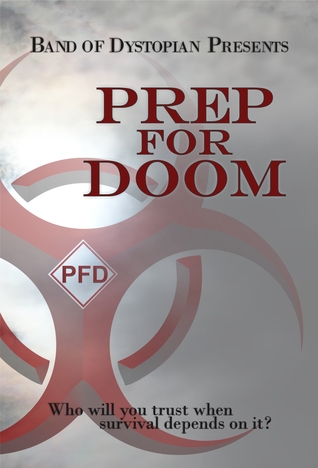
PFD25629151

From the imaginations of twenty authors of dystopian and post-apocalyptic fiction comes PREP FOR DOOM – an integrated collection of short stories that tell the tale of a single catastrophe as experienced by many characters, some of whom will cross paths. What begins with a seemingly innocuous traffic accident soon spirals into a global pandemic. The release of Airborne Viral Hemorrhagic Fever upon New York City’s unsuspecting populace brings bloody suffering within hours, death within a day, and spreads worldwide within a month. An online community called Prep For Doom has risen to the top of a recent doomsday preparation movement. Some have written them off as crazy while others couldn’t be more serious about the safety the preppers could provide in a global disaster. But when AVHF strikes, their preparation may not be enough to save them.


Prep For Doom” is a clever anthology by different authors, each contributing a stand-alone story connected by the pandemic apocalypse, so building into one large story from multiple points of view. The level of collaboration on this project must have been impressive, as is the resulting work.

The characters of each story reflect different reactions to the growing crisis, some more intense and visceral than others. Each protagonist takes the stage in a unique way, and plays out their fate in the disaster – some as victims, some as opportunists, even killers, and some as saviours. Some are committed preppers or have known one for good or bad. But most are ordinary people trying to survive.

Much of the time I was asking how I would react in such a situation. Panic? Help?

Each of the writers tells a facet of the story in their characters’ words. So inevitably, some stories are stronger than others, painting more vivid images. Most wrenched at my emotional responses.

Many characters reappear in other stories, whether in supporting roles or even as people in the ‘crowd’. Some get swept up as casualties, others survive and give hope. Memorably one antagonist is seen in one story from a victim’s viewpoint, yet later another writer vividly shows that antagonist’s desperation and driven fall from survivor to killer.

I wanted to give “Prep for Doom” five stars, but a few things let it down in my opinion.

Setting: although the virus spreads worldwide, we only get to see its impact on US communities, predominantly around the epicentre of New York. The opening chapter is the exception as it’s set somewhere in Africa, but I wanted a few more non-US viewpoints.

Resources: food runs out fast as does water, which makes total sense so some people are surviving on granola bars. The desperate looters feel realistic, but I kept wondering why cell phones worked for so long? Why do some people have the power to keep watching the world die on TV? For a few days perhaps, but this felt longer. Since the hospitals are swamped very quickly, I struggled to believe that some services survived for long. Maybe the emergency facilities are far better than I thought, or Americans are better prepared.

Chronology: inevitably many of the stories start at roughly the same point – the virus release – so the editors will have struggled to place them in order. Unfortunately, at times I was lost and wished there were clearer indicators of time and date in some instances. But most were clear from the words.

Stereotyping: in most cases, the race/sex/religion of the characters didn’t adversely reflect on their actions in an unrealistic way. But one crucial episode grated as the minority concerned gets a trite apology and the story gives them a raw deal. Not wishing to spoil the plot, I will say no more.

Missing elements: there were a few things left unexplained, although maybe there is more to come. For instance, I wanted to know about the initials PFD, which appear throughout and not just for Prep For Doom. Is the link a coincidence, or a reasoned choice?

However, these criticisms are minor and don’t detract from an excellent anthology that I recommend. It has the right blend of realistic actions and reactions, weaving a sense of despair as the reader is carried towards hope.

As to my own post-apocalyptic saga, I feel there are lessons to learn and I will attempt to embrace them.

And for my next read, I am tackling a very different novel in this genre – far bleaker and darker… like grey ash: The Road by Cormac McCarthy.


A Brilliant Conspiracy

atoz-theme-reveal-2016 v2

Blogging from A to Z Challenge Theme Reveal 2016

April and the A to Z Challenge is drawing near, so today I’m posting about the Theme I intend to follow for the Month of April on Writing Wings.

The Challenge runs over 26 days – with Sundays off for good behaviour – and each day will be based on the alphabet, from A through to Z.

In previous years, I have chosen themes that were linked to Work In Progress… and I rambled somewhat. So I wanted something different, maybe tighter and more cryptic.

So “A Brilliant Conspiracy” was born.

This is a short saga based around the following ‘Blurb’.

Archibald Brewster claims detective expertise, frustrating genius hospital intern Jamila Knox.

Luckily, muscles never obstruct progress.

Questions remain, silently taunting, until vengeance wakes xenophobia-yapping zealots.

Inspired by this mystery, I will post a brief episode in “A Brilliant Conspiracy” on every day of the challenge, from A through to Z, each one starting with the relevant letter.

Each episode will consist of one word for each of the letters of the alphabet, initially in alphabetical order. As each letter is ticked off, I will then use it anywhere in the following episodes. For instance, Day 3 will start with ‘C’ for ‘Confessions, and somewhere I will use A and B – possibly for ‘Archibald’ and for ‘but’. By the time the mystery reaches Z, all the other letters will be in non-alphabetical order. That means 26 posts, each one of 26 words.

As a bonus, Archibald will pick his ‘horse of the day’, while Jamila will assess a ‘daily poison’ – again from A to Z.

I’m attempting to concoct these cryptic episodes in advance, but it’s proving tough. So if I fail to complete this challenge, then this will be, “Another Baffling Confusion”, especially if there is no Z.

Why not go visit the others on the linky list to find out what sort of posts you can look forward to elsewhere.

You can also visit the A to Z Facebook page where you’ll be able to see what everyone’s posting about. And there are the A to Z pinterest boards, the G+ page, and Twitter where the #atozchallenge tag rules.

See you on April 1st when Archibald and Jamila embark on their adventure.


Plodding Towards Publication

InsecureWritersSupportGroup2

Today is the monthly Insecure Writers Support Group post and I am flip-flopping between positivity and insecurity.

I should feel positive having completed the 100k in 100 days challenge that began on January 1st, and then plunged straight into the Blogging from A to Z Challenge, completing that as well. I may be exhausted but I’m still writing, although not as frenetically.

However, my A to Z Challenge failed as my posts were too long – details on my last blog post here. And I still shuffle my way forward over getting something published. It should be ‘best step forward’ as I am productive, but there is too much unfinished and unresolved.

And how do I get the work published? I see better writers than me self-publishing, but I lack the means to do that – starting with the health to cope. I’ve been looking around at small presses but I fear that my writing is not suitable, and my promotion skills are lacking.

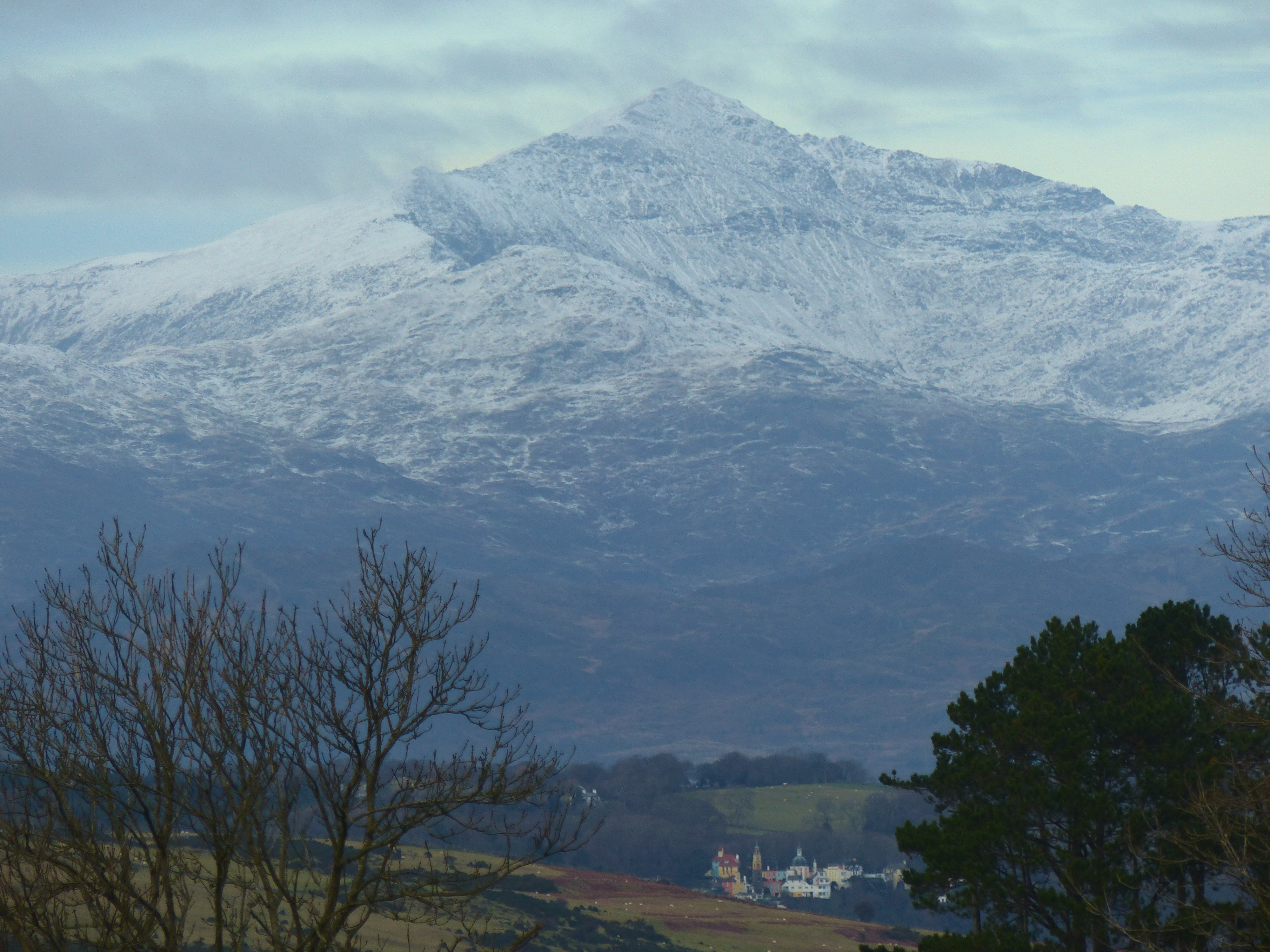
Snowdon by Juanita Clarke on Duskweald

Snowdon by Juanita Clarke on Duskweald

Or does “Storms Compass” fit into the new interest around novellas? I need to add an overarching plot that will weave the stories together, but the length might remain within the shorter length – and the tales have been professionally edited.

And if novellas are the future, what do I do with my plans for the Snowdon Shadows series? They will be full-length novels as they stand. Or do I trim them to the skeleton? Where do I go?

***

Purpose of the IWSG day: To share and encourage. Writers can express doubts and concerns without fear of appearing foolish or weak. Those who have been through the fire can offer assistance and guidance. It’s a safe haven for insecure writers of all kinds!

Posting: The first Wednesday of every month is officially Insecure Writer’s Support Group day. Post our thoughts on our own blog. Talk about our doubts and the fears we have conquered. Discuss our struggles and triumphs. Offer a word of encouragement for others who are struggling. Visit others in the group and connect with our fellow writers – aiming for a dozen new people each time

Let’s rock the neurotic writing world!

Our Twitter hashtag is #IWSG
The awesome co-hosts for the May 6 posting of the IWSG are Eva Solar, Melanie Schulz, Lisa-Buie Collard, and Stephen Tremp!

Lessons learnt for next year’s A to Z Challenge

A-to-Z Reflection [2015] - Lg

2015 A to Z Blogging Challenge Reflections

Reflecting on how I survived the Challenge is hard, but I do know that I’m wearing the T-shirt as I write – and I’m okay.

This post will be shorter than others as I suspect that you have had to read too many of my words during.

I realised as the month unfolded that my posts were too long, although I hope they were informative about ‘The War of 1812’. The research will be useful when I eventually get back to my novel “Seeking A Knife”, although I need to concentrate on the novel preceding it in the Snowdon Shadows series.

Writing the posts and updating/amending them as I went along took too long, and left me with too little time to visit many other bloggers, even some of my regular haunts – apologies.

Those I did visit regularly and enjoyed were:

Tasha’s Thinkings – an example of how to do A to Z and have fun

Alex Cavanaugh – the Ninja Captain is always worth visiting but how does he do it?

Magic Moments – an Indian perspective from Pratikshya Mishra, often looking further East

if I only had a time machine – Second World War insights

The Old Shelter – information that I never knew about Roaring Twenties America

Insecure Writers Support Group – succinct and insightful; and one of the guiding lights

There were other blogs that I dropped by, but not on a regular basis like these. Over time I intend to visit some more, but at the pace I do things it will take a few months. (My wheelchair goes faster than my fingers or my mind.)

So inspired by the way that others approached this challenge, and encouraged by the way that it has been organised, I am now looking forward. Next year I will plan better, and choose a short post theme – letters of the alphabet.

93c82ca40bf511a22386762cd902f2c9

Just kidding. Not sure what I will do but will be something easier for everyone, especially passers-by. Suspect that the window-shoppers take one look and run.

For more reflections by other blogging survivors, visit here.

PREVIOUS A TO Z POSTS

Details on my 2015 A to Z theme and a linked list of posts can be found on my A to Z Challenge page, which also has a linked list of my 2014 posts.

Z is for Zachary Taylor

Z

Zachary Taylor (November 24, 1784 – July 9, 1850) was the 12th president of the United States, serving only 16 months in office from March 1849 until his death on July 9 1850 from acute gastroenteritis.

Taylor was born near Barboursville, Virginia to a prominent family of planters who migrated westward to Kentucky in his youth. He received only a rudimentary education but was well schooled in the frontier skills of farming, horsemanship and using a musket. In 1808, he left home after obtaining a commission as a first lieutenant in the army.

In 1810, he married Margaret Mackall Smith, and they went on to have six children. Their second daughter, Sarah Knox Taylor, would marry Jefferson Davis, the future president of the Confederacy, in 1835.

During the War of 1812, Taylor successfully defended Fort Harrison in Indiana Territory from an Indian attack commanded by the Tecumseh. Later that year he joined General Samuel Hopkins as an aide on two expeditions: the first into the Illinois Territory and the second to the Tippecanoe battle site, where they were forced to retreat in the Battle of Wild Cat Creek. Taylor moved his growing family to Fort Knox after the violence subsided.

In October 1814, he supervised the construction of Fort Johnson, the last toehold of the U.S. Army in the upper Mississippi River Valley. A few weeks after the death of his commander, Brigadier General Benjamin Howard, Taylor was ordered to abandon the fort and retreat to Saint Louis. Reduced to the rank of captain when the war ended in 1815, he resigned from the army.

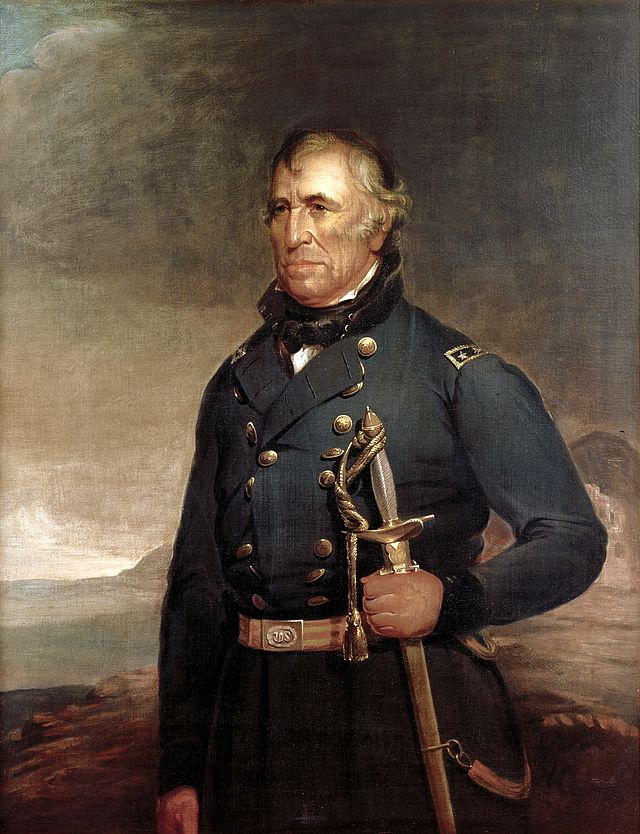
Official White House portrait of Zachary Taylor by Joseph Henry Bush, c1848

Official White House portrait of Zachary Taylor by Joseph Henry Bush, c1848

He re-entered it a year later after gaining a commission as a major. Taylor’s status as a national hero as a result of his victories in the Mexican-American War , won him election to the White House despite his vague political beliefs. His top priority as president was preserving the Union, but he died before making any progress on the status of slavery, which had been inflaming tensions in Congress.

Further Information:

http://www.history.com/topics/us-presidents/zachary-taylor

http://www.biography.com/people/zachary-taylor-9503363

http://en.wikipedia.org/wiki/Zachary_Taylor

Of course I could have chosen Brigadier General Zebulon Pike, who led the Pike Expedition as a Captain in 1806-7, and for whom Pikes Peak in Colorado is named. The same Zebulon Pike that led the American troops at the Battle of York, where he was killed (My letter Y.).

And finally, there is Reverend Zephaniah Wendell, the youngest brother of Talcott Wendell, my fictional memoir writer from the War of 1812 in “Seeking A Knife” – the beginning of this journey back in time.

PREVIOUS A TO Z POSTS

Details on my 2015 A to Z theme and a linked list of posts can be found on my A to Z Challenge page, which also has a linked list of my 2014 posts.

A2Z-BADGE-000 [2015] - Life is Good

The brainchild of Arlee Bird, at Tossing it Out, the A to Z Challenge is posting every day in April except Sundays (we get those off for good behaviour.) And since there are 26 days, that matches the 26 letters of the alphabet. On April 1, we blog about something that begins with the letter “A.” April 2 is “B,” April 3 is “C,” and so on. Please visit other challenge writers.

My theme is ‘The War of 1812’, a military conflict, lasting for two-and-a-half years, fought by the United States of America against the United Kingdom of Great Britain and Ireland, its North American colonies, and its American Indian allies. The Memoirs of a British naval officer from the war is central to my novel “Seeking A Knife” – part of the Snowdon Shadows series.

Further reading on The War of 1812:

http://www.eighteentwelve.ca/?q=eng

http://www.history.com/topics/war-of-1812

http://www.theglobeandmail.com/globe-debate/the-war-of-1812-stupid-but-important/article547554/

http://www.shmoop.com/war-1812/

http://www.pbs.org/wned/war-of-1812/essays/

Y is for York

Y

The Battle of York was fought during the War of 1812, on April 27, 1813, in York (present-day Toronto), the capital of the province of Upper Canada (present-day Ontario), between United States forces and the British defenders of York. U.S. forces under Brigadier General Zebulon Pike were able to defeat the defenders of York, comprising a British-led force under the command of Sir Roger Hale Sheaffe, combined with a small group of Ojibwe allies.

An American force of approximately 1700 men, supported by a naval flotilla of 16 American ships under Commodore Isaac Chauncey, landed on the lake shore to the west, suppressed the small group of warriors defending the shore, while knocking out the town’s meagre batteries. With the fort poorly defended by an undersized garrison of 700 soldiers and backed by an unenthusiastic (indeed, almost wholly absent) militia, the Americans captured the fort, town and dockyard. To circumvent looting, Sheaffe had ordered all valuables to be destroyed before retreating. A ship, then under construction, was burned, the naval stores were destroyed, and the fort’s magazine was set on fire. Two local militia officers were left behind to negotiate the terms of surrender.

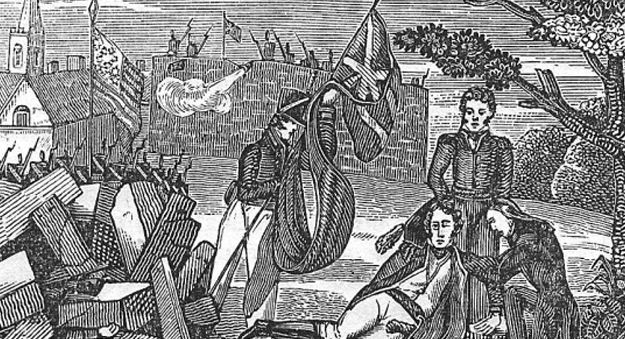
The death of American General Pike at the Battle of York, 27 April 1813 (courtesy Canadian Military History Gateway, Government of Canada).

The death of American General Pike at the Battle of York, 27 April 1813 (courtesy Canadian Military History Gateway, Government of Canada).

The Americans themselves suffered heavy casualties, including Zebulon Pike who was leading the troops, when the burning magazine blew up with devastating results. The American forces subsequently carried out several acts of arson and looting in the town themselves, before withdrawing. Over the course of their six-day occupation, American troops sacked any home they found deserted, along with several businesses and public buildings.

Though the Americans won a clear victory, it did not have decisive strategic results as York was a less important objective in military terms than Kingston, where the British armed vessels on Lake Ontario were based. The loss of naval and military stores was crippling, particularly for the British efforts on Lake Erie.

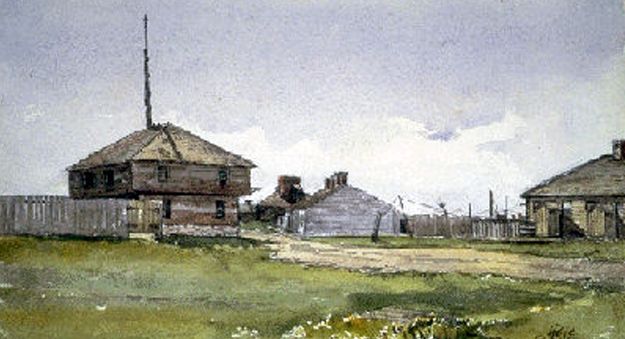
Fort York was sacked twice by the Americans during the War of 1812 (courtesy Library and Archives Canada/C-40091).

Fort York was sacked twice by the Americans during the War of 1812 (courtesy Library and Archives Canada/C-40091).

The capture of the capital was an embarrassment for the British, exposing fatal inadequacies in their defences. Indeed, so poorly defended was the town that Chauncey returned in July, landing unopposed to burn several public buildings and boats, destroy a lumber yard, and make off with their supplies. The British attack on Washington in August 1814 was seen as just retaliation.

Further Information:

http://en.wikipedia.org/wiki/Battle_of_York

http://www.eighteentwelve.ca/?q=eng/Topic/47

PREVIOUS A TO Z POSTS

Details on my 2015 A to Z theme and a linked list of posts can be found on my A to Z Challenge page, which also has a linked list of my 2014 posts.

A2Z-BADGE-000 [2015] - Life is Good

The brainchild of Arlee Bird, at Tossing it Out, the A to Z Challenge is posting every day in April except Sundays (we get those off for good behaviour.) And since there are 26 days, that matches the 26 letters of the alphabet. On April 1, we blog about something that begins with the letter “A.” April 2 is “B,” April 3 is “C,” and so on. Please visit other challenge writers.

My theme is ‘The War of 1812, a military conflict, lasting for two-and-a-half years, fought by the United States of America against the United Kingdom of Great Britain and Ireland, its North American colonies, and its American Indian allies. The Memoirs of a British naval officer from the war is central to my novel “Seeking A Knife” – part of the Snowdon Shadows series.

Further reading on The War of 1812:

http://www.eighteentwelve.ca/?q=eng

http://www.history.com/topics/war-of-1812

http://www.theglobeandmail.com/globe-debate/the-war-of-1812-stupid-but-important/article547554/

http://www.shmoop.com/war-1812/

http://www.pbs.org/wned/war-of-1812/essays/