Immurement – a review

I must apologise for the lack of any reviews since the beginning of August, in fact a distinct lack of any posts. However, that doesn’t mean that I haven’t been reading. I have and reviews of Ray Bradbury’s Fahrenheit 451 and Stephen Puleston’s Devil’s Kitchen are in the pipeline. But first I’m going to review the sci-fi dystopian first book in Norma Hinkens’s’ The Undergrounders Series.

Immurement_28181699 

Immurement (The Undergrounders #1)

by Norma Hinkens

The Sweepers are coming. They hunt the young. Earth’s end is her beginning.

Sixteen-year-old Derry and her brother live in perpetual fear of capture. They survive underground on a scorched earth overrun by gangs, clones, and mysterious hoverships. When her brother goes missing, Derry’s only hope of finding him is to strike a deal with a group of cutthroat subversives. Desperate to save her brother, she leads a daring raid to uncover the secrets behind the Sweepers’ hoverships, but she soon finds out the world she knows is a lie.

Keeping her brother alive may require trusting her enemy and opening her heart to something she never thought possible. 

Immurement is the first book in The Undergrounders Series, a sci-fi dystopian thriller trilogy with a gritty complex heroine and twists you won’t see coming!

REVIEW:

The first requirement of a good book is the ability to keep me turning the pages, and in that Immurement succeeded. It also painted a scary Dystopian world that added to my desire to read Book Two and discover what happen to Derry and the other Undergrounders.

I liked Derry with her insecurities and frustrations, and her courage and spontaneity. She is not a ‘perfect’ heroine who makes reasoned and clever decisions. She makes mistakes like any sixteen-year-old, especially one struggling to save those she loves and herself in the face of terrible danger and untruths.

Who does one trust in that situation? Derry understandably is dependent on what she knows or has been told, so her journey is one of multiple discoveries. She doesn’t become the ‘perfect’ heroine by the end, but she has learnt to demonstrate the qualities that will be needed in the struggles ahead.

She finds support from a cast of secondary characters, all with their own distinctive characteristics and abilities. In some cases, she is forced to trust dubious personalities despite her gut feelings. There are stereotypes, like the subversives, but then the novel is told in 1st person POV. These are the stereotypes ingrained by others’ prejudices and beliefs. So they evolve as her knowledge broadens, and secrets are revealed.

I enjoyed the outdoor setting, not least as I am about to discover more about the great outdoors in Idaho and the Sawtooth Mountains. The contrast works with the survivalist lifestyle underground and the high-tech nightmare world of the Sweepers – the latter a world that feels too possible.

Don’t expect a tidying up of loose ends. This is Book 1 and it very much sets up Book Two. However, I admit that I like books in a series to leave more settled by the end.


The Book Thief – a review

Last month, I found my reading had a theme – Books – and that began with  Rachel Caine’s Ink and Bone, which I reviewed on July 23rd.

Now I have finished The Book Thief by Markus Zusak, which I review below, but I lied when I said, “I don’t intend to move on from there to Ray Bradbury’s Fahrenheit 451…” That’s my current read, but I promise a change of direction next time.

However, it was weird to stumble on a short by Kristine Kathryn Rusch that echoed that book theme, burning books, and the Library of Alexandra. If you can find it, The Midbury Lake Incident is part of the Uncollected Anthology Magical Libraries.

Anyway, all this synchronicity is giving me goose-bumps. But then Death was a quirky character in Jackie Moore Kessler’s Hunger, and now in The Book Thief, the narrator is Death with opinions and frailties.

So before I give my latest review, and as we are on the subject of reviews, I came across this topical post: http://terrytyler59.blogspot.co.uk/2016/07/augustreviews-because-every-little-helps.html


BookThief22824478

The Book Thief

by Markus Zusak

The Book Thief by Marcus Zusak was the best-selling debut literary novel of the year 2007, selling over 400,000 copies. The author is a prize-winning writer of children’s books, and this, his first novel for adults, proved to be a triumphant success. The book is extraordinary on many levels: moving, yet restrained, angry yet balanced — and written with the kind of elegance found all too rarely in fiction these days. The book’s narrator is nothing less than Death itself, regaling us with a remarkable tale of book burnings, treachery and theft. The book never forgets the primary purpose of compelling the reader’s attention, yet which nevertheless is able to impart a cogent message about the importance of words, particularly in those societies which regard the word as dangerous (the book is set during the Nazi regime, but this message is all too relevant in many places in the world today).
Nine-year-old Liesel lives with her foster family on Himmel Street during the dark days of the Third Reich. Her Communist parents have been transported to a concentration camp, and during the funeral for her brother, she manages to steal a macabre book: it is, in fact, a gravediggers’ instruction manual. This is the first of many books which will pass through her hands as the carnage of the Second World War begins to hungrily claim lives. Both Liesel and her fellow inhabitants of Himmel Street will find themselves changed by both words on the printed page and the horrendous events happening around them.

I have no hesitation in standing alongside those readers that loved this book. Words are important to me as a writer and a reader, so I could feel for the title character, Liesel, and for all those swept in different directions by the power of the word.

On the one hand, the novel shows how easily the sweet insidious words of Hitler could sway so many ordinary people. Most of the characters are German citizens reacting like so many of us do…with knee-jerk responses. Life goes on. It’s too easy to sit back and then realise too late what is really going on. Sadly, just glancing at current politics, we haven’t learnt from those dark days.

On the other hand, words are the beacon of hope for Liesel and others. Books create possibilities, whether classics or stories written on the paint covered pages of Mein Kampf. They inspire.

“When she came to write her story, she would wonder when the books and the words started to mean not just something, but everything.”

Although the Holocaust is building in the background, and the plight of one particular Jew, Max, touches Liesel and our lives, this is a novel about the way that German people reacted to the events at that time. Markus Zusak might be Australian but his mother Lisa is originally from Germany and his father Helmut is from Austria. So they would have known about those times, and having had German friends, I know that the perspective of the citizens was similar to what Liesel experienced. And this novel is from the viewpoint of a child – well except for when Death paints the darker aspects of events, as he/it is always there, especially when the atrocities happen or a child dies senselessly.

Death is a tragic narrator, struggling to understand humanity and trying to take a caring approach to a distasteful job, because “even death has a heart”.

“Please believe me when I tell you that I picked up each soul that day as if it were newly born. I even kissed a few weary, poisoned cheeks. I listened to their last, gasping cries. Their vanishing words. I watched their love visions and freed them from their fear.”

Death’s observations enhance the unfolding story, and in places Death gets the best lines:

“The question is, what color will everything be at that moment when I come for you? What will the sky be saying?”

And then says, “I am haunted by Humans.” And Death is drawn to Liesel’s story in which there are so many rich characters, from Papa to Rudy Steiner to the Mayor’s Wife, and so many others.

In fact, there was so much to love, from poetic passages and images, to emotion wringing incidents, that I must re-read “The Book Thief”.

The final words must be Liesel’s, and to discover more pick up the novel.

“Sometimes I think my papa is an accordion. When he looks at me and smiles and breathes, I hear the notes.”


#IWSG – First Piece of Writing

Insecure Writers Support Group Badge

The first Wednesday of every month is officially Insecure Writer’s Support Group Day, and from last month the group have revved up IWSG Day to make it more fun and interactive!

Every month, they’ll announce a question that members can answer in the IWSG Day post. These questions may prompt us to share advice, insight, a personal experience or story. So on to the AUGUST 3rd QUESTION: 

What was your very first piece of writing as an aspiring writer? Where is it now? Collecting dust or has it been published?

My immediate reaction is: do false starts to my stuttering career count?

I suspect the well-intentioned but probably delusional first scribblings don’t – like the stories about animals that I dreamt up as a child. Nor does my prize-winning essay about ‘A Day in the Life of a Helicopter Pilot’ that won me 3 days with the Royal Navy, aged about eleven.

As for all the manuscripts taking up space on my hard drive, they are post-debut/ “Spiral of Hooves” so don’t qualify.

So I have to time travel back to the early 1970s when I was at school near Montreal, and created BILINSSEF, a bilingual society that showed classic science fiction films and encouraged aspiring SF and fantasy writers. I even published a magazine called MIND SPHERE, although I fear that my shorts were the bad ones.

I have the notes and outlines for some of those stories, but not sadly any of the magazines. Nor have I got my first ever draft novel, which was a fantasy about a unicorn and a god. The god had given himself amnesia believing that the real divine being would rescue a time-fractured world. Cue the unicorn.

Sadly – or maybe fortunately – the manuscript was probably trashed when I left Canada, although a few of the ideas have filtered through to works in progress…including the unicorn, even if his nature has changed.

Moral: sometimes age improves ideas as well as wine. And some wine doesn’t age at all well.

Wine_Barrels.jpg

Oak Wine Barrels – Copyright: Sanjay Acharya


*

The first Wednesday of every month is officially Insecure Writer’s Support Group Day. We post our thoughts on our own blogs. We talk about our doubts and the fears we have conquered. We discuss our struggles and triumphs. We offer a word of encouragement for others who are struggling.

Please visit others in the group and connect with my fellow writers.

Let’s rock the neurotic writing world!

Our Twitter hashtag is #IWSG

And be sure to check out our Facebook group –https://www.facebook.com/groups/IWSG13/

Our revved up IWSG Day question may prompt you to share advice, insight, a personal experience or story. Include your answer to the question in your IWSG post or let it inspire your post if you are struggling with something to say.

The awesome co-hosts for this August 3 posting of the IWSG are Tamara Narayan, Tonja Drecker, Ellen @ The Cynical Sailor, Lauren @ Pensuasion, Stephen Tremp, and Julie Flanders! 

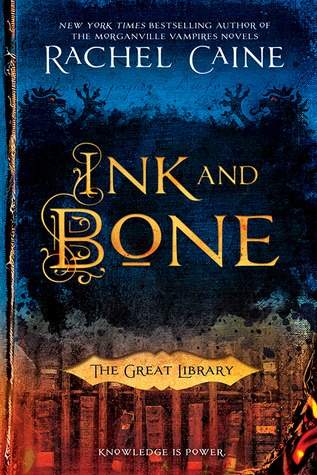
Ink and Bone – a review

It seems that my reading has found a theme…for now. Books. Or rather novels in which Books play a central role, like today’s review, Rachel Caine’s Ink and Bone, and my current read (and next review), The Book Thief by Markus Zusak. However, I don’t intend to move on from there to Ray Bradbury’s Fahrenheit 451 or Umberto Eco’s The Name of the Rose – well not yet. (Those two are both influences already though not as a reader.)

Anyway, on to the review:

InkBone20643052

Ink and Bone (The Great Library #1) by Rachel Caine 

In an exhilarating new series, New York Times bestselling author Rachel Caine rewrites history, creating a dangerous world where the Great Library of Alexandria has survived the test of time.…

Ruthless and supremely powerful, the Great Library is now a presence in every major city, governing the flow of knowledge to the masses. Alchemy allows the Library to deliver the content of the greatest works of history instantly—but the personal ownership of books is expressly forbidden.

Jess Brightwell believes in the value of the Library, but the majority of his knowledge comes from illegal books obtained by his family, who are involved in the thriving black market. Jess has been sent to be his family’s spy, but his loyalties are tested in the final months of his training to enter the Library’s service.

When his friend inadvertently commits heresy by creating a device that could change the world, Jess discovers that those who control the Great Library believe that knowledge is more valuable than any human life—and soon both heretics and books will burn…

Ink and Bone” was a novel that I couldn’t stop reading from the moment that the blurb hooked my attention. This is an alternative history based around a radical shift in events two millennia ago, when the first burning of the Library at Alexandria took place.

This alternative history’s direction has been dictated by the Great Library, who controls everyone’s lives through their stranglehold on knowledge. We are used to having books all around us, freely available – well in fact not everywhere. But this situation is frighteningly different and Rachel Caine has created a believable society, with a clever twist on how people read – or don’t.

The twists and deceptions kept me thinking, but this novel was very readable and everything made sense – in its parallel world way. Everyone had some sort of relationship with books, and those interactions dictated their roles and how the Great Library viewed them. Whether the authorities know about Jess Brightwell ’s smuggling background is a crucial plot element – information rules.

The descriptions of Jess and his fellow students at the Great Library draw you into their lives and concerns. The machinations of the Great Library mean that you can never be sure who to trust, or even who will survive to enter the Library’s service.

Ink and Bone reaches a chilling conclusion that sets up Book 2 Paper and Fire with plenty of questions to motivate reading on.


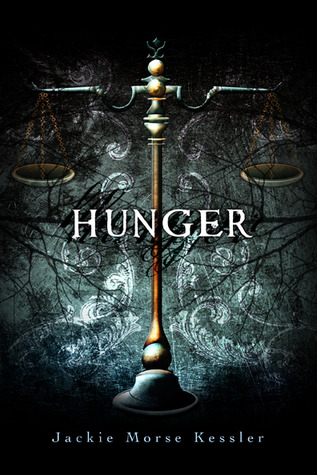
Hunger – a review

I don’t normally read books for teens, but the blurb for “Hunger” and a review made me buy this excellent as part of Pub Hub’s Buy Diverse Books offer in June. The mix of apocalypse and eating disorder had me hooked, and could prove useful – my character Twyla Locke, in “Fates Maelstrom”, has an illness that could be an eating disorder, or not.

Hunger_7247856


Hunger (Riders of the Apocalypse #1)

by Jackie Morse Kessler

“Thou art the Black Rider. Go thee out unto the world.”

Lisabeth Lewis has a black steed, a set of scales, and a new job: she’s been appointed Famine. How will an anorexic seventeen-year-old girl from the suburbs fare as one of the Four Horsemen of the Apocalypse?

Traveling the world on her steed gives Lisa freedom from her troubles at home: her constant battle with hunger, and her struggle to hide it from the people who care about her. But being Famine forces her to go places where hunger is a painful part of everyday life, and to face the horrifying effects of her phenomenal power. Can Lisa find a way to harness that power — and the courage to battle her own inner demons?

*

“Hunger” not only satisfied me as a reader, but also tackled the issue of eating disorders in a clever yet informative way. This was much more than a fantasy read, and yet it was never preachy. Although I have known people that were anorexic, this took me into the mind-set of a girl battling with a too-common teenage problem, with an added touch of allegory that worked brilliantly.

From the opening moments when Lisa had to deal with her appropriate appointment as Famine, her thought processes were confused as she tried to absorb the new role into her troubled social life. The tense family situation and her fragile friendships seemed realistic, with her struggles over food ever present and understandable, given the pressures to fit the norm.

But the illness of anorexia nervosa is part of Lisa’s personality and life, never a tedious lecture from the author. Jackie Morse Kessler has experienced eating disorders first hand, so that authenticity blends well with the unfolding tale. The ‘Thin Voice’ that drives Lisa’s insecurity becomes not just Lisa’s alter-ego but also a central antagonist.

The writing is a strong mix of teenage distractions, psychological tribulations and fantastical challenges. Some readers might wonder why Lisa’s actions as Famine, especially her final decision, are somewhat illogical at times. She’s supposed to be Famine, so why is she doing that…? Because this is her take on Famine, perhaps.

Throughout the novel, my mind kept flipping between ‘this is a real fantasy’ and ‘this is in her confused mind’. How much is the calling to be one of the Four Horseman in her head? Perhaps that is why Death appears in the form of Kurt Cobain and plays Nirvana numbers on his guitar – that’s her take on Death.

After this engrossing opening novel, I’m intrigued to read the second Riders of the Apocalypse book, “Rage”, to see how Jackie Morse Kessler handles the next appointee and her self-mutilation.


SPOILER WARNING: It’s only when Lisa faces her greatest nemesis, a fellow Horseman, that she can finally confront the ‘Thin voice’ and her illness. Maybe that is what Lisa gain from her appointment as Famine.


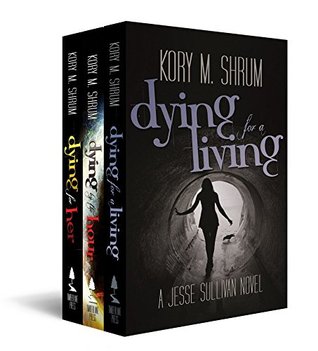
Dying for a Living Boxset – a review

Time for another review, this time of a Boxset, usually a daunting reading prospect and yet a great way to tackle a series. However, they are hard to review without giving away too much, so beware there may be spoilers ahead.

Dying25360086


“This boxset includes the first three novels in the Jesse Sullivan series, for one lower price. Books Dying Light (Book 4) and Worth Dying For (Book 5) are not included.

Fans of contemporary and urban fantasy will enjoy this series. Don’t be surprised to find dark humor, lots of snark, and a murder mystery, all wrapped up in a single thrilling, action-packed narrative.

Called “addictive” by New York Times Bestseller Darynda Jones, those interested in strong female protagonists are sure to take a shine to Jesse Sullivan, the reluctant anti-hero of the series.”


As I said when I reviewed the first novel in the Jesse Sullivan series, I was “hooked from the first few words of the blurb”, immersing myself in the light-hearted style the author used. The opening novel portrays a quirky heroine, a young woman that dies for a living, a ‘necronite’. who can be sarcastic in the face of death.

I liked Jesse and warmed to her, her kooky habits, like wearing shoes that didn’t match, and to her best friend, lover, and sidekick, Ally Gallagher. Their relationship is complicated not only by Lane, Jesse’s comic-store running boyfriend, but also by the attempts to kill her for good. Yes, ‘necronites’ can die in certain circumstances, so I was never able to relax and think that Jesse would always survive.

The tone of the first novel might have been light-hearted, with great humour, but it had darker moments especially towards the end as we discover who is opposed to the ‘necronites’. Book 2 builds on all the elements, with Jesse and her friends in mounting danger. Without spoilers, I can say that everything I enjoyed about Book 1 is there as we learn more about the dangers they face.

I found the writing swept me along with its mix of humour and mounting threat. Jesse’s relationships complicate events, and this area of personal conflict – told from her first person perspective and from Ally’s 1st POV – worked well. The sexual dilemmas felt realistic, even if the lesbian emotions and thoughts were outside my experience. However, unsurprisingly when you read her bio, Kory M. Shrum captures this with taste and style.

The third novel departs from the first two Books, in being told from the perspective of Jesse’s boss Brinkley. In many ways this darker Book is backstory to the events in the opening two volumes, and yet it closes at the same point as Book 2. As I read the revelations, I was even more engrossed in the characters. Gradually, I began to realise that there was a whole side to events that neither Jesse nor Ally were aware of. After reading Book 2, I was ready to take a break from the series, but now that I have learned so much more, I want more.

One niggling problem is the antagonist, whose abilities reminded me as the Books progressed of a successful TV show that aired from 2006 to 2010. That will stop me re-reading the three Books, although not from tackling the next one. Maybe the protagonist will change in ways that I can’t envisage.

*

Here is the link to my 23 Jun. 2015 four star review on Amazon for Book 1 Dying for a Living (Kindle Edition). I wrote…

Chuckled as she died

“Hooked when I read the first few words of the blurb for “Dying for a Living”, I was unable to put down this first novel in the Jesse Sullivan series.

“On the morning before her 67th death, it is business as usual for Jesse Sullivan: meet with the mortician, counsel soon-to-be-dead clients, and have coffee while reading the latest regeneration theory. Jesse dies for a living, literally.”

You have to read on, especially when confronted with Jesse, a ‘necronite’ that can be sarcastic in the face of death. The irritation was more amusement than frustration, as I had to keep laughing and loving her. The light-hearted style and the humour seeps through the novel, especially when Jesse’s clients make such comments as: “Ms Sullivan is like a human Chihuahua who barks at anything that moves.”

There are other well-portrayed characters, like Ally her assistant/lover/friend, and Lane her comic-store running boyfriend, and her boss Brinkley. Their contribution is crucial to the unfolding story in which someone is trying to kill Jesse and her necronite colleagues. And yes, necronites can die if they lose their head. Literally.”